REVIEW · KRAKOW
Exclusive Small Group Auschwitz-Birkenau Guided Tour from Krakow
Book on Viator →Operated by Escape2poland · Bookable on Viator
One day, two camps, and no easy escape. This tour is interesting because it pairs skip-the-line entry with a licensed guide-led route through the key buildings at Auschwitz I and Auschwitz II-Birkenau.
I especially like the way the day is built around clear interpretation: you get a professional educator for up to about 3.5 hours on site, plus headsets (for groups of 10+), so you can actually hear the story as you walk the grounds. I also like that you’re not left figuring things out alone—prepaid admission and a guided plan keep you moving.
One possible drawback to consider: while the tour is marketed as small-group, your day can still feel crowded when multiple tours are operating nearby and you’re sharing space and audio at the same time. If you’re sensitive to noise and confusion, plan to keep expectations flexible.
In This Review
- Key highlights you’ll feel right away
- Auschwitz-Birkenau day trip from Krakow: the real shape of the experience
- Price and value: what $168.10 buys you (and what it doesn’t)
- Pickup and the early start: how to make the first hour go smoothly
- Getting your bearings at Auschwitz I: entrance sign, barracks, and key sites
- The Auschwitz museum stop: why the documents hit harder than facts alone
- Transfer to Birkenau: going from one camp to the bigger machine
- The tour pacing: breaks, headsets, and why small groups still matter
- Packed lunch and weather reality: staying comfortable without losing time
- Dress code and ID rules: the two things that can ruin your entry
- Who this tour fits best (and who should think twice)
- Things to watch on tour day (so you don’t waste energy)
- Should you book this Auschwitz-Birkenau guided tour from Krakow?
- FAQ
- What’s the total duration of the Krakow to Auschwitz-Birkenau tour?
- Is skip-the-line admission included?
- How long is the guided time at the Auschwitz and Birkenau sites?
- What group size should I expect?
- What’s included in the price besides the guided tour?
- Do I need a passport or ID?
- Is there a dress code?
- Are there breaks during the tour?
Key highlights you’ll feel right away
- Guaranteed skip-the-line entry so you spend less time stuck at the gate.
- Headsets included for groups of 10+ to help you follow the guide clearly.
- A licensed guided tour covering both Auschwitz I and Auschwitz II-Birkenau.
- A full “on-site” educator session lasting up to about 3.5 hours, not just a quick walk-through.
- Packed lunch and short breaks, plus up to 30 minutes of additional free time (including a chance to visit a bookstore).
- Strict entry rules like the dress code and needing valid ID/passport for museum access.
Auschwitz-Birkenau day trip from Krakow: the real shape of the experience
This is the kind of trip that changes your internal tempo. In practical terms, it’s a long day: about 7 hours 30 minutes from Krakow to Auschwitz-Birkenau and back, with roughly 3.5 hours on site guided by a professional educator.
What makes it work well for many people is the flow. You start with a guided walkthrough at Auschwitz, you then transfer to Birkenau for the second half, and you finish back in Krakow’s city center. You’re not bouncing between random viewpoints—you’re following a structured path that covers the main areas connected to the camp system.
Also, the tour is run in English with a maximum group size of 20 (and it’s usually limited to 12). That matters here more than in many “sightseeing” tours, because listening carefully is part of respecting what you’re seeing.
You can also read our reviews of more guided tours in Krakow
Price and value: what $168.10 buys you (and what it doesn’t)
At $168.10 per person, you’re paying for more than transport. You’re buying admission tickets and a licensed guided tour that covers both camps, with a planned educator-led route lasting up to about 3.5 hours on site.
You’re also paying for the time-saver that matters most at Auschwitz: the guaranteed skip-the-line access. If you’ve ever toured a major museum on a busy day, you know how much energy can leak away while waiting. Here, that “lost time” is especially frustrating, because you want your attention focused when you step into the camp environment.
The other value piece is included comfort. You get round-trip shared transfer in an air-conditioned vehicle, a packed lunch, and headsets for groups of 10+ so you can follow your guide without constantly craning your neck or moving to catch words.
What you should not expect: a leisurely pace. Breaks are kept short (no longer than 10 minutes), and entry rules mean you’ll want to be ready when you arrive.
Pickup and the early start: how to make the first hour go smoothly
Most tours like this depend on tight timing, and this one does too. You meet in Krakow’s Old Town and you’ll travel by van or minibus, with pickup near your hotel if possible.
Here’s the practical tip I give everyone: treat pickup like a train, not a casual meet-up. Some departures are timed very early (one account describes a 6:00 a.m. pickup with strict departure), so even if your exact pickup time is different, show up early and double-check details during the confirmation stage.
Why this matters: the Auschwitz portion is time-sensitive. The earlier you get in, the more likely you’ll start the on-site portion without wasting energy at the entrance.
Getting your bearings at Auschwitz I: entrance sign, barracks, and key sites
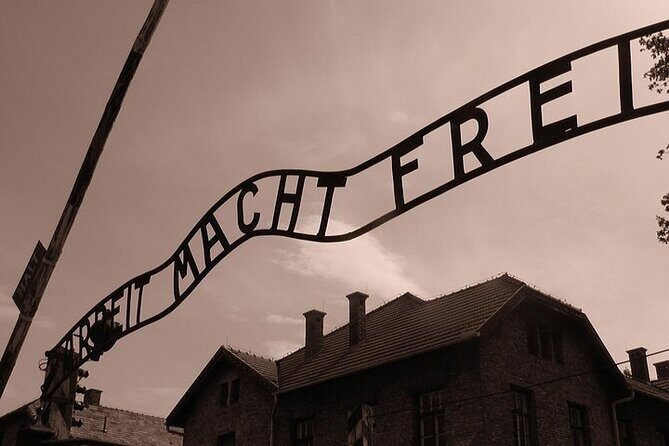
Once you arrive, you use your prepaid skip-the-line tickets to go straight inside and follow your guide. The tour route includes walking through the main entrance area where you pass beneath the Arbeit macht frei sign.
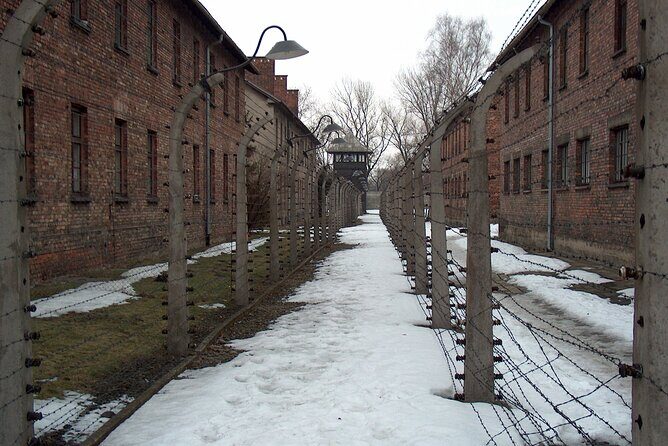
From there, the Auschwitz I portion is built around specific locations, not vague generalities. You’ll see:
- Original wooden barracks
- A bathhouse
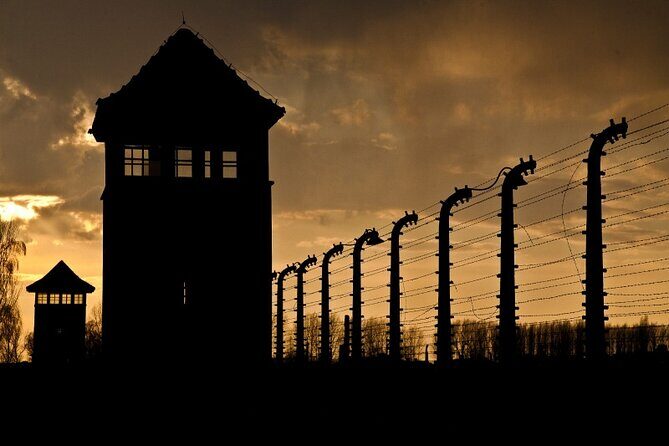
- A watchtower
- Areas tied to the camp’s killing process, including the crematorium and gas chamber
- The Death Wall
- The on-site museum with photographs, documents, and personal items connected to prisoners
What I like about this structure is that it keeps you anchored. When a guide points to a barrack layout, a facility function, or a specific museum display category, your brain stops treating everything as one large blur and starts organizing what you’re learning.
Also, the visit isn’t only about buildings. You should expect history woven into everyday realities of the period—how WWII-era Poland fits into what happened here—plus explanation of how this camp became one of the Nazis’ most notorious systems.
The Auschwitz museum stop: why the documents hit harder than facts alone
The on-site museum experience is part of what makes the day more than a “walk and look” tour. You’ll view a moving collection of photographs, documents, and personal items belonging to prisoners.
This is the moment where the site shifts from structure to evidence. Even with a guide explaining context, museum material tends to do something different: it gives you names, records, and physical traces. That’s where many people feel the strongest emotional weight, because you’re not only looking at what a system did—you’re seeing proof of who suffered within it.
The lesson for you: if you want to understand what you’re seeing, give yourself permission to slow down here. The tour schedule is real, but you don’t have to rush how you absorb.


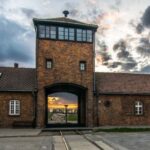
Transfer to Birkenau: going from one camp to the bigger machine
After the Auschwitz I portion, you move to Auschwitz II-Birkenau. This transfer is part of why the trip feels like two different days inside one day.
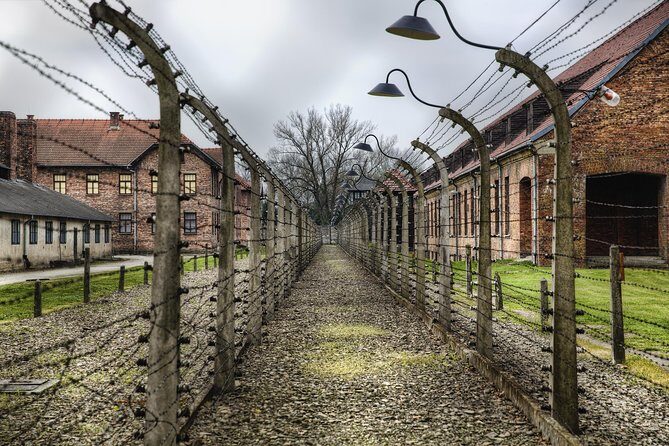
In the tour flow, Birkenau is where the scale becomes harder to grasp from a distance. Your guide shows you:
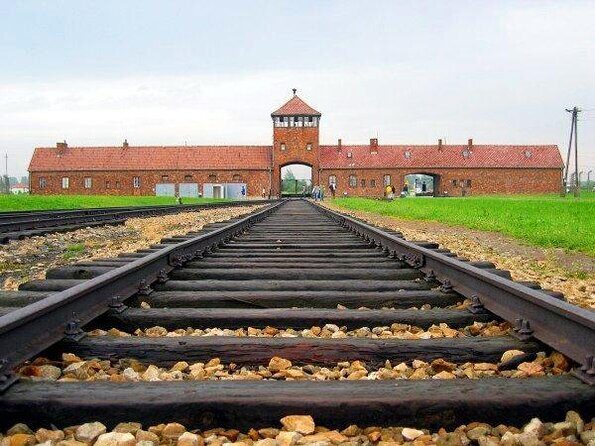
- Original barracks
- Unloading/loading ramps
- Watchtowers
- The sites connected with mass extermination
The important thing to know is time. Birkenau is about 1 hour 20 minutes in this itinerary plan. That’s not long enough to “fully master” such a vast location, but it is long enough to learn how the camp’s layout functioned and why certain features matter.
This is also where headsets help a lot. If you find your ears straining or your focus dropping, don’t fight it—move with your guide, keep your attention on the current stop, and accept that your memory will fill in the gaps later.
The tour pacing: breaks, headsets, and why small groups still matter
This trip stays tightly scheduled. Breaks are no longer than 10 minutes, which means you’ll have to plan your energy like a day hike.
You also get headsets (for groups of 10+), which can be a lifesaver at Auschwitz. Even the most articulate guide can struggle against wind, echo, and crowd movement, so having clear audio helps you keep your place in the story.
Here’s another practical detail: the tour includes up to 30 minutes of additional free time during the tour, with suggested options like reflection or a bookstore stop. That’s valuable because it gives you a brief window to reset without feeling like you’ve been abandoned.
If you’re imagining this as a quiet, empty museum stroll—adjust that expectation. This is a major international historical site visited by many groups, and at times the environment can feel busy around the main stops.
Packed lunch and weather reality: staying comfortable without losing time
You’ll have a delicious packed lunch included. In a day like this, I care less about the menu and more about having something reliable in your bag so hunger doesn’t hijack your attention.
The tour operates in all weather conditions, so dress for cold or rain as needed. Also, the site can involve walking on uneven ground and long periods standing, so moderate physical fitness is recommended.
One more practical point: if you need to buy drinks or snacks, you may have less freedom than in normal sightseeing. The itinerary is built around staying with your group to reach each on-site stop.
Dress code and ID rules: the two things that can ruin your entry
This tour includes museum access rules you must follow. For museum entry, there’s a dress code: no shorts or sleeveless tops. If you show up without meeting the rules, you risk refused entry.
Also bring valid ID or passport. The tour specifically notes that each traveler must have valid ID/passport for the Auschwitz Museum.
So my advice is simple: check your outfit before you leave Krakow. If you’re traveling light, pack a layer that covers your shoulders and legs. It’s the kind of tiny effort that prevents a major day-stopper.
Who this tour fits best (and who should think twice)
This is a strong fit if you want:
- A guided, educator-led route through both camps
- Clear coverage of the major sites, including crematorium and gas chamber areas, plus Birkenau’s ramps and watchtowers
- A day trip that handles transport and tickets so you can focus on the experience
It can be a tough fit if:
- You’re very sensitive to crowds or overlapping tours at busy stops
- You dislike strict schedules and short breaks
- You’re not comfortable meeting entry rules on dress and ID
Also, children must be accompanied by an adult, and it’s not recommended for children under 14 to visit the Auschwitz museum. If you’re traveling with teens, it’s worth thinking carefully about what they can handle emotionally and physically.
Things to watch on tour day (so you don’t waste energy)
A few details can make your day smoother:
- Pickup strictness: Some departures are early and run on time. Show up early and confirm your pickup location and timing before the day.
- Group-size expectations: The tour is designed as a small group (usually limited to 12, max 20). Still, the real-world experience can feel more crowded when the site has multiple groups moving through at once. If you want a very quiet experience, be realistic.
- Listen-smart strategy: Use the headsets fully. When the guide moves to a new stop, don’t lag behind—audio clarity and orientation both improve when you stay with the group.
- Respect the dress code and ID rule: These aren’t optional, and they’re easy to plan for.
Should you book this Auschwitz-Birkenau guided tour from Krakow?
If you want a structured, educator-led visit that covers both Auschwitz I and Auschwitz II-Birkenau with skip-the-line tickets, this is a solid choice. The included headsets, licensed guided tour, and packed lunch mean you can spend your mental energy on understanding and reflecting instead of logistics.
I’d book it especially if you care about getting the main locations explained clearly—original barracks, the bathhouse, watchtowers, and the key Auschwitz and Birkenau sites—rather than rushing through with minimal context.
But if you’re the type who needs a very quiet, low-crowd experience, or you’re worried about strict timing and entry rules, you should plan carefully (or consider a different format). This day isn’t meant to be easy. It’s meant to be understood.
FAQ
What’s the total duration of the Krakow to Auschwitz-Birkenau tour?
It’s about 7 hours 30 minutes total (approx.), including round-trip transfer time and the guided visit.
Is skip-the-line admission included?
Yes. You get prepaid skip-the-line tickets so you can head straight inside when you arrive.
How long is the guided time at the Auschwitz and Birkenau sites?
You’ll have about 3.5 hours of guided tours on site, with roughly 2 hours for Auschwitz and about 1 hour 20 minutes for the Birkenau portion.
What group size should I expect?
The small group is typically limited to 12 participants, with a maximum of 20 travelers.
What’s included in the price besides the guided tour?
You also get air-conditioned round-trip shared transfer, headsets (for groups of 10+), admission tickets, a packed lunch, and up to 30 minutes of additional free time during the tour.
Do I need a passport or ID?
Yes. Each traveler must have valid ID or passport for entry at the Auschwitz Museum.
Is there a dress code?
Yes. No shorts or sleeveless tops are allowed. You may be refused entry if you don’t follow the dress code.
Are there breaks during the tour?
Yes, breaks are no longer than 10 minutes. You also get up to 30 minutes of additional free time for reflection or a bookstore visit.