REVIEW · KRAKOW
Electric Scooter Tour: Jewish Quarter – 2-Hours of Magic!
Book on GetYourGuide →Operated by Segway Tours & Rental Kraków · Bookable on GetYourGuide
Two wheels, big stories in Kazimierz. This electric scooter tour turns Krakow’s Jewish Quarter into an easy, efficient ride, with a guide who connects the dots as you glide. You’ll cover a route that’s longer than it sounds, with major sights around Kazimierz and plenty of stops for photos and street-level context.
I especially like two things: the quick training (helmet on, scooter ready fast) and the way the tour mixes movement with clear, friendly explanations. Guides like Tom and Johan are a big part of the experience, with smart commentary and a relaxed feel that makes the history easier to follow while you stay rolling.
One consideration before you book: timing can be tight. In at least one case the guide started late and the meeting-point setup wasn’t immediately clear, so I’d plan to arrive early and give yourself a small cushion.
In This Review
- Key highlights worth planning for
- Krakow’s Jewish Quarter by Electric Scooter: the real payoff
- Price and value: why about $33 can work
- Where you meet: Sienna 17 Street (Segway Point)
- The 15-minute training: getting comfortable quickly
- The 2-hour flow: training then a long, guided loop
- Vistula Boulevards and Bernatka’s Footbridge: a scenic start
- Church on the Rock and Wolnica Square: architecture you’ll recognize
- Kazimierz Town Hall, Corpus Christi Church, and the sense of layers
- Synagogue streets: Tempel, Kupa, Izaak, High, Old, Remuh
- Nowy Square, Szeroka Street, and Wawrzyńca Street
- Gestapo Prison and the heavier moments
- Old Jewish Cemetery and Jewish Stands: quiet and context
- Guides make the difference: Tom and Johan’s impact
- What to wear, what to bring, and what to avoid
- Pace and group feel: what 10 km in 2 hours means
- Who should book this scooter tour of Kazimierz
- Should you book the Electric Scooter: Jewish Quarter tour?
- FAQ
- What is the meeting point for the tour?
- How long is the tour, and how is the time divided?
- What do I do before I start riding?
- What language is the guide available in?
- Are raincoats provided?
- What should I wear or bring?
- Is alcohol allowed?
Key highlights worth planning for
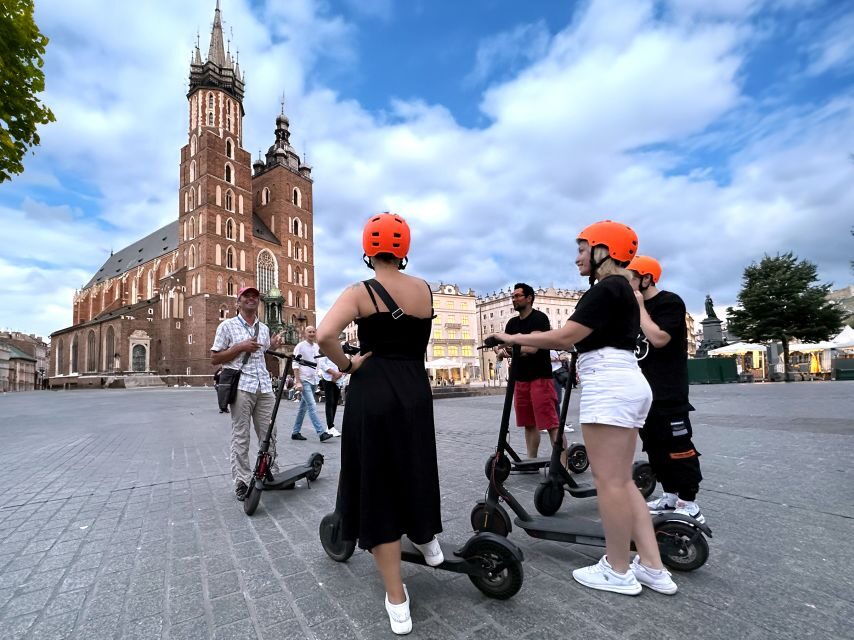
- Sienna 17 Street check-in: the Segway Point office is on the ground floor, front entrance for easy finding
- 15 minutes of riding training plus a guided route long enough to feel worth the effort
- Kazimierz core sights by scooter: squares, synagogues, and street names you’ll recognize
- Vistula River viewpoints: you’ll get scenic breaks instead of only urban streets
- Raincoats included if needed: practical when Krakow weather turns
- Guides with personality: Tom and Johan-style commentary that keeps you engaged without rushing
Krakow’s Jewish Quarter by Electric Scooter: the real payoff
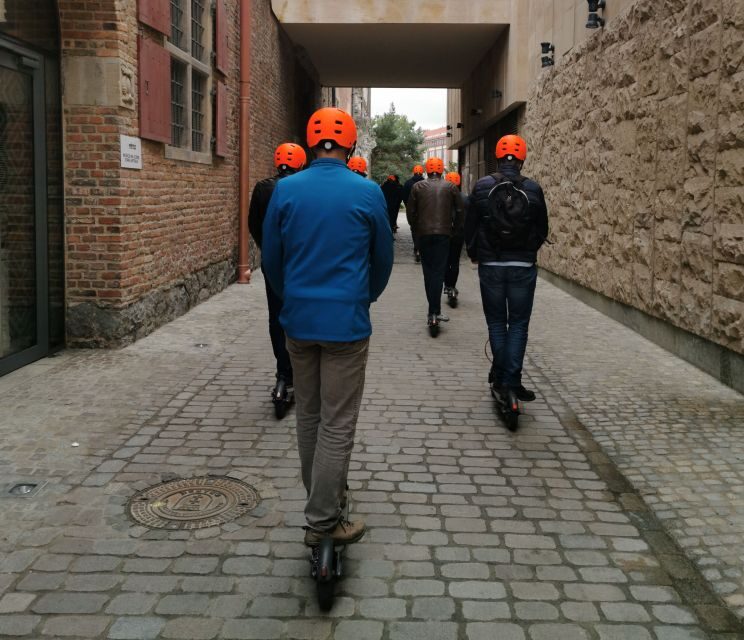
If you want the Jewish Quarter experience without spending the day walking hills and cobblestones, this Krakow Kazimierz scooter tour is built for you. The concept is simple: you learn to ride quickly, then you cover a big loop of sights with a live guide who tells you what you’re looking at and what you might want to do next.
The biggest payoff is time and energy. Krakow’s Kazimierz is spread out enough that on foot you can end up tired before you’ve even reached the places you care about most. Here, the scooter carries you between stops, so you can focus on observation: architecture, street layout, memorial sites, and the way the neighborhood still feels layered with past and present.
You’ll also get a strong overview, not a scattershot walk. The route is designed to keep you moving through the area’s landmarks while staying on a logical path. And because you’re on two wheels, the tour feels like sightseeing with momentum rather than a checklist of short, stop-start photos.
A few more Krakow tours and experiences worth a look
Price and value: why about $33 can work
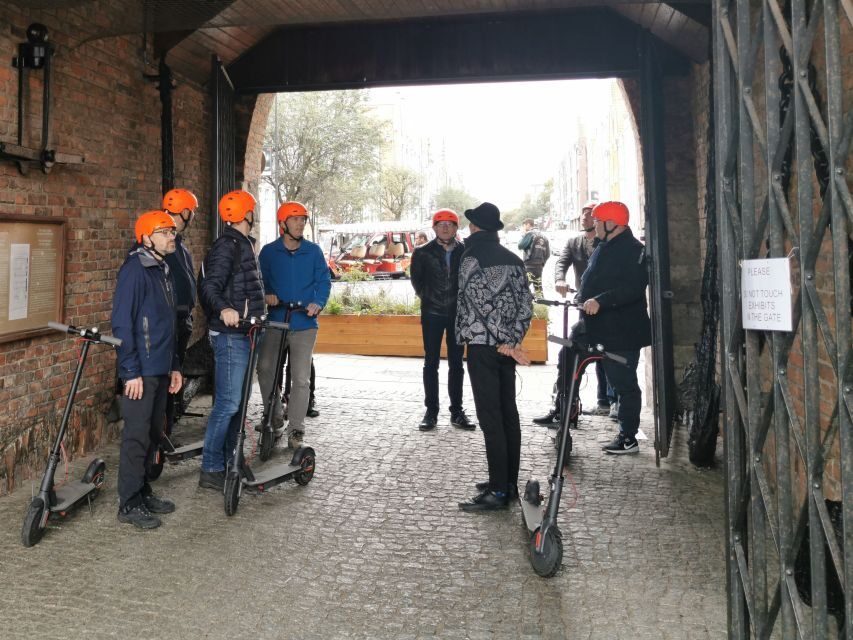
At $33 per person for a 2-hour experience, you’re paying for more than transportation. The value is in the package: the scooter, safety gear, the local guide, and training are all included. You’re also covering a route described as more than 10 km during the guided portion (about 4 miles), which is a lot of distance to achieve comfortably in just a couple hours.
Walking tours can be cheaper, but your cost here is fatigue. When you add up rest stops, slower pace, and the chance you miss a few streets because you’re worn out, scooter tours start to look like good practical math. This one also gives you raincoats if needed, so you’re not scrambling for weather gear last-minute.
Is it worth it if you love slow wandering? Maybe not. If you’re the type who wants long pauses and museum doors, you might prefer a traditional guided walk. But if you want efficient coverage of Kazimierz plus Vistula views in a single outing, this price point tends to make sense.
Where you meet: Sienna 17 Street (Segway Point)
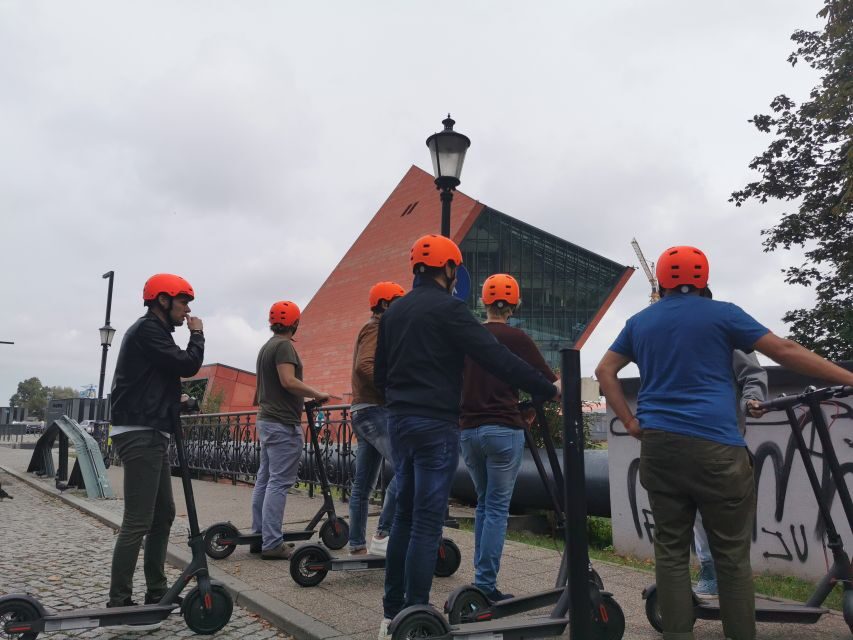
Your meeting point is Sienna 17 Street, Krakow, at the Segway Point office. The office is on the ground floor with a front entrance, so you’re not hunting for an upstairs counter or a hidden door.
This matters because scooter tours depend on a smooth start. When check-in is easy, you waste less time, and you get your training sooner. I’d still arrive a bit early anyway, because once the group is assembled, you’ll move straight into the helmet-and-scooter learning phase.
If you’re coming from central Krakow attractions, give yourself a little buffer. In one instance, the guide arrived late and the meeting point didn’t have quick clarity for the group. That’s not a reason to skip the tour, but it is a reason to not arrive at the exact minute.
The 15-minute training: getting comfortable quickly
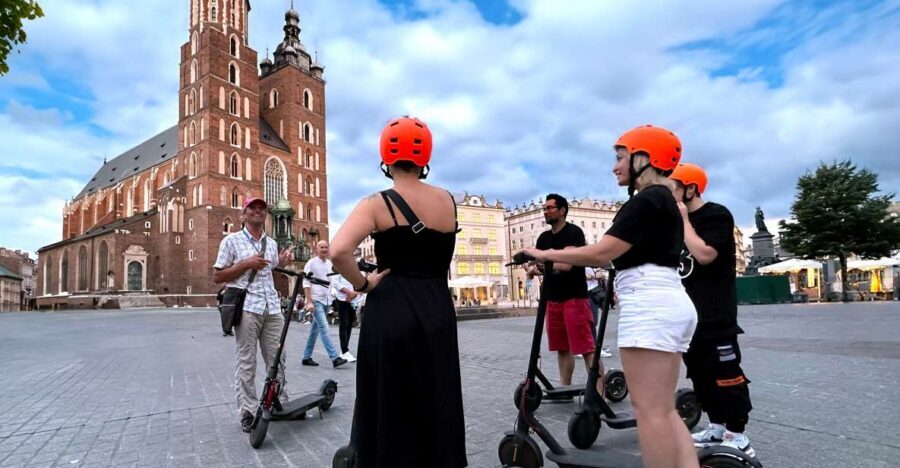
Before the sightseeing starts, you’ll get a short electric scooter training and a helmet. The tour description promises the learning curve is quick, and the goal is simple: you should be able to move confidently without wrestling the controls.
This isn’t a driving school, and you’re not expected to become a scooter pro. Instead, you get the basics you need to enjoy the route safely. The tour is designed so you can relax into the ride after the initial practice.
What I like about this structure is that it lowers the stress factor for first-time riders. If you’ve never tried an electric scooter before, the hardest part is usually starting. Here, that part is handled for you, with a guide present.
Practical tip: wear flat sole, comfortable shoes. Even if the scooter does the work, your feet will still be stepping on and off safely, and you’ll likely spend time standing at viewpoints and streets during the guided stops.
The 2-hour flow: training then a long, guided loop
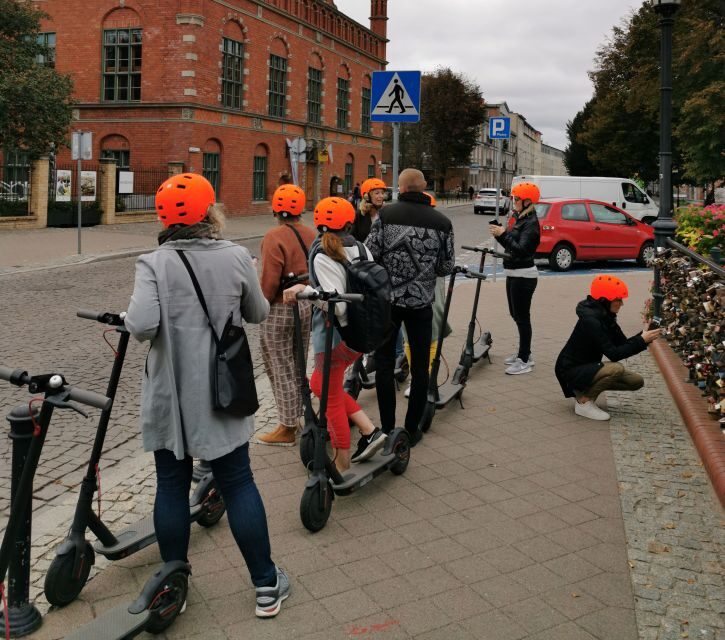
The tour timing is split like this:
- 15 minutes of scooter/Segway riding training
- 1 hour 45 minutes guided sightseeing
That means most of your time is actually out on the route. It also means you’re not sitting around listening for ages before you move.
The guided loop is described as more than 10 km (about 4 miles), centered on Kazimierz’s most important places. So even though the total tour is 2 hours, it doesn’t feel like a short hop to only a few streets. The route includes a mix of big landmarks, smaller street-level moments, and several stops where you can take in the architecture and monuments.
And importantly, the guide doesn’t just point and move. They’ll recommend places worth visiting during your stay and share tips about everyday Krakow life—useful if you want to plan a second day with less guesswork.



Vistula Boulevards and Bernatka’s Footbridge: a scenic start
You’ll ride through the Vistula Boulevards and then reach Bernatka’s Footbridge. This is a smart choice early in the tour. Riverfront areas give you open views, and they help you settle into the scooter rhythm before you get deeper into tighter streets and dense neighborhoods.
From the Vistula River area, you’ll get that bigger-sky perspective—one of the moments that makes Krakow feel more than just a cluster of old streets. It also helps break up the ride visually, so the tour doesn’t become one continuous block of urban scenery.
If you like photos, aim to keep your camera ready here. Bridges and riverfront viewpoints are usually where you can get shots that look different from what you’d get on a walking tour.
Church on the Rock and Wolnica Square: architecture you’ll recognize
Next you’ll pass by landmarks like the Church on the Rock and then Wolnica Square. These stops work because they’re recognizable by sight and placement, even if you’re not a church-architecture expert.
From a rider’s perspective, squares like Wolnica are also good rest points. You can slow down, regroup mentally, and take in the setting while you listen to the guide’s explanation.
What makes these stops valuable is the street-to-street context. As you glide from viewpoint to viewpoint, you start to understand how the Jewish Quarter’s layout connects to the surrounding parts of Krakow. You’re learning the neighborhood by moving through it, not just by hearing facts.
Kazimierz Town Hall, Corpus Christi Church, and the sense of layers
You’ll see Kazimierz Town Hall and Corpus Christi Church as part of the route. Places like these are useful because they hint at how Kazimierz isn’t just a single-purpose neighborhood. It’s been shaped over time, and the guide’s commentary helps you read the streets as a mix of civic, religious, and cultural landmarks.
As you ride past them, you’ll likely start recognizing patterns: how squares sit next to major buildings, how streets funnel movement, and how your route connects monuments in a way that makes sense in real time.
This is the kind of learning-by-riding that sticks. Even after the tour ends, you tend to remember street names because you’ve seen their landmarks from multiple angles during the ride.
Synagogue streets: Tempel, Kupa, Izaak, High, Old, Remuh
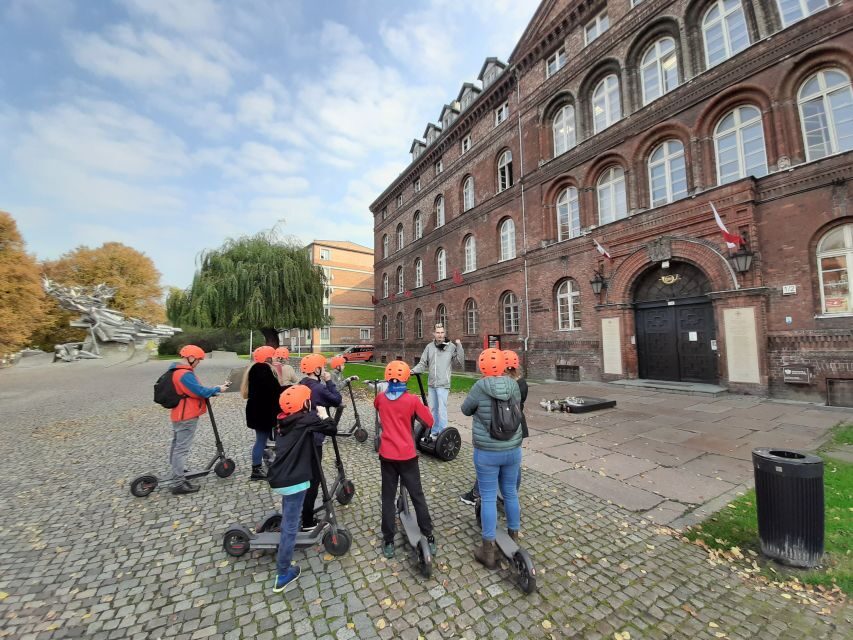
The heart of the tour is Kazimierz’s synagogue area. The route includes major names such as Tempel Synagogue, Kupa Synagogue, Izaak Synagogue, High Synagogue, Old Synagogue, and Remuh Synagogue.
Even if you don’t go inside every building (the tour format doesn’t promise entry), you’ll still get something meaningful: a clear sense of place. These are not random stops. They’re landmarks that define the Jewish Quarter’s identity, and seeing them in a sequence helps you understand why certain streets feel especially important.
The best way to enjoy these moments is to slow your thinking down for a second. Scooter tours can move fast, but this section is the part where your attention matters. Watch building shapes and street spacing as the guide points out what’s significant. That’s how you turn a ride into actual understanding.
Nowy Square, Szeroka Street, and Wawrzyńca Street
You’ll also pass Nowy Square, then ride through key street corridors like Wawrzyńca Street and Szeroka Street. These streets are where Kazimierz stops feeling like a list of monuments and starts feeling like a neighborhood.
Szeroka Street in particular is a place you’ll want to look at for the way the buildings frame the roadway. Even if you’re mostly rolling along, you can feel how the street functions as a stage for daily life and remembrance at the same time.
These stops are valuable because they’re the everyday connections. They help you imagine how people moved here historically, and how the area works now when it’s not just a museum route.
Gestapo Prison and the heavier moments
The tour route includes Gestapo Prison. This is one of the stops where a good guide matters even more than the vehicle.
When the topic is heavy, the scooter format could feel strange if you’re expecting silence or long pauses. Here, your best approach is to listen carefully and accept that the tour format is built for coverage and orientation. You won’t get a long, uninterrupted memorial experience on a scooter, but you will get a structured chance to understand why the site is part of the Kazimierz story.
If you find yourself wanting more time at a specific location after the tour ends, that’s usually a sign the guide helped you identify what matters most.
Old Jewish Cemetery and Jewish Stands: quiet and context
Later in the loop you’ll reach the Old Jewish Cemetery and Jewish Stands. These are places where you’ll probably slow your attention naturally. Cemetery and memorial-related sites can feel different from churches and squares, because the emotional tone is quieter and more reflective.
Because the tour doesn’t spell out long stops at every point, I’d recommend using your own judgment on pace. If the moment calls for it, take extra time in your position when the group pauses so you can actually absorb what you’re seeing.
The guide’s job here is to give you context so it doesn’t feel like a drive-by. If they do that well, this section becomes one of the strongest parts of the day.
Guides make the difference: Tom and Johan’s impact
The tour is led by a live English and German guide. Names from the experience include Tom and Johan, and both styles seem geared toward practical storytelling: friendly, clear, and tuned to keeping you moving without confusion.
One reason this matters is that you’re riding through many stops. If the guide’s explanations are organized, you understand the route. If they ramble, you end up watching scenery pass by with little to hold onto.
From what’s described, Tom and Johan are both professional with a warm sense of humor, and they don’t just talk about the past. They also point you toward places to eat and what to do during the rest of your Krakow stay. That kind of advice is gold because it saves you guesswork after the tour ends.
What to wear, what to bring, and what to avoid
This tour is built for comfort on your feet and control on the scooter.
Bring:
- Comfortable shoes with flat soles
- Comfortable clothing that lets you move easily
Weather:
- Raincoats are provided if needed
Avoid:
- Alcohol and drugs
- People under the influence are not allowed to ride
Also note:
- Not suitable for pregnant women
If you’re tall, short, or usually nervous about balance, still consider the training time seriously. The whole system is designed to get you up to speed fast, but your own comfort and health matter.
Pace and group feel: what 10 km in 2 hours means
Covering more than 10 km during the guided portion is a lot for one outing. The scooter helps, but it still means you’ll have a steady pace and frequent movement between points.
In at least one small group example (five people), the vibe stayed friendly and not chaotic. That’s a good sign for your comfort because smaller groups mean easier guidance and fewer delays.
Still, keep expectations realistic. This is a structured route with stops, not a slow, wandering day. If you want a relaxed, stop-and-smell-everything tour, you might still enjoy it, but you’ll need to choose when to linger versus keep the flow.
Who should book this scooter tour of Kazimierz
This tour is a great fit if you:
- Want efficient sightseeing without exhausting your legs
- Like learning through movement and street context
- Are interested in the Jewish Quarter landmarks and want a high-level route you can build on later
- Want a fun way to cover Vistula views plus Kazimierz in one outing
It might be less ideal if you:
- Need long, quiet stays at memorial sites
- Prefer walking tours where you control every pause
- Have safety or comfort limits that make scooter riding unsuitable for you (pregnancy is explicitly called out)
Should you book the Electric Scooter: Jewish Quarter tour?
I’d book it if you want a smart first pass through Kazimierz—one that saves energy, hits major landmarks, and gives you guide-led context you can remember. The combination of fast training, a live guide, and a route that covers real distance makes the price feel practical, not inflated.
I wouldn’t book it if you want a slow, contemplative day with lots of waiting around and no schedule pressure. And since scooters are involved, take the suitability rules seriously and wear the shoes that help you step on and off safely.
If you’re ready for coverage with personality, this is one of the more efficient ways to see Krakow’s Jewish Quarter without turning your vacation into a blister marathon.
FAQ
What is the meeting point for the tour?
You meet at Sienna 17 Street, Krakow, at the Segway Point. The office is on the ground floor with a front entrance.
How long is the tour, and how is the time divided?
The total duration is 2 hours. It includes about 15 minutes of scooter training and about 1 hour 45 minutes of guided sightseeing.
What do I do before I start riding?
Before you go, you receive a short electric scooter training session and a safety helmet. The guide teaches you how to drive, and it takes a moment before you can move around confidently.
What language is the guide available in?
The live tour guide is available in English and German.
Are raincoats provided?
Yes. Raincoats are provided if necessary.
What should I wear or bring?
Wear comfortable clothes and flat sole shoes. Those are specifically advised for safer, more comfortable riding and standing during stops.
Is alcohol allowed?
No. Alcohol and drugs are not allowed, and people under the influence are not permitted to ride.