REVIEW · KRAKOW
Krakow: Sightseeing Cruise on the Vistula River
Book on Viator →Operated by excursions.city · Bookable on Viator
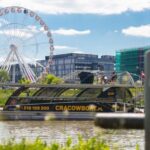
One hour on the Vistula feels like a breather. This Krakow sightseeing cruise turns the river into your guided route, with English audio that helps you spot major landmarks as you glide past the city. You get a comfy ride on a catamaran, and the whole thing is built for an easy, low-effort overview.
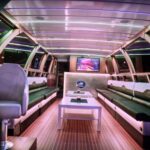
What I especially like is the heated, enclosed deck plus leather seating—perfect when the weather turns chilly or damp. I also like that the commentary actually guides you through what you’re seeing, and on at least one run the guide’s info (Thomas) added extra context beyond the recorded track.
The main thing to watch: the meeting point can be a little confusing if signage isn’t obvious, and the cruise depends on weather. Also, since this is mostly recorded audio, there can be moments where timing feels slightly off with your exact position on the river.
In This Review
- Key highlights worth your attention
- A one-hour Krakow reset, powered by the Vistula
- Price and time: what $27.61 buys you in real terms
- Finding Bulwar Inflancki: the one part that needs your attention
- Onboard comfort: heated deck, leather seating, and a bar
- English audio commentary: turning river views into a story
- Cruise route breakdown: Kościuszko Mound to Skałka
- Kościuszko Mound: patriotism on the river’s edge
- The monastery and the Emmaus tradition: where Krakow’s ritual life comes in
- Wawel hill and Wawel Royal Castle: power, faith, and the legend of the dragon
- Museum of Art and Technology: a modern roof that references the river
- Skałka church: Saint Michael, Saint Stanislaus, and the national pantheon idea
- Where to stand for photos: open deck vs closed deck trade-offs
- Service quality: why the crew can make a short tour feel long
- When to go: sunshine, mist, and dusk lighting
- Who this Krakow river cruise is perfect for
- Should you book this Vistula River cruise?
- FAQ
- How long is the Krakow Vistula sightseeing cruise?
- Is the tour offered in English?
- Where does the cruise start?
- What is on the catamaran?
- What if it’s cold or rainy?
- How many people are on the tour?
- Do I need to arrive early?
- Can I cancel for free?
Key highlights worth your attention
- Heated catamaran comfort with an open observation deck when the sky clears
- English audio commentary so you can follow Krakow’s landmarks without extra effort
- Wawel Royal Castle views from the river plus a close look at the Wawel hill area
- A route that covers both sides of the river within a short, 1-hour window
- Small group size (max 12) for a calmer ride and easier photo-taking
- Onboard bar and clean facilities for a true sit-and-enjoy outing
A one-hour Krakow reset, powered by the Vistula
Krakow can be intense on your feet. Stone streets, hills, stairs, museums—great stuff, but it adds up. This cruise gives you a simple alternative: sit down, let the river do the walking for you, and watch the city slide by at an easy pace.
The Vistula is also the best kind of guide. It forces your eyes to move from landmark to landmark instead of bouncing randomly around town. And because the route stays on the water, you get perspectives you can’t easily recreate from the street.
If you want the quick version of Krakow’s story—power, faith, culture, and the city’s legends—this is a strong fit. It’s also ideal when you only have a short window and don’t want to squeeze in another long guided tour.
You can also read our reviews of more boat tours in Krakow
Price and time: what $27.61 buys you in real terms
At about $27.61 per person for roughly 1 hour, you’re paying for convenience, comfort, and a guided overview in a compact timeframe. You’re not paying to “see everything in Krakow.” You’re paying to see the right highlights efficiently from the water.
That value gets better because the boat is small—up to 12 travelers—and the ride includes comfort features like a heated enclosed deck, a toilet, and a bar. On short tours, those details matter. Cold wind can ruin your mood fast, and heated seating turns the cruise from just okay into actually enjoyable.
If you’re comparing options, think of this as a “paid walking break” with better views. One hour won’t replace time in Old Town—but it can help you understand what you’re seeing later when you do go ashore.
Finding Bulwar Inflancki: the one part that needs your attention
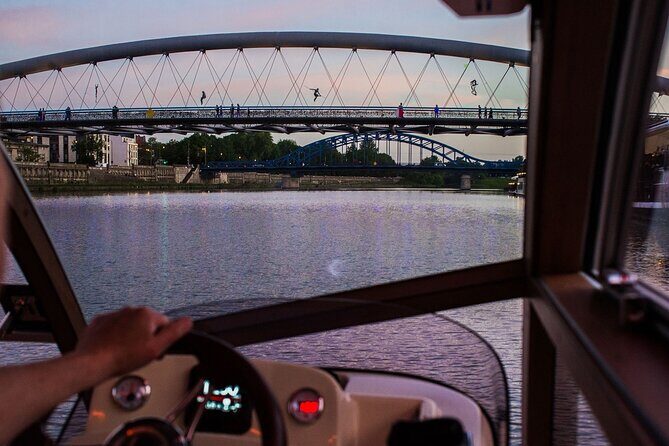
The cruise meets at Bulwar Inflancki, Kraków, Poland. That’s a riverfront spot, so it’s easy to picture—but not always easy to spot from the street if the exact area isn’t clearly marked.
I’d treat the meeting point like a tiny scavenger hunt. Arrive 10 minutes early, like the operator asks. If you arrive late, you may not be able to join once the group leaves, and you won’t be able to swap in at the last second.
Also, if you’re navigating by phone, keep maps ready and double-check your direction. Some people said it wasn’t immediately clear at first, even though they knew they were close.
Onboard comfort: heated deck, leather seating, and a bar
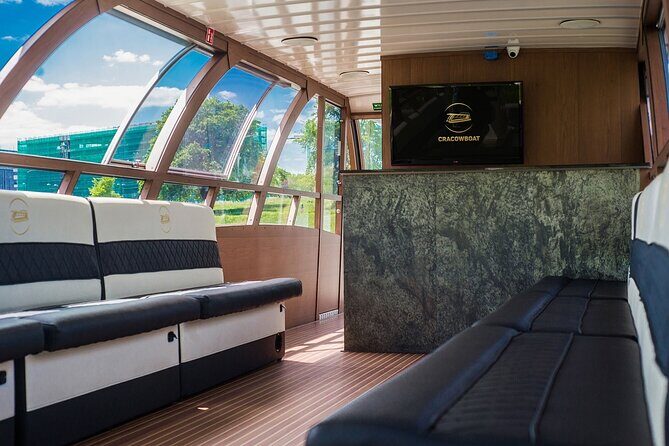
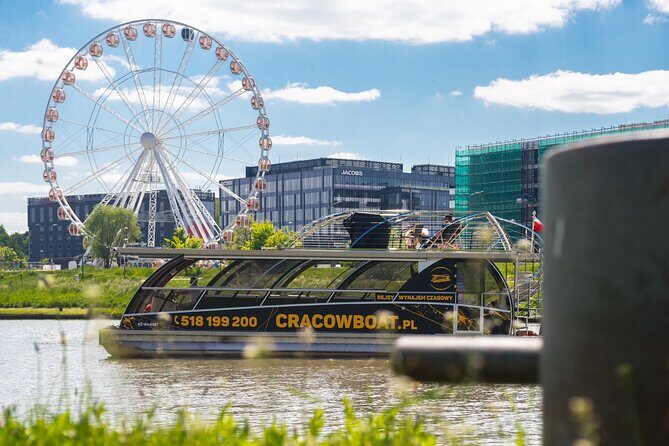
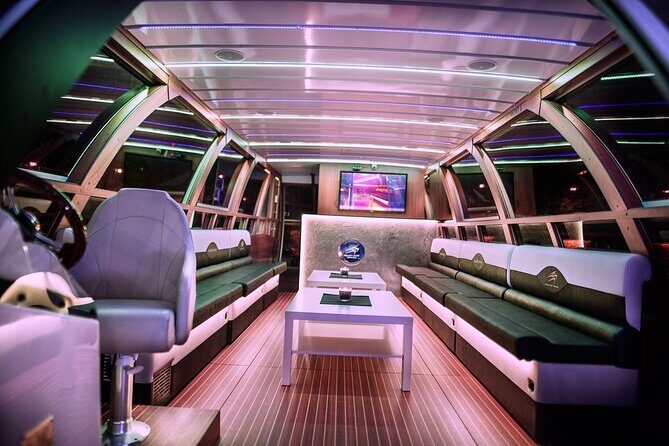
This catamaran ride is built for comfort. You’ve got a closed deck (heated) for warmth and a separate open observation deck for the best photo angle. Seating includes leather sofas, which sounds like a small detail until you’re sitting on a chilly day and you’re grateful your back isn’t freezing.
You also get a toilet and a bar, so you don’t have to plan your drinking and restroom timing like a hawk. In the reviews, people specifically mentioned hot and cold drinks, plus reasonable drink pricing.
One more small comfort bonus: the boat is reported as spotlessly clean. On a short cruise, that cleanliness improves the whole vibe. You’ll feel like you can relax instead of mentally tracking every mess.
English audio commentary: turning river views into a story
The cruise uses audio commentary in English, and the point is not just names on a list. The narration helps you connect what you’re seeing to Krakow’s bigger historical themes—power, religion, and cultural traditions.
You’ll hear about major sites as you pass them, and the commentary is timed to landmarks you can actually see from the water. When it’s working perfectly, it feels like someone is pointing out the city’s “why” rather than just the “what.”
Two practical tips if you want to get the most out of the audio:
- Pick a spot where you can hear clearly—usually the center of the closed deck is easiest if it’s windy.
- Don’t worry if you miss a line. The landmarks keep coming, and the narrative cycles back to key ideas.
There was also at least one mention of the recorded audio being slightly out of sync with location at a couple of moments. If that happens, you can still follow visually—Wawel and the church on Skałka are hard to miss once you see them.
Cruise route breakdown: Kościuszko Mound to Skałka
This is a 1-hour loop that takes you along the river past the major hits. The format can feel like you go one direction, then return, with time to catch different angles. If you like repetition (you’ll likely see the same landmarks from slightly different sides), this structure works.
Below is what you’ll be watching for, and why each stop matters.
Kościuszko Mound: patriotism on the river’s edge
The Kościuszko Mound is one of the five mounds in Krakow, and it was built to honor Tadeusz Kościuszko, a key patriot and leader of the national uprising. Seeing it from the river is useful because it reads like more than a random hill—it’s a monument to national identity, set into the city’s geography.
From the water, you also get a clearer sense of how Krakow’s public memory sits beyond the Old Town center. It’s a reminder that the city’s story stretches outward.
Potential drawback: if visibility is limited (heavy mist, rain), the mound’s silhouette can be less crisp. You’ll still get the shape, but you may miss fine details.
The monastery and the Emmaus tradition: where Krakow’s ritual life comes in
Another highlight is a fortified, castle-like monastery area founded in the 12th century, rebuilt after destruction over time. This is also tied to one of Krakow’s famous traditions—on the Monday after Easter, the Emmaus festival takes place, and the Lajkonik procession begins every June.
This section is one of those “you’ll remember it later” moments. On the river, you’re not just viewing stone—you’re seeing how tradition leaves a physical footprint in the city’s neighborhoods.
Why it’s valuable: Krakow has great architecture, but what makes it feel alive is how people keep rituals going. That’s what this part of the narration connects.
Wawel hill and Wawel Royal Castle: power, faith, and the legend of the dragon
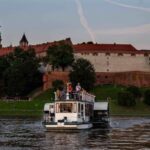
Then you hit the big one: Wawel. The limestone hill above the Vistula River was the former center of power—princely, episcopal, and royal. Wawel is a complex of castle and sacred buildings and is often described as a symbol of the city.
From the river, the view is practical: you can see the overall layout rather than just standing in one courtyard. You can also spot the famous Wawel dragon motif—yes, the city’s legendary fire-breathing dragon aimed at onlookers is part of the visual landscape near the castle area.
What I like about seeing Wawel from the river: it gives your brain a “map view.” Later when you visit Wawel in person, you’ll feel like you already understand where things sit.
Potential drawback: the strongest views are usually on the open deck. If it’s very cold or wet, you’ll likely prefer the heated closed deck, which can slightly reduce sight lines.
Museum of Art and Technology: a modern roof that references the river
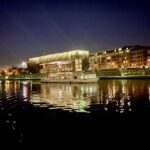
As you continue, you’ll also notice a modern building housing a museum of art and technology. The roofline is designed as a wavy line that refers directly to the waves of the Vistula.
This is a nice reminder that Krakow isn’t frozen in time. You’re seeing how the city blends old power centers with newer design language.
Practical note: from the river level, the roof shape is often the easiest feature to spot. If you’re mainly photographing buildings, this is a good spot to aim your camera upward slightly.
Skałka church: Saint Michael, Saint Stanislaus, and the national pantheon idea
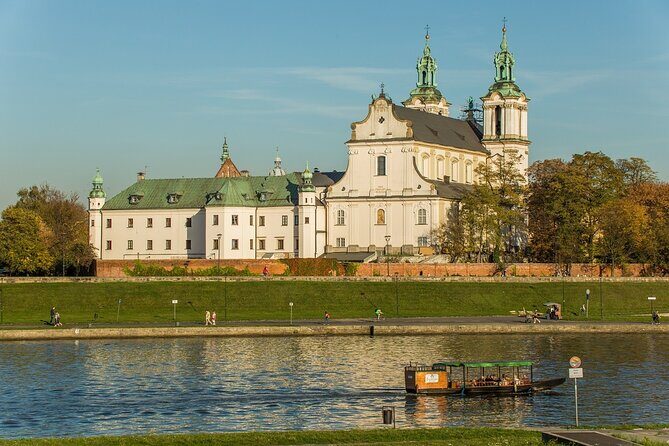
On a small hill made of white Jurassic limestones, you’ll see the Baroque church of Saint Michael the Archangel and Saint Stanislaus on Skałka rising above the river boulevards. It’s also described as a national pantheon, with distinguished painters, musicians, and poets buried there.
This stop feels slightly different from Wawel because it’s more intimate. From the water, Skałka reads as a distinct landmark perched above the river—great for photos, and great for understanding that Krakow’s sacred sites don’t all cluster in one place.
Why it’s valuable: you get a quick sense of how the city’s religious and cultural memory is layered across different hills, not just one main complex.
Where to stand for photos: open deck vs closed deck trade-offs
If you’re chasing the best pictures, your main decision is where you sit. The open observation deck is where you get the most direct, unobstructed views. The trade-off is wind and cold if the weather isn’t cooperating.
When the day turns grey or chilly, the heated closed deck becomes the smart choice. You’ll still see the landmarks, you’ll just feel more comfortable doing it. In the reviews, people specifically praised that the boat was warm and that it stayed comfortable even in colder conditions.
For a simple strategy:
- Go open-deck first when the sky is clear.
- Switch to the closed deck when you need a break.
- Take your “captain chair” photo if you get the chance—on some departures, the captain was friendly and allowed photos.
Service quality: why the crew can make a short tour feel long
For a one-hour tour, the crew’s attitude matters a lot. People praised attentive, pleasant staff and a welcoming vibe. There was even mention of the captain being friendly and letting passengers take photos in the captain’s chair.
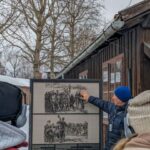
One name stood out in the feedback: Thomas. When someone like Thomas adds helpful context, the experience feels less like a pre-recorded drive-by and more like real guiding.
And because the group is capped at 12, you’re less likely to feel lost in a crowd. Short tours go smoother when the staff isn’t juggling a large mass of people.
When to go: sunshine, mist, and dusk lighting
This cruise is flexible in timing. I love it most when you can match the lighting to the mood you want.
- Morning or daytime works if you want clear sight lines and a calm vibe. People described it as a relaxing morning and noted how the audio made it easy to follow along.
- Grey and misty days still can work, especially on a heated boat. The river gives you a different atmosphere, even when the colors aren’t punchy.
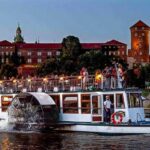
- Dusk can be magical. One departure at dusk was described as beautiful with the city lit up. If you’re a “photos at golden hour” person, this is worth targeting.
If the weather is truly rough, know that the tour depends on good weather. That isn’t a small detail here—it’s the difference between a relaxing cruise and a canceled plan.
Who this Krakow river cruise is perfect for
This tour fits best when you want:
- A fast orientation to Krakow without walking for hours
- A comfortable break from hills and crowds
- An easy, English-guided overview of major landmarks
It’s also great for people who want to bring kids or multigenerational groups, because the ride is short, the boat is comfortable, and there’s time to enjoy drinks without a long commitment.
If you’re the type who wants deep museum time, this won’t replace walking Krakow’s streets for hours. But as a first pass—or a recharge in the middle of a busy day—it does a lot of work for its size.
Should you book this Vistula River cruise?
I’d book it if you want an easy, comfortable way to see Krakow’s biggest symbols—especially Wawel—from a viewpoint that feels fresh. The combination of heated comfort, English audio, and a small group size makes the hour feel well spent, not rushed.
Skip it only if you’re extremely sensitive to weather changes or if you hate audio-guided narration. In that case, you might prefer a full walking tour with a live guide. But for most people building a practical Krakow plan, this cruise is a smart, low-stress add-on.
FAQ
How long is the Krakow Vistula sightseeing cruise?
The cruise lasts about 1 hour.
Is the tour offered in English?
Yes, the audio commentary is offered in English.
Where does the cruise start?
The meeting point is Bulwar Inflancki, Kraków, Poland. The activity ends back at the same meeting point.
What is on the catamaran?
The catamaran has a closed deck and an open observation deck, plus a toilet and a bar.
What if it’s cold or rainy?
The boat has a heated closed deck, which helps a lot in cool conditions. The experience requires good weather, and if it’s canceled due to poor weather, you’ll be offered another date or a full refund.
How many people are on the tour?
The tour has a maximum of 12 travelers.
Do I need to arrive early?
Yes. Arrive about 10 minutes before the tour begins. Latecomers can’t join once the group has departed, and tickets can’t be refunded.
Can I cancel for free?
You can cancel for a full refund up to 24 hours in advance of the experience start time. Cancellation within 24 hours of the start time isn’t refundable.