REVIEW · KRAKOW
Kraków: Schindler’s Factory & Jewish Ghetto in a Small Group
Book on GetYourGuide →Operated by Tours with Ewa · Bookable on GetYourGuide
Kraków gets personal fast. This small-group tour connects Schindler’s Factory to the streets of the Jewish Ghetto, so the story isn’t just read, it’s understood in context. You get a guided pass through one of the sites that inspired Schindler’s List, then you continue with a focused walk through the neighborhood shaped by Nazi occupation.
What I really like is how much care goes into the human side of the experience. You’re matched with licensed guides who know the details and can answer questions without hand-waving. The meeting point is clear too: outside the museum, next to the black-and-white photos of the survivors, which helps you start the tour without stress.
One possible drawback: this content is heavy, and the information load can feel brisk if you prefer a slower rhythm. The museum especially packs in a lot of documents, photos, and footage in a limited time.
In This Review
- Key things to know before you go
- Schindler’s Factory: the factory floor where the story lands
- What the exhibits focus on (and why the guide matters)
- The Jewish Ghetto walk: turning museum context into street understanding
- Small-group comfort with licensed guides from Tours with Ewa
- Timing: how 3 hours actually plays out
- Price and value: why $47 can make sense here
- Where you meet: the one detail that prevents tour-day stress
- Your ticket may unlock more than the main museum
- What to bring (and the ID rule you should not ignore)
- Who should book this Kraków tour
- Should you book this tour?
- FAQ
- How long is the Kraków Schindler’s Factory & Jewish Ghetto small group tour?
- What is included in the ticket price?
- Is the tour in English?
- Where exactly do I meet the guide?
- Does the tour skip the ticket line?
- Is the tour wheelchair accessible?
- What do I need to bring for the tour?
- Do participant names need to match IDs?
- Can I cancel and get a refund?
- Is anything about the ticket useful beyond Schindler’s Factory itself?
Key things to know before you go
- Small-group format keeps the day comfortable and question-friendly.
- English live guide helps you connect the museum story to the wider Kraków context.
- Skip the ticket line means less waiting and more time where it counts.
- Original enamel factory setting turns exhibitions into a place with weight.
- Your ticket can cover extra nearby sites, like the small interactive Pharmacy in the ghetto, if you have time.
- You’ll get clear meeting instructions and a smooth handoff from museum to ghetto walk.
Schindler’s Factory: the factory floor where the story lands
Schindler’s Factory (the enamel factory museum) is one of those places where history doesn’t feel like a lecture. It feels like location. You’re walking through the original setting, and that matters because the exhibits aren’t floating in space. They’re anchored in a real wartime industrial landscape, which gives everything you see extra gravity.
This tour is built around a guided visit of about 1.5 hours inside the museum. The pacing is designed to get you oriented and then move through key themes without turning it into a rushed highlight reel. And yes, you’ll start with an entry ticket included and you skip the ticket line, so you don’t waste precious minutes outside.
You can also read our reviews of more tours and experiences in Krakow.

What the exhibits focus on (and why the guide matters)
The museum exhibits are packed with authentic materials: photographs, documents, personal stories, and film footage. Without guidance, you can still learn a lot, but it’s easy to get lost in the sheer volume and miss the thread.
That’s where a strong guide earns their keep. The goal here is to help you follow Oskar Schindler’s transformation: starting as a war profiteer and later becoming a man who saved over 1,000 Jews during the Holocaust. You’ll see how Kraków’s Jewish community is presented, how life changed under occupation, and how the occupation’s machinery affected real people.
One practical benefit: when the guide pauses to explain what you’re looking at, you’re not just absorbing facts. You’re learning how to interpret them. A photo becomes a story. A document becomes a turning point. The result is less confusion and more clarity when you move from indoor exhibits to the street-level ghetto walk.
The Jewish Ghetto walk: turning museum context into street understanding
After the museum, you continue with a walking tour focused on the Jewish Ghetto. This is the part that often makes the difference between a “museum day” and a “Kraków understanding” day.
Inside Schindler’s Factory, you get the background: Kraków’s Jewish community, the conditions under Nazi occupation, and the moral shift that made Schindler’s actions possible. On the street walk, that context helps you read the area differently. It’s not about seeing one single landmark and calling it a day. It’s about connecting what you learned to where events played out.
Because this is a small group, you can usually keep momentum without feeling pushed. And if you have questions, this is the time to ask them. In past runs of this tour, guides like Michał (also seen listed as Michael or Michal) were praised for answering questions well and giving the group time to take in what they were seeing.
Small-group comfort with licensed guides from Tours with Ewa
This isn’t a big bus-style tour. It’s a small group experience, which usually translates into two things: you feel less like a number, and the guide can tailor explanations to the group’s questions.
The provider is Tours with Ewa, and the emphasis here is on working with licensed, passionate guides. In the best moments, that passion shows up as respectful, human storytelling rather than recycled facts. The tour aims to treat each guest with warmth and respect, which matters for Holocaust-related history. You don’t want a guide rushing through tragedy like it’s a stop on a checklist.
If your style is “ask lots of questions,” you’ll likely appreciate that the guide’s attention stays on you and the group rather than being swallowed by crowd noise. Even if you’re quieter, the structure still helps: clear meeting instructions, a smooth museum segment, then a guided walk.
Timing: how 3 hours actually plays out
The total duration is about 3 hours, with the museum visit taking about half of that (around 1.5 hours). That structure is realistic for Kraków because you’re dealing with a museum that’s not just visual—it’s document-heavy and emotionally intense.
Here’s the trade-off: you will not have unlimited time to wander every corner of the museum on your own. The guided component is meant to pull out the essential storyline and keep you oriented.
So I’d plan for this mindset: treat Schindler’s Factory as the main event, and treat the ghetto walk as the meaning-maker. If you want to pause for long personal reading, consider arriving a bit early so you can decompress before the guide leads you into the exhibitions.
One caution from real pacing expectations: if you prefer a slower, more spaced-out explanation, this kind of museum coverage can feel information-heavy. The guide should still focus on the important points, but the museum is busy with materials and the timeline is fixed.


Price and value: why $47 can make sense here
At $47 per person (for a 3-hour small-group experience), the value comes from two things that are hard to replicate cheaply on your own: a guided interpretation and included entry.
Here’s what you’re paying for:
- Entry ticket included
- Live English guide
- Skip-the-ticket-line convenience
You’re also saving time and mental effort. Going alone is possible, but you’d likely spend part of the day just figuring out what to focus on and how to connect the exhibit sections. With a guide, the museum materials are organized into a story you can actually follow, and the ghetto walk gives you a next step so the day doesn’t end at the museum door.
The one clear “not included” item: food and drinks. So plan to eat before or after. If you’re sensitive to fatigue during emotionally heavy sites, a meal buffer helps.
Where you meet: the one detail that prevents tour-day stress
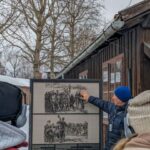
Meeting point is outside the museum, next to the black-and-white photos of the survivors. That’s useful because it’s a recognizable reference point, and it helps you avoid the classic travel problem of wandering around the wrong entrance while your tour group departs.
I’d suggest you use your phone map to get within a short walk, then look for that photo area and wait nearby. If you’re early, you’ll have time to settle before the group gets going.
Your ticket may unlock more than the main museum
This tour includes an entry ticket, and that ticket can also be helpful for additional nearby sites. In particular, the Pharmacy in the ghetto is called out as a small, interactive museum that’s worth seeking out. One guide strategy that’s mentioned is that the guide may show you where it is and encourage you to return to experience it (rather than trying to turn it into a multi-stop sprint).
There’s also mention that the ticket is valid for the former Gestapo headquarters for multiple days. Not everyone will get there during the guided window, but it’s nice to know your ticket can extend the day on your own schedule.
Practical take: if you want the ghetto walk to stay focused, do the guided tour first. Then, if you still have energy later, use your ticket to add the extra site(s).
What to bring (and the ID rule you should not ignore)
This is one of those tours where details matter, because names must match IDs. Bring:
- Your passport or ID card
- Passport/ID card for children as well
Also, the tour requires a photo ID or passport for all participants. So if you’re the type who travels with only a phone photo of your ID, fix that before you go.
If you’re traveling with accessibility needs, the tour is wheelchair accessible as stated. That’s a meaningful plus for planning a history day without guessing about route feasibility.
Who should book this Kraków tour
Book it if you want:
- A small group experience that stays human-sized
- An English live guide who can connect the dots between museum materials and the ghetto setting
- A guided storyline focused on Schindler’s actions and the wartime reality in Kraków
- A visit that saves time via skip-the-ticket-line
This is also a good fit for history lovers who don’t just want facts, but want help interpreting what they’re seeing. If you’re a student, it’s a strong way to get structure quickly. If you’re visiting for the first time and feel overwhelmed by Holocaust-related sites, the guide’s explanation can reduce that feeling.
Consider the pacing note if you prefer a slower museum rhythm. The content is heavy and the timeline is tight, so if you need lots of breathing room for reading, you may want to plan extra time on your own for later.
Should you book this tour?
I think this is a smart booking for most first-time Kraków visitors who care about context. The combination of Schindler’s Factory plus a guided Jewish Ghetto walk gives you a complete arc: origin, occupation reality, and the story people still carry today.
If you’re choosing only one option, and you want your ticket to do more than just get you into a room, this small-group format is the advantage. You get included entry, a live English guide, and enough structure to understand the story instead of just viewing it.
If you’re sensitive to emotionally intense themes or you know you need slower pacing, show up prepared to take it at your own pace when you can, and consider doing extra reading later using the ticket access for nearby sites.
FAQ
How long is the Kraków Schindler’s Factory & Jewish Ghetto small group tour?
The tour duration is 3 hours.
What is included in the ticket price?
Entry ticket and a live tour guide are included.
Is the tour in English?
Yes, the live tour guide is English.
Where exactly do I meet the guide?
Meet outside the museum, next to the black-and-white photos of the survivors.
Does the tour skip the ticket line?
Yes, it includes skip-the-ticket-line access.
Is the tour wheelchair accessible?
Yes, it is wheelchair accessible.
What do I need to bring for the tour?
Bring a passport or ID card. You also need passport/ID card for children.
Do participant names need to match IDs?
Yes. Names of participants must match the names in IDs, and all participants need to carry a photo ID or passport.
Can I cancel and get a refund?
Free cancellation is available up to 24 hours in advance for a full refund.
Is anything about the ticket useful beyond Schindler’s Factory itself?
The entry ticket can be used for additional nearby sites, including the Pharmacy Museum in the ghetto and the former Gestapo headquarters, with the ticket noted as valid for multiple days.