REVIEW · WARSAW
Communist Warsaw: private tour by retro minibus with hotel pickup
Book on Viator →Operated by Warsaw Behind the Scenes · Bookable on Viator
Communism still shapes Warsaw’s skyline and streets. This private 3-hour tour helps you read that story fast, with hotel pickup and a retro minibus that keeps you from burning time on walking. I especially liked how guide Tom connects communist history to the buildings and statues you see, which makes the whole city feel more readable. The one catch: the minibuses are vintage and not air-conditioned, so you’ll want to plan for heat or cold.
You’ll cover several key postwar areas without switching gears all day. You also skip the stress of figuring out transit or where to start, because pickup and drop-off are included and the tour is private, so you’re not squeezed into a crowd. A small consideration is that the vehicle time counts toward the total tour time, so far-away hotels can shorten your time at the stops.
In This Review
- Key points to know before you go
- Price and logistics: what $134.43 buys you
- Retro communist minibus: fast, fun, and not built for comfort extremes
- Palace of Culture and Science: the Soviet-era landmark you can’t miss
- Muranów: rebuilding Warsaw as a socialist experiment
- Old Town reconstruction and the Soviet-built traffic route
- Praga Polnoc: when communist neglect became a survival economy
- Śródmieście government district: socialist realism meets prewar modernism
- What makes it a private tour (and why that matters)
- Who this tour suits best
- Booking tips that actually help
- Should you book Communist Warsaw with retro minibus pickup?
- FAQ
- How long is the Communist Warsaw private tour?
- Is hotel pickup and drop-off included?
- Is the tour private or shared?
- What language is the guide?
- Do I need to buy tickets for the stops?
- Does the tour include the Palace of Culture terrace?
- What should I expect in terms of walking?
- Can children join, and is a booster needed?
Key points to know before you go
- Private group with your own guide means you can ask questions as you go
- Retro minibus transport cuts walking, with short walk segments at each stop
- Palace of Culture and Science context without the terrace stop
- Praga Polnoc’s “survival” stories add texture beyond the monuments
- All fees and taxes are included, so you’re not juggling ticket math mid-tour
- No seatbelts on some vehicles is allowed for historic vehicles, so choose your seat wisely
Price and logistics: what $134.43 buys you
At $134.43 per person for about 3 hours, the value here is mostly in two places: expert storytelling and convenience. You’re not just paying for a ride. You’re paying for an English-speaking local guide, plus transport in a retro communist minibus, plus hotel pickup and drop-off, plus all fees and taxes.
That matters because Warsaw’s communist-era sites aren’t all in one tidy cluster you can cover with a quick hop on public transit. With this format, you get to bounce between neighborhoods efficiently while your guide explains what you’re seeing in real time. If you’ve ever tried to DIY this kind of history, you know the frustrating part is not the walking. It’s the missing context.
One more practical detail: you should treat the tour like a timed outing, not a free-form roam. Transfer from and back to your hotel counts in the overall schedule. If your hotel is on the edge of the center, meeting in the city center can sometimes make the stop time feel better.
You can also read our reviews of more private tours in Warsaw
Retro communist minibus: fast, fun, and not built for comfort extremes
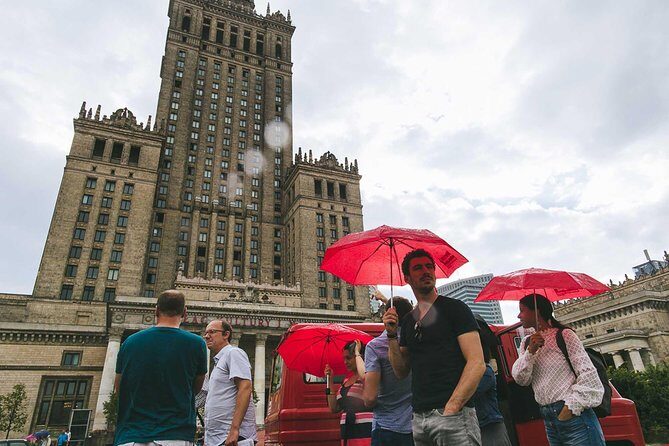
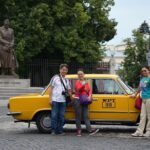
This is the kind of Warsaw tour that feels like a movie set. You travel around in a classic vintage minibus, and the vibe is part of the experience. Each vehicle carries up to 8 passengers, and there’s a fleet of 5 minibuses available, so your group won’t be waiting around forever.
Now the practical bits. These vehicles are not air-conditioned, and some don’t have seat belts. That’s permitted for historic vehicles, but it does mean you’ll want to wear comfortable clothes and keep your balance during any turns or stops. For winter, the good news is they do have heating.
You’ll also do short walking segments at each stop. They’re not described as long hikes, but you should wear good shoes anyway. This is the sort of tour where you want your feet to cooperate so you can focus on what the guide is pointing out.
Palace of Culture and Science: the Soviet-era landmark you can’t miss
You start at the Palace of Culture and Science, Warsaw’s most recognizable—and still controversial—communist landmark. Built between 1952 and 1955 as a Soviet “gift,” the building dominates the skyline, and that dominance is exactly what your guide will help you interpret.
You’ll get about 20 minutes here. The important detail: you do not visit the terrace from the tour. That keeps things moving and leaves room for the rest of the story in the time window.
Why this stop is worth it, even if you think you already know the building: it’s the symbol that anchors almost everything else. Your guide can explain why locals reacted the way they did, and how the place became shorthand for power, influence, and Soviet-era pressure. When you then move on to neighborhoods like Muranów and Praga, the Palace stops being just a photo subject. It becomes a reference point.
Muranów: rebuilding Warsaw as a socialist experiment
Next up is Muranów, a neighborhood that shows how communist authorities tried to reshape life through planning and architecture. Your tour frames it with a before-and-after contrast: before World War II, Warsaw was a dense, tenement-filled capitalist city. After 1945, reconstruction became an opportunity to redesign society, not just rebuild buildings.
You’ll spend around 20 minutes in the area. Muranów is described as a green residential district built in the late 1940s on wartime ruins, aiming for a model socialist neighborhood. That idea can sound abstract, but seeing the district in context helps you understand why reconstruction wasn’t neutral. It was a statement about how people should live.
What I think works well here is that you’re not asked to memorize architectural terms. Instead, you’re guided to look at how space and housing were used as tools of ideology. If you enjoy reading cities like textbooks, this stop will click.
Possible drawback: this is a neighborhood context stop, not a single monument stop. If you prefer only big-ticket sights, you may find it less dramatic than the Palace. But it’s an important “how did they try to change daily life” piece.
Old Town reconstruction and the Soviet-built traffic route
Between stops, you’ll pass through an area tied to Old Town reconstruction and Soviet assistance with infrastructure. The key detail here is what sits under the surface: after the war, reconstruction efforts included help from Soviet engineers involved in the Moscow metro. Part of the postwar city redesign included building a key traffic route beneath the Old Town.
On this tour, you pass through rather than linger. That means you won’t get a long, slow experience at ground level. But the payoff is in the connection: you see how communist modernization wasn’t just about grand buildings. It was also about controlling movement, access, and the flow of daily life.
If you’re the type who likes “how” details, keep an eye out as you move through this corridor. The tour’s strength is turning transit routes into interpretation.



Praga Polnoc: when communist neglect became a survival economy
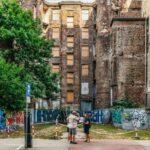
Praga Polnoc is where the tone gets darker. This district is described as largely neglected by state investment, and that neglect shaped its story after the war.
You’ll get about 30 minutes here, and the focus isn’t on polish or monuments. It’s on survival behind courtyards. The tour explains how residents traded foreign currency, swapped Western music, and searched for goods that were hard or impossible to find elsewhere. In other words, where official systems failed to deliver normal life, people created their own informal networks.
This stop is valuable because it adds humanity. Communist history can sometimes feel like speeches and architecture. Praga brings it down to real behavior under real scarcity. It also helps you understand why people might have had complicated relationships with the system: not just opposition, not just acceptance, but constant adjustment.
A consideration: this is still a historical tour with walking segments, not a cultural show. Dress comfortably and keep your energy up, because you’ll want to absorb the stories without rushing.
Śródmieście government district: socialist realism meets prewar modernism
The tour ends in Śródmieście, Warsaw’s government district. Here, you get the contrast between prewar modernist architecture and monumental socialist realism. That clash is the point. It shows you how communist style didn’t just replace old power structures. It also tried to replace visual language.
You’ll spend about 45 minutes at the end, which is a nice chunk of time compared to the earlier stops. This is also where the anecdotes start to feel sharp and specific. The tour notes that the communist leader of Poland reportedly refused to move into the new party headquarters because it looked more like a capitalist bank than an office of a workers’ party.
That kind of story lands because it’s so visual. You’re not just hearing what someone thought. You’re being asked to look at how buildings “perform” ideology. When the architecture is meant to project authority, even the wrong aesthetic becomes political.
What makes it a private tour (and why that matters)
This is a private experience, meaning only your group participates. That sounds like a simple perk, but it changes the way the tour feels.
With a private guide, you’re not stuck waiting your turn to ask why a neighborhood looks the way it does. You can also pace the conversation. If something clicks, you can follow it. If something feels confusing, you can slow down and get clarity before moving on.
It’s also why the guide’s style matters. The tour’s strongest review notes credit guide Tom by name for describing the history of communism and for connecting it to buildings and statues. That’s the kind of guiding that turns sightseeing into understanding.
If you’re traveling with kids, this structure can help too, because the guide can steer attention and explain in a way that keeps everyone engaged. (Just make sure you plan for the vehicle’s lack of air-conditioning.)
Who this tour suits best
This tour is a good match if you want communist-era Warsaw with context, not just photos. You’ll likely enjoy it if you:
- Like history that explains why places look the way they do
- Prefer a guided route over arranging transport on your own
- Want a compact 3-hour format that covers multiple districts
- Value English-speaking guidance and hotel convenience
It may be less ideal if you hate vehicle travel or dislike stories that focus on everyday life and survival rather than only grand landmarks. The tour has big symbols, but it also spends time on neighborhood reality.
Booking tips that actually help
A few choices can make the day feel smoother.
First, think about your pickup location. If your hotel is far, the transfer time can eat into stop time. If you’re staying in the center, you’ll probably enjoy the pacing more.
Second, wear shoes you’re comfortable walking in. The stops include short walks, and you’ll want to move steadily.
Third, plan for temperature. Vintage minibuses have heating for winter, but no air-conditioning. If you’re going in warmer months, consider light layers and hydration.
Finally, if you’re traveling with a child under 150 cm, seat boosters are mandatory under Polish law. The tour notes that you should contact the operator in advance to check availability.
Should you book Communist Warsaw with retro minibus pickup?
If your goal is to understand Warsaw’s communist past in a short, guided, low-stress format, I’d book this. The blend of Palace-of-Culture symbolism, neighborhood reconstruction context, and the more human stories from Praga Polnoc gives you range without making the day exhausting. The private setup plus hotel pickup is also a real quality-of-life upgrade.
I’d think twice only if you can’t handle riding in a vintage vehicle without air-conditioning, or if you’re looking for long time at one single site. For most people, though, this is an efficient way to leave Warsaw knowing more than just where the big landmarks are.
FAQ
How long is the Communist Warsaw private tour?
It runs for about 3 hours.
Is hotel pickup and drop-off included?
Yes. Hotel pickup and drop-off are included.
Is the tour private or shared?
It’s private. Only your group participates.
What language is the guide?
The tour is offered with an English-speaking guide.
Do I need to buy tickets for the stops?
All fees and taxes are included, and the tour notes that admission tickets are free for the stops listed.
Does the tour include the Palace of Culture terrace?
No. The tour does not include the terrace visit.
What should I expect in terms of walking?
There are walking segments at each stop, but the vehicles are mainly used for transfers between locations.
Can children join, and is a booster needed?
Children over 150 cm (4 ft 9 in) can participate. If you’re booking for a child under 150 cm, you need to contact the operator in advance to check seat booster availability, and boosters are mandatory under Polish law.