REVIEW · WARSAW
Warsaw Nature and Urban Highlights Bike Tour
Book on Viator →Operated by Outdoor Vacations · Bookable on Viator
Warsaw by bike feels like cheating—in a good way. This 4-hour urban + nature ride stitches together grand architecture, big city landmarks, and calm green spaces on a smart route that actually works for getting a lot done. I especially loved the way the tour alternates between Łazienki Park-style scenery and downtown power spots, and I also liked how the pacing feels friendly even if you are not a serious cyclist.
The one thing to keep in mind: this is weather-dependent and takes place outdoors, so if the day is rainy or cold, you will want to plan for that. Also, you will cover a solid number of stops, so bring water and keep your energy up between photo moments.
In This Review
- Key points you’ll care about
- Why this Warsaw bike tour fits so well in 4 hours
- Getting started at Wspólna 65A (and why 15 minutes matters)
- Stop 1: From Politechnika Warszawska to the city’s scientific backbone
- Jazdów and Ujazdowski Castle: park elegance with a contemporary twist
- Palace on the Island: short stop, big payoff
- Łazienki Park ride to Port Czerniakowski: safety, then a local break
- Plaża Poniatówka and Poniatowski Bridge: beaches, panoramas, and symbolism
- Natura 2000 along the Vistula: the “nature” part is genuinely there
- Stara Praga and the Vistula Boulevards: where the city texture changes
- Multimedia Fountain Park and the science of where Warsaw began
- Maria Skłodowska-Curie monument: Warsaw’s Nobel-level claim
- Nowe Miasto and the Warsaw Barbican: quiet Old Town energy
- Plac Zamkowy (Castle Square): the postcard center, explained with care
- Plac Marszałka Józefa Piłsudskiego and the memorials you don’t skip
- Palace of Culture and Science: the controversial skyline icon
- Final stretch: ending at Downtown Warsaw with a last architectural hint
- What I’d call the best parts (and why they matter)
- Value check: what you’re paying for
- Who should book this Warsaw bike tour?
- Should you book it?
- FAQ
- How long is the Warsaw Nature and Urban Highlights Bike Tour?
- What time does the tour start, and where do I meet?
- Is the tour offered in English?
- What’s included in the price?
- Is coffee or tea included?
- How many people are on the tour, and is good weather required?
Key points you’ll care about
- Real balance of city and parks: you get the big sights and the quieter riverside feel
- Guiding that makes details stick: you hear stories tied to the places, not just names
- Safe, guided cycling route: helmets on, bike handling included, and frequent regroup points
- Natura 2000 in the middle of town: protected riverside nature is part of the plan
- Urban beaches and bridge history: you get the Vistula riverfront viewpoint without long hikes
- Small group size (max 12): easier questions, less waiting around
Why this Warsaw bike tour fits so well in 4 hours
Warsaw can feel big when you’re on foot. This tour solves that with simple logic: by bike, you move fast, but you still stop often enough to actually see things.
The route is built around variety. You glide from scientific-and-architectural Warsaw to castle viewpoints, then into major parkland around Łazienki Park and the Vistula riverfront. After that, it turns into a history-and-identity route through areas like Nowe Miasto (rebuilt after WWII), Jewish Warsaw landmarks, and key 20th-century architecture. The “nature” part is not just a token park stop either—you pass through a Natura 2000 protected riverside area.
For the price point (about $61.30 per person), the value is how much you get: a full morning loop that hits iconic places plus meaningful sidetracks, all with bikes, a helmet, and luggage storage included.
You can also read our reviews of more cycling tours in Warsaw
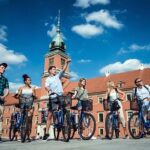
Getting started at Wspólna 65A (and why 15 minutes matters)
Meet at Wspólna 65A, 00-687 Warszawa, with a start time of 11:00 am. You’re advised to arrive at least 15 minutes early, which is exactly what I recommend. It gives you time to get your bike fitted, ask questions, and settle your route nerves before you roll.
The setup is practical:
- Kona bike rental
- Helmet
- Waterproof side bag for a small item
- Locker luggage storage until 16:30, useful if you’re traveling with extra bags
This matters because the tour itself is a chain of short stops, lookouts, and short rides between them. If you’re still fiddling with gear when you should be looking at the next landmark, you lose the best part of the rhythm.
Stop 1: From Politechnika Warszawska to the city’s scientific backbone
Right at the start, you get a safety brief and introduction. Then you head to the main building of Politechnika Warszawska—a striking 20th-century neo-baroque structure tied to Poland’s scientific progress for over a century.
This first stop works well because it sets the tone: Warsaw isn’t only about wars and monuments. It’s also about engineering, education, and design. And the building’s survival through WWII adds extra weight to what you’re seeing now—this isn’t just pretty architecture on a postcard.
Tip for your ride: keep an eye on the details while you’re stopped, not just the wide view. The neo-baroque style rewards close looking.
Jazdów and Ujazdowski Castle: park elegance with a contemporary twist
Next up is Jazdów, where you cycle across the Finnish Houses of Jazdow and get a short explanation of the area. These mid-century touches help the tour feel “lived-in,” not staged.
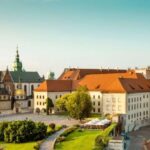
Then you reach Ujazdowski Castle, once a royal residence and now home to the Centre for Contemporary Art. What I like here is the mix: you’re in a historic shell, but the present-day use gives it a modern pulse. The castle also provides a lookout over the surrounding gardens and fountains—perfect for a quick reset between cycling segments.
Possible drawback: castle viewpoints can be popular, so if you want photos without waiting, you may need to be quick when the group stops.
Palace on the Island: short stop, big payoff
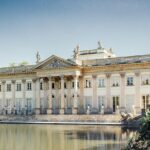
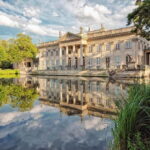
You roll through Łazienki Park and arrive at the epic lookout at the Palace on the Island. This is one of those Warsaw moments where the city’s grand style hits you immediately, even if you’ve only been riding a short time.
The value of this stop is less about staying long and more about changing the scenery. You go from architecture-and-street energy to a more reflective park atmosphere. That contrast keeps the tour fun, not exhausting.

Łazienki Park ride to Port Czerniakowski: safety, then a local break
After Palace on the Island, you cycle across Łazienki Park. Then you reach Port Czerniakowski, where you get a 30-minute break at a local café. You can buy a drink and refresh here.
A small but useful detail: coffee/tea isn’t included, so plan on buying what you want (or bring your own if that’s allowed by the operator’s rules on the day).
You then head along the river area, with a highlight of cycling under the busy Łazienkowski Bridge on a dedicated bike lane. This is a great Warsaw contrast lesson: traffic thunders above, while the riverside route feels calmer underneath.
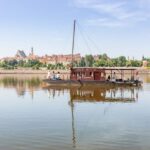
On the way, you see Gruba Kaska, Warsaw’s water filtration point, and you pass by what are described as the most dangerous beaches on the east river bank. The fun part is that even with the warnings, the views are stunning.
My advice: treat the beaches as “look, don’t linger.” Keep your focus on the ride and the viewpoint moments.
Plaża Poniatówka and Poniatowski Bridge: beaches, panoramas, and symbolism
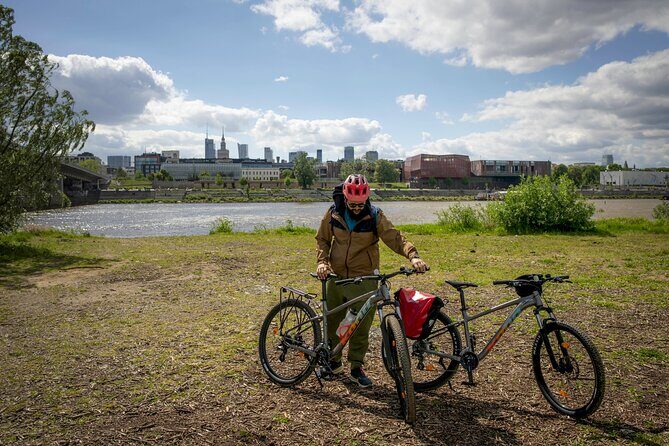
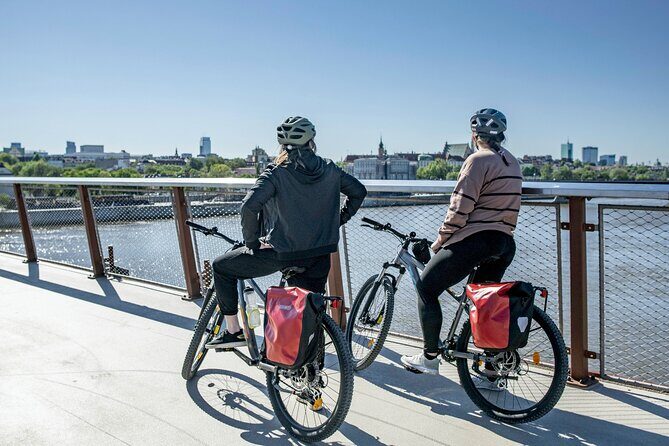
Next you stop at Plaża Poniatówka, one of Warsaw’s popular urban beaches. You get panoramic city views and hear history about Warsaw’s bridges—exactly the kind of context that turns a photo stop into a memory.
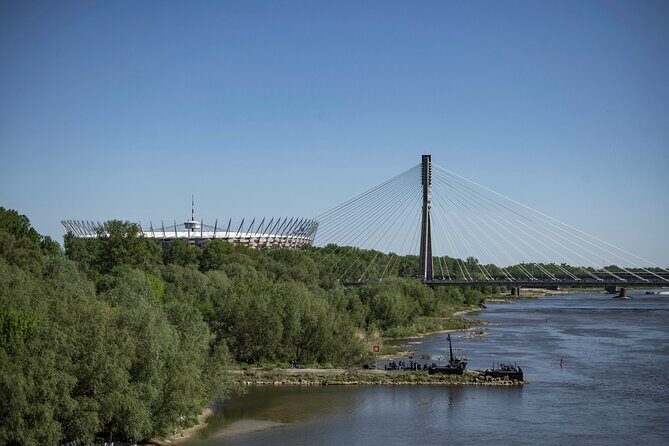
Then you cycle beneath the Poniatowski Bridge. The tour frames it as a symbol of Warsaw’s resilience, and it also notes that it’s a key route for fans heading to the National Stadium. Even if you’re not going to any match, that kind of practical detail makes the infrastructure feel real.
You also pass by the National Stadium, which once hosted a bustling underground market before becoming the centerpiece of Euro 2012. That’s a clever stop because it connects past and present in one place.
Natura 2000 along the Vistula: the “nature” part is genuinely there
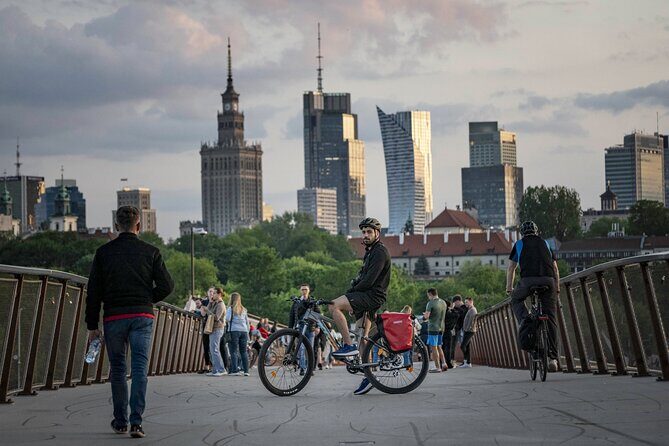
One of the best surprises on the route is riding through a Natura 2000 area. This is described as a protected riverside haven for endangered species.
Even if you won’t spot rare animals in the moment, the point is that you’re riding through a protected ecological zone, right in the city. It reframes Warsaw as something more than architecture and memorials. You’re literally moving through a living system.
This also makes the tour feel different from many “same-old” sightseeing rides, where nature is just a background. Here, it’s part of the planned route.
Stara Praga and the Vistula Boulevards: where the city texture changes
You get a glimpse of Stara Praga, where old Warsaw meets new. It’s the kind of transition that helps you understand a city’s layers without doing a deep multi-day neighborhood grind.
Then you ride along the Vistula Boulevards, Warsaw’s lively riverfront promenade. This section is great for soaking in the energy without needing to stop for every view. Your bike keeps you moving while still letting you watch daily life go by.
Multimedia Fountain Park and the science of where Warsaw began
You then pass by Multimedia Fountain Park and learn about its significance in the city’s origins. You’re not getting a long lecture, but you are getting the story that helps you interpret what you see.
This is a theme across the whole tour: you get just enough context to make each stop make sense. No one is drowning you in facts, but the highlights feel grounded.
Maria Skłodowska-Curie monument: Warsaw’s Nobel-level claim
A quick stop brings you to the Monument to Maria Skłodowska-Curie. The tour points out that she is the only woman to win two Nobel Prizes, and that she was born in Warsaw. The statue is close to her childhood home, tying the monument to a specific place.
This stop is worth it because it’s not vague. It gives you an immediate reason to care, and you leave with a stronger sense of Warsaw’s contributions beyond politics and buildings.
Nowe Miasto and the Warsaw Barbican: quiet Old Town energy
You roll through Nowe Miasto, a quieter side of Old Town rebuilt after WWII. The route emphasizes that the streets survived fierce fighting, and now blend centuries-old charm with local life.
Then you see the Warsaw Barbican, one of the few remaining pieces of Warsaw’s old defensive walls. The Barbican works well on a bike tour because it’s visual: you can appreciate its form, not just read about it.
If you like history, this area gives you a different flavor than the most famous Old Town streets. It feels more like everyday Warsaw with layers visible rather than polished for crowds.
Plac Zamkowy (Castle Square): the postcard center, explained with care
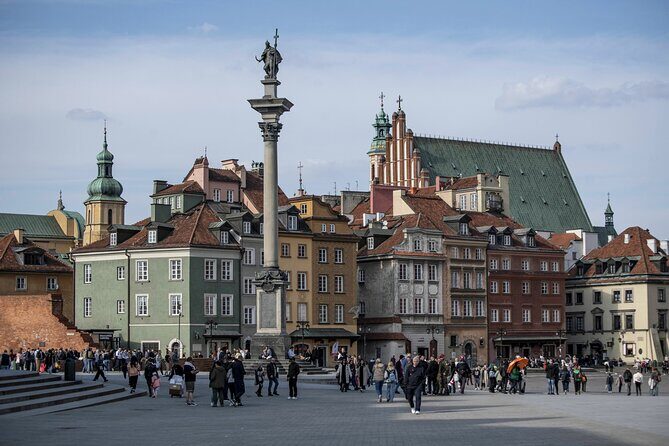
You get a short break in the heart of Warsaw at Plac Zamkowy, with the Royal Castle and Sigismund’s Column nearby. The tour talks about how this area was rebuilt from ruins after WWII and notes that it has UNESCO heritage status.
This is your moment to slow down. Use it to refill your water, stretch your legs, and check your next photos.
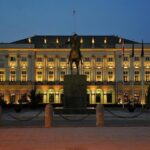
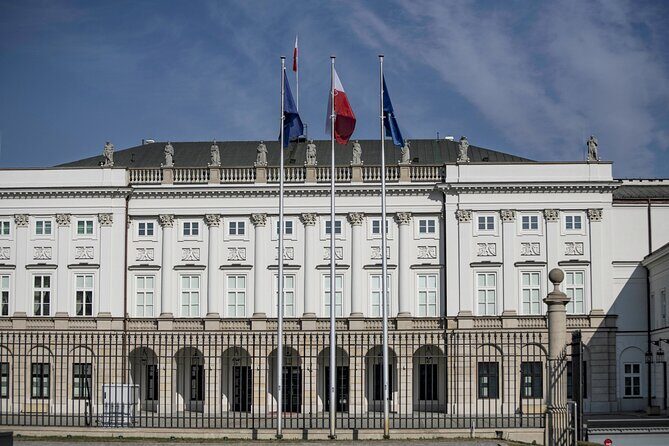
Then you cycle down one of Warsaw’s most prestigious streets—lined with historic buildings, luxury hotels, and the fanciest shops. The tour points out a neoclassical palace where Poland’s presidents work and live. It frames it as a symbol of Polish statehood and modern politics.
Even if shopping isn’t your thing, the street makes sense on a bike because you can appreciate the scale without walking the whole length.
Plac Marszałka Józefa Piłsudskiego and the memorials you don’t skip
You arrive at plac Marszałka Józefa Piłsudskiego, described as rich in modern history, including stories like a pope’s visit and spy-related anecdotes. Then you pass Poland’s most important war memorial, guarded day and night, honoring all unknown soldiers who died fighting for the country.
This section can feel heavy, but it’s also one of the most important parts of Warsaw for understanding what you’re seeing elsewhere. When you understand the memorial landscape, the rebuilding stories earlier feel even more real.
After that, you ride through Warsaw’s oldest public park, with fountains and old trees—a local favorite for a break. Then you pass the only street from the Warsaw Ghetto that survived with original buildings, giving you a rare look at pre-war Jewish Warsaw. The route continues to Plac Grzybowski, where you get history of Jewish Warsaw and how it helped create Warsaw as you know it.
Palace of Culture and Science: the controversial skyline icon
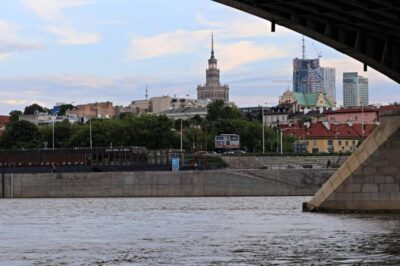
Next comes Palace of Culture and Science, Warsaw’s tallest and most controversial building. The tour frames it as a gift from Stalin and shares some “secrets” about what’s inside. Even if you don’t go in, it’s worth standing at the right angle and looking up—because this tower is part of Warsaw’s identity whether you love it or argue with it.
There’s also time for a photo, and that matters here. This is the kind of landmark where your memory will depend on the picture you take now.
Final stretch: ending at Downtown Warsaw with a last architectural hint
You finish by cycling back toward the bike point in Downtown Warsaw. The tour notes it saved a final architectural secret for last, and then you’re done back where you started from.
At this point, you’ll feel the advantage of the format. You’ve ridden through parks, bridges, neighborhoods, and skyline moments, and everything is tied together with short explanations that help your brain file it all away.
What I’d call the best parts (and why they matter)
From my perspective, the most praised-feeling parts are also the most practical:
1) The guide-driven storytelling
When you get explanations at each stop, the city stops being a list. The route keeps moving, but you still get meaning—like the bridge symbolism, the Novi Miasto rebuilding context, and the Nobel-level significance of Maria Skłodowska-Curie.
2) The urban-and-park pacing
This route doesn’t treat you like a single-file parade. You get time for lookouts and short breaks, then you ride. It’s efficient without feeling rushed, and it makes the whole morning feel enjoyable rather than a sprint.
3) Safety and comfort on the bike
Helmets, a side bag, and a structured route help. And the group size is small (maximum 12 travelers), which makes regrouping and questions easier.
Value check: what you’re paying for
For around $61.30, you’re not just paying for a bike. You’re paying for:
- guided cycling across multiple districts
- English explanations
- a helmet and bike setup
- luggage storage until 16:30
- short stops that include free admission areas and photo moments (the tour notes tickets are free at stops)
The “not included” piece is simple: coffee/tea. If you budget a drink during the Port Czerniakowski break, you’ll be fine.
Who should book this Warsaw bike tour?
I think this is a strong fit if:
- you want to cover a lot in one morning without feeling like you’re speed-walking
- you like a mix of big landmarks and calmer nature moments
- you want context on Warsaw’s WWII rebuilding and Jewish Warsaw sites, not just surface sightseeing
- you prefer small-group guidance with time to ask questions
It may be less ideal if you hate being outside for several hours or you have very limited cycling tolerance. Since good weather is required, make sure you’re comfortable riding outdoors when conditions are decent.
Should you book it?
Yes, if you want a smart, high-value way to see Warsaw in one go. This tour’s biggest strength is how it balances emotional weight (memorials and ghetto-related remnants) with lighter visual escapes (Łazienki Park views, the Vistula riverfront, and the beach panoramas). You get city swagger and riverside calm in the same loop.
If you only have half a day and you want your morning to feel purposeful instead of chaotic, this is the kind of Warsaw experience that pays off fast. Just check the weather before you commit, and bring a plan for buying a drink at the café stop.
FAQ
How long is the Warsaw Nature and Urban Highlights Bike Tour?
It runs for about 4 hours.
What time does the tour start, and where do I meet?
The tour starts at 11:00 am at Wspólna 65A, 00-687 Warszawa, Poland.
Is the tour offered in English?
Yes, it’s offered in English.
What’s included in the price?
Included are a Kona bike rental, helmet, a waterproof side bag, and locker luggage storage until 16:30.
Is coffee or tea included?
No. Coffee and/or tea isn’t included, though there is a café break where you can buy a drink.
How many people are on the tour, and is good weather required?
The group has a maximum size of 12 travelers, and the tour requires good weather.