REVIEW · POZNAN
The Birthplace of Poland: A Self-Guided Audio Tour of Poznań
Book on Viator →Operated by VoiceMap Audio Tours · Bookable on Viator
Poznań’s Cathedral Island packs centuries into one walk. This self-guided English audio tour leads you past the city’s most important religious and political landmarks, using GPS to keep you moving at your pace.
I like that it’s great value: just $8.99 for lifetime access, plus offline access so you’re not stuck hunting for service. And I love that the story is built around what you can actually see—bridges, palaces, churches, and fortifications—so the history feels grounded, not abstract.
One thing to consider: you’re on your own with a phone. The tour includes the app, but a smartphone and headphones are not included, so bring what you need before you start.
In This Review
- Key highlights you’ll notice right away
- Cathedral Island is where Poznań’s big story starts
- Price and what you actually get for $8.99
- How VoiceMap keeps you moving (and what to bring)
- Start at the Island model: Makieta Ostrowa Tumskiego
- Church of Our Lady in Summo: a palace story beneath the church
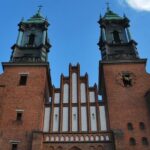
- Poznań Cathedral: the oldest Polish cathedral on your route
- The Archbishop’s Palace: buildings with many lives
- Jordan Bridge: built, destroyed, then rebuilt
- Śródka District: a neighborhood with its own history
- The Śródka mural: early wall painting in Poland
- Saint Margaret Church: keep walking, keep listening
- Brama Poznania: Porta Posnania Heritage Centre (and whether to enter)
- Cathedral Lock: Prussian fortification remains
- Genius Loci: 3D films and the old wall relics
- End at the Archdiocese Museum / Lubrański Academy area
- Timing tips: fit it into a day of river and old streets
- Who this audio tour suits best
- Should you book this self-guided audio tour of Ostrów Tumski?
- FAQ
- Is the tour in English?
- How long does the self-guided tour take?
- What does the $8.99 price include?
- Do I need a smartphone and headphones?
- Are museum tickets included?
- Where do I start and where does it end?
- Can I use it offline?
- Is the experience refundable if I cancel?
- Is it a private tour?
Key highlights you’ll notice right away
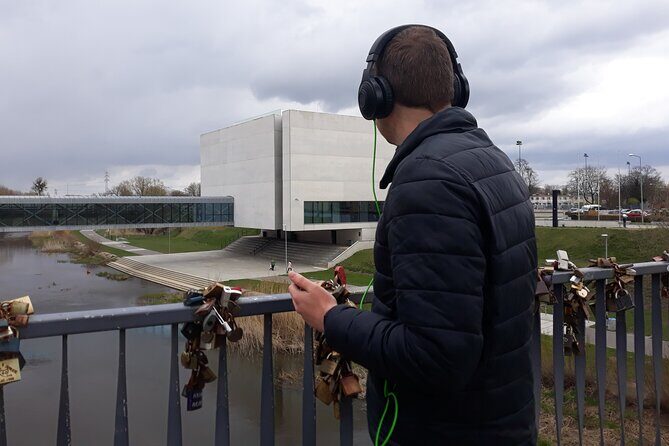
- GPS-guided audio means you don’t need to stare at a map all the time
- Cathedral Island landmarks connected by walking, not buses
- Mieszko-related remains are part of the stop story, right under your feet
- Jordan Bridge gets explained as a connection that was built, destroyed, and rebuilt
- State-of-the-art museum stops like Brama Poznania and Genius Loci sit right on the route
- Offline audio and maps help you keep going if your signal is weak
Cathedral Island is where Poznań’s big story starts
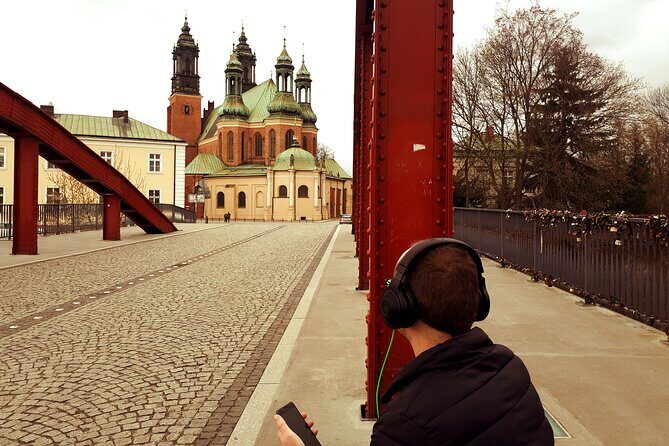
Ostrów Tumski (Cathedral Island) is the kind of place where your feet do most of the explaining. You’ll move along the river and through a tight cluster of sites tied to early Polish power, church authority, and shifting borders. The audio tour works especially well here because the route is mostly outdoors and close enough that you can keep comparing what you hear to what you see.
The tour’s theme is the birthplace idea behind “The Birthplace of Poland.” Even if you don’t memorize dates, the walk helps you understand why this spot mattered: rulers wanted control, the church wanted influence, and the island’s location made it a natural focal point for both.
You can also read our reviews of more guided tours in Poznan


Price and what you actually get for $8.99
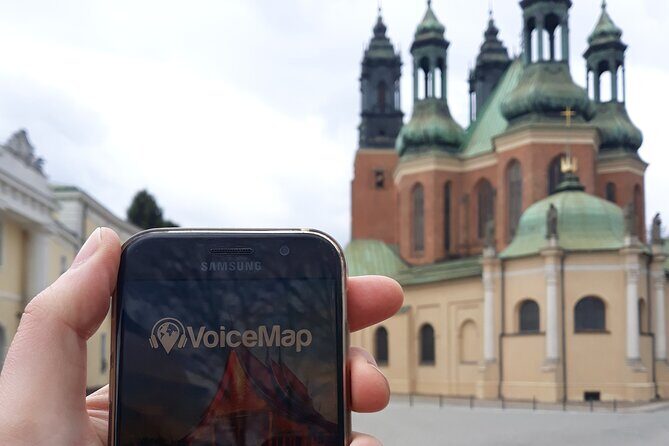
At $8.99 per person, this is one of those “small price, big comfort” buys. You’re paying for a guided walk without the usual costs: no guide fee, no group minimum, and no need to time yourself with a tour schedule.
Here’s what’s included in a practical sense:
- Lifetime access to the English tour
- The VoiceMap app for Android and iOS
- Offline access to audio, maps, and geodata
And here’s what you should expect not to be included:
- No museum tickets for the places you pass by
- No smartphone or headphones
That last part matters. If you show up without your headphones, you’ll still be able to listen (in theory) at whatever volume your phone allows, but it won’t be comfortable—or discreet—especially around churches and stone corridors.
How VoiceMap keeps you moving (and what to bring)
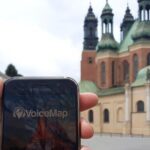
VoiceMap is designed to play the right audio based on where your phone is, using GPS location. In plain terms: you follow the route, and the narration cues itself as you reach each spot. This is a huge help on a walk like Cathedral Island, because the sights are close enough that stopping to check your screen can break your flow.
Bring:
- Your smartphone (with enough battery for roughly an hour)
- Headphones (strongly recommended)
- A quick way to download beforehand if your phone is temperamental with connectivity
You also get offline audio and maps. That’s ideal for older areas where signal can be spotty, and for days when you don’t want to burn mobile data just to keep your tour running.
One more practical tip: if you hit a download or playback problem, VoiceMap support exists and can resolve issues fast. At least one user had a start-up glitch and got help quickly after contacting support.
Start at the Island model: Makieta Ostrowa Tumskiego
Your walk begins at Makieta Ostrowa Tumskiego, at Ostrów Tumski 9. The tour starts in front of the scale model of the island, which is a smart move. Before you’ve even stepped into the main area, you get an “on-a-plate” sense of how the sites connect.
This first stop also sets the tone for how the tour will feel: it’s not just reading plaques. You get a guided sense of place, plus an explanation of how VoiceMap works before you move on.
What I’d do here: take 60 seconds to orient yourself. Look at the model, then glance at the real buildings nearby. That small habit makes the rest of the walk click.
Church of Our Lady in Summo: a palace story beneath the church
Next up is the Church of Our Lady in Summo. The audio focuses on the church, but the standout detail is what sits underneath it: a vast relic of Mieszko’s palace and the palace chapel.
That’s the kind of information that changes how you see the building. Instead of thinking of a church as only a religious site, the narration frames it as part of a much bigger political picture. A palace on this ground helps explain why rulers cared about this island so early on.
Practical note: churches can be busy even outside service times. Keep your volume reasonable and take your time around the entrance areas so you don’t feel rushed.



Poznań Cathedral: the oldest Polish cathedral on your route
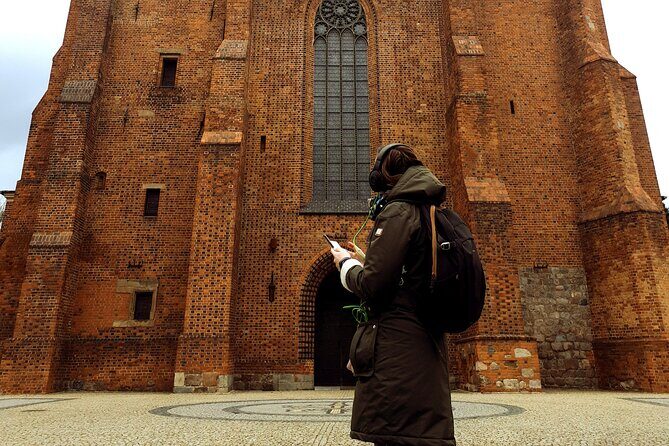
When you reach Poznań Cathedral, the audio guides you as you walk past. This is described as the oldest Polish cathedral, and the tour helps you understand why that matters beyond bragging rights.
Even if you don’t go inside, you’ll likely pick up the logic of the architecture: it’s a visual record of long-term power, faith, and rebuilding. And because the narration keeps you linked to what you’re seeing, the cathedral doesn’t become a “stop photo” that you forget the minute you move on.
If you do like to read details, this is one of those places where pausing for an extra minute can pay off. The more you look, the more the audio makes sense.
The Archbishop’s Palace: buildings with many lives
The next major landmark is the Archbishop’s Palace. The tour explains the building and its “many iterations,” which is a helpful reminder: you’re not standing in one single era. You’re standing in layers.
That’s a key value of this audio format. It’s easy to think old cities are frozen snapshots. Instead, this narration treats them like ongoing projects—power and needs change, and the structures change with them.
Jordan Bridge: built, destroyed, then rebuilt
Crossing the Jordan Bridge is where the walk turns from purely historical landmarks to infrastructure and survival. The audio tells you how the bridge was built, destroyed, and rebuilt, and how it ultimately reconnected Cathedral Island with the Śródka district.
A bridge explanation can sound dry, but it’s actually one of the most “real-world” parts of the tour. It gives you a sense of why boundaries shift and why connections matter for trade, movement, and political influence.
Also, bridges are great listening spots. You get open views, and the river air can make your pace feel easier.
Śródka District: a neighborhood with its own history
After the bridge, you move into Śródka District. One of the tour’s stops frames Śródka as being independent from the rest of Poland at one stage.
Even if you don’t have that period mapped in your head, the narration helps you understand the district as more than a scenic path. It becomes a character in the larger story: an area with its own status, not just a backdrop to the cathedral.
The Śródka mural: early wall painting in Poland
You’ll pass by the Śródka mural, described as one of the first wall paintings of this type in Poland. This is a nice reminder that “history” isn’t only stone churches and old castles.
A mural on this route also works as a time-bridge. After all the architecture and religious authority, street art signals cultural expression that belongs to a later chapter.
If you’re the kind of traveler who likes a mix of old and newer, this stop is a good emotional reset.
Saint Margaret Church: keep walking, keep listening
The Saint Margaret Church stop is another on-foot landmark where the tour explains what you’re seeing as you walk past. It helps keep the story chain unbroken between the larger “headline” sites.
One practical thing: when churches cluster together, you can fall into the trap of speed-walking just to “get through.” Here, the audio pacing encourages you to keep moving without racing. Let the narration guide your timing.
Brama Poznania: Porta Posnania Heritage Centre (and whether to enter)
The route brings you past Brama Poznania, also called Porta Posnania Heritage Center. It’s described as a state-of-the-art museum created in 2014, focused on the issues tied to Cathedral Island and Śródka.
Important: museum tickets aren’t included in the tour. So you have two good options:
- Use the audio as a “preview,” then skip the visit if you’re short on time
- Or plan ahead to add museum time, knowing you’ll pay separate entry
If you enjoy hands-on interpretation—maps, models, or modern explanations—this is the one on the route where an entry might feel most worthwhile, because it’s built specifically for explaining the area.
Cathedral Lock: Prussian fortification remains
Next you pass the Cathedral Lock, a 19th-century element of the Prussian fortification system. This is one of those details that turns the walk into a stronger “Poznań is strategic” story.
Fortifications aren’t always visible at a glance, but a lock system makes you think about water control and defensive planning. It’s also a reminder that rivers weren’t just for scenery—they were part of how cities protected themselves and moved goods.
Genius Loci: 3D films and the old wall relics
You’ll also encounter Genius Loci, a modern museum that shows relics of the borough walls from about a thousand years ago, plus 3D immersive films.
Again, museum entry is not included. But even from the outside, this stop matters because the audio frames how the site connects to what you’ve already walked through: walls, borders, and the practical reality of a defended urban center.
If you’re deciding whether to go inside: a 3D film usually means you’ll get a stronger “visual timeline,” especially if you like modern storytelling formats.
End at the Archdiocese Museum / Lubrański Academy area
Your tour finishes in front of the archdiocese Museum in Poznań, at Jana Lubrańskiego 1. The tour also notes this is the front of the Lubrański Academy area.
This end point is described as important not only for the city but for Poland from the 1500s until the 1700s. So the ending theme is continuity: the Cathedral Island story doesn’t end with medieval architecture. The institutions kept shaping national religious and cultural life for centuries.
If you want to squeeze in a little extra, this is a good place to pause and read the museum signage before you move on.
Timing tips: fit it into a day of river and old streets
The tour time is listed as about 45 minutes to 1 hour 15 minutes. That range makes sense for a self-guided walk where you’ll sometimes stop for photos or linger near a doorway.
I’d plan on the longer side if:
- You like reading building details while you listen
- You want a couple photo stops without rushing
- You expect to briefly enter any museums (tickets not included)
Also watch for comfort basics:
- Wear shoes that handle cobblestones and uneven stone surfaces
- Give yourself a quick battery check before you start
- If you run into noisy construction in the area, it can be harder to hear the narration, but the GPS stops help you keep track
Because it’s mostly an outdoor route, it also works well in decent weather. If rain is heavy, plan for slower pacing and extra time under cover around church fronts.
Who this audio tour suits best
This is a good match if you:
- Want a low-cost, self-paced way to understand Cathedral Island
- Like historic walking routes where the narration explains what you’re seeing
- Prefer offline access, especially on days when you don’t want to depend on mobile data
- Travel with your own rhythm—stop for a bench, keep going when you’re ready
It’s less ideal if you’re uncomfortable using a smartphone for navigation and audio. This isn’t a “set it and forget it” tour without tech. You’re carrying the guide in your pocket.
Should you book this self-guided audio tour of Ostrów Tumski?
I’d book it if you want an efficient way to connect the dots between churches, palaces, bridges, and water defenses on Cathedral Island without paying for a live guide.
Do skip it (or think twice) if:
- You don’t have headphones or you hate relying on GPS audio
- You’re looking for full museum entry time included in the price
For most people doing a first visit to Poznań, this is a smart buy. The route is compact, the story keeps moving, and the offline English audio means you can repeat it later if you come back to re-check details.
FAQ
Is the tour in English?
Yes. The audio tour is offered in English.
How long does the self-guided tour take?
It takes about 45 minutes to 1 hour 15 minutes.
What does the $8.99 price include?
You get lifetime access to the English tour, the VoiceMap app (Android and iOS), and offline access to audio, maps, and geodata.
Do I need a smartphone and headphones?
Yes. The tour does not include a smartphone or headphones, so you’ll need to bring both.
Are museum tickets included?
No. Tickets or entrance fees for museums or attractions along the way are not included.
Where do I start and where does it end?
Start: Makieta Ostrowa Tumskiego, Ostrów Tumski 9, 61-109 Poznań.
End: Archdiocese Museum in Poznań, Jana Lubrańskiego 1, 61-003 Poznań (in front of the Lubrański Academy).
Can I use it offline?
Yes. You get offline access to audio, maps, and geodata.
Is the experience refundable if I cancel?
No. This experience is listed as non-refundable and cannot be changed for any reason.
Is it a private tour?
Yes. It’s described as a private activity with only your group participating.