REVIEW · POZNAN
Poznań Experience 2-Hours Guided Walking Tour
Book on Viator →Operated by Raccoon Tours Poznań · Bookable on Viator
Poznań feels like a city that remembers. This guided walk strings together architecture and big 20th-century events, so you stop just sightseeing and start understanding what you’re looking at. It’s led by Viktor (sometimes spelled Wiktor), whose style is part history lesson, part street-level story time.
My favorite part is how smoothly the guide turns landmarks into meaning: Baroque-looking facades, grand squares, and places like the June 1956 monument all connect to a bigger picture. The other big win for me is the small group size (max 15), which keeps the pace relaxed and makes questions feel easy, not awkward.
One thing to consider: several stops are mainly exterior views with explanations, and some indoor admissions aren’t included. If you’re hoping for a lot of museum time, plan a separate visit on your own.
In This Review
- Quick Hits Before You Go
- A Small-Group Poznań Welcome With Viktor at the Center
- Walk-Time, Meeting Point, and How to Pace Yourself
- Liberty Square Sets the Tone: 19th-Century Grandness and Modern Meaning
- Raczynski Library: Why One Building Can Explain a Whole Era
- Bazar Poznański: A Market Building With Stories Behind It
- The Museum, Theatre, and Okrąglak Facades: When You’re Meant to Look Closely
- Churches and Collegiums: The Poland Thread You Don’t See at First Glance
- June 1956 Events Monument: The Moment History Gets Personal
- Zamek Cultural Center and the Old Market Square: From Power to Everyday Life
- Fara Church: A Possible Interior Moment
- Ratusz Poznański and the Royal Castle Facade Finish: Leaving With Clear Next Steps
- Price and Value: Is $39.60 Reasonable?
- What You’ll Notice During the Walk (Beyond the List of Stops)
- Who Should Book This Tour, and Who Might Skip
- Should You Book This Poznań Walking Tour?
- FAQ
- How long is the Poznań Experience 2-Hours Guided Walking Tour?
- Is the tour offered in English?
- What group size should I expect?
- Are any entrances included during the walk?
- Where does the tour start?
- What if the weather is bad?
Quick Hits Before You Go
- Small group (max 15) keeps the walk personable and unhurried.
- English-led storytelling that ties buildings to events, including anti-Communist protests.
- Photo-friendly stops built into the route, not a race through the streets.
- Many entrances marked free, but some major venues are facade-only with admissions not included.
- End-of-tour extras show up in recent experiences, like Polish sweets and recommendation materials.
A Small-Group Poznań Welcome With Viktor at the Center
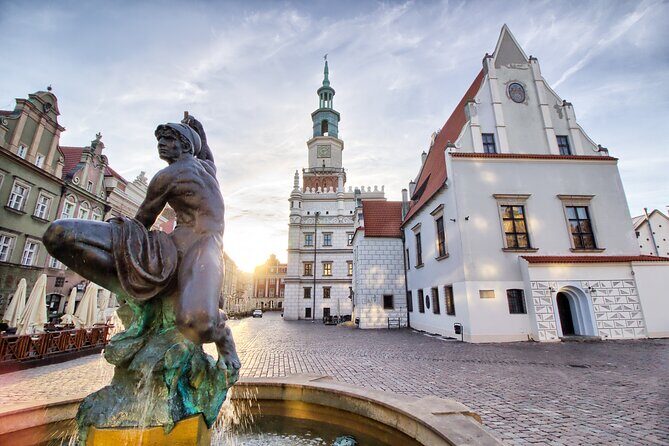
If you’re new to Poznań, this is a smart way to get oriented fast. The route covers a lot of ground in about 2 to 2.5 hours, but it never feels like you’re being herded. With a group capped at 15, you actually hear the guide’s details without craning your neck or listening over other conversations.
The tour’s tone is also a big part of why it works. Viktor (or Wiktor) comes across as approachable and witty, and you can tell he enjoys the city’s layers. Expect humour, quick moments where you’re prompted to think, and a steady flow of context that makes the streets click into place.
And yes, the walk is photo-friendly. The stops aren’t just “look and move.” You get little windows to frame the facades and ask for pointers, which matters when you’re trying to capture Poznań’s standout architecture—especially the Baroque-leaning scenes in the old center.
You can also read our reviews of more walking tours in Poznan

Walk-Time, Meeting Point, and How to Pace Yourself
You meet at Fontanna Wolności on plac Wolności 18, Poznań, and the tour loops back to the same spot at the end. It’s timed to work as a first-day activity, or as a reset after you’ve arrived and want to know where everything is.
The tour runs in a tight window—around 2 hours to 2.5 hours—and each stop is short. That’s good news if you hate slow, meandering tours. It’s also your cue to wear comfy shoes and bring a light layer. This is a city-walk format, so you’ll spend real time on sidewalks and cobbled streets.
Two practical tips that make this easier:
- Bring your camera ready for facades and squares. Most of the payoff is visual, not ticketed museum time.
- If you like to linger, don’t fight the schedule. Ask the guide where to revisit later; the walk is designed to point you in the right direction.
The tour uses a mobile ticket, and it’s offered in English. Service animals are allowed, and the route is described as doable for most people.
Weather matters too. The experience requires good weather, and if it’s cancelled due to poor conditions, you’ll be offered a different date or a full refund.
Liberty Square Sets the Tone: 19th-Century Grandness and Modern Meaning
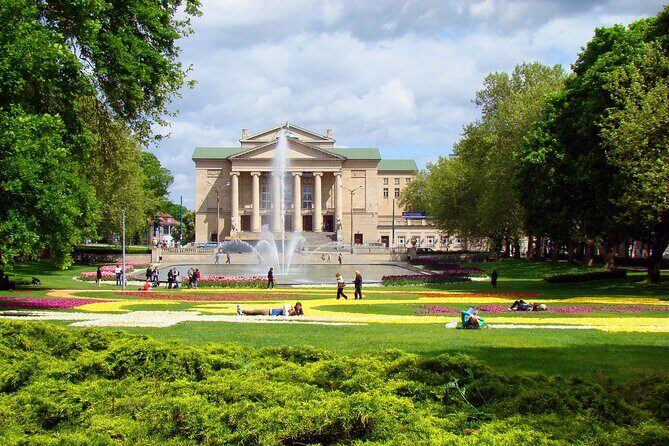
You start at Liberty Square (plac Wolności), and the guide wastes no time giving you a handle on what you’re seeing. This is a 19th-century square with impressive architecture, and it functions like an introduction to the city’s mood: serious, proud, and designed to impress.
What I like here is the way the guide uses the building styles to explain shifting power and identity over time. You’re not just learning names of places; you’re learning why they look the way they do. That matters later when the tour moves into areas tied to political memory.
If you’re the type who usually walks past squares without really noticing them, start this way and you’ll be more alert the rest of the day.
Raczynski Library: Why One Building Can Explain a Whole Era
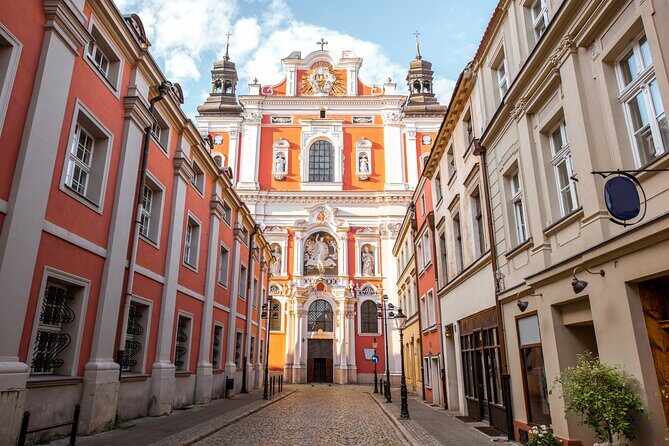
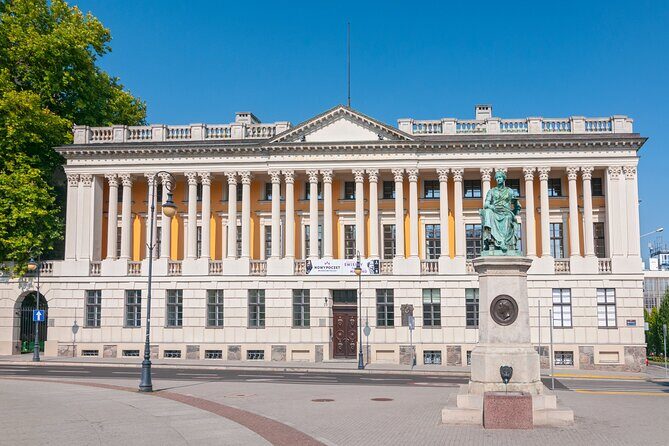
Next up is Raczynski Library, where you’ll get a quick stop with high value. The guide highlights it as the oldest and one of the biggest libraries in Poland, and then layers in surprising facts about the institution.
This is the kind of stop that changes how you look at libraries anywhere. Instead of treating it like a quiet room you might visit later, you get a sense of the library’s role in education, culture, and public life. You start to see why a city would build something so prominent and symbolic.
It’s a short visit (about 5 minutes), so come ready to listen. You won’t have time to read every detail, but you’ll leave knowing what’s important to notice.
Bazar Poznański: A Market Building With Stories Behind It
Then you’ll reach Bazar Poznański, another quick facade-focused stop. The guide explains the building’s history, and it’s one of those moments where you realize the city’s commercial life has a backstory too.
Markets often get reduced to function—buy, sell, move on. Here, the guide frames the bazar as part of Poznań’s growth and identity. You’ll probably look at the ornamentation and scale differently after hearing why it mattered.
If you love architecture but you also like politics and social context, this stop is a nice bridge.
You can also read our reviews of more guided tours in Poznan


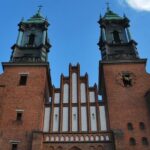

The Museum, Theatre, and Okrąglak Facades: When You’re Meant to Look Closely
A cluster of stops follows where you mainly see facades and hear what makes each place significant.
You’ll come by the National Museum in Poznań exterior, then the Theatre of Poland, and then Okrąglak. For these, admission isn’t included, so think of it as orientation plus explanation. You’re getting the story and the visual cue, not a guaranteed inside visit.
That actually suits the tour length. The guide can cover more ground and still keep the walk moving at a good pace. If you decide later that you want interior time, you now know what to target.
One word of advice: take a breath at these stops. Stand where the building reads best, and let the guide finish the point. With this many facades, your eyes can blur if you rush your photos.
Churches and Collegiums: The Poland Thread You Don’t See at First Glance
The route then leans more heavily into religious and academic architecture, with short stops where the guide describes what to notice.
You’ll see the Church of the Most Holy Savior, then Collegium Maius, then Teatr Wielki im. Stanisława Moniuszki. After that comes Collegium Minus, plus the Church of St. Martin. In these spots, admission is generally not included, so again: expect exterior views and street-level storytelling.
One of my favorite effects of this section is how it turns the city into a map of “who made it and why.” Educational and cultural institutions aren’t random landmarks. They reflect national ambitions, civic life, and the way Poznań positioned itself in changing eras.
If you’re into details, listen for what the guide points out about architecture and symbolism. Even when time is short, these are the stops where you pick up “eyes trained to see” habits.
June 1956 Events Monument: The Moment History Gets Personal
This is the stop where the walk sharpens into something more than sightseeing. At the June 1956 Events Monument, you’ll hear the story behind the city’s political memory.
This connects directly to the tour’s big theme: Poznań’s anti-Communist protests and the events that shaped how Poland’s story unfolded. The guide doesn’t just state dates. The explanation gives you a reason why this monument belongs on a walking route through the old center.
Even if you’re not a deep political-history reader, this stop helps you understand why some buildings and squares feel serious. You start recognizing that the city is built with remembrance baked into it.
Zamek Cultural Center and the Old Market Square: From Power to Everyday Life
After the monument, you’ll reach the Zamek Cultural Center. Admission is listed as free for this stop, but you’ll still likely experience it as a view-and-story moment rather than a long sit-down.
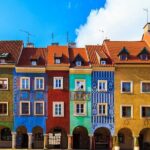
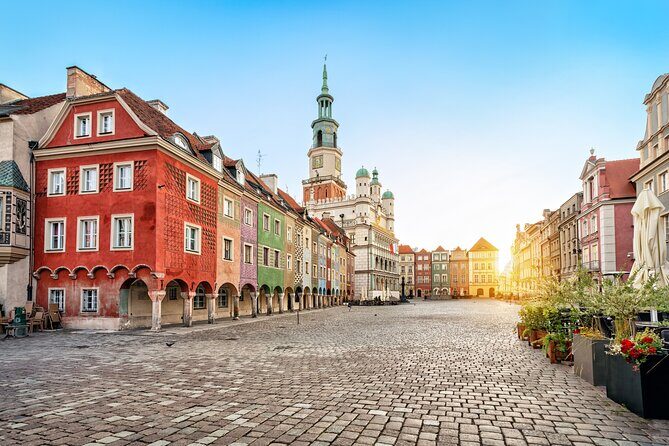
Then comes the Old Market Square, one of the most photogenic segments of the route. Admission is free here, and the guide gives you the square’s background and how it fits into the city’s development.
I like Old Market Square for a simple reason: it’s where civic life feels visible. You’re not just looking at grand buildings; you’re looking at a space that has hosted ordinary routines for generations. The guide’s context turns it from a backdrop into a living timeline.
Fara Church: A Possible Interior Moment
At Parish Church of St. Stanislaus (Fara Church), admission is listed as free, and the guide may be able to help you enter if it’s possible. That’s a real perk, because churches in Poznań can feel like a different atmosphere completely—cooler air, quieter acoustics, and details you miss from the street.
Even if you don’t get inside, the stop is still worth it for the exterior and the explanation. This is where the guide often helps you connect architecture to community identity, so the building doesn’t feel like just another pretty facade.
Ratusz Poznański and the Royal Castle Facade Finish: Leaving With Clear Next Steps
The final stretch includes Ratusz Poznański (Town Hall) and the Royal Castle. For these, admission isn’t included, so you’re seeing facades and hearing what makes each place important.
This ending works well because it gives you a concrete list of what to revisit if you want more. By the time you reach the castle area, you’ve already heard enough story to know what your photo should capture. It’s not random shutter-clicking anymore.
Then you return to the Fontanna Wolności meeting point to wrap up.
Price and Value: Is $39.60 Reasonable?
At $39.60 per person, this isn’t the cheapest walk in Poland. But it also isn’t trying to be. You’re paying for two things that matter:
First, you’re paying for an English-speaking guide who can connect street-level architecture to political and cultural history. The difference between a normal walking tour and a good one is the quality of interpretation—and this one scores extremely high on that front.
Second, you’re paying for efficiency with structure. In roughly 2 to 2.5 hours, you cover major parts of central Poznań and hear enough context to plan your remaining days. Some entrances are free along the way, and other major sites are clearly marked as not included, so you’re not surprised by extra costs if you follow the route as designed.
I also think the small group cap of 15 pushes value upward. You get more time per person, and it’s easier to ask questions and slow down for photos.
If you’re the kind of visitor who loves to wander without a plan, you might skip this and do a self-guided route. But if you want your first day to make sense, the price-to-clarity ratio is strong.
What You’ll Notice During the Walk (Beyond the List of Stops)
Here are a few extras that show up in real experiences with this tour format.
The guide uses photo materials (a binder of images) to help you visualize what you might otherwise miss. That’s especially useful for architecture, where you may not catch the full story just from a quick glance at a facade.
There are also small, friendly moments that break the lecture tone. Some groups reported little quizzes, plus practical advice like where to eat and what else to see in Poznań after the tour. One person also mentioned lessons related to Polish alphabet basics, which is a fun way to help you read street signs with more confidence.
And at the end, a few participants noted getting small Polish sweets or a little goody bag-type finish. That’s not the headline, but it’s a nice cultural touch that makes the tour feel more like a guided experience than a transaction.
Who Should Book This Tour, and Who Might Skip
This tour is ideal if you:
- Want a first introduction to Poznań that links buildings to events.
- Prefer a gentle pace with time for questions and photos.
- Like history with real-world context, including political memory like the June 1956 story.
You might consider skipping (or at least pairing it with other plans) if you:
- Want mostly inside museum time. Several big places are not included and are described as facade-focused.
- Are visiting on a day with unpredictable weather, since the experience is weather-dependent.
Should You Book This Poznań Walking Tour?
I’d book it if your goal is to understand Poznań quickly and leave with a clearer sense of where to spend your next hours. The tour’s strength is interpretation: Viktor’s style turns squares, libraries, churches, and monuments into a connected story, not a checklist of pretty stops.
Book soon-ish, too. The average booking window is about 13 days in advance, which tells me demand is steady. If your schedule is fixed, reserving earlier keeps you from playing phone-tag with availability.
Finally, pack for a real walk and be ready to hear more than you expect. Even if you consider yourself “not a tour person,” this one tends to convert skeptics because it’s both structured and human.
FAQ
How long is the Poznań Experience 2-Hours Guided Walking Tour?
It runs about 2 hours to 2 hours 30 minutes.
Is the tour offered in English?
Yes, the tour is offered in English.
What group size should I expect?
The tour has a maximum of 15 travelers.
Are any entrances included during the walk?
Some stops list admission as free (like Liberty Square, Raczynski Library, Bazar Poznański, Kosciol Najswietszego Zbawiciela, June 1956 Events Monument, Zamek Cultural Center, and Old Market Square). Other stops note admission not included, and the focus there is typically on seeing the facade.
Where does the tour start?
It starts at Fontanna Wolności on plac Wolności 18, 61-738 Poznań, Poland.
What if the weather is bad?
The experience requires good weather. If it’s canceled due to poor weather, you’ll be offered a different date or a full refund. There’s also free cancellation up to 24 hours in advance for a full refund.