REVIEW · POZNAN
The Best of Poznan 4 Hour Guided Private Walking Tour
Book on Viator →Operated by Raccoon Tours Poznań · Bookable on Viator
Poznań tells stories on every corner. This private walking tour strings together key landmarks with an English-speaking guide, plus a real chance to step inside the Poznań Cathedral. It’s a smart way to see more than postcard landmarks without turning the day into a museum slog.
I especially love the easy pace and clear explanations from the guides, including Wiktor (credited in past tours for crisp English and smart, practical storytelling). You’ll also get variety: architecture and monuments in the morning, then castle grounds, river crossings, and even public art that reacts to rain.
One thing to factor in: a few moments depend on timing and access. The cathedral visit can be limited if there’s an ongoing religious ceremony, the lock/glass bridge works only if it’s open, and a couple of church entries are only possible if the timing lines up.
In This Review
- Key highlights you’ll feel fast
- Why this private Poznań walk feels personal in 3–4 hours
- Liberty Square and the 19th-century Poznań mindset
- Old libraries, civic buildings, and the rhythm of “see, learn, move”
- Poznań Imperial Castle: interiors for context, gardens for calm
- Hipolit Cegielski and the monument that explains a person
- Skwer Romana Wilhelmiego: Cannon Tower, murals, and medieval walls
- Cathedral Lock and Jordan Bridge: the practical magic of crossing districts
- Green Symphony and murals: when rain becomes part of the tour
- Inside Poznań Cathedral of St Peter and Paul: where the 10-centuries story lands
- Price and value: what $88.94 covers in practice
- Weather, pacing, and what to wear for this route
- Should you book this Best of Poznań private walking tour?
- FAQ
- How long is the Poznań Best of Poznan 4 Hour Guided Private Walking Tour?
- What does the tour cost?
- Is the tour private, or will I join other people?
- Do I get any tickets included?
- Is the tour offered in English, and is pickup available?
- What’s the meeting point and where does the tour end?
Key highlights you’ll feel fast
- Private, only-your-group format for a more personal pace through central Poznań
- Cathedral entrance included, so you’re not hunting tickets mid-walk
- Historic + modern stops, from Imperial Castle interiors to the Green Symphony sound installation
- Great “photo + story” sequence with murals, facades, and city-wall viewpoints
- Crossing the city’s waterways via Cathedral Lock and Jordan Bridge
- Guide pickup available (meeting point is fixed, but pickup can simplify your start)
Why this private Poznań walk feels personal in 3–4 hours
This tour is built for real people with real schedules. It’s private, meaning you’re walking with your group only, not weaving through a crowd. That matters because Poznań history can get detailed fast. A good guide keeps it understandable, and that’s what the small-group setup helps with.
You’ll start in the center at Fontanna Wolności (Plac Wolności 18) and end at the Poznań Cathedral area (Ostrów Tumski 17). The tour runs about 3 to 4 hours, and the route is designed around frequent short stops, not long dead stretches. That’s why it works even if you’re not a “stand in lines” kind of sightseer.
If you choose pickup, the guide meets you holding a name plate. It’s one of those small things that turns “Where do I go?” into “Okay, we’re off.” You’ll also get a mobile ticket, which makes entry points smoother—especially for the cathedral.
One more practical note: this experience is offered in English, and the guiding style has been described as clear and easy to follow. In one instance, a short tram segment was part of the day, so if you’re hoping for any added transit along the way, it’s worth asking when you book.
You can also read our reviews of more walking tours in Poznan


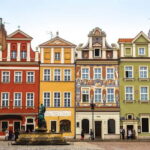
Liberty Square and the 19th-century Poznań mindset
Most first-time visitors hit Poznań and focus on a few big attractions. This tour starts with a different question: how did this city look and think when it was modernizing?
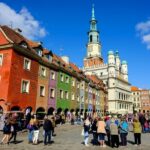
You’ll begin at Liberty Square, a 19th-century square packed with impressive architecture. It’s timed to be quick (about 15 minutes), but that’s enough to frame everything that comes next. The guide’s job here is to help you read the facades like clues: what they signal about wealth, power, and the people who built the city’s identity.
From there, you shift into a stretch that feels like walking through “public knowledge” and civic pride. You’ll see one of the oldest and biggest libraries in Poland, and you’ll hear surprising facts about how the institution fits into national life. Then come more landmark facades—buildings tied to local importance, trade, and institutions that shaped daily life long before smartphones and schedules.
Several stops in this early section focus on facade stories. That might sound repetitive, but it’s actually one of the tour’s strengths: you learn to notice patterns. Who invested? What was the purpose of the building? What did it symbolize? If you like architecture that has a backstory, this part delivers.
Possible downside here: if you prefer fewer stops and more time inside buildings, the early walking segment can feel “talk-heavy.” Still, the stops are short, and the guide keeps it moving.
Old libraries, civic buildings, and the rhythm of “see, learn, move”
This middle “city-center architecture” phase is designed to teach you how to look at Poznań without requiring you to memorize dates. You’ll repeatedly pause to view important building exteriors—then get the explanation that makes them make sense.
Expect to learn about:
- A major national library and why it matters
- Historic buildings tied to institutions, including a notable bank-related edifice you’ll pass as part of the route
- How the city’s identity shows up through street-scale architecture, not only big monuments
These are free stops, and that matters. It means you can spend your energy and money where it counts—like the cathedral entrance later.
Also, the tour format is built around frequent turning points. You never feel stuck in one place too long. That’s good if you get tired easily or if you want a tour that doesn’t turn into a walking endurance test.
Poznań Imperial Castle: interiors for context, gardens for calm
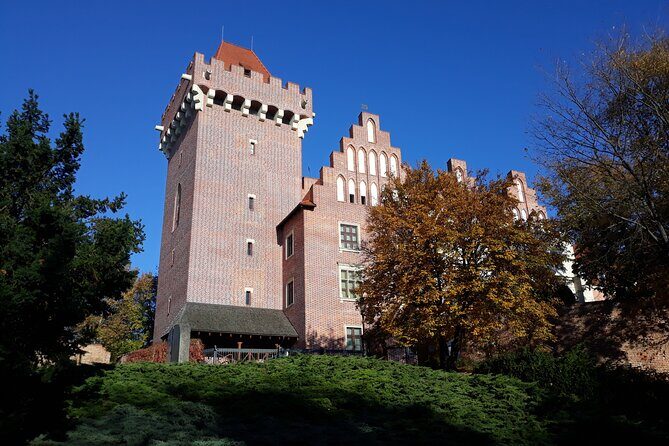
The day pivots at Poznań Imperial Castle. You get around 25 minutes, including time to explore some castle interiors (ticket-free on this segment). If the castle had only an exterior, you’d learn less. Interiors give you texture—how space was designed, how authority was displayed, and what life might have looked like in those halls.
After that, you’ll move into park and garden walking, where the tone softens. The guide continues the story, but the setting helps it land. Castle grounds and nearby green space make it easier to imagine what the area used to feel like, not just what it looks like in photos.
This is also where the tour’s pacing tends to click. You’re not rushing. You’re transitioning—history in architecture, then history in surroundings. If you’re the type who likes to connect stories to physical space, this castle portion is a key payoff.
Hipolit Cegielski and the monument that explains a person
Next up is the Pomnik Hipolita Cegielskiego, a quick stop (about 5 minutes) built around one name: Hipolit Cegielski. You’ll see the monument and get the story of who he was and why he matters in Poznań’s larger narrative.
This is a reminder of how cities grow: it’s not only kings and wars. It’s industry, ideas, and people who pushed growth in everyday ways.
The guide then points you toward nearby sights that may include church access if possible. That means you may get additional entry time for a church, but it’s not guaranteed. Plan for it as a bonus, not a fixed promise.
You can also read our reviews of more guided tours in Poznan



Skwer Romana Wilhelmiego: Cannon Tower, murals, and medieval walls
If you want visual variety, this segment delivers. At Skwer Romana Wilhelmiego, you’ll see the Cannon Tower and hear the background story tied to it. Then you’ll walk through a park area passing by medieval city walls.
What I like about this part is the mixture of texture and art:
- You get medieval infrastructure (walls, tower context)
- You get a mural of medieval Poznań, which helps you “see” the past instead of only hearing it
- You get river/harbor context later in the segment—seeing the Old Harbour from a distance as part of the broader picture
You’ll also spot an installation showing relics of Mieszko’s I Palace. It’s one of those learning stops that feels more modern than the rest of the walk, and it helps break up the history without losing the thread. If it’s rainy, this kind of public art stop is also a good way to keep momentum instead of ducking indoors too early.
Cathedral Lock and Jordan Bridge: the practical magic of crossing districts
This is one of my favorite “story logistics” parts of the tour, because it’s not only sightseeing—it’s movement through Poznań’s geography.
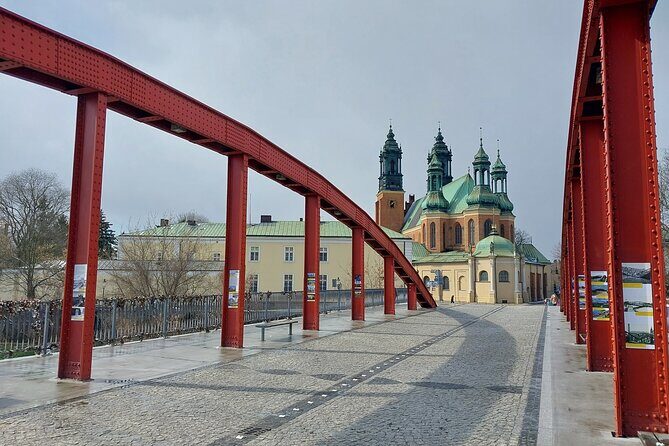
At the Cathedral Lock, you’ll walk through the lock and cross a glass bridge to reach another district if it’s open. That’s a neat contrast: old-meets-new engineering, and it gives you a real sense of how the river shapes the city.
A practical tip: because the glass bridge depends on whether it’s open, you should be ready for slight timing changes. If it’s closed, you still won’t lose the overall value, but your exact crossing moment might differ.
Then you’ll reach the Jordan Bridge, where you’ll cross while listening to the story of the place. Bridges do something emotional in a city like Poznań. They mark transitions. They also make it easier to understand how different areas connect.
Green Symphony and murals: when rain becomes part of the tour
Between crossings and cathedral time, you’ll encounter the installation Green Symphony. This stop is short—around 3 minutes—but it can be surprisingly memorable.
The fun detail here is weather-related. If it’s rainy, you can also listen to sounds the installation produces. Even if it’s not rainy, the installation still fits the tour’s theme: Poznań isn’t only old stone and historic facades. It also plays with sound and modern public art.
Right after, you’ll admire one of the most amazing murals in Europe (as described in the experience). You’ll then see one of the oldest churches in Poznań and hear its story.
This sequence works well because it resets your brain. After lots of architecture explanation, the murals and installations give you a different kind of learning: visual, immediate, and easy to remember. You’ll likely catch yourself taking photos simply because you can see what the guide is pointing out.
Inside Poznań Cathedral of St Peter and Paul: where the 10-centuries story lands
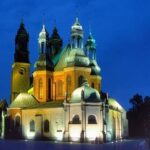
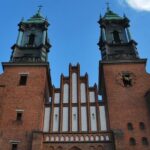
The tour ends in a strong finish at the Poznań Cathedral of St Peter and Paul (Basilika Archikatedralna św. Apostołów Piotra i Pawła). The cathedral entry is included, and you’ll spend about 20 minutes inside.
You’ll learn about traces left by people who helped build the Polish state 10 centuries ago—as long as there isn’t an ongoing religious ceremony at the time you arrive. This matters. If there’s a service happening, you may have limited access or a different experience than you hoped for.
Still, even with limited access, the cathedral visit is usually the kind of moment that anchors the entire walk. Earlier parts gave you context: city growth, institutions, the role of important figures. The cathedral ties it together by showing how religious and political history overlap in the city’s physical center.
One practical respect note: keep your voice low inside, dress appropriately, and follow any signage or staff guidance. This is a working sacred space, not a background set.
Price and value: what $88.94 covers in practice
At $88.94 per person for a 3 to 4 hour private guided walk, the value comes from three things you can’t easily DIY.
First, you get real time with the guide. This route is full of short stops and “facade story” explanations. If you walk it on your own, you’ll see the buildings—but you’ll miss the connections that make them feel like more than photo targets.
Second, you get cathedral entry included. That’s a straightforward cost saver and reduces friction at your final stop.
Third, you have flexibility baked into the format: pickup offered (when available), group discounts, and only your party joining you. That’s often where private walking tours win. If you’re traveling with a small group, you’re not paying for a seat on a bigger bus tour. You’re paying for attention.
Who does this fit best?
- First-timers who want Poznań basics in one day
- Couples or small groups who like a guided route with frequent stops
- People who enjoy history tied to buildings, monuments, and street-scale details
- Anyone who wants English guidance without a long museum day
Who might want a different option?
- You hate walking for 3–4 hours, even with short pauses
- You want guaranteed interior access to every single site (some elements depend on opening hours or ceremonies)
- You’re looking for long, deep museum time rather than city storytelling
Weather, pacing, and what to wear for this route
This experience requires good weather. If it’s canceled due to poor weather, you’ll be offered another date or a full refund. That’s worth taking seriously because this is a walking-first day.
What to wear:
- Comfortable shoes with traction for sidewalks and bridge areas
- A light rain layer if forecasts look iffy (the Green Symphony stop is one reason rain isn’t automatically a loss)
- A small umbrella or rain jacket, since you’ll be outside for long stretches
Pacing is generally easy. Stops are short. The guide’s style (including Wiktor’s, as previously described) helps keep things clear without turning it into a lecture.
Also, the tour is near public transportation, and service animals are allowed. Most people can participate, so if you’re deciding between “walking day” and “rest day,” this is usually the walking-friendly option.
Should you book this Best of Poznań private walking tour?
Book it if you want a guided day that feels efficient and human—three to four hours, English explanations, and a cathedral visit that gives your Poznań experience a real backbone. This is also a great choice if you’re the type who likes learning how a city’s past shows up in the street view, not just in a single big attraction.
Skip it (or consider something else) if your priority is guaranteed long indoor time at multiple sites, or if you’re walking-averse. A few access points depend on whether a church entry is possible, whether the lock/glass bridge is open, and whether the cathedral has an ongoing ceremony.
If you’re flexible and you like stories tied to what you can actually see, this tour is a strong “do this early” pick. It gives you a framework you can use later when you wander on your own.
FAQ
How long is the Poznań Best of Poznan 4 Hour Guided Private Walking Tour?
It runs for about 3 to 4 hours.
What does the tour cost?
The price is $88.94 per person.
Is the tour private, or will I join other people?
It’s a private tour/activity, so only your group participates.
Do I get any tickets included?
Yes. Entrance ticket to the Cathedral is included.
Is the tour offered in English, and is pickup available?
The tour is offered in English. Pickup is offered, and the guide will hold a plate with your name.
What’s the meeting point and where does the tour end?
It starts at Fontanna Wolności, Plac Wolności 18, 61-738 Poznań and ends at Ostrów Tumski 17, 61-001 Poznań (Poznań Cathedral area).