REVIEW · WARSAW
Offbeat Warsaw: Explore the Edgy & Artsy Praga District
Book on Viator →Operated by Warsaw City Tours by Lukasz · Bookable on Viator
Praga feels like Warsaw’s other movie. On this 2-hour English walking tour with Łukasz, I love the small-group pace and how you move through real neighborhood streets with time for photo stops. You’ll learn why Praga is where locals go when they want something more edgy than Old Town.
What I liked most was the blend of street-level visuals and Jewish historical sites you can actually point to with your camera. You’ll see landmarks tied to community stories, plus recognizable movie scenery connected to The Pianist, all while the guide keeps it moving with short, human details rather than long lectures.
One consideration: this is still a walking tour, so wear comfy shoes and plan on quicker, outdoor-style stops. And because Praga can feel less comfortable in darker hours, this afternoon timing is the safer bet than a late-night wander.
In This Review
- Key highlights at a glance
- Praga’s gritty edge: the Warsaw you don’t see from tour buses
- Where the walk starts and how it ends at Bohema (Szwedzka metro + tram)
- Stop-by-stop: Jewish sites, film corners, and the streets where Praga breathes
- Stop 1: plac Weteranów 1863 Roku (meet by St. Florian’s)
- Stop 2: Pomnik Praskiej Kapeli Podworkowej
- Stop 3: Teatr Baj (former Jewish Orphanage)
- Stop 4: Nożyk Synagogue site (former Praga Synagogue from the 1830s)
- Stop (unnamed on the route): a 19th-century park
- Stop 5: Chapel of Our Lady of Loreto
- Stop 6: Jagiellońska 44 (early communist-era housing estate)
- Stop 7: Mała (The Pianist movie location)
- Stop 8: Stalowa street (cafes, bars, galleries, street art)
- Stop 9: Pałacyk Ksawerego Konopackiego
- Stop 10: Fabryka Schichta Bohema (post-industrial hub + transport)
- Price and what you really get for about $42
- Who this tour is for (and when it might not be your best match)
- Getting the most out of it: practical photo and pacing tips
- Should you book Offbeat Warsaw: Explore the Edgy & Artsy Praga District?
- FAQ
- How long is the Praga walking tour?
- Is the tour offered in English?
- How many people are on the tour?
- Where do I meet the guide, and where does the tour end?
- What kind of ticket do I receive?
- Are there admission tickets for the stops?
- What’s nearby for getting back to central Warsaw?
- FAQ
- Can I get a full refund if I cancel?
- Is the tour suitable for most travelers?
- When does the tour start?
Key highlights at a glance
- A 10-person cap keeps questions flowing with Łukasz and makes the walk feel personal
- Jewish landmarks + local music history at sites like Nożyk Synagogue and the Praga band monument
- Photo-friendly street art and market scenes in streets like Stalowa
- Movie-location moments tied to The Pianist, so Warsaw feels cinematic and real
- A smart finish at Fabryka Schichta Bohema, with metro and tram options close by
- Quick, practical stops (often free to view) that fit neatly into a short day in Warsaw
Praga’s gritty edge: the Warsaw you don’t see from tour buses
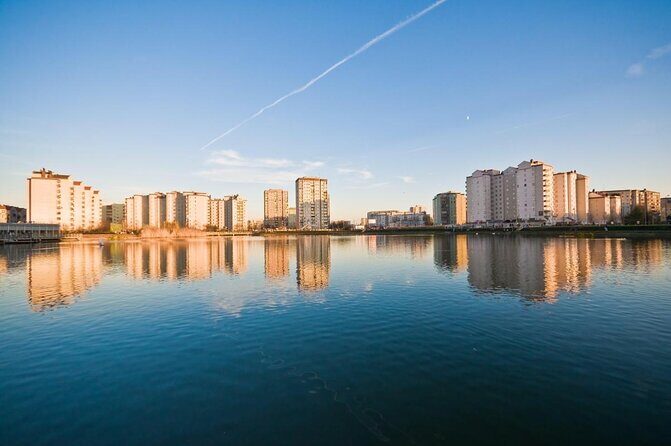
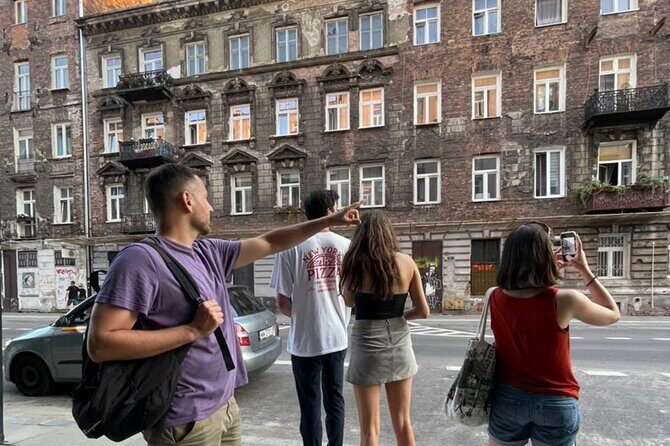
If your idea of Warsaw is mostly grand government buildings and tidy Old Town streets, this tour reframes the city. Praga is the side of Warsaw that feels more lived-in: louder, messier, and way more creative. The walking route is designed for exactly that. You’re not waiting in lines or sitting in a van. You’re out on the sidewalk, noticing details as the neighborhood shifts around you.
Two things make this experience stand out. First, the guide is the reason it feels like a conversation instead of a checklist. Łukasz is the type who can answer questions on the spot and tweak the walk to what you care about. Second, the tour is built around contrasts: Jewish history beside communist-era housing, film locations near everyday cafes, and street art near serious local monuments.
The tour is also a great fit for people who want authenticity without committing to a full day. It’s only about two hours, and because the group is limited to 10, you don’t feel swallowed by a crowd.
You can also read our reviews of more tours and experiences in Warsaw.


Where the walk starts and how it ends at Bohema (Szwedzka metro + tram)
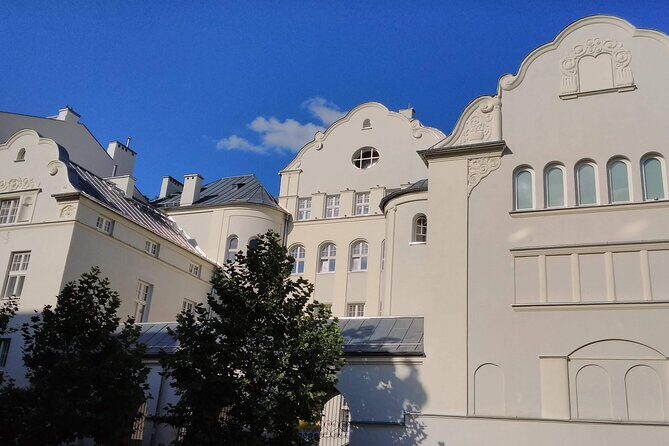
You meet at plac Weteranów 1863 Roku in the area by St. Florian’s. That matters because it gives you a clear starting point and an easy handoff into the Praga streets without extra hunting. The tour runs from 1:00 pm and is designed as a smooth loop that ends with transit-friendly options.
You finish at Fabryka Schichta Bohema on Szwedzka 20. This former 19th-century post-industrial cosmetics complex has been turned into a multi-functional hub, so the ending feels contemporary, not just “the end.” More importantly for you, getting back is simple:
- The Szwedzka metro station is right there
- The 23 tram stop is about 400 meters away, with a route that can connect you toward Castle Square in Old Town
So even if you’re visiting in layers—Old Town in the morning, Praga in the afternoon, then dinner back in the center—you’ll be able to move without complicated planning.
Stop-by-stop: Jewish sites, film corners, and the streets where Praga breathes
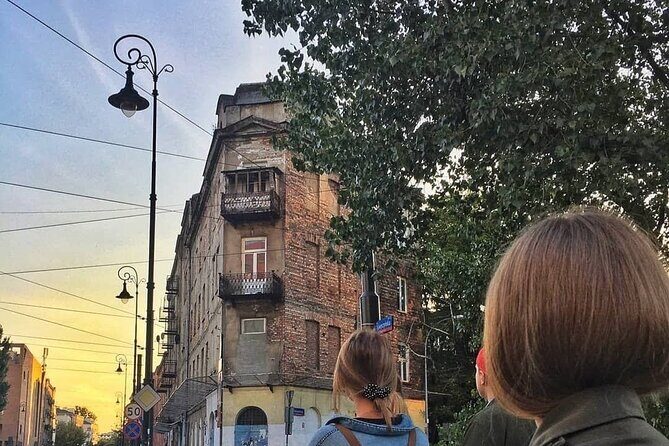
This tour is paced with short stops. Some are just 5-minute look-backs; others give you a little more time. The tradeoff is you won’t have hours inside museums. The upside is you’ll see a lot of Praga without exhausting your feet, and you’ll come away with a mental map you can explore on your own afterward.
Also, most of the stops listed are free to view (no admission ticket required), which helps you get value from a short, focused walk.
Stop 1: plac Weteranów 1863 Roku (meet by St. Florian’s)
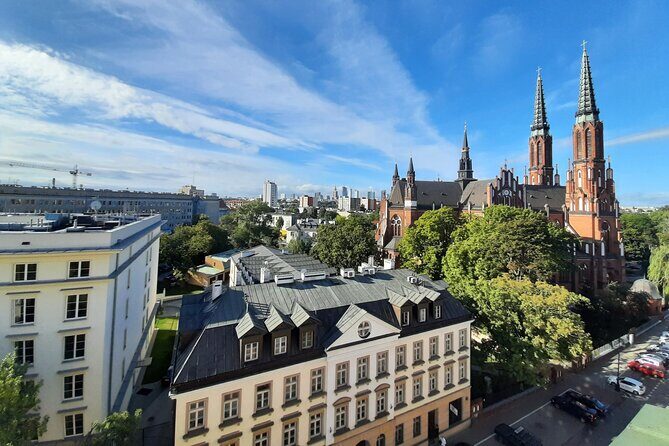
You start at plac Weteranów 1863 Roku, with the guide meeting you in front of St. Florian’s. This opening moment matters because it frames Praga in time, not just place. You get oriented, then you begin moving into neighborhood corners where the history shows up in buildings, street patterns, and monuments.
Practical tip: arrive a few minutes early. Even though it’s a simple meeting point, you’ll want time to check you’re standing in the right place before the group tightens up.
Stop 2: Pomnik Praskiej Kapeli Podworkowej
Next is the Pomnik Praskiej Kapeli Podworkowej, the monument honoring Praga’s tradition of local music bands. This is one of those stops where you learn how culture lives outside official venues. It’s not a big museum story. It’s a street-level reminder that Praga has long had its own identity.
If you like the idea of Warsaw having multiple cultural dialects, this is the kind of stop that clicks.


Stop 3: Teatr Baj (former Jewish Orphanage)
You then reach Teatr Baj, a building connected to a former Jewish orphanage. This stop gives you a reminder that Praga isn’t only about art murals and cafes. It’s also a place where Jewish community life has left strong traces.
The value here is the perspective shift. Instead of treating Praga as just the artsy side, you see how community history is part of the neighborhood fabric.
Stop 4: Nożyk Synagogue site (former Praga Synagogue from the 1830s)
You’ll visit Nożyk Synagogue, which relates to the former site of the Praga Synagogue from the 1830s. Even when you’re looking at what’s there now, the story behind the site changes how you see the architecture and the street around it.
If you care about how cities remember trauma and continuity, this stop is heavy in the right way. It’s also a good moment to slow down and take photos while you’re thinking, not just while you’re clicking.
Stop (unnamed on the route): a 19th-century park
There’s also a pause at a 19th-century park. It breaks up the walking rhythm and gives you a chance to reset. Parks in older districts tend to show up as quiet anchors, and this one helps the tour feel balanced rather than nonstop street corners.
Stop 5: Chapel of Our Lady of Loreto
Then you reach the Chapel of Our Lady of Loreto, a 17th-century chapel and described as the oldest historical monument in Praga. This is the moment where Praga shows its older roots clearly. You get a historical reference point you can use when you’re later wandering independently.
Practical consideration: look up when you can. Small details at religious sites are often where the personality lives.
Stop 6: Jagiellońska 44 (early communist-era housing estate)
Next is Jagiellońska 44, one of the first communist-era housing estates in Warsaw. It was designed by prominent Polish avant-garde architects. This stop makes a point: Praga’s identity isn’t only pre-war or post-industrial. You also see how 20th-century planning shaped daily life.
The benefit for you is perspective. You stop viewing buildings as background and start seeing them as decisions people made about housing, aesthetics, and power.
Stop 7: Mała (The Pianist movie location)
Now you get that movie connection: Mała, a location tied to The Pianist. This kind of stop is perfect if you’ve watched the film and want to place scenes in real geography.
What makes it work on foot is that you’re walking through the same kind of city texture that a camera needed: tight street rhythm, uneven facades, and a sense of lived-in distance.
Stop 8: Stalowa street (cafes, bars, galleries, street art)
Stalowa is one of the tour’s visual highlights. It’s an important Praga street with popular cafes, bars, galleries, and street art. This is where the neighborhood mood becomes obvious fast.
If you want photos that don’t look like tourist posters, this is where to aim your camera. Street art + everyday life is a winning combo, and it’s also where you’ll likely feel the Praga vibe in your body, not just your head.
Drawback to note: since this is a lively street, you may have brief crowd moments depending on the time. The good news is the tour keeps you moving so you don’t get stuck in one spot.
Stop 9: Pałacyk Ksawerego Konopackiego
You’ll stop at Pałacyk Ksawerego Konopackiego, described as the former residence of the founder of the neighborhood. This is a nice counterweight to the more modern feel of street art and cafes. It gives you a human origin story for why this area developed the way it did.
If you like your city walks to answer the why behind the where, this stop helps.
Stop 10: Fabryka Schichta Bohema (post-industrial hub + transport)
You end at Fabryka Schichta Bohema, a multi-functional hub combining 19th-century post-industrial architecture with contemporary buildings. It’s a fitting finish because the tour itself moves between eras and uses Praga street corners as the connecting thread.
Your practical takeaway: you’re done with the guided portion, but you’re not stuck. With metro and tram nearby, you can hop back to central Warsaw quickly. The guide can also point you toward hip cafes and restaurants in the area, which is a useful way to keep your time efficient after the tour.
Price and what you really get for about $42
At $42.14 per person for roughly two hours, this tour sits in the sweet spot for value in big-city walking tours. Here’s why it feels fair based on what’s included:
- You get an English-speaking guide, not a generic audio route
- The group is capped at 10, which improves the experience quality (questions get answered, not waved off)
- It’s a short time commitment, so it fits easily into a travel day
- Most of the stops are free to view, so you’re not paying entrance fees to justify the ticket price
- You finish at a transit-friendly hub, which saves you time and taxi costs later
The best part of the value equation is intangible: it’s the kind of tour that gives you directions for your next walk. After you’ve learned the neighborhood logic—where history sits, how art shows up, and where daily life happens—you can keep exploring with more confidence.
Who this tour is for (and when it might not be your best match)
This experience is a strong fit if you:
- Want Warsaw beyond Old Town
- Like street art and photo opportunities, but still want context
- Enjoy history told in short stories tied to real places
- Want recognizable film locations tied to The Pianist
- Prefer small groups where your questions actually matter
It might not be perfect if you:
- Want a long sit-down museum-style experience
- Need slow, extended indoor time at each stop
- Are sensitive to the fact that Praga streets can feel less polished than central tourist areas, especially outside daytime hours
Given the tour starts at 1:00 pm, you’re getting a daylight-friendly slot for most sightseeing needs.
Getting the most out of it: practical photo and pacing tips
To enjoy this tour fully, think like a photographer and a listener at the same time.
- Wear shoes you trust. Stops are quick and the walk is the core activity.
- Have your camera ready at the street-art and monument moments, not only when buildings look pretty.
- If you’re into film locations, mention that early to the guide. The tour is built to support that kind of curiosity.
- Plan your lunch or dinner buffer. Since the tour ends at Fabryka Schichta Bohema with transit close by, you can keep moving right after.
And a small mindset shift helps: you’ll get more out of Praga if you stop expecting everything to look curated. It’s a working neighborhood. That’s the point.
Should you book Offbeat Warsaw: Explore the Edgy & Artsy Praga District?
Book it if you want a short, high-impact way to understand Praga. With Łukasz leading a 10-person walk in English, you get a mix that’s hard to replicate on your own: Jewish landmark storytelling, music and neighborhood monuments, The Pianist location moments, and street art in areas where people actually hang out.
Skip it only if you’re looking for a mostly indoor, ticket-heavy museum format or you don’t like walking. For most visitors, though, this is one of the best ways to see the Warsaw that feels different the second you step off the main tourist track.
FAQ
How long is the Praga walking tour?
The tour lasts about 2 hours.
Is the tour offered in English?
Yes, it’s offered in English.
How many people are on the tour?
The maximum group size is 10 travelers.
Where do I meet the guide, and where does the tour end?
You meet at plac Weteranów 1863 Roku, near St. Florian’s, and the tour ends at Fabryka Schichta Bohema (Szwedzka 20, Warszawa).
What kind of ticket do I receive?
You get a mobile ticket.
Are there admission tickets for the stops?
The tour lists stops with admission tickets marked as free.
What’s nearby for getting back to central Warsaw?
At Fabryka Schichta Bohema, you can use the Szwedzka metro station, and the 23 tram stop is about 400 meters away with service toward Castle Square in Old Town.
FAQ
Can I get a full refund if I cancel?
Cancellation is free up to 24 hours in advance for a full refund.
Is the tour suitable for most travelers?
The tour notes that most travelers can participate.
When does the tour start?
The start time listed is 1:00 pm.