REVIEW · KRAKOW
Schindler’s Factory & Kazimierz Jewish Quarter Tour
Book on GetYourGuide →Operated by INTERCRAC Ltd. · Bookable on GetYourGuide
One walking tour, two Kraków realities. Kazimierz feels like a living window into Jewish street life, and Schindler’s Factory shows the occupation through real human stories. I love how the route links old synagogues with ordinary neighborhoods, and I love that the museum time is guided and focused on what happened to people, not just dates. One consideration: the pace and museum layout can be tight and narrow, so if you’re uncomfortable with enclosed spaces or slow walking, plan accordingly.
You’ll start at the steps of the Old Synagogue, then trace key stops across Szeroka Street and onward toward Plac Nowy before heading into the enamel factory museum. With guides like Helen (when she’s on the schedule), the narration tends to be clear and easy to follow, and you’ll get German, French, Italian, English, or Spanish depending on what you book.
In This Review
- Key things to know before you go
- Starting at the Old Synagogue on Szeroka Street
- Kazimierz’s synagogues: what each stop teaches you
- Old Synagogue (the tour’s anchor)
- Remuh Synagogue and Cemetery (where sacred space meets memory)
- Kupa Synagogue (a reminder of class within community)
- Tempel Synagogue (from historic worship to modern cultural life)
- Plac Nowy: the walk-to-museum pivot you’ll feel immediately
- Schindler’s Enamel Factory: the museum that connects people to events
- Inside the exhibition: how the guide keeps it from becoming a blur
- Fast-track admission: the money-saver you don’t notice until you need it
- Price and value: is $69 worth it?
- Who this tour fits best (and who might want alternatives)
- Tips to make the tour feel smooth
- Booking languages and group rhythm
- Should you book Schindler’s Factory & Kazimierz?
- FAQ
- Where does the tour start?
- How long is the tour?
- What languages are available for the live guide?
- Is food included?
- What’s included with the ticket price?
- Do I need to provide names for the museum?
Key things to know before you go
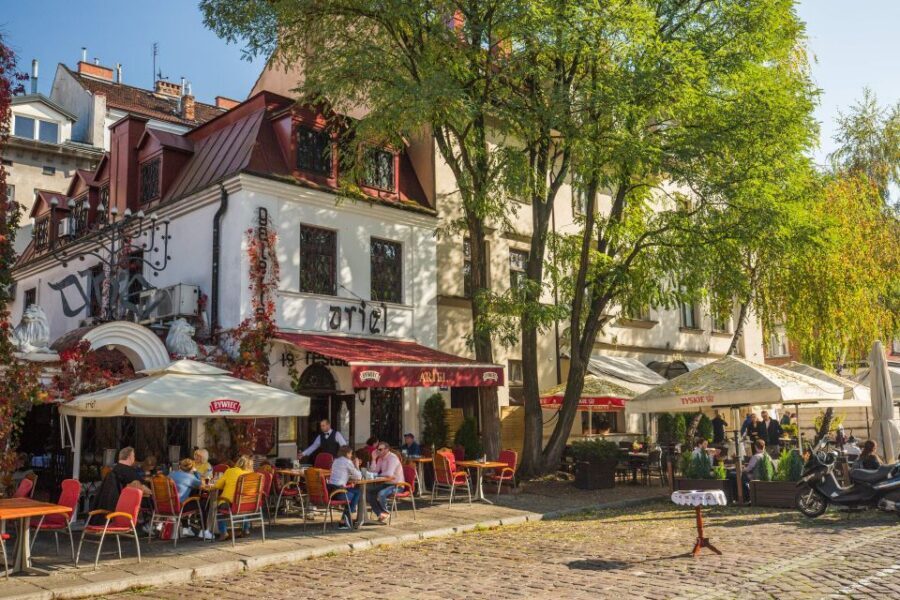
- Old Synagogue start: meet right at the steps, with Szeroka Street’s 16th–18th century streetscape setting the tone.
- Major Kazimierz stops: Remuh Synagogue and Cemetery, plus Kupa and Tempel Synagogues along the walk.
- Plac Nowy break in the middle: a practical transition from memorial context to today’s café-and-market square.
- Schindler’s story, but with context: the museum explains Kraków under Nazi occupation (1939–1945) through Schindler and the people he saved.
- Fast-track entry: you skip the ticket line for the museum, making the 210-minute schedule feel usable.
Starting at the Old Synagogue on Szeroka Street
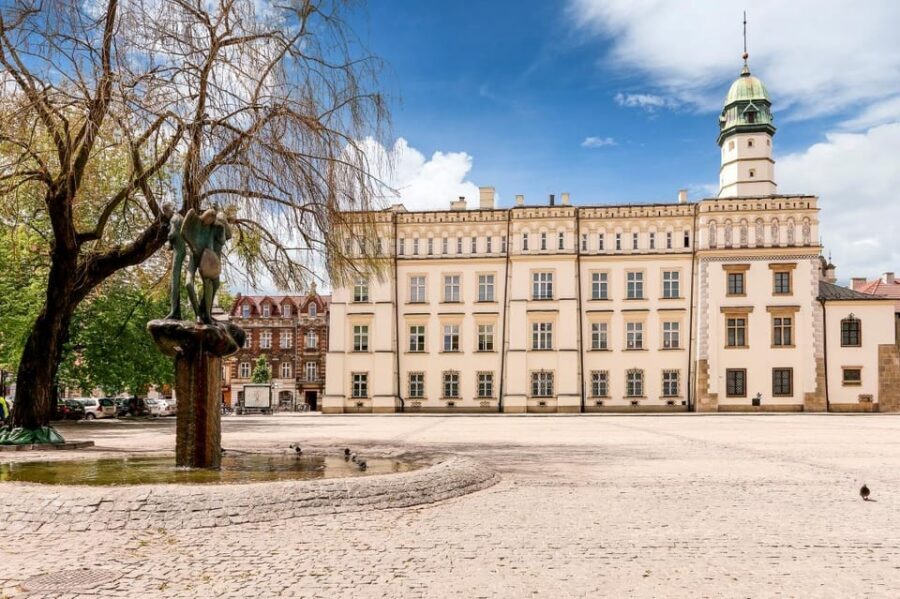
This tour begins in Kazimierz, Kraków’s historic Jewish Quarter, where the streets still feel threaded with centuries of religious life and close community ties. Your meeting point is simple: the steps of the Old Synagogue, and your guide will be holding a Kazimierz Guided Tour sign. It’s a good setup for first-timers, because you’re not trying to find a museum entrance after you’re already behind schedule.
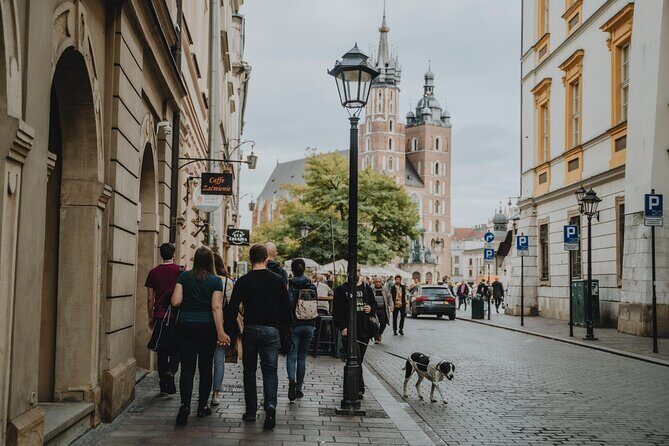
From there, you’re guided into the heart of the area along Szeroka Street, where you’ll see townhouses and synagogue buildings dating roughly from the 1500s through the 1700s. Even before you reach the museum, the walk gives you something travelers often miss when they only do one big attraction: you get a sense of how the neighborhood was built for daily routines—prayer, visiting, and community life—right alongside ordinary streets and homes.
I like that the tour doesn’t treat Kazimierz as a postcard. It frames the architecture as part of how people lived. When you’re standing near a historic synagogue, it’s easier to understand why occupation-era life was so brutal: you’re not starting from abstract tragedy. You’re starting from a functioning world that was forcibly destroyed.
A practical note: the tour is 210 minutes, so you’ll be moving at a steady walking pace. If you’re hoping for a slow meander where you can stop for photos every few minutes, you might wish you had a little extra time on your own afterward.
You can also read our reviews of more tours and experiences in Krakow.
Kazimierz’s synagogues: what each stop teaches you
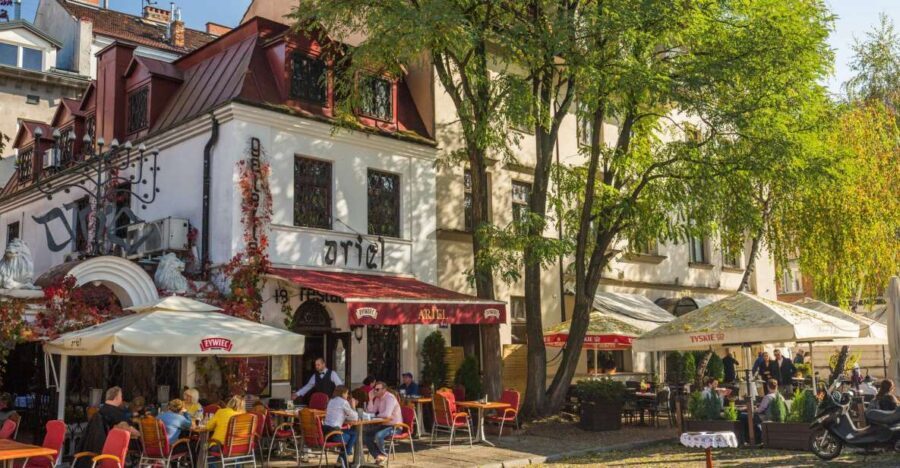
The Kazimierz portion is the soul of the tour. You’ll pass multiple synagogues that represent different layers of the community—faith, social structure, and change over time.
Old Synagogue (the tour’s anchor)
The Old Synagogue is the oldest preserved synagogue in Poland, and in today’s setting it functions as a museum dedicated to Jewish history. Starting here matters, because it gives you context before you move deeper into the neighborhood. You’re not just ticking off buildings; you’re building a mental map of what the community considered important and enduring.
Remuh Synagogue and Cemetery (where sacred space meets memory)
Next, you’ll see the Remuh Synagogue and Cemetery, described as one of the most important Jewish religious sites in the country. This stop is often where the tone becomes more serious. Cemeteries change how you look at time; they make it harder to treat history like a story from far away.
For your visit, the key value here is learning how Jewish and non-Jewish residents endured the war together in a city that didn’t live in a vacuum. The tour is designed to explain daily life in Nazi-occupied Kraków beyond Schindler’s individual story—so you understand that saving lives happened inside a larger system of fear, control, and survival.
Kupa Synagogue (a reminder of class within community)
You’ll also pass the Kupa Synagogue, once serving the poorest members of the community. This detail is small but powerful. It stops the story from feeling like one uniform experience. Within any community, people had different resources, different challenges, and different levels of vulnerability—so it’s useful to see that reflected even in a place of worship.
Tempel Synagogue (from historic worship to modern cultural life)
Finally, you’ll pass the Tempel Synagogue, which today acts as a cultural venue. This is a different kind of lesson than the occupation-focused museum. It shows continuity: buildings aren’t frozen in time. They get new roles, new audiences, and new uses, while still carrying meaning from what came before.
Plac Nowy: the walk-to-museum pivot you’ll feel immediately
The route finishes its Kazimierz segment at Plac Nowy, a lively square with cafés, markets, and local art. This stop does two helpful things.
First, it gives you a natural reset between heavier history and the emotionally intense museum time. Second, it’s a reality check: Kraków is still here. People still work, eat, shop, and meet friends. You’ll understand the neighborhood’s survival not only through what was lost, but through what continues.
This is also where you’ll want to think about comfort. The tour is all walking, and the listing flags that weather conditions can influence comfort. If it’s cold or rainy, you’ll be glad you brought a layer and something with grip. If it’s warm, hydration helps, even though food and drinks aren’t included.
One more point: food isn’t part of the tour price. So Plac Nowy can become your easy place to grab something after the walking portion—just don’t count on the tour time to make a full meal happen.
Schindler’s Enamel Factory: the museum that connects people to events
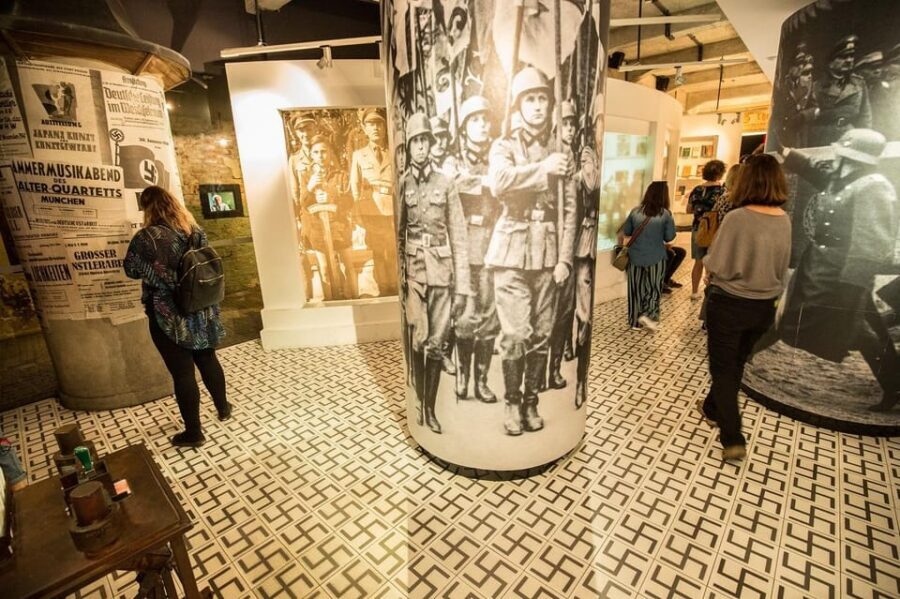
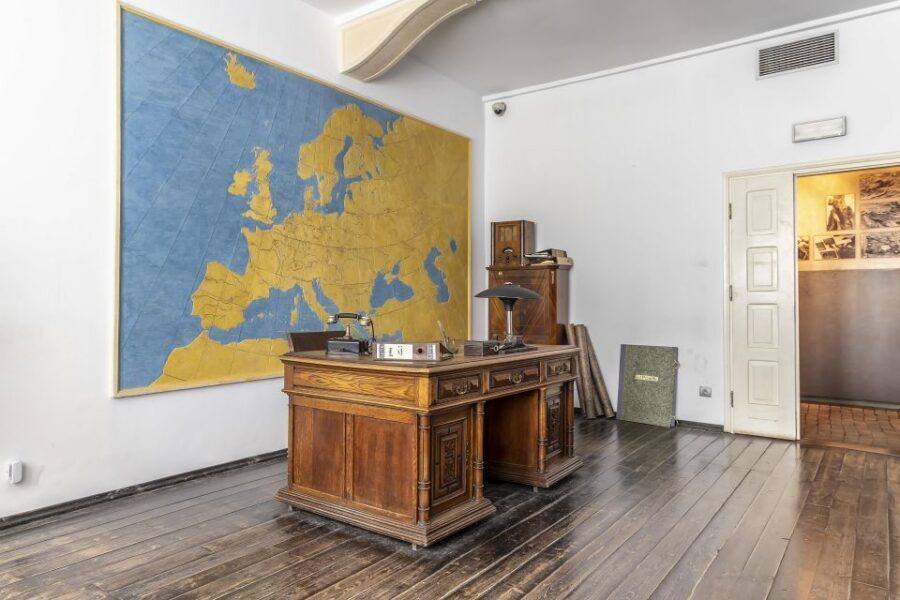
After Kazimierz, you continue to Schindler’s Enamel Factory, today one of Kraków’s most visited museums. The big benefit here is that you don’t wander through alone. With a licensed expert guide, you explore the permanent exhibition Kraków under Nazi Occupation 1939–1945, presented through the story of Oskar Schindler.
This portion is where the tour does something important: it acknowledges Schindler’s courage, then places it inside the larger system of occupation. Schindler employed Jewish workers and used his position, influence, and resources to help save them from deportation. The museum framing credits him with saving more than a thousand men and women, and it connects that to the people whose testimonies remain deeply moving.
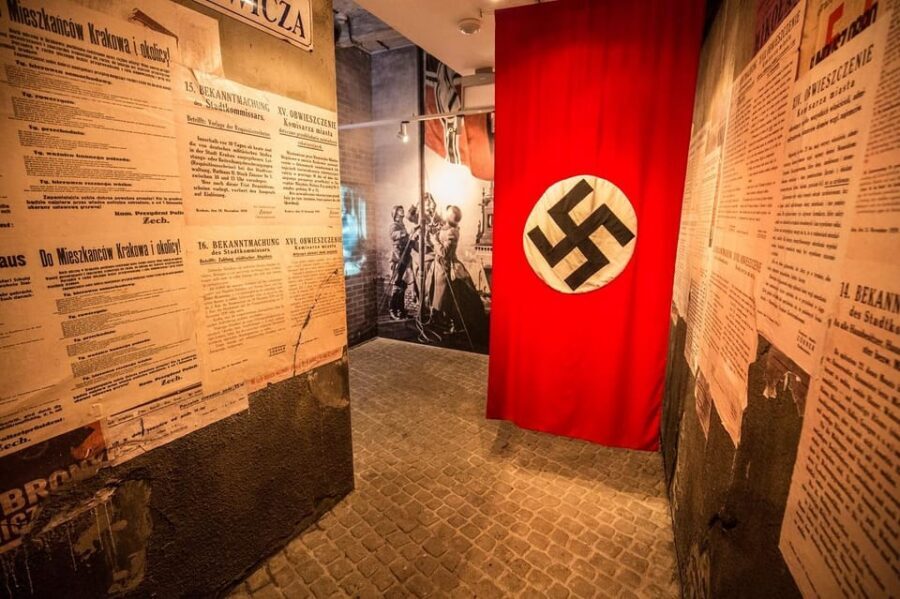
As you move through the exhibition, you’ll encounter historic photographs, personal belongings, and reconstructed streetscapes meant to reflect wartime life—fear, uncertainty, and hardship. This isn’t designed to be comfortable. It’s designed to make you understand.
A practical detail that matters for your expectations: the building originally functioned as a factory, but it now operates as a museum and does not contain original production equipment. So if you’re picturing a hands-on factory tour with machines everywhere, that’s not what this is. Think of it as a guided, emotional walk through the wartime experience, with the setting lending atmosphere rather than showing functioning industrial lines.
Inside the exhibition: how the guide keeps it from becoming a blur
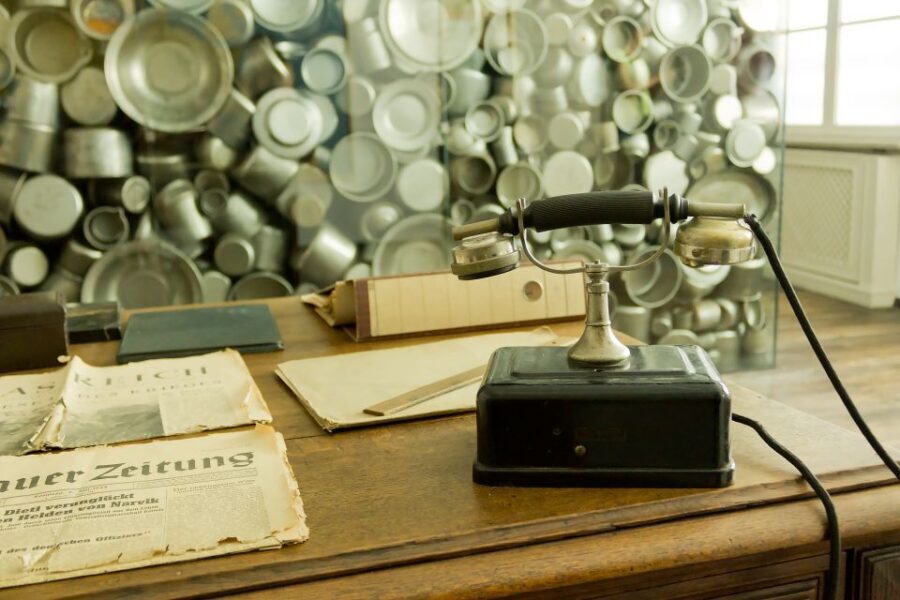
A museum with narrow passageways can feel exhausting if you’re doing it without structure. Here, the guide’s job is to give you a storyline you can hold onto while the environment restricts your movement.
The tour’s setup is also time-bound: it’s one combined experience (Kazimierz walk plus museum). That means you won’t get endless time in each corner. In return, you get something that many self-guided visits don’t provide: a guided emphasis on the parts that explain daily life under occupation beyond Schindler’s personal narrative.
And yes, pacing can vary slightly. One participant noted that it ran a bit over time. That tells me the biggest variable is how the group moves through the museum’s narrow layout and how questions come up. If you’re catching another appointment after the tour, give yourself buffer time.
Fast-track admission: the money-saver you don’t notice until you need it
You get fast-track admission, which means you skip the ticket line. With popular sites, lines can steal your momentum, especially when your time is already built into a 210-minute structure.
For value, this matters. You’re paying for a guided walking route plus museum access. If you had to do ticket lines on your own, the tour would likely become shorter in practice—or more stressful—because you’d spend time negotiating entry instead of learning.
Price and value: is $69 worth it?
At $69 per person for a 210-minute experience, you’re paying for three things bundled together:
- a walking tour through Kazimierz with a professional, licensed guide
- guided museum time connected to Kraków under Nazi occupation (1939–1945)
- fast-track admission to Schindler’s Factory
What makes it feel like good value is not just the combined length. It’s the way the two halves complement each other. Kazimierz gives you the setting and community structure. The museum then explains what the occupation did to real lives inside that world.
Also, group size is limited to 25 participants, which generally helps you get explanations without feeling like you’re just part of a moving crowd. If you’ve ever tried to follow a self-guided museum plan with limited attention, you’ll appreciate why a guide-led route can be worth paying for—even at a higher per-person price than a basic entry ticket.
Who this tour fits best (and who might want alternatives)
This is a strong match if you want a focused Jewish history tour that connects streets, synagogues, and the wartime narrative in a single storyline. It’s also ideal if you’re visiting Kraków and want to understand daily life in Nazi-occupied Kraków beyond Schindler’s famous role.
It’s less ideal if you:
- struggle with narrow passageways and tighter indoor spaces
- dislike structured time limits and would rather roam independently
- need a lot of frequent breaks, since it’s primarily a single combined schedule
If you’re traveling as a couple, a small group, or solo, the experience still works because the guide can keep the group together and tie details into one coherent explanation.
Tips to make the tour feel smooth
A few small moves help a lot with a 3.5-hour mix of walking and museum corridors:
- Arrive 10 minutes early. If you’re late, entry can’t be accommodated and tickets are non-refundable.
- Bring layers. Weather can affect comfort during the walk.
- Prepare for serious content. The museum uses reconstructed streetscapes and highlights fear, uncertainty, and hardship.
- Plan for names. The museum issues personalized tickets, and the full names of all participants are required at booking.
These aren’t “paperwork hassles.” They’re the difference between starting calm and starting rushed.
Booking languages and group rhythm
The tour runs with live guidance in German, French, Italian, English, and Spanish. All group tours are conducted in a single language, so pick your option carefully when booking.
Group tours also have a practical rhythm: limited to 25 participants, moving together from synagogue to synagogue, then into the factory museum. If you need quiet time, you can still take moments to look around—just understand you’ll be guided as a unit through the main narrative beats.
Should you book Schindler’s Factory & Kazimierz?
I’d book it if you want one itinerary that gives you both atmosphere and explanation: Kazimierz for the setting, then Schindler’s Enamel Factory for the occupation story told through people and testimonies.
Skip it (or pair it with extra time elsewhere) if you’re expecting a relaxed, slow-paced wandering day, or if you strongly dislike enclosed spaces. This is a structured, guided experience built for clarity and connection.
If you choose to go, arrive early, dress for the weather, and give the museum the attention it deserves. The payoff is a Kraków story you can actually picture: streets where Jewish life once centered, and a factory museum that shows why survival took courage, connections, and action.
FAQ
Where does the tour start?
Meet your guide on the steps of the Old Synagogue. Your guide will be holding a Kazimierz Guided Tour sign.
How long is the tour?
The total duration is 210 minutes.
What languages are available for the live guide?
The tour offers live guiding in German, French, Italian, English, and Spanish.
Is food included?
No. Food and drinks aren’t included.
What’s included with the ticket price?
You get a walking tour through Kraków’s historic Kazimierz Jewish Quarter, a professional licensed guide, and fast-track admission to Schindler’s Factory.
Do I need to provide names for the museum?
Yes. Personalized tickets are issued by the museum, and the full names of all participants must be provided at booking to avoid denied entry.