REVIEW · POZNAN
Private 3-hour Poznan Old Town Tour
Book on Viator →Operated by PT Team · Bookable on Viator
Poznan has a gift for storytelling. In just about three hours, this private Old Town walk moves from the city’s earliest roots on Cathedral Island to the famous Renaissance Town Hall and its noon ritual. I like how it pairs big-picture context with street-level details, so you’re not just looking at pretty buildings. I also like that the route leans heavily on sights where entry is free, meaning your money goes mainly to the guide doing the explaining.
One thing to think about: the tour includes a stop at the Croissant Museum, but admission there is not included. So if you want the full sweet experience, budget a little extra.
In This Review
- Key things to know before you go
- A tight 3-hour loop: how this tour makes Poznan click
- Ostrow Tumski and Porta Posnania: start with the oldest layer of Poznan
- Old Market Square and the Renaissance Town Hall: the noon show you plan for
- Inside the Town Hall Museum: Revival Hall and the sculptures overhead
- Fara Church (St Stanislaus): baroque drama with a named artist
- The Croissant Museum and St. Martin croissants: a sweet finish that costs extra
- Price and value: where your $110.01 really goes
- Timing on foot: how to get the most out of the route
- Who should book this private Poznan Old Town tour
- Should you book this private Poznan Old Town Tour?
- FAQ
- How long is the private Poznan Old Town tour?
- What language is the tour offered in?
- Is this tour private or shared?
- What is included in the tour price?
- Are admission fees included?
- Where does the tour start and end?
- Will I need a paper ticket?
- Is free cancellation available?
- Is the Croissant Museum stop part of the tour?
Key things to know before you go
- Private for your group: only your party joins, so the pacing feels human.
- English guide included: you’ll get local context tied to what you’re seeing.
- Cathedral Island plus the Old Market Square: two different “faces” of Poznan in one loop.
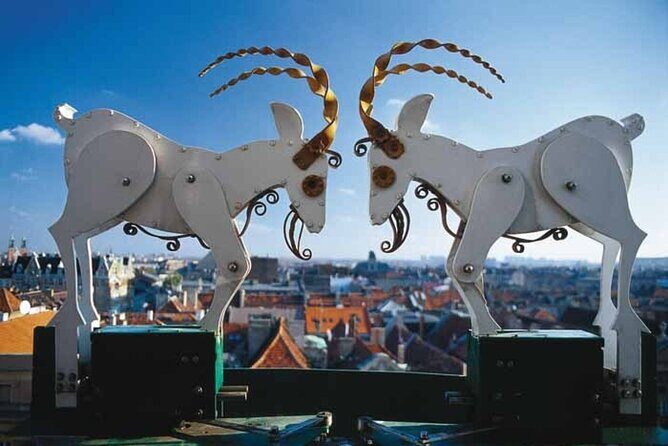
- Town Hall billy goats at noon: a scheduled moment you can plan photos around.
- Most major sights are free to enter: Town Hall, key churches, and Cathedral Island don’t require paid tickets on this route.
- Croissant Museum costs extra: everything else is mostly about wandering and learning; the museum is the add-on.
A tight 3-hour loop: how this tour makes Poznan click
This is a short walk, but it’s built like a good meal: each stop gives you a different flavor, then connects back to the bigger story of the city. You start on Cathedral Island at the main cathedral area, then work your way to the medieval Old Town core around the Old Market Square and Town Hall. After that, you shift into two classic Poznan church-and-art stops, and finish back in the Old Town with the Croissant Museum.
The private format matters more than you might think. With only your group, you’re not stuck in a rigid group shuffle. You can ask questions, linger at a façade for a minute longer, or ask the guide to explain a detail you notice (like a set of architectural features or a church detail) without feeling rushed.
Also, the tour uses a mobile ticket. That’s a small thing, but it helps your day run smoothly—no paper hunt, no last-minute worry about where you put tickets.
You can also read our reviews of more private tours in Poznan

Ostrow Tumski and Porta Posnania: start with the oldest layer of Poznan
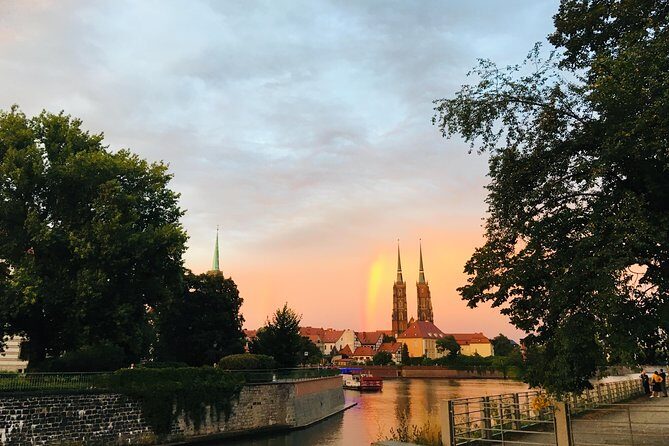
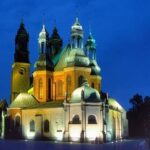
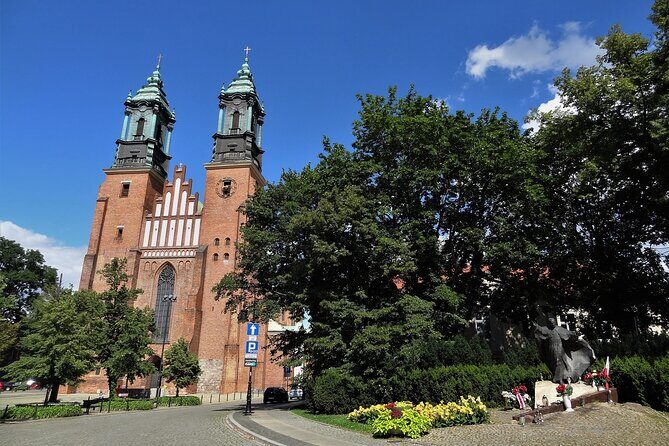
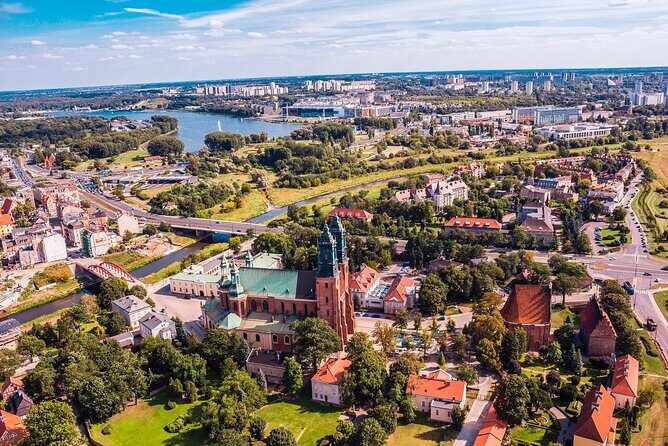
Your tour begins at the Basilica-Archikatedralna św. Apostołów Piotra i Pawła on Ostrów Tumski 17, Cathedral Island. This isn’t just a scenic starting point. It’s the historical anchor of the city, set in the fork of the Warta River and the Cybina stream.
You’ll be in the area tied to very early Polish history. The guide points out the Cathedral of Saints Peter and Paul, often mentioned as the country’s oldest cathedral, and the place associated with early rulers like Mieszko I and Boleslaus the Brave. Even if you don’t know the names yet, the guide’s job here is to put them into a human timeline so they don’t feel like textbook trivia.
Then there’s Porta Posnania Interactive Heritage Centre—the white, modern structure you enter via a footbridge crossing the river. It’s a “now-meets-then” moment: medieval roots beside a contemporary design that’s won architectural attention. You’re there for about 30 minutes, and the entry for this part is free, which keeps the pace easy on your wallet.
Practical tip: this is a good place to settle your bearings. If you want to understand Poznan later as you walk the Old Town, this start point does the job fast.
Old Market Square and the Renaissance Town Hall: the noon show you plan for
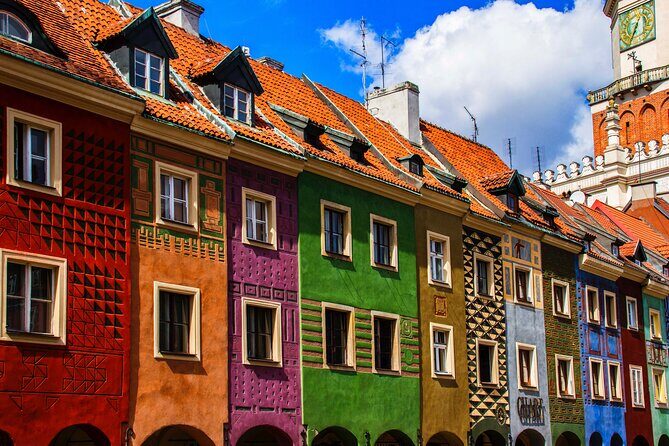
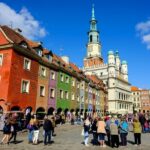
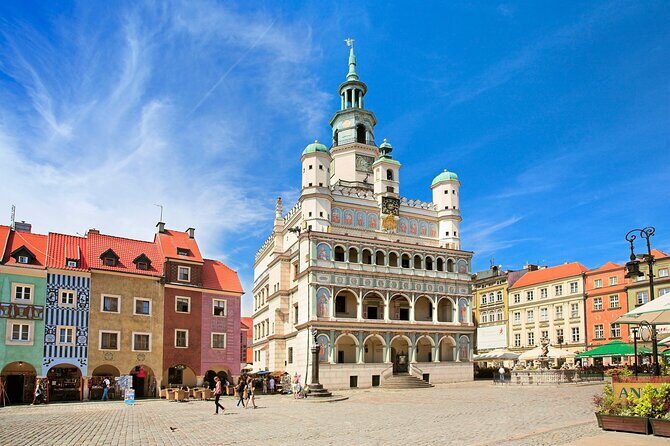
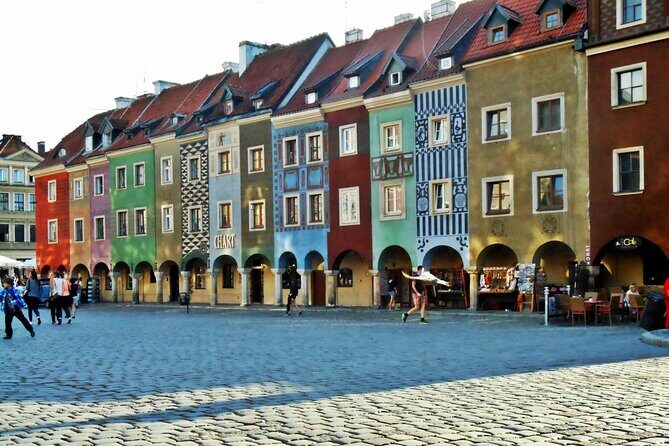
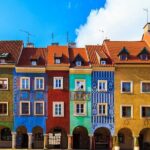
Next comes the heart of Poznan: the Old Town around the Old Market Square, with its row of historic houses and the city’s most famous landmark—the Poznan Town Hall. The Town Hall is a Renaissance symbol of the city, founded in 1253 and known for its striking façade, including a three-storied arcade loggia.
Here’s the classic moment: the Town Hall tower has the famous billy goats. They butt their heads together every day at noon. This is the kind of detail that sounds like a fun local gimmick—until you see it and realize how it becomes part of the city’s rhythm. Because the tour is paced for key sights, you’ll have a solid chance to time your viewing for the noon action, so you can skip the guessing game on your own.
The guide also helps you connect the square to surrounding architectural highlights. You’ll get pointed toward major churches such as Fara basilica and St Antony church, plus the idea of Poznan’s elevated Old Town position toward the west, where Przemysl Hill and the reconstructed Royal Castle offer a panorama from the tower. Even if you don’t spend extra time climbing on your own after the tour, you’ll come away with a mental map of where to go next.
This stop runs about 45 minutes with free entry, so it’s one of those rare sightseeing stretches where you’re paying in time, not tickets.
Inside the Town Hall Museum: Revival Hall and the sculptures overhead
The tour doesn’t stop at the exterior. You also get to enjoy the Town Hall interior, where the scale and design shift gears from street-level to art-and-symbols.
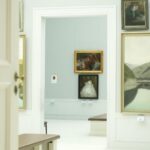
A key highlight is the Museum of the History of the City of Poznan. The focal point is the Grand Hall, also known as the Revival Hall. The ceiling and interior decor use polichromed sculptures that cover everything from crests and symbolic religious imagery to mythological scenes, exotic animals, and even planets.
If you’re wondering why you should care about sculptures you can’t fully identify, here’s the practical angle: a guide can translate what you’re looking at into understandable themes—what it meant for Poznan, how the city presented itself, and how art was used like a public language. It turns “pretty room” into “I get what they were saying.”
This portion is about 15 minutes and entry is free. Short and sweet, but it gives the Town Hall more weight than a photo stop.
Fara Church (St Stanislaus): baroque drama with a named artist
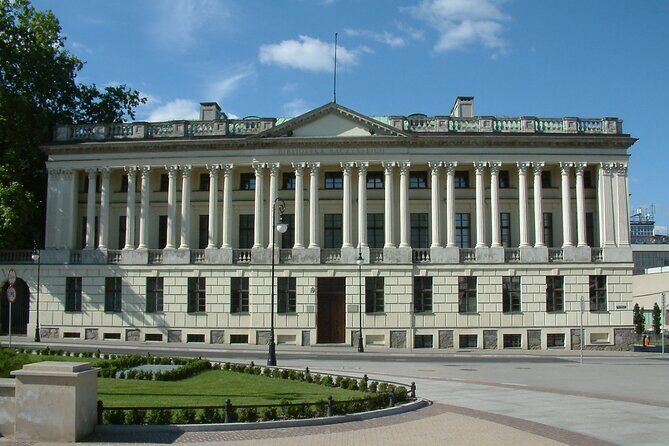
After the Town Hall, you head to the Parish Church of St Stanisław, commonly known as the fara church. This one is a Baroque powerhouse: three naves, galleries over the lateral naves, and massive columns in the main nave.
The tour gives you context for why the church looks the way it does. It started as a Jesuit temple, then construction went in stages beginning in 1651 and running until the mid-18th century. The guide also explains how city defenses played a role—some city wall fragments were demolished and a moat was filled to make space. That kind of detail makes the building feel earned, not just “old.”
Two specific things I think you’ll appreciate here:
- The main altar and entrance portal were designed by Pompeo Ferrari.
- The church interior plays with light in a way that can feel almost atmospheric, like the space is softly lit from within.
It’s about 20 minutes on this route, with free admission. Even if churches aren’t your thing, the architecture here is the reason. You’ll see why Baroque style relied on drama, scale, and ornament to communicate through emotion, not just facts.


The Croissant Museum and St. Martin croissants: a sweet finish that costs extra
The last stop is the Croissant Museum, tied to one of Poznan’s signature sweets: St. Martin croissants. These are made from Danish pastry dough using a strict recipe, and the filling often uses white poppy seeds, topped with icing.
What makes this more than a gimmick is that St. Martin croissants have official recognition as a Protected Geographical Indicator. The museum uses an interactive approach—there’s an animated story of how this baked good became a regional symbol, presented under a polychromed wooden ceiling in a Renaissance tenement within the Old Town Market Square area.
This is the one part of the tour where admission is not included. If you’re coming for the cultural story, it’s worth considering because it gives the sweet a place in Poznan’s identity, not just a food description. If you’d rather spend that money elsewhere, you can still enjoy what’s around you in the area during the allocated time, but the structured museum experience itself has a separate cost.
The tour also points you toward other regional flavors you might want to try later, like pyra z gzikiem (baked potato with cottage cheese dip) and Poznan-style duck with potato dumplings, baked apple, and red cabbage. Even if you don’t buy anything right away, the guide’s food cues make it easier to choose what to order when you finally sit down to eat.
Price and value: where your $110.01 really goes
At $110.01 per person for a private 3-hour tour, the key value question is: what do you get besides walking and looking?
Here’s the practical breakdown:
- You get a professional local guide included in the price.
- You visit several major sights where entry is free on this route (Cathedral Island area, Old Town areas, the Town Hall interior, and the fara church).
- The only clear extra you might pay for is Croissant Museum admission.
That means a big chunk of the cost goes toward guided interpretation. And that’s where this tour earns its keep. You’re not just absorbing architecture—you’re learning why those buildings exist, what they meant to power and identity, and what local symbols (like the billy goats) represent.
Also, since the tour is offered in English and uses a mobile ticket, it reduces the friction of planning. You show up, you follow the story, you get to spend your time actually seeing Poznan.
Timing on foot: how to get the most out of the route
This is a walking tour with a schedule built around specific stop lengths: about 30 minutes at Ostrow Tumski, around 45 minutes in the Old Town area, shorter Museum-of-Town-Hall time, then two church stops, and finally about 45 minutes at the Croissant Museum.
The only big “timing-sensitive” element is the billy goats at the Town Hall tower at noon. The tour plan is designed to bring you there during that moment, so you’ll want to be ready to move when the guide signals it—don’t let photo breaks steal the minutes you need for the show.
For comfort, plan for city walking. Dress for weather, and keep a water bottle handy. (Poznan can be pleasant one moment and cool the next.) If you’re the type who likes to read every plaque, tell your guide early. In a private tour, they can adjust your time so you get the explanation without sacrificing the main sights.
Finally, note that the tour ends at a different point: Budynek Arkadii, Plac Wolności 11. It’s handy because you may find it easier to continue exploring or grab a meal afterward.
Who should book this private Poznan Old Town tour
This tour is ideal if you:
- Want a guided path through Poznan’s main highlights without spending time figuring out connections.
- Like when a guide ties architecture to people and events (early Polish history through the cathedral area, then city identity through the Town Hall and its symbols).
- Care about seeing the “known” highlights without getting stuck at the wrong spot at the wrong time.
It’s also a smart choice for first-timers to Poznan. You get an orientation sweep: where the roots are, where the civic story is told, and where Baroque art shows its teeth.
If you already know you only want food and photos and zero context, you might find parts of the churches or museum time less essential. But if you enjoy learning while you walk, this format fits well.
Should you book this private Poznan Old Town Tour?
Yes—with one practical caveat.
Book it if you want a focused introduction to Poznan that hits Ostrow Tumski, the Old Market Square and Town Hall (including the billy goats at noon), the fara church, and a guided stop at the Croissant Museum area. Most of the major stops are free to enter on this route, so you’re not paying ticket fees for every step.
Consider skipping or budgeting for the Croissant Museum admission if you’d rather keep spending tight. But even then, the food cues from the guide can help you plan what to try next.
If you like conversations as you walk—asking why something was built, what a symbol means, or how the city evolved—this private 3-hour tour is a solid way to make Poznan feel personal, fast.
FAQ
How long is the private Poznan Old Town tour?
It runs for about 3 hours.
What language is the tour offered in?
The tour is offered in English.
Is this tour private or shared?
It’s a private tour/activity, so only your group participates.
What is included in the tour price?
A professional local guide is included.
Are admission fees included?
Entry is free for several stops on the route, but the Croissant Museum admission is not included.
Where does the tour start and end?
It starts at Bazylika Archikatedralna św. Apostołów Piotra i Pawła, Ostrów Tumski 17, Poznań, and ends at Budynek Arkadiiplac Wolności 11, Poznań.
Will I need a paper ticket?
No. You’ll use a mobile ticket.
Is free cancellation available?
Yes, you can cancel for a full refund if you cancel up to 24 hours in advance of the experience start time.
Is the Croissant Museum stop part of the tour?
It is part of the tour route, but admission to the Croissant Museum is not included.