REVIEW · KRAKOW
Pierogi Cooking Class: Mastering the Art of Polish Dumplings
Book on Viator →Operated by Delicious Poland · Bookable on Viator
Pierogi are basically edible comfort in Polish form, and making them yourself is the fun part. In Krakow, this class gets you making pierogi from scratch: dough, savory filling, sweet filling, shaping, boiling, and then eating. I love that it’s a hands-on, step-by-step lesson in English with small-group attention, plus you get to finish with a beer or a glass of wine.
The one thing to consider is timing and expectations: the class runs about 2 hours, so it moves at a steady pace, and if your group grows larger than usual (or if you have special needs), you’ll want to confirm how stations and portions will work.
In This Review
- Key things I’d bank on before you book
- A Central Krakow Pierogi Class That Feels Like a Real Night Out
- The Real Lesson: Dough, Filling, Sealing (Not Just Pretend Cooking)
- Pierogi Ruskie and Fruit Dumplings: Two Fillings, Two Sides of Polish Comfort
- Boiling to Perfection and Turning Work Into Dinner
- How the Instructor Makes It Easy (and Why Small-Group Matters)
- What the $82.72 Price Buys You (and Where Value Really Shows)
- Practical Tips Before You Go (So Your Dumplings Don’t Fight Back)
- When This Pierogi Class Is a Perfect Fit (and When It Might Not Be)
- Should You Book This Pierogi Cooking Class in Krakow?
- FAQ
- How long is the pierogi cooking class?
- Is the class taught in English?
- What do I make during the class?
- Is beer or wine included?
- What’s the meeting point in Krakow?
- What is the cancellation window?
Key things I’d bank on before you book
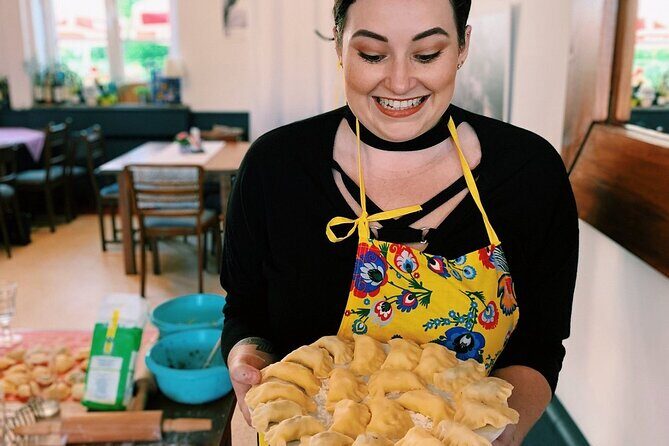
- Dough from scratch: you learn the base, not just the filling.
- Two fillings, savory and sweet: pierogi ruskie plus fruit-filled dumplings.
- Beer or wine included: you finish the meal as part of the experience.
- Local instructors: patient, funny, and practical in the way they guide you.
- Central meeting point: you’re picked up near public transport.
- Smart casual and family friendly: no chef coat required, and it works for mixed ages.
A Central Krakow Pierogi Class That Feels Like a Real Night Out
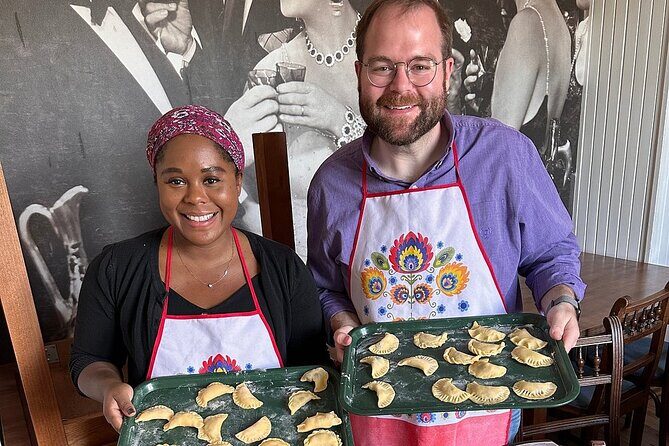
Krakow has tourist traps. This pierogi class isn’t one of them. You meet at WavelovePodchorążych 3 (easy for public transport), then head to a local restaurant near the city center where the whole thing happens. That matters because you’re not hunting around town for a cooking room you can’t find.
The vibe is also built for real life. This is family friendly, and the lesson is set up for people who are brand new to dough. You’ll be guided through each step—so instead of watching someone else cook, you’re the one pressing, filling, sealing, and boiling.
One more reason I like the setup: the class includes food tasting and alcoholic drinks, so it’s not just a demo. You learn the technique, then you eat what you made.
You can also read our reviews of more cooking classes in Krakow
The Real Lesson: Dough, Filling, Sealing (Not Just Pretend Cooking)
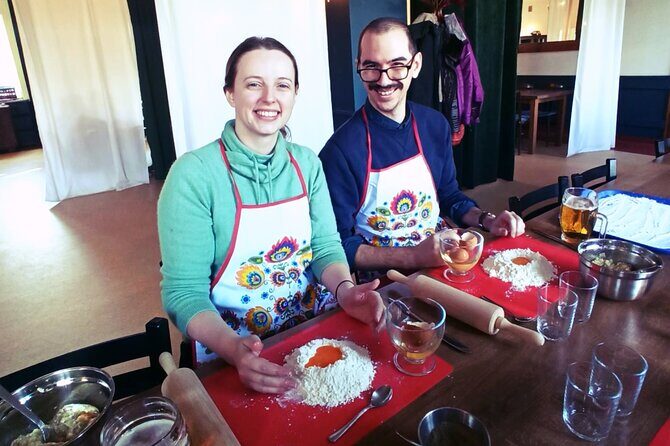
The heart of this experience is doing pierogi the traditional way: from start to finish. First, you make a dough from scratch. That’s a big deal because pierogi dough isn’t difficult, but it does require the right feel—enough elasticity to seal, but not so tough that it fights you when you shape.
You then move to the fillings. You’ll handle two kinds:
- a savory filling
- a sweet filling
At each stage, the instructor walks you through what to do and why. People often assume pierogi are just “stuff and fold.” But the difference between decent and great pierogi is the texture and portioning—how much filling goes in, how firmly the dough is sealed, and how you handle dough so it doesn’t dry out.
You’ll also learn practical rhythm: how to work without rushing, how to keep things organized at your station, and how to troubleshoot common issues like sealing that comes undone. And because the class is taught in English, you get the instructions without the guesswork.
If you’re worried you’ll get stuck because you’re not a confident cook, don’t be. The teaching style described by past sessions is hands-on and patient, with instructors repeatedly bringing people back to basics and keeping explanations clear.
Pierogi Ruskie and Fruit Dumplings: Two Fillings, Two Sides of Polish Comfort
Pierogi ruskie is one of the most classic versions in Poland. In this class, you make it with potatoes mixed with creamy and tangy white cheese (twaróg). It’s hearty and slightly tangy—exactly the flavor profile that makes this dumpling so popular in colder months and family kitchens.
Then you switch to sweet. You’ll make fruit-filled pierogi using fruits that are currently available. That seasonal note is more useful than it sounds. It means the sweet filling isn’t stuck in a generic recipe list—you get a live example of how Polish cooks adapt to what’s in season.
Why I think this pairing is smart: you’re learning a core technique that applies to almost any filling, while still getting a satisfying contrast at the table. Savory dumplings teach you how to balance richness with potato-cheese texture. Sweet dumplings teach you how to manage moist fillings so they still seal and cook well.
Also, shaping matters for both kinds. Even if your first attempts aren’t perfect, you’ll leave with a feel for how the dumplings should look when they’re ready to boil.
Boiling to Perfection and Turning Work Into Dinner
Once your pierogi are filled and shaped, you boil them until they’re cooked. This is where the class becomes more than craft. Boiling is the moment where correct dough thickness, sealing, and filling amounts all show up.
You’ll then eat your homemade dumplings on-site. And yes, there’s a drink pairing built into the experience: you can choose a local beer or a glass of wine. That’s a practical perk because it turns the class into an actual meal, not just a snack break.
If you’re the type who likes to cook and then immediately taste-test the results, this is your kind of evening. And if you’re bringing family, the meal helps everyone relax. Kids may not care about twaróg or potato ratios, but they care that the dumplings taste good and come with a fun social setting.
How the Instructor Makes It Easy (and Why Small-Group Matters)
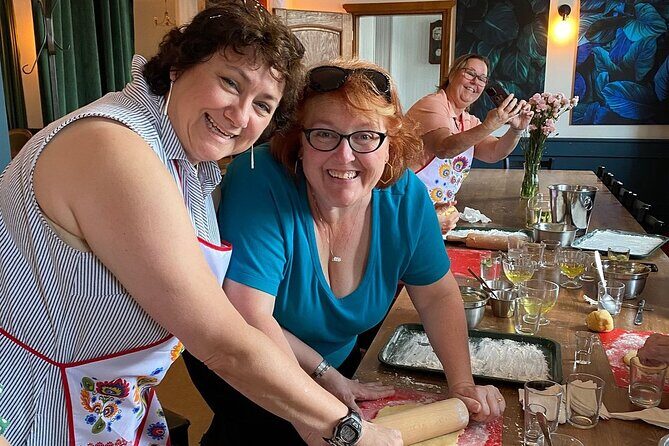
This class is led by local instructors, and the teaching style is a big reason it earns such high scores. In past sessions, people talked about instructors like Olga, Magda, and Maria—not just as friendly personalities, but as teachers who keep things moving while still explaining clearly.
A key detail: the class is designed for personal support. Even though the provider’s stated maximum is up to 50 travelers, the experience itself is described as small-group focused. Translation: you’re not stuck waiting for help while a big crowd blunders through dough.
What you’ll feel in practice is:
- step-by-step pacing
- hands-on guidance when your dough behaves badly
- friendly troubleshooting so you don’t freeze up
One more teaching bonus mentioned in the experience notes: you should get enough materials, equipment, and guidance to succeed even if you’ve never cooked from scratch. That’s crucial for value. If you left with only a vague lesson, you’d still have to guess at home. Here, the class is structured so you learn the parts that make replication possible.
A few more Krakow tours and experiences worth a look
What the $82.72 Price Buys You (and Where Value Really Shows)
At $82.72 per person for about 2 hours, you’re paying for more than ingredients. You’re paying for:
- instruction through every stage
- equipment and supplies
- food tasting
- and alcoholic beverages (beer or wine included)
Here’s how I judge value on this kind of class: can you recreate it at home without spending days figuring it out? The fact that you make dough from scratch and handle both savory and sweet fillings means you’re not leaving with only one technique. You’re leaving with a repeatable process you can use for variations.
And since the class happens near the center of Krakow with pickup from a centrally located meeting point, you’re also saving time. Time in a city like Krakow is real money—especially when you’re planning a busy itinerary. This lesson gives you a structured evening with transport handled.
Do note one pricing-to-expectation mismatch that popped up in some past experiences: a couple of people said they wanted more than one drink or more variety/quantity. That doesn’t mean the class isn’t good value—it just means you should mentally frame it as a focused meal experience, not a party night with free-flowing refills.
Practical Tips Before You Go (So Your Dumplings Don’t Fight Back)
A smart class goes smoother with a little prep on your side. Here are the practical things that align with the information you’re given:
- Dress smart casual. You’ll be working with dough, so avoid anything you’ll hate getting slightly messy.
- Plan for a 2-hour block where you’ll actually cook. Wear shoes you’re comfortable standing in.
- If you have dietary requirements, tell the organizers at booking. The class notes that you should advise needs in advance.
- Keep your phone accessible for a mobile ticket check-in.
Also, if you’re thinking about taking the recipe home, pay attention to whether the recipe is shared during the class or emailed afterward. One past participant mentioned disappointment about not receiving recipes by email when expected. The safe move: ask when you’ll get the recipe and double-check your inbox after the class.
When This Pierogi Class Is a Perfect Fit (and When It Might Not Be)
This works best if you want something active to do in Krakow that feels local and practical. It’s also a strong choice if you:
- like food-focused experiences
- want to learn a skill you can repeat
- are traveling in a group where different people enjoy different tasks
- want a family-friendly option
It may be less ideal if your schedule is extremely tight. While the class is only about two hours, one past negative experience described late changes due to venue availability and communication issues. You can’t control the world, but you can control buffer time.
It also may take a little extra attention if you’re booking for a larger-than-usual group size. There was at least one account where extra attendees led to ingredient and workflow stress. If that’s your situation, contact the provider ahead of time and confirm how they handle station setup, ingredient quantities, and how the amount of pierogi made scales with group size.
Should You Book This Pierogi Cooking Class in Krakow?
If you want a Krakow experience that gives you both a story and a skill, I’d say yes. The strongest reasons to book are simple: you make pierogi from scratch, you learn two fillings (savory and sweet), and you finish with an on-site meal plus beer or wine. That’s a lot of real-world learning and eating for one evening.
I’d hesitate only if you’re the type who hates any uncertainty with timing, or if you’re traveling with a very large group and need guaranteed quantities. In that case, confirm details early and don’t book it as the last thing on your schedule.
Otherwise, this is the kind of cooking class that turns Polish dumplings from a menu item into something you can make at home with confidence.
FAQ
How long is the pierogi cooking class?
It’s approximately 2 hours.
Is the class taught in English?
Yes, the class is offered in English.
What do I make during the class?
You make pierogi from scratch, including the dough, two fillings (savory and sweet), and then you boil and eat what you make.
Is beer or wine included?
Yes. Alcoholic beverages are included, and you can choose between a local beer or a glass of wine with your meal.
What’s the meeting point in Krakow?
The meeting point is WavelovePodchorążych 3, 30-084 Kraków, Poland.
What is the cancellation window?
You can cancel up to 24 hours in advance of the experience start time for a full refund. If you cancel less than 24 hours before, the amount paid is not refunded.