REVIEW · KRAKOW
Łagiewniki-Sanctuary of Divine Mercy and John Paul II
Book on GetYourGuide →Operated by Jordan Group · Bookable on GetYourGuide
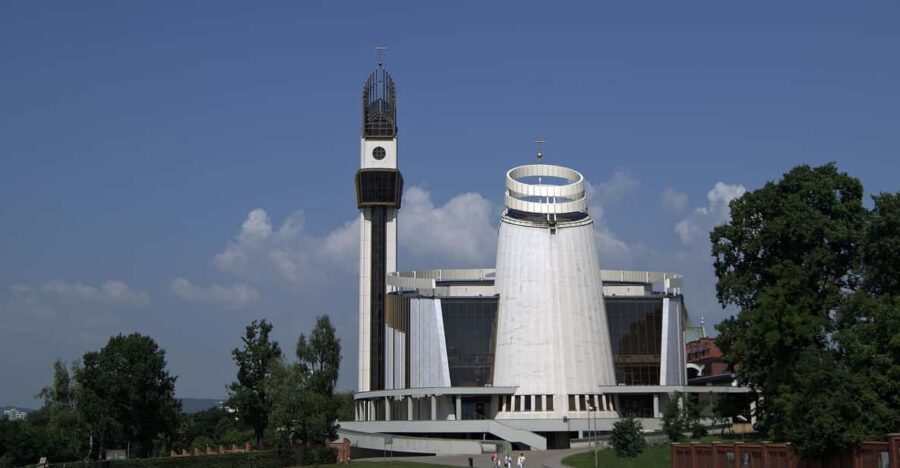
Kraków’s faith stops can feel very personal. This 5-hour tour links the Sanctuary of Divine Mercy with the legacy of John Paul II, with a guided visit that helps you make sense of what you’re seeing instead of just walking past it. I particularly liked the slower, question-friendly pace around St. Faustina’s tomb and the way the day mixes modern church design with prayer-focused spaces.
One thing to consider: food and drinks aren’t included, so plan a snack or time your lunch around the tour length.
I also like how the experience is guide-led rather than crowd-herding. In the reviews, guides named Alexandra and Oleksandra are praised for being attentive, answering questions, and not rushing people who want to linger. If that kind of respectful pace matters to you, you’ll probably feel comfortable here.
In This Review
- Quick hits before you go
- Łagiewniki, Divine Mercy, and John Paul II in one practical route
- Hotel pick-up, a 5-hour pace, and why it helps
- Inside the Sanctuary of Divine Mercy and St. Faustina’s tomb
- Observation tower time: a calm reset between shrines
- Museum of St. Faustina: turning devotion into context
- Sanctuary of St. John Paul II and the Have No Fear! Center
- How the guides shape the whole day (Alexandra and Oleksandra)
- Price and what you’re really paying for ($122 per person)
- Who should book this tour, and who might skip it
- Should you book this Łagiewniki Divine Mercy and John Paul II tour?
- FAQ
- How long is the Łagiewniki Divine Mercy and John Paul II tour?
- Where does the tour start and end?
- What’s included in the price?
- Is food or drinks included?
- What languages are available?
- Can I cancel and get a refund?
Quick hits before you go
- 5 hours from Kraków, with transport and a guided structure that keeps the day on track
- St. Faustina’s tomb and the Divine Mercy message, presented as something you can understand, not just observe
- Observation tower time, giving your eyes a break from indoor shrines and museums
- Museum of St. Faustina, adding context to the devotion connected to her life and visions
- Sanctuary of St. John Paul II within the Have No Fear! Center, combining church, museum, and exhibits
- Live guide in English, Polish, Ukrainian, or Russian, with a Q-and-A style that several people highlight
Łagiewniki, Divine Mercy, and John Paul II in one practical route
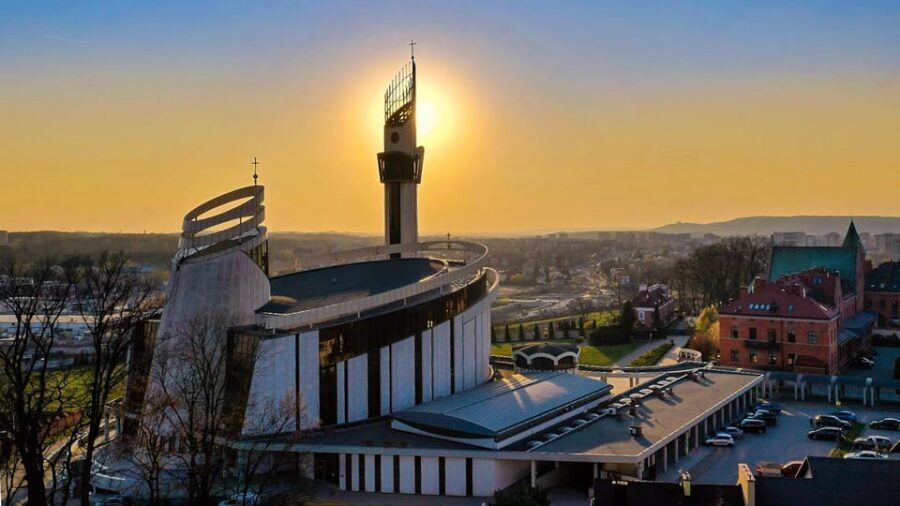
If you’re already spending time in Kraków, this is one of the more meaningful day plans you can add. The focus is specific: St. Faustina and the Divine Mercy devotion, then a second stop tied to Pope John Paul II’s life and legacy. That focus matters. It turns a list of religious sites into a story you can follow.
What also works is the balance between space for contemplation and space for explanation. You’re not just shown rooms; you’re given context for why people visit, pray, and reflect at each place. That’s ideal if you like visiting sacred sites but you also want to understand the “why” behind them.
You can also read our reviews of more tours and experiences in Krakow.

Hotel pick-up, a 5-hour pace, and why it helps
This tour is designed around a simple rhythm: pickup in Kraków, guided visits, and then returning to Kraków at the end. The total duration is 5 hours, which is long enough for you to see everything important without feeling like you’re cramming.
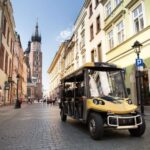
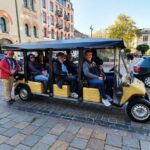
The transport component matters too. Even a short transfer can eat time when you’re navigating on your own. With transportation and hotel pickup/drop-off included, you can spend the day focused on the shrines and museum rather than logistics.
You’ll also benefit from the language options: the live guide is available in English, Polish, Ukrainian, and Russian. That’s a big deal here because the tour is interpretive. It’s about devotion, symbolism, and legacy—not just location spotting.
Inside the Sanctuary of Divine Mercy and St. Faustina’s tomb
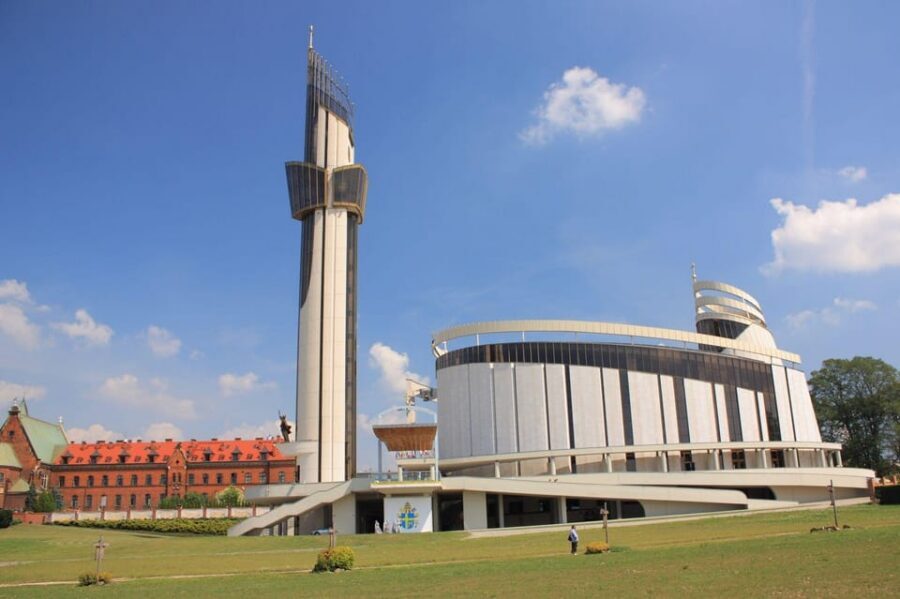
Your first major stop is the Sanctuary of Divine Mercy, closely tied to the life and mission of St. Faustina Kowalska. The heart of the experience is her tomb, which serves as a focal point for prayer and reflection. Even if you’re not the type to pray at shrines, you’ll likely notice how central this place is to visitors’ attention.
From there, you’ll move through the sanctuary and its main basilica. The basilica is described as modern in design, yet it’s still filled with a sense of sacred history. That combination can be surprisingly grounding. It feels less like a theme park stop and more like a working place of worship where the setting helps you slow down.
The guiding value here is context: you learn about the impact of the Divine Mercy devotion and the message tied to God’s boundless love and forgiveness. Instead of reading that in a brochure, you get it framed while you’re standing in the physical setting where people come to connect with it.
Practical tip: give yourself permission to linger at the tomb area. Part of the appeal of a guided visit is that you can ask questions and stay present without feeling like you have to “keep up.”
Observation tower time: a calm reset between shrines
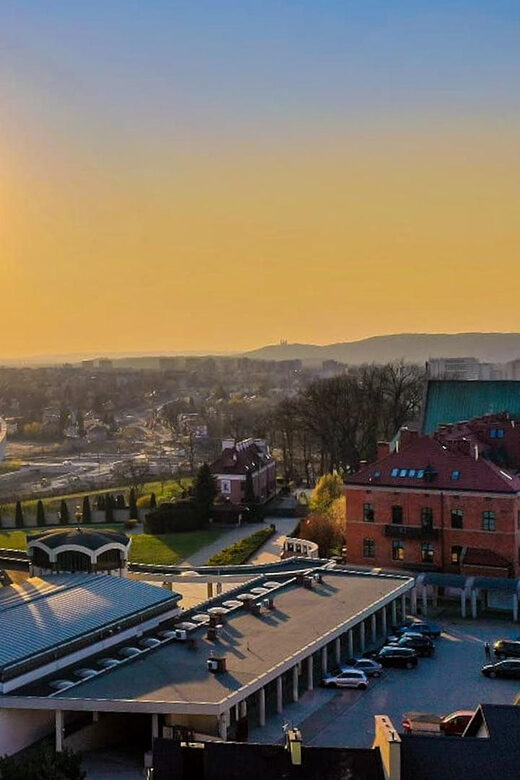
After the sanctuary portion, you also get sightseeing of the observation tower. It’s one of those stops that quietly improves the day. When most of your time is spent indoors—or in places designed for quiet focus—your brain appreciates a change of pace.
The tower visit is listed as part of what’s included, so you can plan for a short transition moment. Think of it as your reset button: a bit of open-air time, a different viewpoint, and a chance to reorient before the next museum-and-sanctuary segment.
If you’re the type who gets “shrine fatigue” after too many similar spaces, this tower stop can be a lifesaver. It breaks the emotional intensity with something practical and visual.
Museum of St. Faustina: turning devotion into context
The tour includes a visit to the Museum of Saint Faustina. Museums like this work best when they connect ideas to the person they’re tied to. In this case, the tour context centers on St. Faustina and the Divine Mercy message, so the museum visit helps you understand what people are reflecting on.
The value isn’t just facts. It’s clarity. You’ll come away with a more coherent sense of how devotion, life story, and worship practices connect. That helps if you’ve ever visited religious sites and felt like you were missing the thread that turns locations into meaning.
Also, since you’ll have a live guide, you can ask questions while you’re looking at the exhibits. That’s a big advantage over wandering on your own, where you might see things but not know what to notice.

Sanctuary of St. John Paul II and the Have No Fear! Center
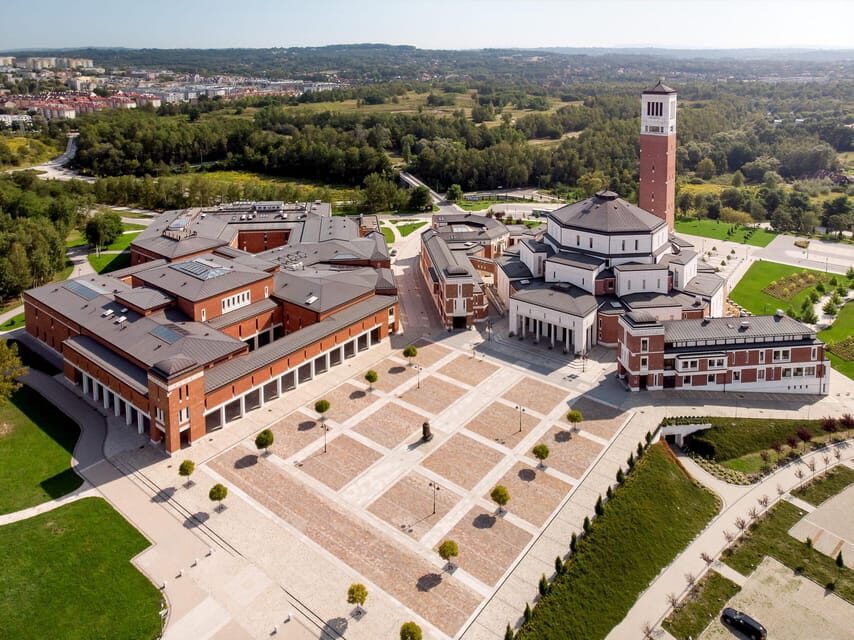
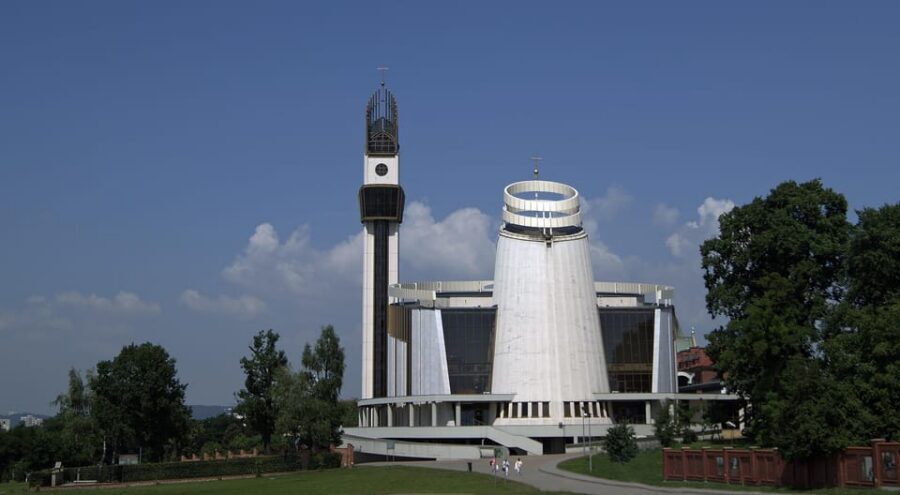
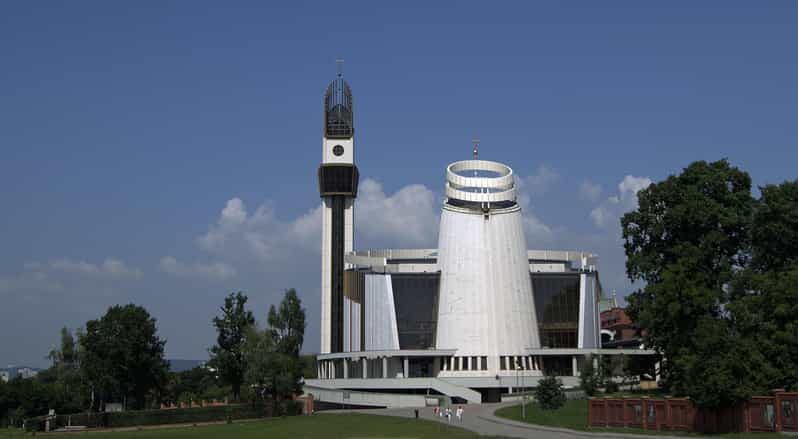
Next, the tour travels to the Sanctuary of St. John Paul II, connected to the “Have No Fear!” Center. This part is built differently from the Divine Mercy stop. It’s dedicated to John Paul II’s life and legacy, and the center includes a church, a museum, and various exhibits.
This is where architecture and presentation matter. The tour description emphasizes a blend of modern elements with traditional features. When sacred sites mix styles, it can feel confusing at first glance—but on a guided tour, you’re more likely to understand why the space was designed that way and what it’s intended to communicate.
As you move through the church and exhibits, you’ll be guided through teachings and significant moments of John Paul II’s papacy. For many visitors, this works as a second “story” running parallel to the Divine Mercy devotion. Together, the two stops create a full day about faith, message, and legacy—without turning the schedule into a blur.
How the guides shape the whole day (Alexandra and Oleksandra)
The biggest praise in the reviews is about the guide’s style. People specifically highlight that the guide is attentive and does not rush. That matters because these sites reward time. If you’re forced to move on quickly, you lose the chance to reflect where reflection is expected.
One reviewer praised Alexandra for being knowledgeable about both Saint Faustina and John Paul II, and for making it feel like there was truly a lot to see. Another praised Oleksandra for making every moment count, including showing different places before reaching the shrines and then making sure the most important parts were covered once you were there.
Also, one of the most practical points: the guide is described as catering to individual desires and answering questions. That’s the difference between a “visit” and a “tour.” If you care about understanding what you’re looking at—at a tomb, inside a basilica, or across museum exhibits—this format helps.
Price and what you’re really paying for ($122 per person)
At $122 per person, this tour is not the cheapest option from Kraków—but it also isn’t overpriced when you look at what’s included. You’re getting:
- Transportation with pickup and drop-off in Kraków
- A live guide for the full guided experience
- Entry and time for the Sanctuary of Divine Mercy and St. Faustina-related areas
- Museum of St. Faustina
- A visit to the observation tower
- The John Paul II stop within the Have No Fear! Center
The main value driver is time + context. If you tried to plan this yourself, you’d still need transport and you’d still need to figure out what to focus on at each location. Here, the guide does that work for you, and the group visit keeps it from turning into a stressful scheduling puzzle.
One cost you should anticipate yourself: food and drinks aren’t included. So factor in a snack stop or plan an early meal before your pickup.
Who should book this tour, and who might skip it
This tour makes the most sense if you want more than photo stops. If you like religious sites but you also want the message explained while you’re there, the guided structure is a strong fit.
You’ll probably enjoy it if you:
- want a focused day around Divine Mercy and John Paul II rather than generic sightseeing
- prefer guided interpretation instead of wandering without direction
- like the idea of a question-friendly guide and time to linger
You might consider skipping or pairing it with a lighter plan if you:
- don’t want a structured, guided format
- need lots of independent free time (since the day is organized into included visits)
- haven’t planned for meals, since food isn’t part of the package
Should you book this Łagiewniki Divine Mercy and John Paul II tour?
I’d say yes if you’re the type of traveler who wants meaning, not just movement. The tour’s strength is its focus: St. Faustina’s tomb and the Divine Mercy message, then a dedicated John Paul II experience at the Have No Fear! Center, with museum context and an observation tower break.
Book it if you like having a guide who will answer questions and not rush you—especially since the reviews specifically praise that pace and attention. And take it seriously if your schedule only allows one organized outing to these sites from Kraków.
I’d also advise you to bring the practical basics: comfortable shoes for moving between places, and a meal plan since food and drinks aren’t included. If you do that, you’ll get a clean, well-paced day with context you can carry long after you leave Łagiewniki.
FAQ
How long is the Łagiewniki Divine Mercy and John Paul II tour?
The total duration is 5 hours.
Where does the tour start and end?
Pickup and return are in Kraków.
What’s included in the price?
Transportation, a live guide, the observation tower visit, the Museum of Saint Faustina, and visits tied to the Sanctuary of Divine Mercy (plus the John Paul II sanctuary experience as part of the guided program).
Is food or drinks included?
No, food and drinks aren’t included.
What languages are available?
The live tour guide is available in English, Polish, Ukrainian, and Russian.
Can I cancel and get a refund?
Yes. You can cancel up to 24 hours in advance for a full refund.