REVIEW · KRAKOW
Krakow World War II Private Tour
Book on Viator →Operated by Prime Tours Krakow · Bookable on Viator
A few streets in Krakow carry huge weight. This private WWII tour connects neighborhoods and buildings so the story feels clear, local, and human—rather than like a history slideshow. You’ll move through Kazimierz, the wartime sites tied to occupation and persecution, and the museums that explain what happened to Krakow’s people.
I especially like that all entrance fees are included, so you’re not doing ticket math in the middle of a difficult topic. I also love the free hotel pickup and drop-off, which keeps the day practical and less stressful when you’re trying to fit a lot into about five hours.
One consideration: this is tragedy-focused history. Plan your pace and expectations—some stops deal directly with terror and imprisonment, so you’ll want emotional stamina, not just curiosity.
In This Review
- Key Points You Should Know Before You Go
- Why This WWII Route Helps You Understand Krakow
- Private Pickup and Timing That Keep the Day from Spiraling
- Stop 1: Kazimierz, Krakow’s Former Jewish District (40 Minutes)
- Stop 2: Schindler’s Enamelled Goods Factory Museum (1.5 Hours)
- Stop 3: Plaszow Concentration Camp (About 30 Minutes)
- Stop 4: Muzeum Krakowa on Pomorska Street (Gestapo Headquarters, 40 Minutes)
- Stop 5: Eagle Pharmacy, Museum of Krakow (30 Minutes)
- Guides Make the Difference (From Zuzanna to Magda to Ada)
- Price and Value: What $294.37 Buys You
- Who This Tour Suits Best
- What to Expect Emotionally (So You Don’t Get Caught Off Guard)
- Should You Book This WWII Private Tour?
- FAQ
- What’s the duration of the Krakow World War II Private Tour?
- Does the tour include hotel pickup and drop-off?
- Are entrance fees included?
- Is this a private tour or a group tour?
- What language is the tour offered in?
- Can I cancel for free if my plans change?
Key Points You Should Know Before You Go
- Private group experience: only your party plus a guide/driver, so questions don’t get squeezed out.
- Entrance fees included: you pay once and then focus on learning at each stop.
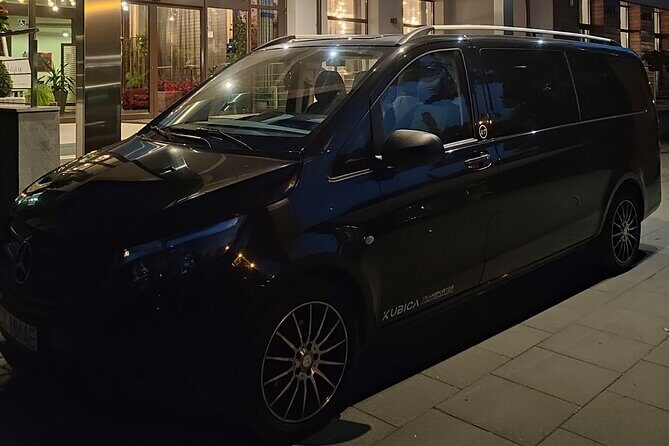
- Hotel pickup and drop-off: easier logistics, especially if you’re staying farther from the main sites.
- A route that links places: Kazimierz to occupation-era museums to camp sites gives you context in order.
- English-guided: the tour is offered in English, with guides praised for clear explanations.
- Weather-ready: it runs in all weather, so dress for Krakow conditions.
Why This WWII Route Helps You Understand Krakow
WWII history in Krakow is not only about famous names. It’s about how an entire city changed—block by block, institution by institution, and family by family. This tour is built around that idea: you visit places that connect pre-war Jewish life, Nazi occupation, and the mechanisms of persecution.
What makes the route work is the sequence. You start in Kazimierz, where you can still picture what Jewish life looked like for centuries. Then the day moves toward the occupation museums and camp ground, so you get a timeline you can hold in your head.
You’ll also notice something practical: it’s paced to keep your brain from overheating. Each stop is long enough to absorb what matters, but the tour still stays within about five hours overall.
You can also read our reviews of more private tours in Krakow


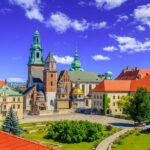
Private Pickup and Timing That Keep the Day from Spiraling
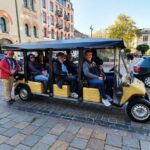
This is a true private tour: only your group goes with the guide/driver. That matters because questions come naturally with WWII history, and you don’t have to wait for a group rhythm.
You’re picked up from your hotel/hostel/private apartment, with your guide meeting you there. The start time is generally 9:00 am, though the schedule can shift slightly based on attraction opening hours. If you need a different start time, you can ask ahead.
You’ll also get a mobile ticket, which is handy for entry days when you just want smooth, quick check-in. And because the tour operates in all weather, bring layers you can handle—Krakow can shift fast.
Stop 1: Kazimierz, Krakow’s Former Jewish District (40 Minutes)
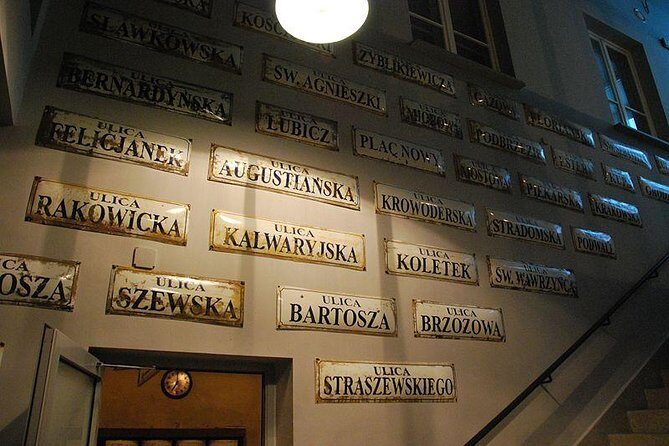
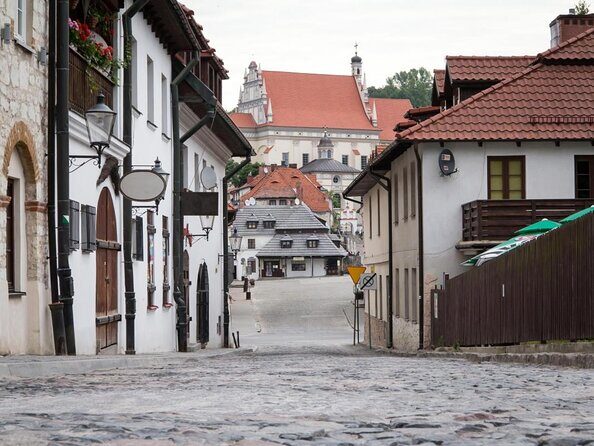
Kazimierz is the part of Krakow that reminds you this story didn’t begin with the war. It was home to Jewish life for over 500 years, and even after World War II, you can still see the district’s imprint in its synagogues and cemeteries.
In 40 minutes, you won’t see everything the neighborhood offers. Instead, you’ll get a foundation: what Kazimierz was like, and what it became during and after Nazi destruction. This stop is often the emotional on-ramp of the day. It helps you understand why later sites hit harder.
What to watch for: Kazimierz is a neighborhood, not just a museum. Wear shoes for walking uneven streets, and keep in mind that you’re moving through a living area, not a sealed-off attraction zone.
Small drawback: because it’s a quick orientation stop, some details you might want to linger on could feel like they need more time. If you’re a serious history fan, you may end up wanting a second trip specifically to Kazimierz after this tour.
Stop 2: Schindler’s Enamelled Goods Factory Museum (1.5 Hours)
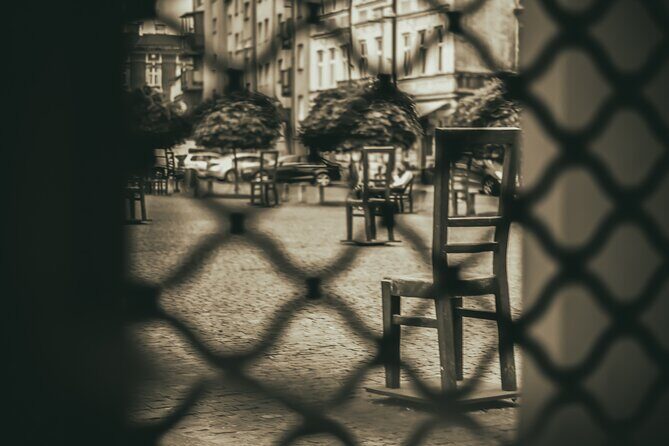
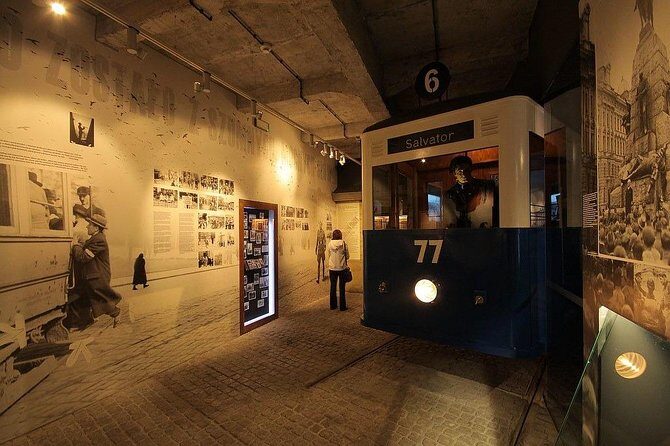
Schindler’s factory is where your understanding starts shifting from neighborhood history to occupation reality. The museum is housed in the former enamelled goods workshop and presents Krakow during Nazi occupation (1939–1945).
The key value here is the way the exhibition uses individual wartime lives as a guide. Rather than only listing events, it threads everyday existence—what people faced, how normal routines got disrupted, and how persecution worked in practice.
Why this stop is worth the time: 1 hour 30 minutes is enough to grasp the overall story and still read some of the human-scale details. You’ll likely come out thinking about Krakow as a place where ordinary life got reorganized by occupation policy.
Possible drawback: the museum can feel emotionally heavy. If you’re the type who needs breaks, plan to pace yourself inside and step out when you need air.
Stop 3: Plaszow Concentration Camp (About 30 Minutes)
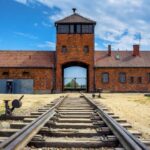
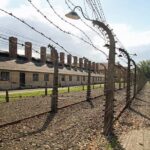
Plaszow is one of those sites where you feel the past before you fully process it. The camp was built in 1942 on grounds tied to former Jewish cemeteries, and it expanded under SS control until it reached its maximum size in 1944. It became a concentration camp as the system grew.
In about 30 minutes, your guide focuses on what you can learn from the layout and what the site represents in the wider story of persecution in the region. This stop is not about “touristy viewing.” It’s about understanding how places were repurposed and scaled up for terror.
What helps here: a good guide turns walking time into meaning. You’ll get explanations that link Plaszow to the broader Krakow wartime timeline, instead of treating it as a standalone stop.
Consideration: this is a short stop, so you won’t leave with every detail. If you want deeper reading, the museum stops in particular may be where you’ll feel ready to spend extra time on your own afterward.
Stop 4: Muzeum Krakowa on Pomorska Street (Gestapo Headquarters, 40 Minutes)
Pomorska Street is where the story becomes administrative and chilling. This museum is tied to the headquarters of the Gestapo, the Nazi secret state police. You’ll see documents, archive material, photographs, and the kind of evidence that shows how interrogation and torment were carried out.
The main emotional anchor is the preserved old cells—spaces where prisoners were interrogated. Even without overexplaining, you’ll understand why this stop hits so hard: confinement is not abstract here.
Why you’ll appreciate this stop: it explains the machinery of control. Seeing a location tied to the Gestapo helps you connect the earlier museum context to how persecution operated day-to-day.
Possible drawback: if you’re sensitive to the prison/interrogation theme, this is likely the hardest stop on the route. Plan your energy for it, and don’t feel guilty if you need extra spacing while inside.
Stop 5: Eagle Pharmacy, Museum of Krakow (30 Minutes)
Eagle Pharmacy is another location that brings the “occupation story” back to daily human stakes. It’s a branch museum connected in spirit to Schindler’s Factory: you get wartime context through photographs, the Podgorze ghetto story, and the work of a pharmacist who helped hundreds of Jews.
This stop changes the emotional tone of the day in a necessary way. After the Gestapo and camp sites, it’s a reminder that people found ways to help, survive, and resist in small and dangerous ways.
What I like about ending here: it gives you a closing thread that isn’t only despair. You leave with a human-scale note—what courage looks like when the stakes are life or death.
Consideration: 30 minutes is brisk. If you love ghetto history and specific personal stories, you’ll probably want to return later on your own for a longer read-through.
Guides Make the Difference (From Zuzanna to Magda to Ada)
This tour is private, so the guide is a major part of the value. In English, guides have been praised for being friendly, organized, and able to connect the day’s sites into one story.
You may run into guides like Zuzanna, Magda, or Ada. Different people teach slightly different angles, but the consistent theme is clarity: the history is tragic, yet explained in a way that helps you keep your bearings across neighborhoods and institutions.
One detail that stood out in practical terms: on snowy days, a driver named Marcin provided umbrellas when weather kicked up. That’s the kind of small service that makes a big walking day feel manageable.
Price and Value: What $294.37 Buys You
At $294.37 per person, this isn’t a budget tour. But it’s also not just “someone drives you around.” You’re paying for a private guide, private transport time, and the fact that entrance fees are included across the major stops.
For WWII history in Krakow, entrance costs plus guided interpretation can add up quickly if you piece it together yourself. This is often where private tours win: your guide handles entry planning and keeps the route logical so you spend the day learning instead of figuring out what’s open and where to go next.
Also, free hotel pickup and drop-off reduces the hidden costs of time and local navigation. If you’re trying to fit this around other plans, that convenience can be worth a lot.
Who This Tour Suits Best
This works best for you if:
- You want a clear, ordered understanding of WWII in Krakow, not random stops.
- You prefer asking questions without a crowd.
- You’re okay with a serious, emotion-heavy itinerary.
It may not fit as well if you want a lighter “highlights” day. This tour is about persecution, occupation, and the institutions behind it, so it’s meant for serious interest and respect—not distraction.
What to Expect Emotionally (So You Don’t Get Caught Off Guard)
The day focuses on tragedy. Even if your guide is careful and clear, some sites are inherently grim: concentration camp grounds, Gestapo headquarters cells, and ghetto-linked suffering.
If you know you get overwhelmed easily, plan simple coping moves. Bring water, take short breathing breaks when you need them, and avoid stacking multiple heavy activities the same day.
You’ll also likely notice a pattern: the first half helps you understand context, and the later stops show how that context became a system. It’s structured that way on purpose. When you’re ready, it makes the history feel more coherent—and sometimes that coherence is what makes it bearable.
Should You Book This WWII Private Tour?
Book it if you want a private, guided way to connect Krakow’s neighborhoods to WWII events, with entrance fees handled and pickup included. The route makes sense: Kazimierz for pre-war context, Schindler’s factory for occupation narrative, Plaszow for camp history, Pomorska Street for Gestapo methods, and Eagle Pharmacy for ghetto-linked human stories.
Skip it if you want a relaxed day, lots of optional detours, or a purely uplifting itinerary. Also, if you’re extremely sensitive to detention and mass violence themes, consider whether you want to shorten the time on the hardest stops.
If you’re torn, here’s the practical tip: choose based on time and attention. The longer day matters here—one guide-led route can do more than a brief overview, especially when the goal is to understand how Krakow changed.
FAQ
What’s the duration of the Krakow World War II Private Tour?
The tour runs for about 5 hours.
Does the tour include hotel pickup and drop-off?
Yes. You’re picked up directly from your hotel/hostel/private apartment, and you’re also dropped off.
Are entrance fees included?
Yes. Entrance fees are included for the stops listed in the itinerary.
Is this a private tour or a group tour?
It’s private. Only your group participates, with a guide/driver.
What language is the tour offered in?
The tour is offered in English.
Can I cancel for free if my plans change?
Yes. There’s free cancellation, and you can cancel up to 24 hours in advance for a full refund.