REVIEW · KRAKOW
Krakow: River Cruise and Guided Visit to Schindler’s Factory
Book on GetYourGuide →Operated by excursions.city · Bookable on GetYourGuide
A river cruise and a top museum in one go. You’ll start on the Vistula River with city views, then head straight into Schindler’s Factory for a guided look at Kraków during WWII. It’s a smart pairing: scenery to get your bearings, then history where you can actually sit with it.
I especially love how the tour uses skip-the-line entry to keep your time tight at one of Kraków’s busiest museums. The second thing I like is the guided museum storytelling: you learn about Oskar Schindler and how his factory offered refuge to more than a thousand Jewish workers, but the exhibition keeps the focus on everyday life under Nazi rule.
One consideration: the river part is short, and while there should be an audio guide on the cruise, you may want to double-check it’s working before you settle in—some people have noticed the commentary missing.
In This Review
- Key points to know before you go
- Vistula River Catamaran: Heated deck, big views, tight timing
- The Museum Transition: How the pace stays efficient
- Schindler’s Enamel Factory: Why this museum works even if you only know one name
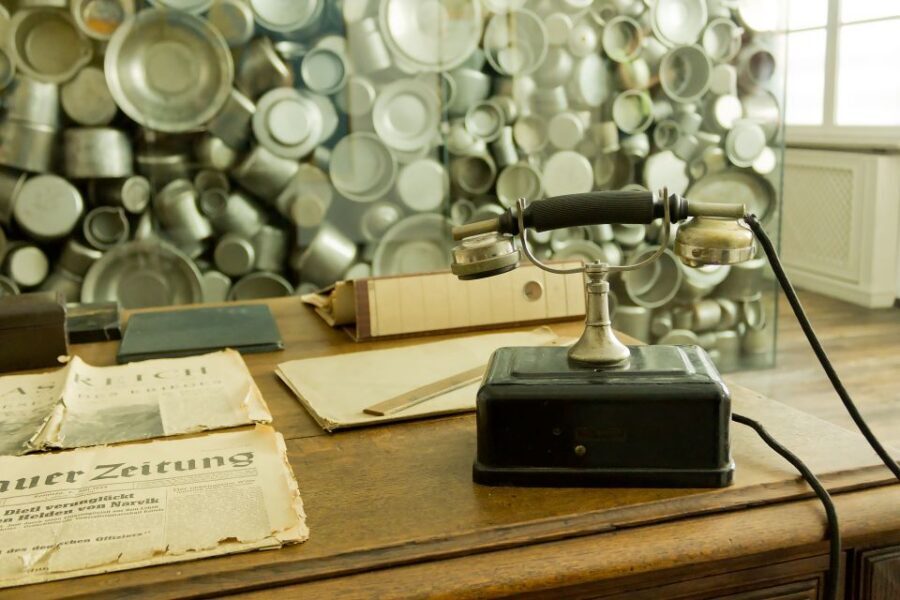
- Kraków under Nazi Occupation 1939–1945: Narrow rooms, dim light, and the feeling of constraint
- Your guided experience: Live expertise plus headsets for groups
- Views from the water: Why the cruise adds context, not just scenery
- Price and value: What you’re paying for (and why it’s not just the museum)
- Best for: Who should book this style of tour
- Quick practical tips that make the experience smoother
- Should you book this Kraków river cruise plus Schindler’s Factory tour?
- FAQ
- Where is the meeting point for the tour?
- How long is the experience?
- Does the tour include the river cruise and the museum?
- Is admission to Schindler’s Factory skip-the-line?
- What language are the guide and audio materials in?
- Is there an audio guide during the cruise?
- What is the museum like inside?
- Is the museum entirely about Oskar Schindler?
- What identification should I bring?
- What is the cancellation policy?
Key points to know before you go
- Skip-the-line admission to Schindler’s Factory saves real time at a popular site
- Live licensed museum guide in English plus headset support for larger groups
- Kraków under Nazi Occupation 1939–1945 centers daily life for Jewish and non-Jewish residents
- Constricted, dim rooms are designed to reflect fear and pressure under occupation
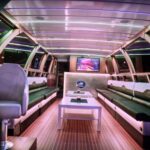
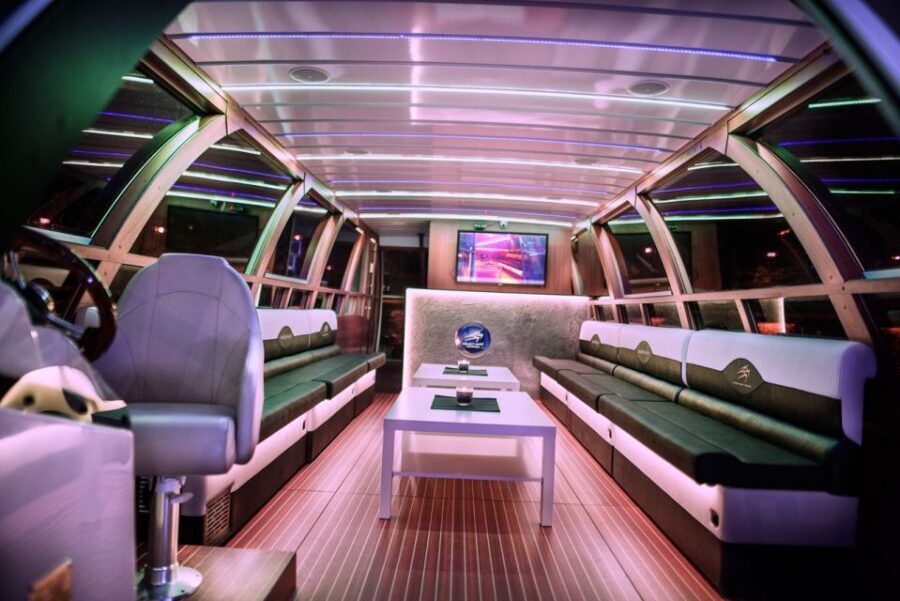
- Heated catamaran deck with leather sofas (good on cooler days), plus an open viewing platform
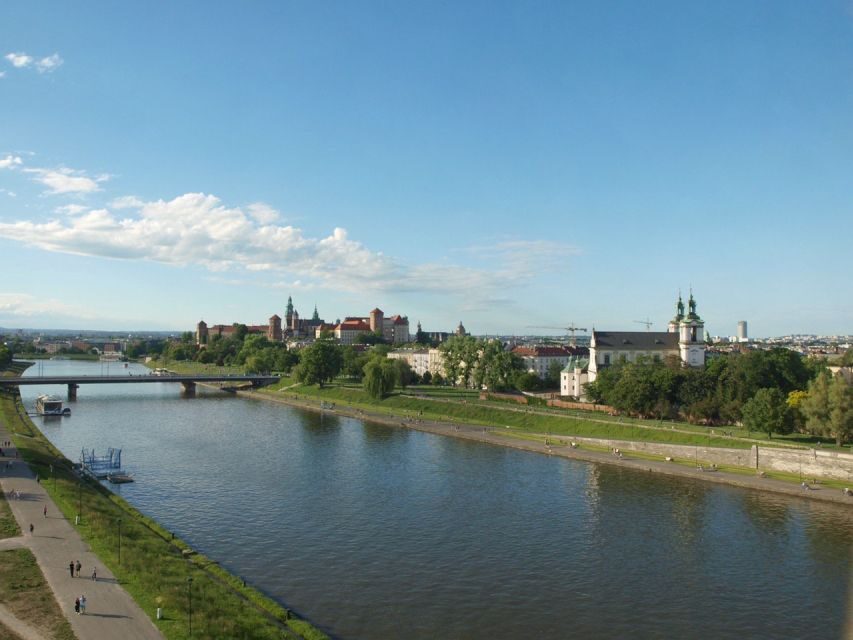
- Wawel Hill views from the water give you a different angle on Kraków’s layout
Vistula River Catamaran: Heated deck, big views, tight timing
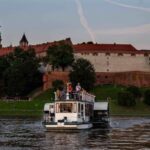
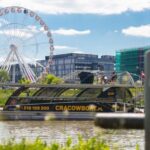
Your tour begins at Inflancki Boulevard, by the water tram stop called Paulinska. Look for the person holding a Cracow Boat sign. From there, you board a modern catamaran for a short one-way cruise on the Vistula River.
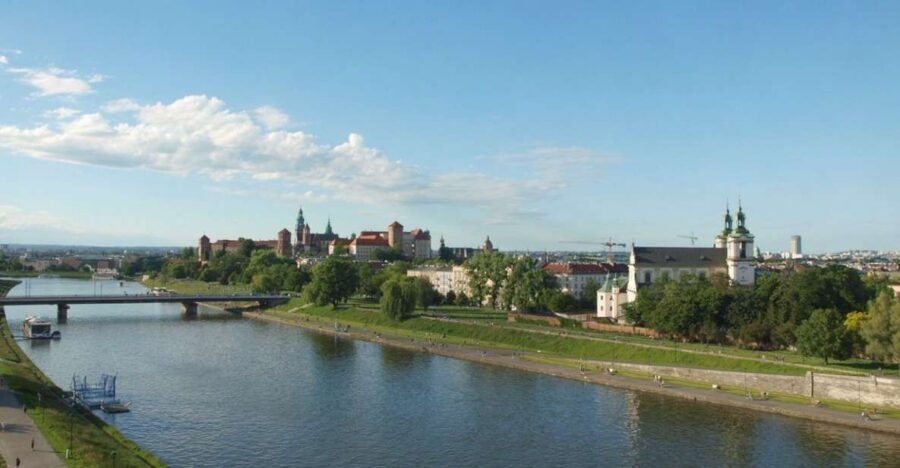
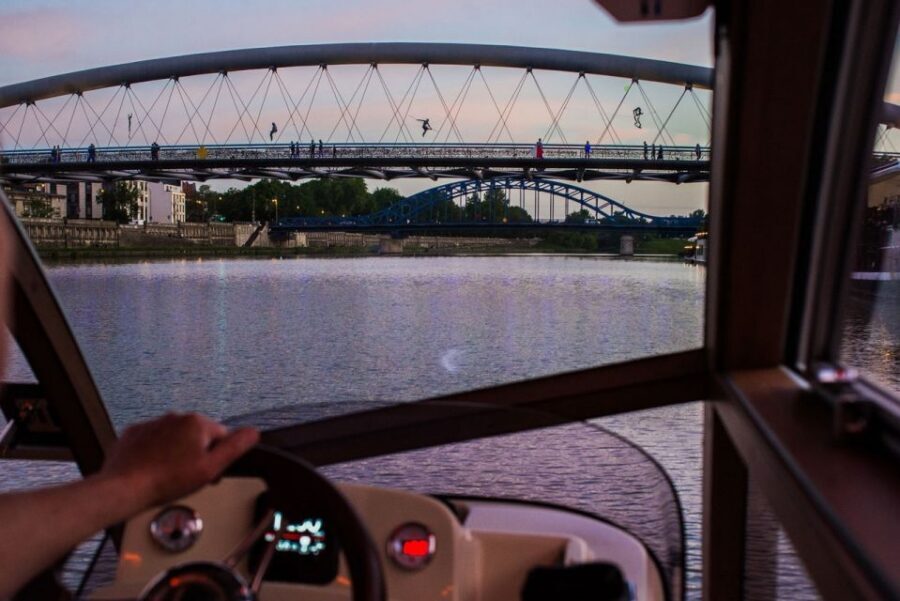
This opening leg is more than a “nice extra.” It’s the part that helps you mentally map Kraków before you step into wartime history. From the water you get panoramic sightlines—especially toward Wawel Hill, along with other well-known landmarks that sit above the river. If you’re the type who likes to understand a city’s geography while you’re moving, this is a good way to do it.
On the boat, you can choose where you stand or sit. You’ll likely have options like staying on the open platform for unobstructed views, or moving inside to the heated deck where there are leather sofas. If the weather turns chilly, you’ll be grateful the warmth isn’t just a promise.
You’ll also have an audio guide on this cruise portion in English. In practice, that means you can watch the scenery and still track the story being told about what you’re seeing. If anything sounds off (quiet audio, unclear device), fix it immediately—staff can usually help once the group is settled, before the boat gets going.
You can also read our reviews of more boat tours in Krakow
The Museum Transition: How the pace stays efficient
After the cruise, you head into Schindler’s Enamel Factory museum area. The tour’s whole rhythm is built around efficiency: cruise first to set the scene, then museum time while you’re already oriented to Kraków’s layout.
The museum visit is where you’ll notice the biggest difference between a guided experience and trying to do it alone. Here, you’re not wrestling ticket lines or figuring out which hallway goes where. Skip-the-line admission means you can start exploring faster—especially useful at a site that’s popular year-round.
The museum is licensed and guided. You’ll be led by a live expert guide who runs the main portion of the tour in English. Then parts continue using an audio guide. That split matters: the live guide helps you understand the big picture and the human stakes, while the audio guide supports you as you move through the exhibition’s tighter sections.
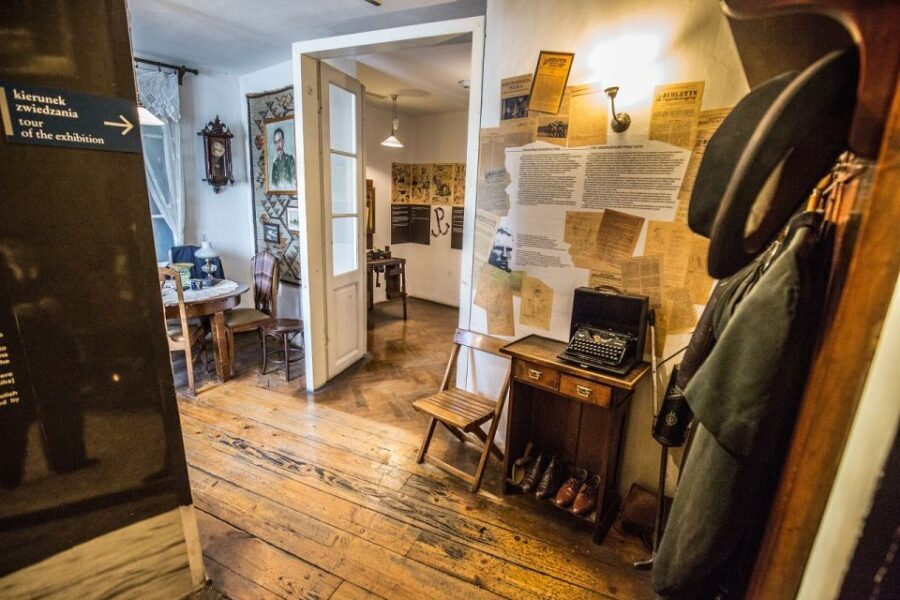
Also keep in mind the building design today. The factory that once produced Schindler’s enamel goods is now a museum, but it doesn’t have original machinery from the wartime period. So you’re experiencing history through artifacts, photos, and the way the exhibition is staged—not through seeing the old machines running.
Schindler’s Enamel Factory: Why this museum works even if you only know one name
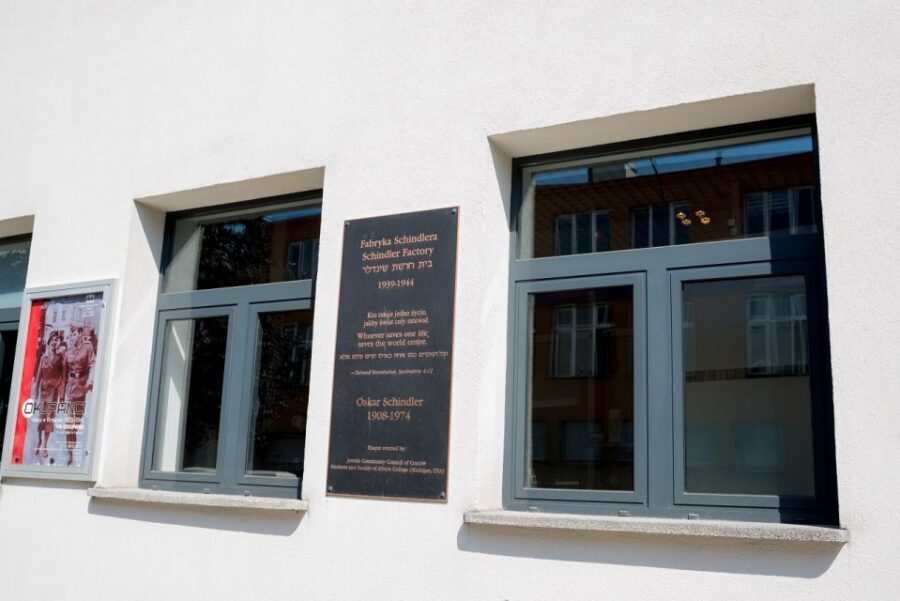
Oskar Schindler is the doorway most people walk through, but the museum isn’t just a “biography in a room.” It places his story inside the wider system of persecution, deportations, and the destruction of Kraków’s Jewish community.
In other words: you’ll learn about Schindler’s factory and how it provided refuge to more than a thousand Jewish workers, but the exhibition keeps asking a broader question—what did occupation do to daily life, not just to famous individuals?
That’s one reason this stop earns its reputation. It doesn’t treat history like a set of dates to memorize. It treats it like a chain reaction that changes schedules, relationships, and choices. For me, that focus makes the name recognition useful. You don’t lose the Schindler thread—you just understand it in context.
One more practical note: you should expect the museum to be more about WWII occupation in Kraków overall, with Schindler’s story forming an important but not exclusive part. If you came only for a detailed factory-centered walk-through, you might find the exhibition broader than you expected. If you came to understand the city under occupation, that broader framing is exactly the point.
Kraków under Nazi Occupation 1939–1945: Narrow rooms, dim light, and the feeling of constraint
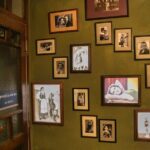
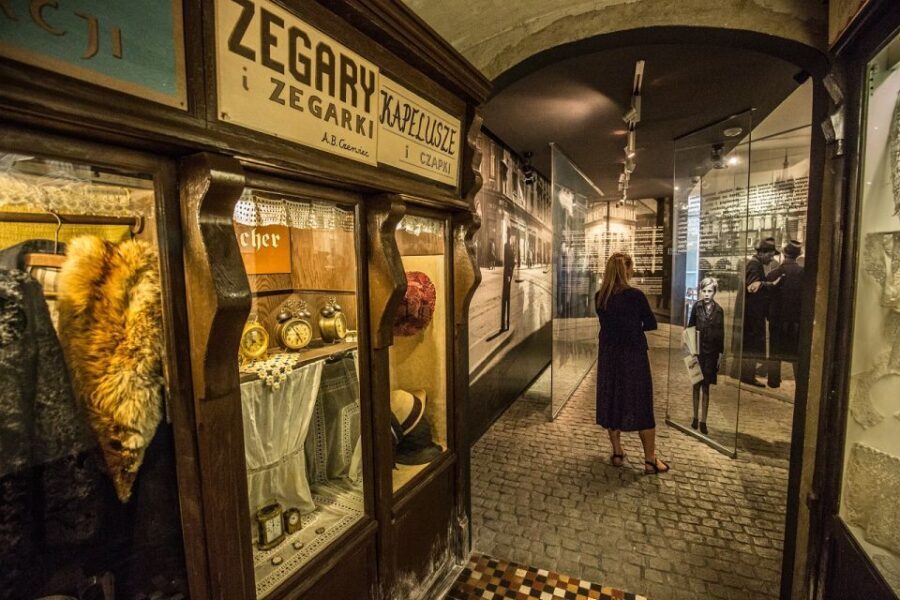
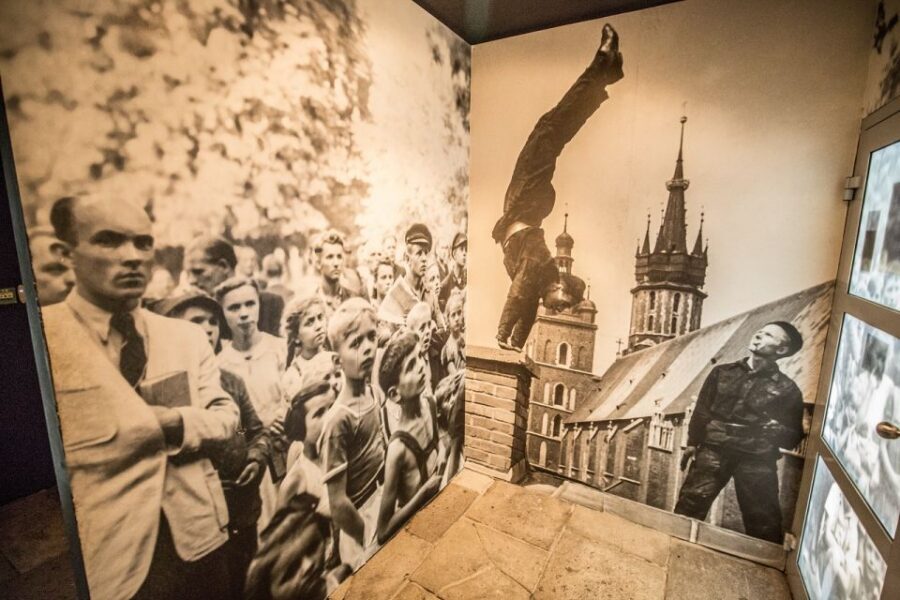
The exhibition Kraków under Nazi Occupation 1939–1945 is presented through a mix of storytelling, original items, photographs, and constructed scenes. A key design choice is the way the museum space is laid out: many sections include narrow corridors and dim, tight rooms intended to recreate the pressure of wartime life.
That means your body experience matters. You aren’t just reading labels while standing in a wide hall. You’ll be moving through spaces that feel restricted, which helps you understand—at a visceral level—how uncertainty and fear shaped everyday movement and decisions.
It’s also a museum that doesn’t only track Jewish experiences. The exhibition looks at day-to-day life across Kraków’s communities under Nazi rule. So you’ll encounter the way persecution affected both Jewish residents and non-Jewish residents in different ways, not as one storyline, but as a citywide reality.
As you walk through, you’ll see how the persecution system unfolded and how it reshaped routines. This is the part that tends to make people slow down. If you’re emotionally sensitive to WWII subject matter, plan your pacing. Take breaks if you need them, because the design uses deliberate mood—especially in the dimmer sections.
Your guided experience: Live expertise plus headsets for groups
A standout part of this tour is the structure of the guidance. During the live portion, you have a licensed expert guide who can connect the dots—Schindler’s actions, the occupation policies, and the daily reality for people inside Kraków.
Headsets are provided for groups of 15+. That’s a small detail that pays off. In museums, sound can be tricky: you’re in tight corridors, and voices can get lost in the crowd. Headsets make it much easier to stay locked into what your guide is explaining rather than constantly asking “what did they say?”
If you like tours where your guide isn’t just reciting facts but also guiding you through how to interpret what you’re seeing, this is the right setup. The exhibition’s design does a lot on its own, but the guide helps you read it correctly.
And because the tour includes audio guidance as well, you aren’t left “on your own” once you move away from the group leader. That’s helpful in an exhibition where you’ll be navigating multiple rooms and thematic sections.
You can also read our reviews of more guided tours in Krakow

Views from the water: Why the cruise adds context, not just scenery
It’s tempting to think of the river cruise as a warm-up that’s mainly there for photos. But it does something more useful than that.
From the water, you see Kraków’s riverside shape and how the city sits relative to major hills and historic landmarks. That matters once you’re inside the museum, because you’re about to learn about Kraków as a lived space under occupation—not just a set of museum stops.
Also, it’s a change of pace. The museum is focused and emotionally heavy. The cruise gives you a breath of open air first. Even if the cruise is short, it helps break the day into two experiences: scenic orientation and then concentrated learning.
And yes, the view quality is real. A catamaran with lots of windows plus the option to stand outside means you’re not trapped behind glass the whole time.
Price and value: What you’re paying for (and why it’s not just the museum)
At $73 per person, the value comes from the combination, not from one component alone. You’re paying for:
- Skip-the-line admission to a very popular museum
- A live licensed guide for the key part of the visit
- Headsets when group size requires it
- A Vistula River catamaran ride with an English audio guide
If you tried to replicate this yourself, you’d likely spend more time coordinating entry and hunting for guided context. Here, the order is handled: cruise, then museum, with the guidance built in.
The biggest “value win” is time. In Kraków, waiting can quietly eat your day. Skipping the ticket line reduces that stress. Then the guide reduces guesswork inside the museum, especially in an exhibition with narrow corridors and a lot of material.
Are you paying for a long day tour? Not really. It’s about 150 minutes total, so you’re getting a concentrated experience rather than an all-day event. If that fits your schedule, it can be a very efficient way to cover a major WWII-focused museum with less friction.
Best for: Who should book this style of tour
This tour is a good fit if you want:
- A guided WWII museum experience in English
- A museum visit that explains context, not just dates
- A time-efficient way to include a top Kraków attraction
- A scenic start on the Vistula so the rest of the day makes sense visually
It’s also a solid choice if you’re traveling with limited time. You get a short cruise plus a major museum without needing extra transportation planning.
On the other hand, if you’re expecting a long cruise or a factory-only deep technical tour of machinery, this may not match. The museum is centered on Kraków under Nazi Occupation and uses Schindler’s story as a critical thread within that bigger narrative.
Quick practical tips that make the experience smoother
- Arrive about 10 minutes early at Inflancki Boulevard. Once the group leaves, latecomers can’t join and tickets can’t be refunded.
- Wear something comfortable. The museum uses narrow corridors and dimly lit rooms with a sense of confinement.
- Bring your ID for museum staff checks. The name on your ticket needs to match your identification document.
- Check that your audio guide device is working at the start of the cruise so you’re not stuck guessing.
- If you’re sensitive to dark, tense environments, take your time. You can slow down in the museum without feeling rushed.
Should you book this Kraków river cruise plus Schindler’s Factory tour?
I think you should book if you want a fast, structured, English-guided way to experience one of Kraków’s most important WWII museums—plus get a scenic river perspective that helps you understand the city spatially.
Skip it if your main goal is a long boat ride or if you only want a Schindler-focused, factory-machine type museum visit. This tour is built for context: occupation, daily life, and how one act of industrial leadership intersected with a brutal system.
If you’re deciding between DIY entry and a guided setup, this is one of those cases where guidance clearly adds value. The skip-the-line access keeps your day calm, and the live guide helps you read what you’re seeing—especially in those narrow, dim rooms where the exhibition’s design is part of the message.
FAQ
Where is the meeting point for the tour?
You meet at Inflancki Boulevard, next to the water tram stop called Paulinska. Look for the person with a Cracow Boat sign.
How long is the experience?
The total duration is 150 minutes.
Does the tour include the river cruise and the museum?
Yes. It includes a one-way short cruise on the Vistula River by catamaran, followed by a guided visit to Schindler’s Factory.
Is admission to Schindler’s Factory skip-the-line?
Yes. The tour includes skip-the-line admission to Schindler’s Factory.
What language are the guide and audio materials in?
The live guide and the audio guide are both in English.
Is there an audio guide during the cruise?
The cruise includes an audio guide (English) as part of the experience.
What is the museum like inside?
The exhibition uses narrow corridors and dimly lit rooms designed to recreate the atmosphere of wartime Kraków.
Is the museum entirely about Oskar Schindler?
No. The museum focuses on Kraków under Nazi Occupation 1939–1945, with Schindler’s story presented as part of that wider narrative.
What identification should I bring?
Bring your ID card or other identification document. The name and surname on your ticket must match the one on your document.
What is the cancellation policy?
Free cancellation is available up to 24 hours in advance for a full refund.