REVIEW · KRAKOW
Krakow: Jewish Quarter and Ghetto tour by electric golf cart
Book on GetYourGuide →Operated by Krakow City Tours · Bookable on GetYourGuide
Krakow tells its hardest stories best from the street. This Jewish Quarter and Ghetto tour uses a heated electric golf cart and a multilingual audio guide to move you through Kazimierz and the sites of Nazi occupation in about an hour. I like how the ride keeps you comfortable in changing weather, and I also like that the route stitches together everyday streets with major WWII landmarks. One thing to consider: it’s a fast, one-hour loop, so you’ll be more dependent on the audio narration than on long, detailed live explanations.
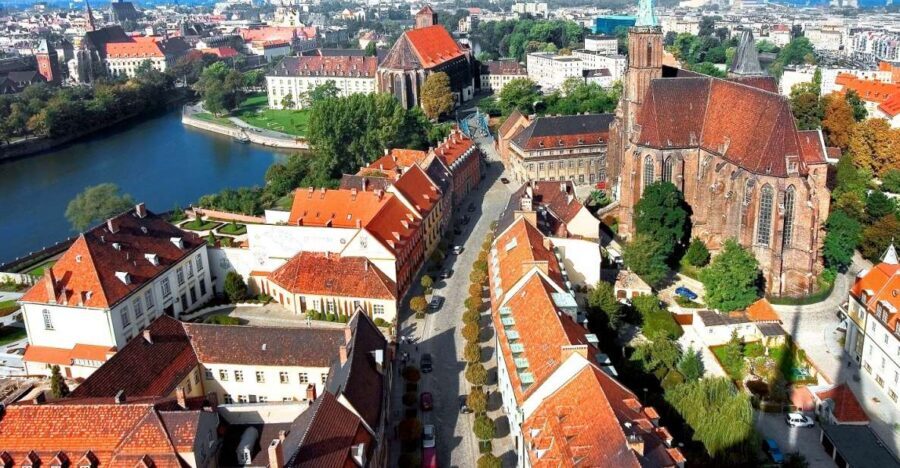
You’ll cover a district that once functioned like a separate medieval town—Kazimierz—founded in the 14th century by King Casimir the Great. The experience connects Christian and Jewish neighborhoods, synagogues, historic streets, and key ghetto memorial locations, including Ghetto Heroes’ Square. The main drawback is simple: entrances to specific sites aren’t included, so some places you’ll see are more about viewing than going inside.
In This Review
- Key points that make this tour efficient and meaningful
- Why the heated electric golf cart works so well here
- The multilingual audio guide: how to use it without missing the point
- What the 60-minute route actually feels like
- Kazimierz streets: medieval walls, market area, and a two-culture district
- Synagogues, Helena Rubinstein, kosher food, and the ritual bath house
- Churches and the old tram depot: a Krakow you can read
- Gestapo transit camp and the darker route through the city
- Ghetto Heroes’ Square: 70 chairs and the story of Tadeusz Pankiewicz
- The original ghetto wall carved like tombstones
- Price and value: is $22 fair for an hour in Krakow?
- Who should book this tour, and who might prefer something longer
- Should you book the Krakow Jewish Quarter and Ghetto tour?
- FAQ
- How long is the Krakow Jewish Quarter and Ghetto tour?
- How much does the tour cost?
- What languages are available for the audio guide?
- Is there a live guide?
- Are entrance tickets included for synagogues or other sites?
- Does the price include food and drinks?
- Is the tour wheelchair accessible?
Key points that make this tour efficient and meaningful
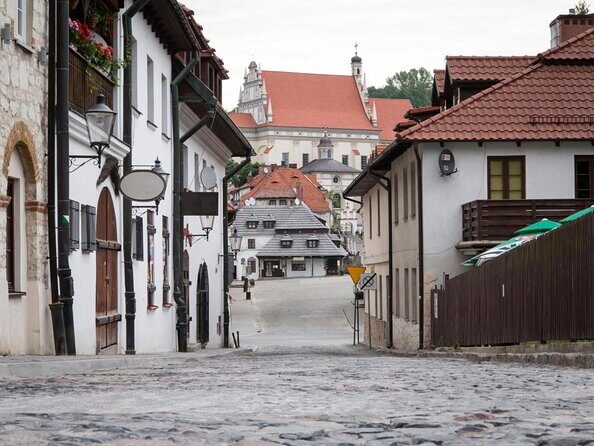
- Heated electric carts with rain curtains and a sun roof, so weather matters less
- Multilingual audio guide in many languages, plus live guide support in English and Polish
- Kazimierz highlights like the former market area, medieval walls, and town-center landmarks
- WWII ghetto sites you can’t ignore, including Ghetto Heroes’ Square with its 70 chairs
- Concrete human-story context, including Tadeusz Pankiewicz and the Eagle Pharmacy
- Time for photos without turning the whole outing into a queue
Why the heated electric golf cart works so well here
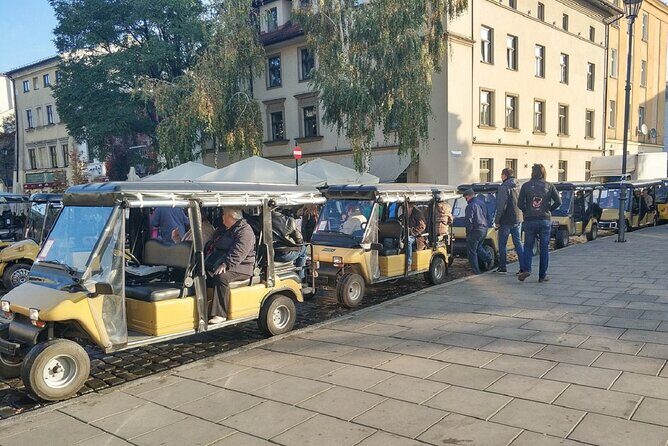
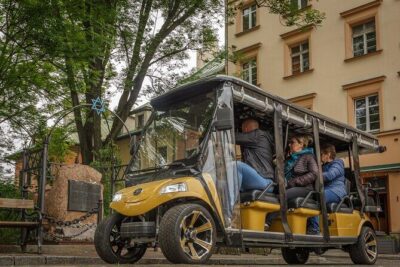
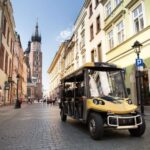
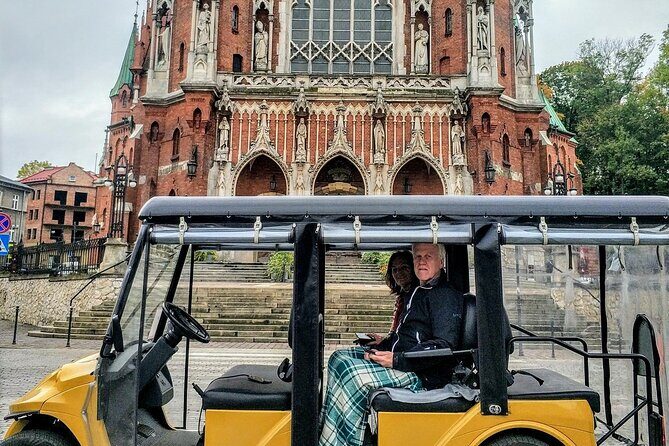
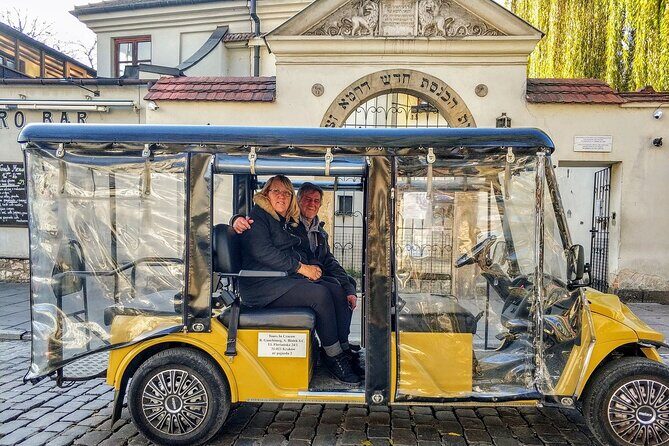
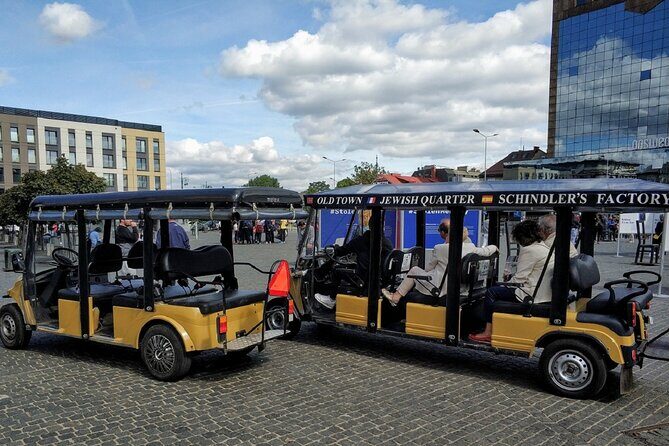
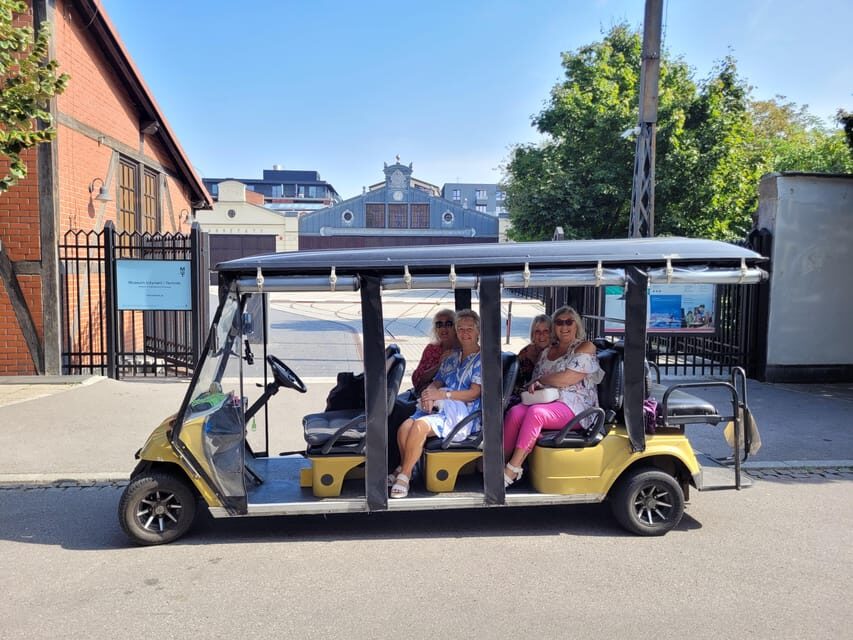
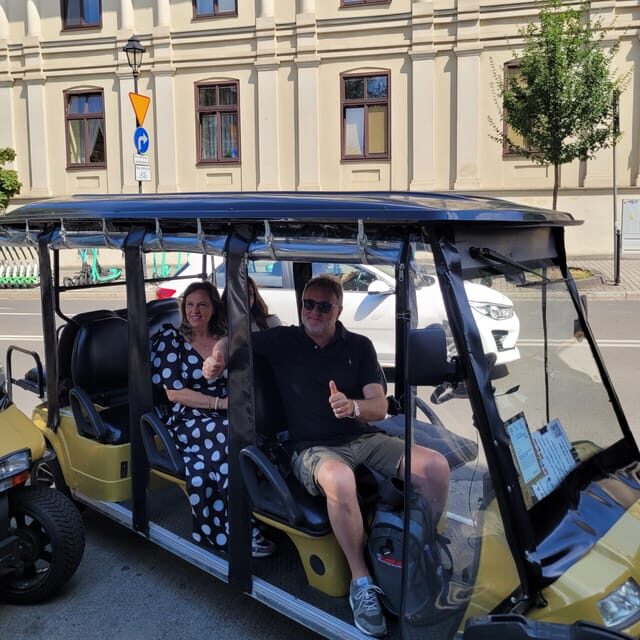
Krakow can be a mix of gorgeous old streets and awkward walking surfaces. This tour fixes the practical side with eco-friendly electric golf carts designed to keep you steady and comfortable. In winter there’s a heating system; in summer there’s a roof and rain curtains, plus air conditioning. That combo matters on a one-hour schedule—if you’re cold or sweaty, you stop paying attention. Here, you stay focused on what you’re learning.
The carts also mean you don’t have to choose between seeing the neighborhood and pacing yourself. You get views from the street level, and you can still step off briefly for photos when the driver stops for landmarks. There’s also space for a stroller or wheelchair, and the experience is pet friendly, which is a nice touch for travelers who don’t want to plan around logistics.
The “consideration” is the trade-off you’ll feel with any short, vehicle-based tour: you won’t linger. If you like to slow down, zoom in, and read every plaque for a long time, you’ll probably want additional time on your own after the cart route.
You can also read our reviews of more tours and experiences in Krakow.
The multilingual audio guide: how to use it without missing the point
This isn’t a one-language tour. You can pick an audio guide language from a long list—Arabic, Czech, Danish, Dutch, English, Finnish, French, German, Hungarian, Italian, Norwegian, Polish, Portuguese, Russian, Slovak, Spanish, Swedish, Ukrainian, and Hebrew. On top of that, there’s live tour support in English and Polish.
In practice, the audio format is ideal for a loop like this. You’re moving through multiple types of sites: medieval architecture, Jewish cultural places, church landmarks, and WWII memorial locations. Without narration, it’s easy to treat the area like a sightseeing checklist. With narration, you start to see connections—why Kazimierz mattered, how daily life and persecution overlapped, and what specific memorials are trying to make you remember.
If you’re traveling with a group, audio also reduces the “one person hears the story, others don’t” problem. Everyone can follow in their chosen language.
One small reality check: an audio guide is only as good as how well you pay attention while the cart is rolling. Bring headphones with your device if that helps you stay locked in, and try to look out for the landmarks mentioned right as you pass them. That’s where the experience clicks.
What the 60-minute route actually feels like
A one-hour tour can either feel rushed or feel like a smart orientation. This one aims for orientation with emotional weight: you’re guided through Kazimierz and the ghetto’s key sites, then brought back through streets where history is still written into the built environment.
The timing is tight enough that you’ll likely get a sense of the layout more than a deep stop-and-stare rhythm. But the pacing is deliberate. It keeps you moving through multiple contexts so you don’t just see memorials—you also understand the neighborhood that surrounded them.
If you want the best results from this schedule, do it early in your Krakow trip (or early in your time in the area). You’ll come away with names and places that make the rest of your exploring far easier.
Kazimierz streets: medieval walls, market area, and a two-culture district
The tour’s story starts with Kazimierz—founded in the 14th century by King Casimir the Great. This matters because Kazimierz wasn’t just “a Jewish area.” It was a medieval district with its own identity, later sharing space and influence with the surrounding city.
During the drive, you’ll see the medieval city walls and areas connected with the former market square and town hall. That’s a big deal for orientation. Instead of imagining what medieval city life looked like, you’re actually moving near remnants of the structures that shaped daily movement, trade, and community gatherings.
You’ll also get a sense of the Christian and Jewish layers coexisting in one district. The tour doesn’t treat these as two separate worlds; it shows a neighborhood where religious and cultural life developed side by side over centuries.
The practical benefit: once you know where the market-center feel was, and where the defensive walls ran, you can navigate the area more confidently later on foot.
Synagogues, Helena Rubinstein, kosher food, and the ritual bath house
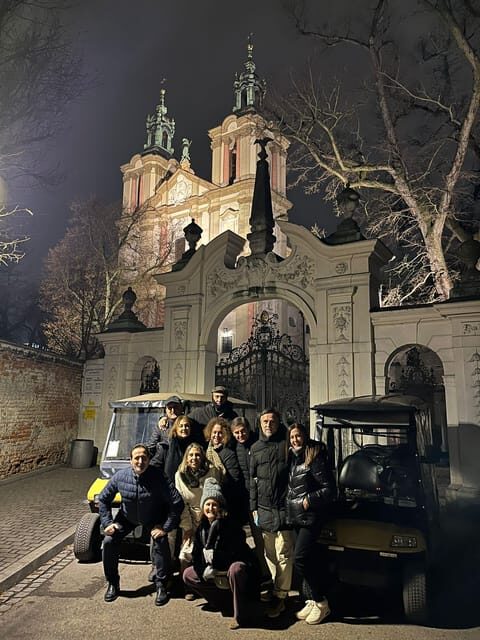
One of the strongest parts of the experience is how it mixes sacred landmarks with cultural and everyday details. You’ll pass Jewish synagogues and also see the home of Helena Rubinstein, known as the cosmetics empire founder. That’s a surprising but very useful contrast—it helps you remember that Jewish life here wasn’t only defined by tragedy. It also included talent, business, and influence.
The route also highlights kosher restaurants and a ritual bath house. Even if you don’t go inside, seeing these references in context helps you understand community structure. A ritual bath house points to religious practice and daily life rhythms, not just one-time events.
This is also where a good audio track makes a difference. When you hear the story while you’re looking at what’s outside the window, the places feel less like isolated photos and more like parts of a living culture that had its own routines.

Churches and the old tram depot: a Krakow you can read
Kazimierz isn’t only Jewish, and the tour doesn’t pretend otherwise. You’ll pass medieval churches, including Corpus Christi and Saints Catherine and Margaret. Those stops keep the broader city picture in view, so the neighborhood doesn’t become a single-meaning zone.
You’ll also see Krakow’s oldest tram depot. That kind of site can be easy to overlook on your own, but in a short tour it’s helpful. It adds a layer of modern city movement to the medieval-and-war story, reminding you that the streets you’re seeing kept working even as the world changed.
This blending is one reason the tour works as an introduction. You learn the area’s “eras,” not just its “attractions.”
Gestapo transit camp and the darker route through the city
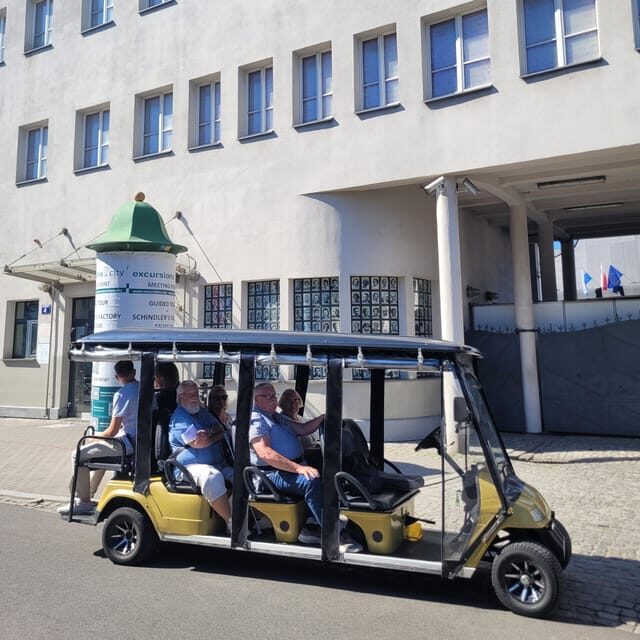
At some point, the tour shifts from architecture and culture into the machinery of persecution. Along the way, you’ll pass a former prison and transit camp of the German Gestapo police.
Hearing this in motion through the streets is unsettling, and that’s likely the point. But it’s also practical: you learn that the ghetto and the broader city weren’t sealed off from everything around them. People were moved, held, processed, and transported through systems that reached into urban spaces.
If you’re sensitive to heavy topics, pace yourself mentally. You’re in a vehicle, which can feel smoother than walking—but the subject matter is intense. It’s okay to take a moment before moving to the next major memorial stop.
Ghetto Heroes’ Square: 70 chairs and the story of Tadeusz Pankiewicz
Ghetto Heroes’ Square is one of the most powerful moments on the route. You’ll see the monument made of 70 chairs, a stark design meant to keep the human scale of tragedy in your mind. This isn’t just a plaque-stop; it’s a space you’ll likely remember long after you leave the neighborhood.
Right alongside that memorial context, the tour brings in the story of hero Tadeusz Pankiewicz, owner of the Eagle Pharmacy. That inclusion matters because it gives you a counterpoint to pure devastation: people acted, took risks, and tried to help in the worst possible circumstances.
This is also where the driver’s role can improve the experience. Some guides are known for being patient about what you want to look at and making sure you can actually see the landmarks, not just pass them at speed. I like that style because it helps you connect the story to the visual details.
The original ghetto wall carved like tombstones
As you drive through the streets of the former ghetto, you’ll see an original section of wall carved in the shape of Jewish tombstones. This is one of those details that changes how you look at a site. A wall can feel like a boundary until you realize it’s been shaped to carry memory, names, and a form of identity even when life was being violently restricted.
Because the tour is timed, you won’t get minutes and minutes at a single spot. But you do get a guided moment where the narrative points you toward the carving style and what it represents. If you’re the type who takes photos to document what you learned, this is the moment you’ll want your camera ready.
Price and value: is $22 fair for an hour in Krakow?
At about $22 per person for a one-hour tour, you’re paying for two things: access to a structured route and narration, plus vehicle comfort that makes the route easier than walking it in full.
What makes it good value is that the tour includes the core “experience tools”:
- heated electric carts
- multilingual audio guide
- helpful driver and stops for photos
- air conditioning, rain curtains, and a sun roof depending on season
- space for stroller or wheelchair
What’s not included is also important for judging value: entrance tickets and food and drinks aren’t part of the price. So you should treat the tour as a guided circuit that helps you see and understand, not as a way to check off museum entry fees.
In other words: the value is highest if you want a guided orientation plus WWII-focused context without planning every stop yourself. If you want long indoor time and paid entry sites, you’ll likely need to pair this with additional self-guided exploring.
Who should book this tour, and who might prefer something longer
This tour fits best if you:
- want an efficient way to learn Kazimierz and major ghetto memorial sites in one shot
- prefer staying comfortable with a heated, roofed vehicle
- like audio guidance and want a choice of languages
- need a route that works with limited mobility (wheelchair accessible, stroller space)
You might want a longer or different option if you:
- prefer heavy live narration for every landmark
- want to spend more time inside specific sites (since entrances aren’t included)
- dislike audio-led tours and prefer guide-led walking pace
The good news is you can still get strong results even with the one-hour format. Use the tour to collect names, locations, and themes—then slow down on your own afterward.
Should you book the Krakow Jewish Quarter and Ghetto tour?
Yes, I’d book it if your goal is to understand the district’s layered past without spending hours crisscrossing streets. The heated electric cart is a smart comfort upgrade, and the combination of Kazimierz context plus WWII memorial focus gives you a route with both meaning and momentum. The best part is that you’re not only staring at landmarks—you’re hearing stories tied to what you see, including the 70 chairs at Ghetto Heroes’ Square and the Eagle Pharmacy connection to Tadeusz Pankiewicz.
Just go in with the right expectations. This is a one-hour circuit with viewing and narration, not a long museum-style deep stay. If you want both, do this first, then come back for more time on foot.
FAQ
How long is the Krakow Jewish Quarter and Ghetto tour?
The tour lasts 1 hour.
How much does the tour cost?
It is priced at $22 per person.
What languages are available for the audio guide?
The audio guide is available in Arabic, Czech, Danish, Dutch, English, Finnish, French, German, Hungarian, Italian, Norwegian, Polish, Portuguese, Russian, Slovak, Spanish, Swedish, Ukrainian, Hebrew.
Is there a live guide?
There is a live tour guide available in English and Polish, and an audio guide is included.
Are entrance tickets included for synagogues or other sites?
No, entrance tickets are not included.
Does the price include food and drinks?
No, food and drinks are not included.
Is the tour wheelchair accessible?
Yes, it is wheelchair accessible, and there is space for a stroller or wheelchair. The tour is also pet friendly.