REVIEW · KRAKOW
Kraków old town and jewish quarter®
Book on GetYourGuide →Operated by CHT Sp. z o.o · Bookable on GetYourGuide
Krakow hits hardest when it has context. This 3-hour Old Town + Jewish Quarter walk is led like a history lesson with street-level stops, so you understand why the city’s buildings matter, not just what they look like. I especially like the way the guide links big events to local streets, and I like the pace that keeps switching between major landmarks. One thing to keep in mind: it’s a lot of walking uphill and around busy squares, so comfy shoes help.
You’ll cover two of Krakow’s most important areas: the historic core and Kazimierz, the Jewish quarter. Along the way you’ll see the medieval fortifications and market power center of the Old Town, then move to synagogues and memorials where memory is part of the landscape. The main drawback is simple: with just 3 hours, some stops (especially the Jewish sites) feel like a strong “overview,” not a slow museum visit.
In This Review
- Key things you’ll notice on this Krakow tour
- Why this 3-hour Krakow walk feels like a lesson, not a checklist
- Old Town first: walls, Barbican, and the Market Square that runs the show
- University neighborhood and Wawel Hill: where Krakow’s institutions and power meet
- Kazimierz Jewish quarter: synagogues, memorials, and the hard parts of coexistence
- The guide, the visuals, and why the Spanish language still works
- Price and pace: value at $16 for a focused highlights route
- Should you book this Krakow Old Town + Jewish quarter tour?
- FAQ
- What’s the duration of the Kraków Old Town and Jewish Quarter tour?
- How much does the tour cost?
- What language is the tour guide speaking?
- Where do we meet?
- What areas of Kraków does the tour cover?
- Is food or drinks included in the price?
- Is the tour wheelchair accessible?
- FAQ
- Can I cancel and get a full refund?
- Are there specific major sites included in the route?
Key things you’ll notice on this Krakow tour
- World Heritage context you can actually use so landmarks click into place fast
- Old Town monuments in a logical route from walls to market square to university streets
- Wawel Hill explained as a power center with cathedral and key buildings in view
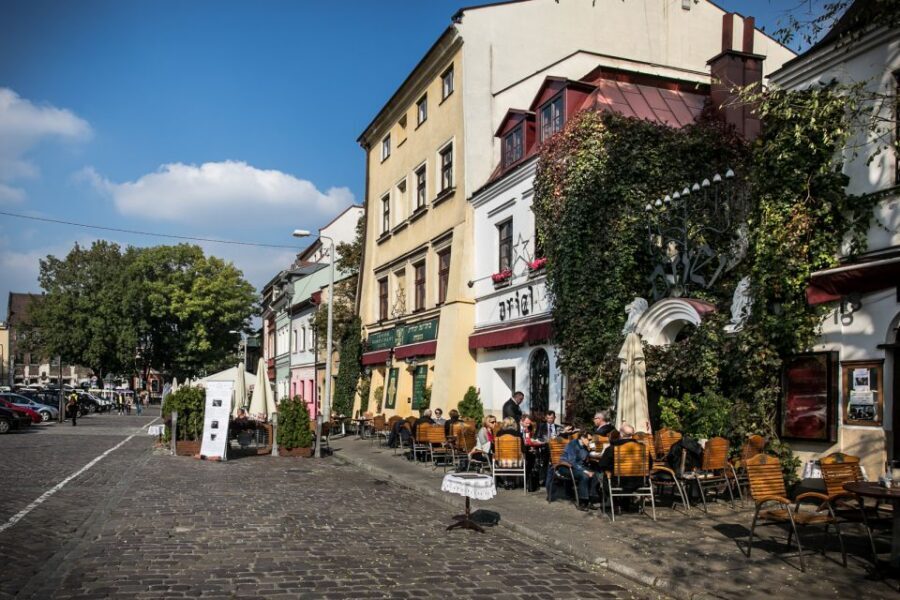
- Kazimierz sites plus the painful memorials that shape the neighborhood’s story
- Spanish live guiding with visual aids like photos and drawings, not just lecture mode
- A tight 3-hour schedule that still leaves time to absorb key moments
Why this 3-hour Krakow walk feels like a lesson, not a checklist
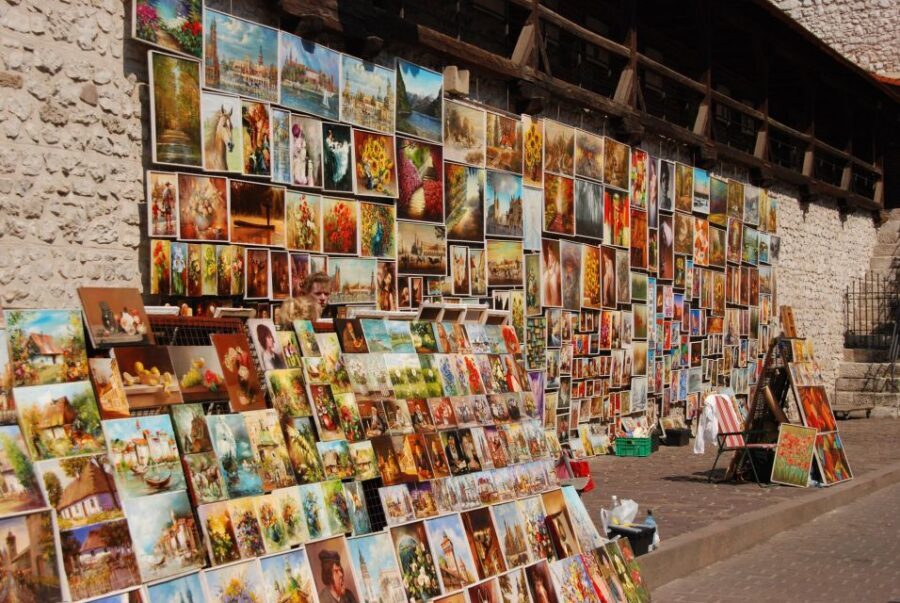
Krakow’s Old Town is gorgeous, but it can also feel like a photo set if nobody explains what you’re looking at. This tour keeps you oriented by telling you how historical events shaped the city’s layout, its institutions, and even the everyday reality of different communities living side by side. You’re not just seeing stones; you’re building a map in your head.
Two things make it especially effective. First, the guide works like a historian with a purpose: you connect events that affected Krakow and Poland to the places in front of you. Second, the explanations are designed to be understandable in real time. In one guide-led experience, people highlighted the use of photos and drawings, which is a big deal when you’re walking and can’t pause like you would in a classroom.
The pacing is another win. You’ll move from major areas to major areas rather than getting stuck in one location too long. That’s ideal if you’re on a tight schedule. The tradeoff is time: you’ll leave with strong impressions and clear context, but you may not “soak” in every detail the way you could with a longer, more stop-by-stop museum tour.
You can also read our reviews of more tours and experiences in Krakow.
Old Town first: walls, Barbican, and the Market Square that runs the show
You start downtown and work your way through Krakow’s most central historic scenes. The route typically kicks off with the kind of landmark you can’t ignore, including Juliusz Słowacki Theater. It’s a good warm-up: you get your bearings and a sense of Krakow as a city that invests in culture, not just monuments.
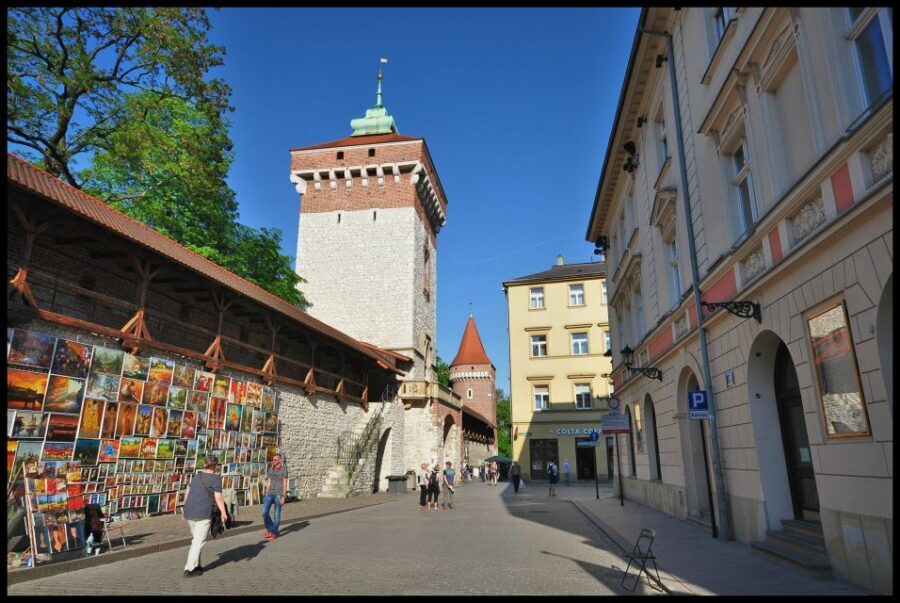
From there, the medieval defense story takes over. You’ll see parts of the medieval walls and the Barbican, plus the St. Florian’s Gate. This is where the city starts to feel like an actual place with boundaries and strategy. These fortifications weren’t decoration. They were how Krakow protected wealth, trade, and identity. When you understand that, the shapes of gates and walls stop being abstract.
Next comes the core of the Old Town: the Main Market Square (Rynek Główny) and its monumental energy. Expect big-name stops that help you read the square the way a local might. You’ll visit Basilica of Saint Mary, the famous trading hall area like the Sukiennice (Cloth Hall), and viewpoints tied to civic history such as the Tower of the old town hall.
A practical tip here: when the guide gives you context, don’t just listen with half your attention. Look around at what’s directly around you: the density of buildings, how the square organizes movement, and how religious and civic spaces share the same stage. The tour’s value is that it teaches you what to notice.
Then you’ll hit more educational and cultural landmarks in the Old Town-adjacent area. You may pass by the Adam Mickiewicz Monument and head toward academic surroundings like Collegium Maius. This matters because Krakow didn’t just grow as a trading stop or royal seat; it built institutions. Learning where education happened helps explain why Krakow became a place that produced influential minds and ideas.
If you’re visiting in cold weather, you’ll be happy the route keeps moving. One experience stood out for how the group stayed attentive even through cold and snow. So dress for weather, but trust the tour doesn’t leave you stranded in one exposed spot for ages.
University neighborhood and Wawel Hill: where Krakow’s institutions and power meet
After the Old Town core, the tour shifts toward the story of learning and authority. You’ll spend time in the university neighborhood area connected with famous Polish figures, including John Paul II and Copernicus in an educational context. That’s a smart pivot: it connects Krakow’s present-day reputation to the people it helped train.
Then it’s on to two major “authority” landmarks. You may see the Archbishop’s Palace and the Basilica of the Franciscans. These are not just religious buildings. They represent how Krakow’s leaders organized society and how the church sat inside civic life. When you understand that, you can read the city’s layout as a system of influence rather than random architecture.
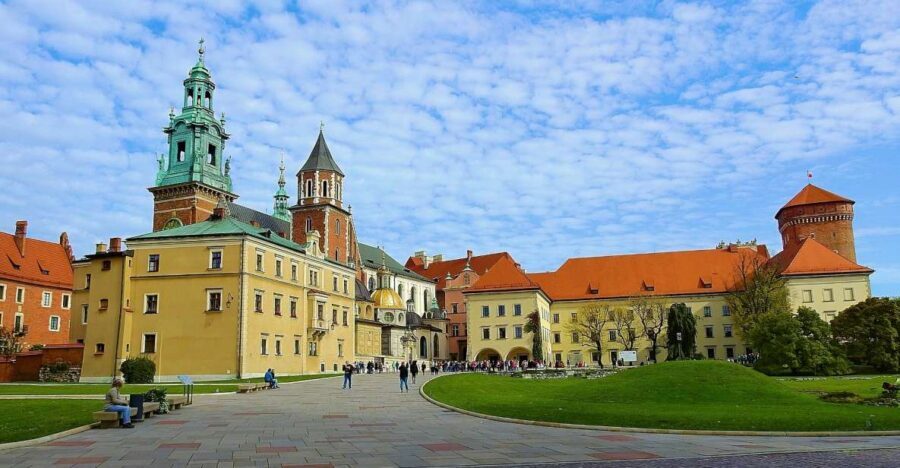
The tour’s big architectural moment is Wawel Complex. You’ll ascend the hill and analyze the cathedral and the surrounding buildings that make Wawel such a defining presence. You also get a famous landmark often mentioned with a smile: the dragon sculpture at the dragon theme spot near the area. Even when you know it from pop culture, hearing it placed inside the broader Wawel story helps. It stops being a quirky photo op and becomes part of how Krakow tells stories about itself.
Important for your expectations: Wawel is visually dominant, so the guide’s job is to slow you down just enough to see patterns. Watch for the way different buildings sit together, how the cathedral represents spiritual authority, and how the complex reflects political weight. This is one of those places where a short guided explanation can save you from wandering around without direction.
Kazimierz Jewish quarter: synagogues, memorials, and the hard parts of coexistence
Now you move into Kazimierz, the neighborhood where the first Jewish communities settled after arriving in the city. This is the heart of the tour’s emotional weight. The guide explains why Jews settled here and how coexistence between Jews and Catholics worked, including what made that relationship both possible and tense over time.
You’ll walk through the area’s key synagogue stops, including Tempel Synagogue and Stara Synagogue. Seeing synagogues in context matters because they’re not only places of worship; they represent community life, law, education, and continuity. The tour frames them as part of a broader story, not isolated monuments.
Then the memorials take over, and this is where you’ll get a fuller picture of the 20th century impact on the Jewish community. You’ll visit the Monument to the victims of the holocaust, the Monument to the righteous among the nations, and also the Monument to Polish victims during the occupation. These stops change the tone of the walk quickly. If you’re expecting a smooth sightseeing rhythm, plan for a more reflective pace here.
The route continues with sites tied to community memory, including the old Jewish cemetery and open public spaces such as New Square and the medieval square of the Jewish quarter. You’ll also see the walls of the Jewish quarter, which gives you a physical sense of how neighborhoods were shaped and defined.
A standout value: the tour doesn’t treat Jewish history as a single chapter. It reviews the longer story of the two communities in the area, including aspects that made the Jewish community both deeply important and also deeply controversial over time. That balanced framing is exactly what you want on a short tour. You get the essentials without the story being sanitized.
And yes, Kazimierz is also photogenic. But if you focus only on buildings, you miss the point. Let the explanations guide where you look: doorways, street junctions, square layouts, and the way memorials stand within an active urban neighborhood.
The guide, the visuals, and why the Spanish language still works
This is a Spanish live tour with a graduate guide in Geography and History. That background shows up in the way the tour connects geography, institutions, and historical events. You’re not just hearing dates. You’re getting a sense of how places functioned.
One praised detail from real experiences: map handouts at the meeting point and visual aids like photos and drawings. That helps a lot when you want to remember what you saw later, especially if you’re walking through multiple major districts in the same afternoon.
Meeting point is practical: the guide will carry a gray umbrella. If you’re arriving early, stand where you can spot the umbrella easily. It’s the simplest way to avoid that awkward scavenger hunt in the middle of a busy center.
The other practical detail: the tour is wheelchair accessible. That doesn’t mean every street will be equally easy everywhere, but it signals the route is planned with access in mind—useful if you’re coordinating mobility.

Price and pace: value at $16 for a focused highlights route
At $16 per person for about 3 hours, this is one of those prices that makes sense when you compare what you’re getting. You’re not paying for a single museum entrance. You’re paying for a guide who helps you connect a lot of landmarks—Old Town civic power, educational Krakow, and Kazimierz community life—into one coherent story.
Is it cheap? It’s definitely in the budget range. Is it “super short”? Yes, and that’s part of the value. A 3-hour format forces focus: you’ll see major sites like Wawel, key synagogues, and central memorials without blowing half a day in one place.
Who should book? This tour is a great fit if:
- you like history, but you don’t want to read five guidebooks before lunch
- you want a strong first orientation to Krakow’s two major districts
- you’re comfortable walking and want to learn while you go
- you prefer a structured route with a guide explaining the why
Who might want something else? If you’re a slow-museum type who wants deep time at fewer sites, you may find 3 hours tight. But for a first visit, it’s a smart way to avoid wasting your sightseeing day.
Should you book this Krakow Old Town + Jewish quarter tour?
Yes—if your goal is to understand Krakow instead of just collecting photos. The biggest reason is the teaching approach: the guide connects historical events to the city’s visible architecture, and you get that in two concentrated areas, Old Town and Kazimierz. The presence of major memorial stops also makes the experience more honest and grounded.
Book it especially if you value a guide who uses clear explanations and even supports learning with visuals like drawings and photos. You’ll likely finish the tour with a much better sense of how Krakow functioned across centuries—and where its most important stories happened.
FAQ
What’s the duration of the Kraków Old Town and Jewish Quarter tour?
The tour lasts 3 hours.
How much does the tour cost?
The price is $16 per person.
What language is the tour guide speaking?
The live tour guide provides the tour in Spanish.
Where do we meet?
You meet at the meeting point where the guide carries a gray umbrella.
What areas of Kraków does the tour cover?
It focuses on the historic center (Old Town) and the Jewish quarter area of Kazimierz, including stops in both districts.
Is food or drinks included in the price?
No, food and drinks are not included.
Is the tour wheelchair accessible?
Yes, it is wheelchair accessible.
FAQ
Can I cancel and get a full refund?
The tour offers free cancellation up to 24 hours in advance for a full refund.
Are there specific major sites included in the route?
Yes. The route includes major Old Town landmarks like the Market Square and Wawel Complex, and Kazimierz sites including Tempel Synagogue, Stara Synagogue, and multiple Holocaust-era memorials.