REVIEW · KRAKOW
Krakow: Jewish Ghetto Walking Tour
Book on GetYourGuide →Operated by excursions.city · Bookable on GetYourGuide
Ghetto history hits hard in one tight hour. I love how this route points to real, surviving wall fragments and then connects you to the human story at Ghetto Heroes Square. One heads-up: the subject matter is heavy, so it can feel emotionally intense even though the walk is brief.
You’ll also get a specific moment of courage at Under the Eagle Pharmacy, tied to Tadeusz Pankiewicz and his staff, and shared by guides such as Olga or Joanna who keep the focus on people, not just dates. At about $11 for 60 minutes, it’s strong value if you want context beyond the bigger-ticket WWII sites.
This tour is built for weather. It runs rain or shine, and you should wear comfortable shoes, because you’ll be walking through the ghetto’s streets and seeing how the area was shaped by Nazi occupation.
In This Review
- Key highlights that make this tour worth your time
- Entering Podgórze: where the ghetto became a map of fear
- The Ghetto Wall fragments: why seeing the boundary changes everything
- Ghetto Heroes Square and the Chair Memorial: history you can stand inside
- Under the Eagle Pharmacy: courage at street level
- Street layouts and wartime buildings: learning the “where” behind WWII
- How long is it, and does 1 hour feel too short?
- Price and value: $11 for a guided context machine
- Pacing, hearing, and the winter reality
- Language choices: pick the tour that matches your day
- Pairing it with Schindler’s Factory and other Kraków plans
- Who should book this Jewish Ghetto walk?
- Should you book this tour?
- FAQ
- How long is the Kraków Jewish Ghetto walking tour?
- How much does the tour cost?
- What key places does the tour visit?
- Does the tour include food or drinks?
- What languages are available for the live guide?
- Where do I meet the guide?
- What time should I arrive before the tour starts?
- Does the tour run in bad weather?
- Is there a private group option?
Key highlights that make this tour worth your time
- Ghetto Wall remains: one of the few physical fragments left from a boundary that confined thousands.
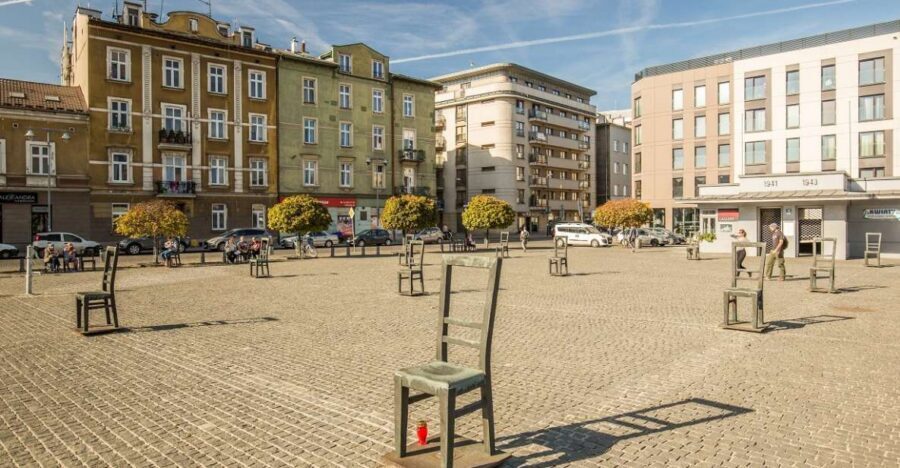
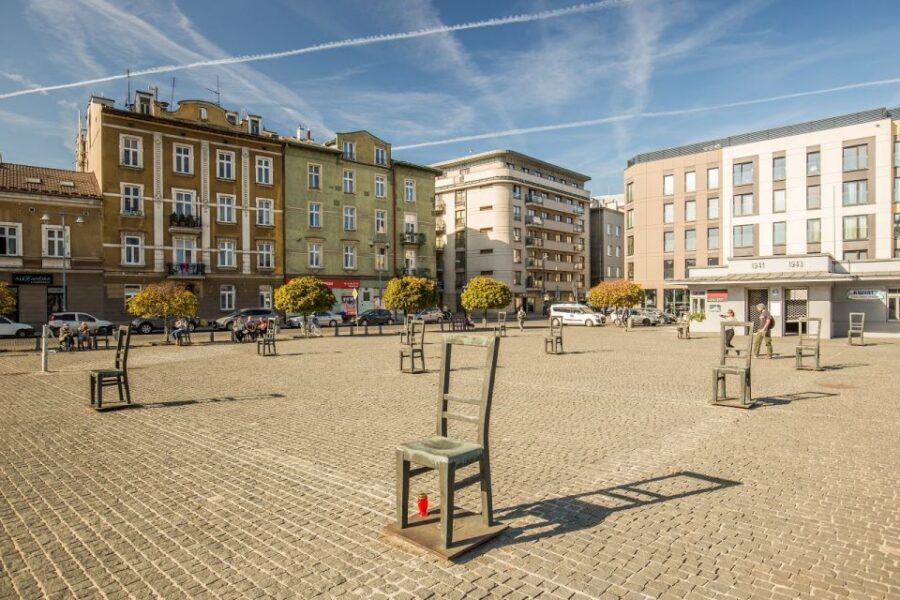
- Ghetto Heroes Square & the chair memorial: dozens of empty metal chairs marking lives lost.
- Under the Eagle Pharmacy story: the bravery of Tadeusz Pankiewicz and staff who helped residents with medicine and shelter.
- Wartime buildings and street layout: you learn why geography mattered for daily survival and deportations.
- A 1-hour format that fits real schedules: short enough to pair with other Kraków history stops.
Entering Podgórze: where the ghetto became a map of fear
The tour starts in Podgórze, the district that became Kraków’s Jewish Ghetto during WWII. Even before you reach the memorials, you’re asked to picture what it meant to live in a space where movement and safety were controlled by violence.
What I like about this opening is that it doesn’t rush to the dramatic part. The guide builds a baseline: who lived here, how the daily rhythm changed under Nazi occupation, and how deportations fit into the slow tightening of control.
You’ll also get a sense of the emotional tone the walk is designed to hold—quiet, respectful, and grounded in place. That matters, because it shapes how you read everything else you see later.
You can also read our reviews of more walking tours in Krakow

The Ghetto Wall fragments: why seeing the boundary changes everything
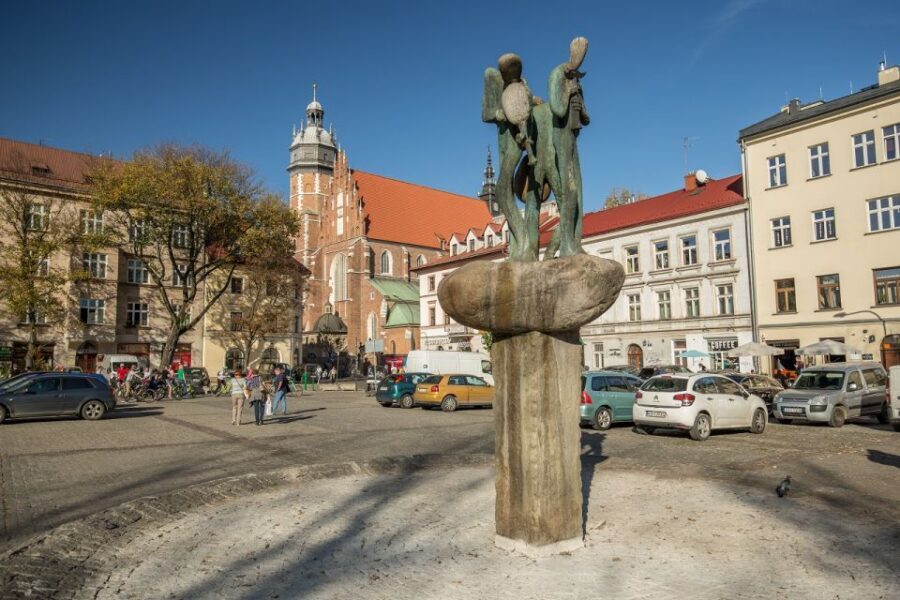
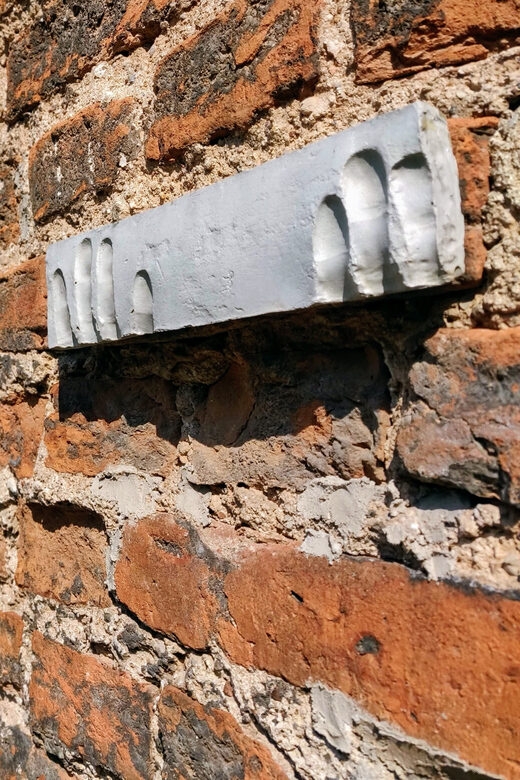
One of the most powerful stops is the remains of the original Ghetto Wall. You’re shown the kind of boundary that enclosed more than 15,000 people in just a few blocks, with the walls turning ordinary streets into a trap.
This is where a guide becomes more than a storyteller. The wall fragments are limited, so the value is in context: what the wall meant for daily life, how it shaped fear and opportunity, and why “location” wasn’t neutral during the occupation.
A practical thing: plan to slow down here. Even in good weather, it’s hard to take in a small fragment unless someone helps you understand what you’re looking at and why it mattered.
Ghetto Heroes Square and the Chair Memorial: history you can stand inside
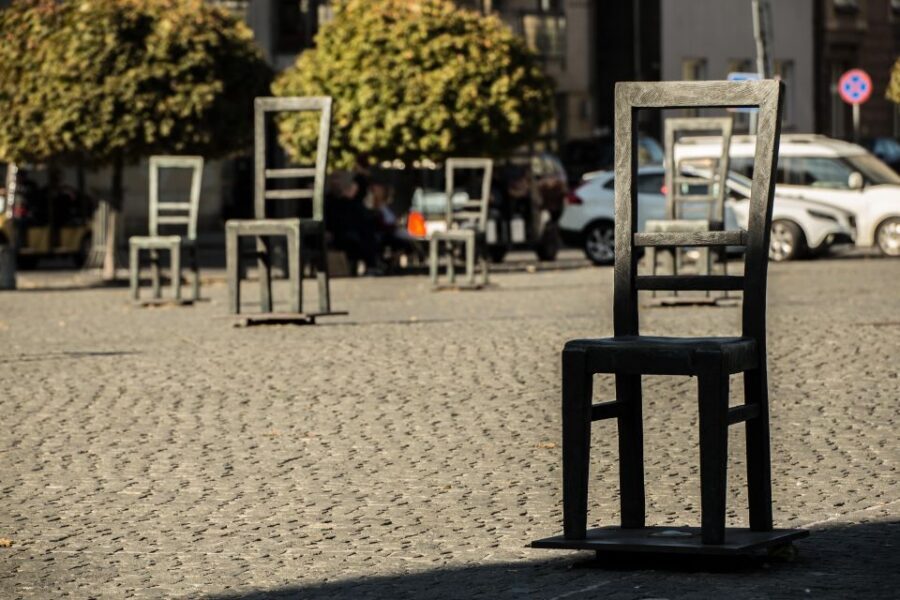
Next comes Ghetto Heroes Square, described as the heart of the ghetto. Historically, it was tied to deportations—so the square is not just a memorial, it’s a reminder of how people were taken from their community.
Today, it’s filled with dozens of empty metal chairs. Each chair symbolizes lives lost, and the effect is simple and direct: you don’t need a long explanation to feel the absence.
This stop is also a good place to pause. If you need a breath, take it here. Let your brain catch up to what your feet have already walked through.
Under the Eagle Pharmacy: courage at street level
Across from the square is Under the Eagle Pharmacy, a historic site connected to Tadeusz Pankiewicz and his staff. The tour focuses on their decision to risk themselves to help ghetto residents—providing medicine and shelter when those basic needs could mean life or death.
What makes this part work is that it turns the story from suffering into action without denying the tragedy. You learn that resistance wasn’t only dramatic. Sometimes it looked like keeping people alive with the resources that were hardest to come by.
One caution: the pharmacy area can sometimes be closed on certain days, which can limit what you’re able to see inside. Even then, the guide’s storytelling and the site’s significance should still land, but if you strongly want interior access, you might plan your day around visiting museums separately as well.
Street layouts and wartime buildings: learning the “where” behind WWII
A big part of this tour is seeing authentic wartime buildings and the street layout that guided everyday movement. That sounds technical, but it’s actually human: where you could go, what you could access, and how quickly danger could reach you.
The guide ties the geography to the story—daily life, deportations, and survival—so the neighborhood becomes a kind of map of decisions people made under impossible pressure.
I also appreciate the structure of the walk. It’s paced as a sequence of “place then meaning,” which helps you keep track of what happened and why this neighborhood mattered.


How long is it, and does 1 hour feel too short?
The tour lasts 1 hour. That’s a real plus if you’re trying to fit Kraków history into a day that already includes other heavy stops.
Still, one honest consideration: an hour can feel short if you want maximum detail at every stop. Some people leave wanting more time to ask questions, linger, and process. If you’re the type who likes to read every plaque and ask follow-ups, consider pairing this with additional reading or another guided stop later.
On the flip side, the short duration is exactly why it can be a good first step. It gives you context so your larger WWII experiences connect to daily life, not just mass events.
Price and value: $11 for a guided context machine
At $11 per person, this is priced like a quick, focused history walk. The value is not that it covers everything about WWII—it can’t, in an hour—but that it covers the local story of the ghetto with real sites.
You’re paying for three key things:
- a licensed guide who connects location to meaning,
- access to surviving physical clues like the wall remains and memorial square,
- and an emotional framework for how to interpret what you see.
If you’ve spent money elsewhere on WWII tours and want something that brings it back to city streets and daily survival, this price makes sense. It’s also an easier decision if you’re on a tighter budget and still want a guide’s interpretation.
Pacing, hearing, and the winter reality
This tour goes ahead in all weather—rain or shine. Kraków winters can be brutal, and you’ll be outside long enough that clothing and shoes matter.
You can also expect that the guide will try to keep you heard. Some groups report using headsets/ear microphones, which is a big help when you’re in cold air and city noise.
The walking itself tends to be manageable. At least one review noted the route is mostly flat, which helps if you’re balancing this with other stops.
Language choices: pick the tour that matches your day
The tour runs with a live guide in one language only. Options include French, German, Italian, English, Spanish, Russian, Portuguese, Swedish, Slovak.
This matters more than it sounds. When the material is emotional and specific—like deportations and local rescue efforts—missing a detail because the language isn’t your best can make the experience thinner.
If you’re traveling as a group with mixed language needs, you’ll want to coordinate your booking so everyone gets the same quality of understanding.
Pairing it with Schindler’s Factory and other Kraków plans
Many people visit Schindler’s Factory in Kraków because it frames occupation-era history. This ghetto walk fits well alongside that, because it moves from broader occupation context into what happened to Jewish residents in the city’s neighborhood scale.
If your tour starts near the Schindler’s Factory area, you’ll also find it easier to stitch together the story without backtracking too much across town.
It’s a good “second act” after a museum stop: one part museum, one part neighborhood, both guided.
Who should book this Jewish Ghetto walk?
This tour is a strong match if you want:
- a guided explanation focused on the Podgórze ghetto area,
- a short, respectful route that’s easy to schedule,
- and specific memorial stops like the chair memorial and the Eagle Pharmacy story.
It’s also a good choice if you’ve already done a long WWII tour and you want the local texture—street-level reality, daily survival, and what “control” looked like in an ordinary city.
It may not be ideal if you:
- need a light, low-emotion sightseeing day,
- or want a deep, multi-hour dive at each stop with time for long Q&A.
Should you book this tour?
If your goal is to understand the Kraków ghetto through real places—wall fragments, Ghetto Heroes Square, and Under the Eagle Pharmacy—this one-hour walk is a smart buy. The price is low enough to feel practical, and the structure is tight enough that it won’t hijack your entire day.
Book it if you want guided context and a respectful route that connects tragedy to human courage. Skip it only if you’re trying to avoid heavy WWII themes right now or if you know you’ll need more time than an hour to absorb and ask questions.
FAQ
How long is the Kraków Jewish Ghetto walking tour?
It lasts 1 hour.
How much does the tour cost?
The price listed is $11 per person.
What key places does the tour visit?
You’ll see the remains of the original Ghetto Wall, Ghetto Heroes Square with the chair memorial, and Under the Eagle Pharmacy. The walk also covers authentic wartime buildings and street layouts.
Does the tour include food or drinks?
No. Food and drink are not included.
What languages are available for the live guide?
French, German, Italian, English, Spanish, Russian, Portuguese, Swedish, and Slovak.
Where do I meet the guide?
The meeting point may vary depending on the option you book.
What time should I arrive before the tour starts?
Arrive 10 minutes early. Latecomers can’t join once the group has departed, and tickets can’t be refunded.
Does the tour run in bad weather?
Yes. It goes ahead in all weather, rain or shine.
Is there a private group option?
Yes, a private group is available.