REVIEW · KRAKOW
Krakow: Guided Tour of the Jewish Ghetto
Book on GetYourGuide →Operated by Hello Cracow · Bookable on GetYourGuide
A quiet square can carry a heavy weight. In just 1 hour, this Kraków guided walk takes you through Podgórze’s former Jewish Ghetto and helps you make sense of fear, daily survival, and resistance.
I especially like two things: the visit to the Ghetto Wall remains you can still see in the city, and the stop at Ghetto Heroes Square with its empty chair memorial. Both turn a difficult topic into something concrete you can stand in and look at.
One consideration: this is emotionally intense WWII material. If you want a light, casual tour, you may find the stories of deportations and survival hard going.
In This Review
- Key highlights that hit hardest
- Podgórze: Where the ghetto story begins in real streets
- Following the original Ghetto Wall remains: what you can still see
- Ghetto Heroes Square and the Chair Memorial: silence with meaning
- Under the Eagle Pharmacy: the story of Tadeusz Pankiewicz
- Authentic wartime buildings and street layouts
- How the guide ties together daily life, deportations, and survival
- Reflection time: what the tour actually leaves you with
- Price and value: is $15 worth it?
- Meeting point tip: start at the right door
- Who this tour is best for
- Should you book this Kraków Jewish Ghetto guided tour?
- FAQ
- How long is the Kraków guided tour of the Jewish Ghetto?
- What does the tour include?
- What’s the price?
- Where is the meeting point?
- What language options are available?
- What are the main places you visit?
- Is food and drink included?
- Can I get a refund if my plans change?
Key highlights that hit hardest
- Ghetto Wall fragments you can actually track in the neighborhood streets
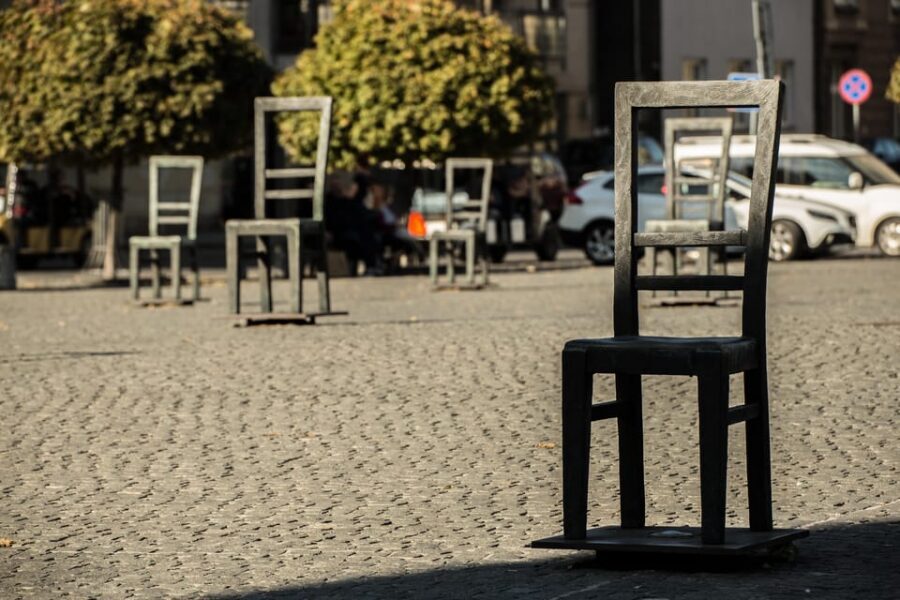
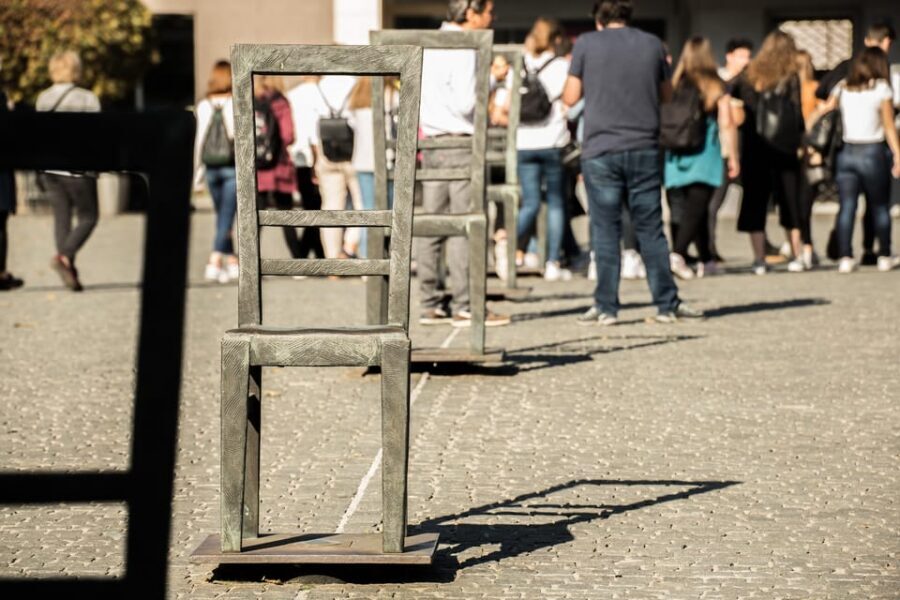
- Ghetto Heroes Square and the Chair Memorial with dozens of empty metal chairs
- Under the Eagle Pharmacy and the bravery of Tadeusz Pankiewicz and his staff
- Authentic wartime buildings and street layout that make the scale feel real
- Clear storytelling about daily life, deportations, and survival during WWII
Podgórze: Where the ghetto story begins in real streets
This tour starts in Podgórze, the Kraków district that became the site of the Jewish Ghetto during World War II. The streets there feel calmer than the subject matter you’re about to hear. That contrast is part of what makes the walk so effective.
Your licensed guide sets the stage as you move through the neighborhood. You’re not just looking at buildings—you’re learning how people lived in a trapped space, with the constant pressure of what was coming next. You’ll hear about how more than 15,000 people were enclosed within a few city blocks, and that number helps you understand why this wasn’t just one tragedy—it was a whole system designed to crush normal life.
I like that the tour doesn’t rush past the human scale. You get enough orientation to follow the story as it moves from everyday reality to deportations and, later, survival.
You can also read our reviews of more guided tours in Krakow
Following the original Ghetto Wall remains: what you can still see
One of the strongest parts of this experience is the stop at the remains of the original Ghetto Wall—one of the few surviving fragments. When you stand near what’s left, the ghetto stops being an abstract concept. It becomes a physical boundary: a line in the city that determined where people could go and what life was limited to.
Your guide connects the wall to daily hardships and to acts of solidarity inside those boundaries. That matters because it keeps you from viewing the ghetto only through the lens of suffering. You also learn how people tried to look out for one another under impossible conditions.
A practical note: because this is a walking tour and the pace is tied to the guide’s storytelling, you’ll want to wear comfortable shoes. You’re covering meaningful ground, but the goal is interpretation—not sightseeing sprints.
Ghetto Heroes Square and the Chair Memorial: silence with meaning
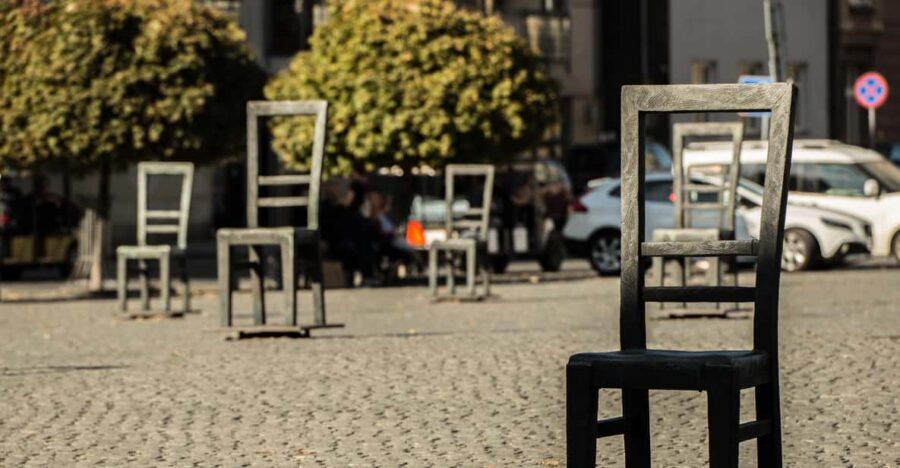
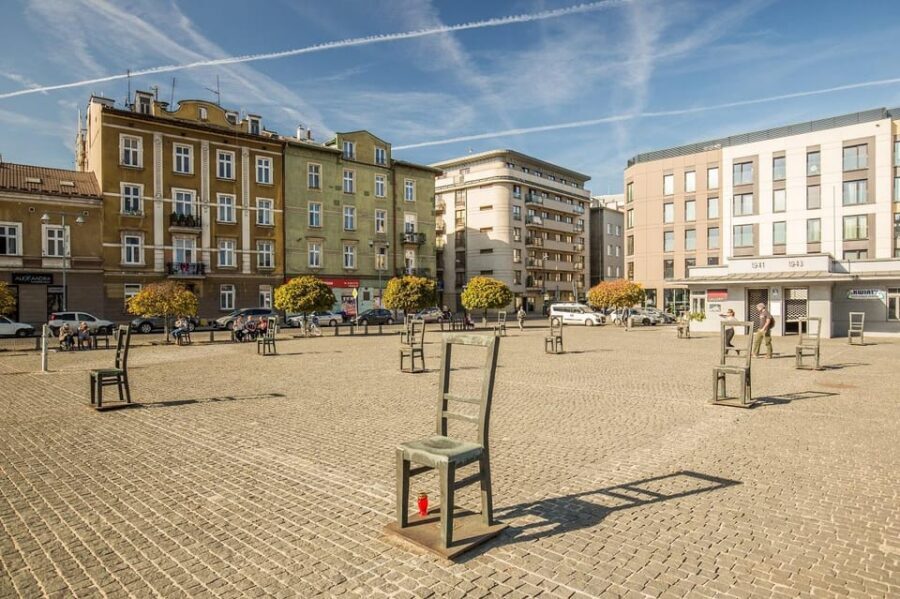
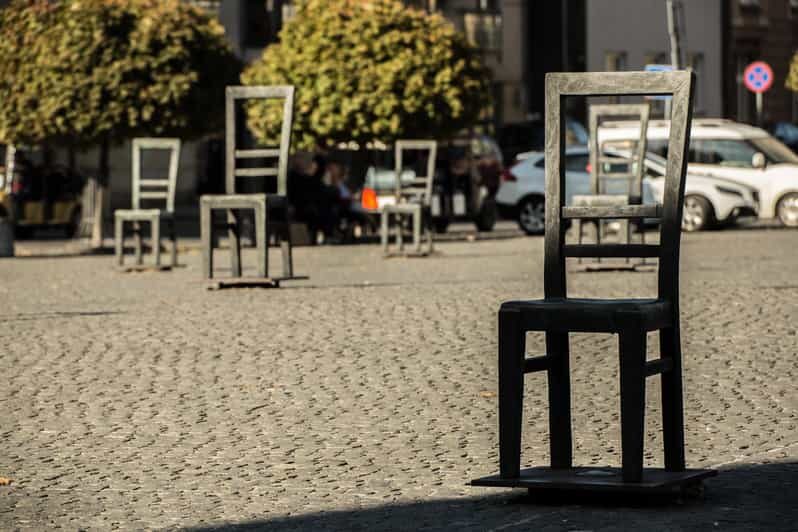
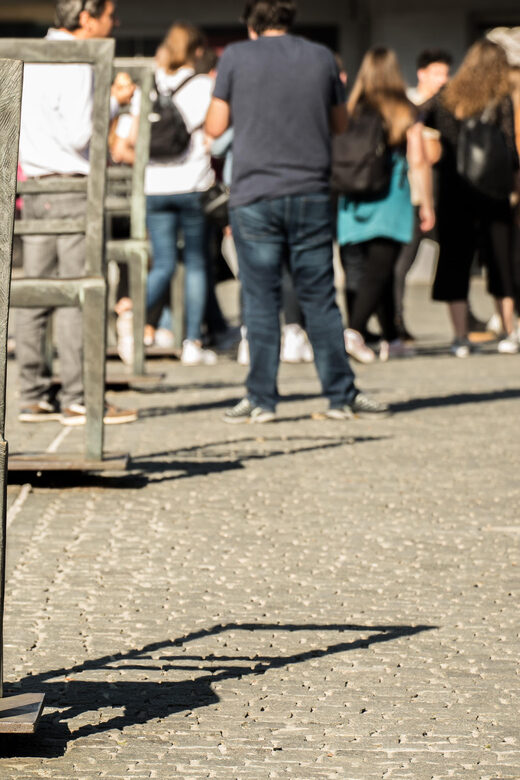
Next comes Ghetto Heroes Square, described as the heart of the ghetto. It was once a gathering place for deportations to concentration camps. Today, it’s a memorial built around a simple, haunting image: dozens of empty metal chairs.
The chairs aren’t decoration. Each one represents a life lost during the Holocaust, and the emptiness of them does something that words alone can’t. You feel how absence can be made visible without needing dramatic scenes.
I like the way the tour asks you to pause here—not just to look, but to absorb the weight of what the site represents. If you tend to rush through monuments, slow down on this stop. Stand back a bit, then approach again. You’ll likely notice more once you give yourself a minute.
Under the Eagle Pharmacy: the story of Tadeusz Pankiewicz
Across the square is the historic Under the Eagle Pharmacy, and this is one of the tour’s most hopeful turns. Your guide shares the story of Tadeusz Pankiewicz and his staff—people who risked their lives to help ghetto residents by providing medicine and shelter.
This stop is valuable because it shows bravery in a very specific form: practical aid. It’s not only about grand gestures. It’s about what survival sometimes depended on—getting medicine, finding safety, and refusing to treat human life as disposable.
The tour also emphasizes what that kind of help cost. You learn it wasn’t a low-risk act, and that makes the compassion feel real, not symbolic.
If you care about ethics and human choices under pressure, this is the part you’ll remember after the walking is done.
Authentic wartime buildings and street layouts
A big reason this tour works is that it stays grounded in the places themselves. You’ll see authentic wartime buildings and the street layout that helped define daily movement in and around the ghetto area.
Street layout might sound like a small detail until your guide uses it to explain how the ghetto functioned. Then the layout becomes a map of control: where people were forced to go, where they might have hoped to move, and how the physical environment shaped behavior.
This is also where the tour’s 1-hour length feels smart. The route is short enough to keep you from fatigue, yet structured enough to hit the key “anchors” of meaning: boundary, square, and help.


How the guide ties together daily life, deportations, and survival
The tour’s storyline moves through the darkest chapters of Kraków’s wartime past: daily life, deportations, and survival. The value isn’t only in the topic—it’s in how the information is sequenced.
You start with the setting (Podgórze and the ghetto’s existence). Then you see the boundary (Ghetto Wall remains). After that, you reach the stage of mass transport (Ghetto Heroes Square). Finally, you end with resistance-through-aid (Under the Eagle Pharmacy).
That structure matters because it keeps you from feeling lost. You leave with a clearer mental timeline of what happened in this area and why these specific locations became memorial sites.
The guide is also live and runs in multiple languages: German, Italian, English, French, and Spanish. That’s helpful if you want the full story without relying on translations from a phone.
Reflection time: what the tour actually leaves you with
The experience concludes with a moment for reflection. That may sound like a generic ending, but in this context it’s not fluff. The tour hits heavy content, and you need a chance to absorb it without immediately switching to casual tourist mode.
I’d treat this like part of the itinerary. Don’t rush out the second the guide finishes speaking. Take a few minutes to let the space work on you—especially after the chair memorial and the deportation context you just heard.
When you do this, the tour becomes more than a “things I saw” checklist. It turns into a better understanding of how a city can hold memory in plain sight.
Price and value: is $15 worth it?
At $15 per person for a 1-hour guided walking tour with a professional guide, the value is clear: you’re paying for licensed interpretation in multiple stops that would take much longer to piece together on your own.
This isn’t a museum you wander through at your own tempo. It’s a curated, place-based story told on foot. You also get a tight route through several major anchors of the ghetto narrative, without adding extra time or transportation costs.
What makes the price feel especially fair is that the tour covers both tragedy (deportations, lives lost) and a specific thread of compassion (medicine and shelter through Pankiewicz and his staff). That balance can be hard to find if you’re only reading signage or stitching together facts from different sources.
So if you want a focused introduction—without spending a half day—this is a strong value.
Meeting point tip: start at the right door
You’ll meet at the entrance of the Schindler Factory Museum, and the instruction is to look for a guide with an excursions.city sign.
This matters because the tour is only 1 hour long. Arrive a little early so you’re not stressed at the start. Once you’re with the guide, you can focus on the story instead of timing.
If you’re combining this with other Kraków sights nearby, consider scheduling it earlier in your day. Emotionally intense tours can take the edge off your energy, even when you feel grateful you did them.
Who this tour is best for
This works well if you want:
- a guided, respectful way to understand Kraków’s WWII Jewish Ghetto sites
- a short walking format with major landmarks in a single block of time
- clear storytelling about daily life, deportations, and survival
It may be less ideal if you’re looking for a light overview, a casual photo walk, or a fast-moving “see everything” schedule. This is history with real emotional weight.
Also, since it runs in several languages, it’s a good option if you’re traveling with friends who prefer something other than English.
Should you book this Kraków Jewish Ghetto guided tour?
I’d book it if you’re in Kraków and you want a focused experience that connects the physical remains of the ghetto to the people who lived, suffered, and helped one another. The mix of the Ghetto Wall remains, the Chair Memorial, and the Under the Eagle Pharmacy story gives you a more complete picture than most quick stops.
You might skip it only if you’re specifically avoiding emotionally heavy content, or if you need a tour that feels mostly educational but not reflective.
If you do book, go in with a simple plan: wear comfortable shoes, give yourself a few quiet minutes at the end, and let the places—not just the facts—do the work.
FAQ
How long is the Kraków guided tour of the Jewish Ghetto?
The tour lasts 1 hour.
What does the tour include?
It includes a professional guide.
What’s the price?
The price is $15 per person.
Where is the meeting point?
Meet at the entrance to the Schindler Factory Museum, and look for a guide holding an excursions.city sign.
What language options are available?
The live guide is offered in German, Italian, English, French, and Spanish.
What are the main places you visit?
You’ll see the remains of the original Ghetto Wall, Ghetto Heroes Square with the Chair Memorial, and Under the Eagle Pharmacy.
Is food and drink included?
No. Food and drink are not included.
Can I get a refund if my plans change?
There is free cancellation up to 24 hours in advance for a full refund.