REVIEW · KRAKOW
Krakow: Guided Auschwitz Birkenau Tour
Book on GetYourGuide →Operated by Unlimited Krakow · Bookable on GetYourGuide
Auschwitz is not a normal day trip. This guided outing takes you to Auschwitz I and Auschwitz II-Birkenau with skip-the-line entry, plus time in the preserved exhibits and original sites like the gas chambers and crematoria. I like how the schedule gives you a structured way to see the whole complex without getting lost, and I especially like that you’re not doing it alone. One drawback: the day is long, the emotions are intense, and you’ll walk a fair amount at a pace set by the memorial.
The transport and logistics are usually the difference between a smooth visit and a stressful one. You’ll ride a coach from Krakow, and many departures run with an air-conditioned vehicle and clear pickup coordination. Still, you may feel like you’re moving constantly because camp tours are timed by site rules, and the memorial environment doesn’t slow down for anyone.
If you want the most meaningful experience, plan for the whole day and bring what you’re supposed to bring. This is not the place for extra baggage, and it is not suitable for people with mobility impairments. Pack light, bring ID that matches your booking name, and let the guide do the heavy lifting.
In This Review
- Key things to know before you go
- Krakow to Auschwitz: the coach ride, the pickup, and the rhythm of the day
- Entering the memorial: security, IDs, and the one mistake that ruins everything
- Auschwitz I: prison blocks, exhibitions, and the emotional weight of details
- The exhibitions and preserved rooms: why a guide changes everything
- Crossing to Birkenau: the shift from museum rooms to vast, exposed reality
- Birkenau highlights: railway ramp, barracks, and the surviving layout
- Skip-the-line entry: what it saves and what it doesn’t
- Transportation timing: why the day feels long even when it’s well run
- What’s included in the value of the price (and where the value shows up)
- Group experience: comfortable coach, clear communication, and the human touch
- One extra stop to know about: short art exhibit time
- Who this tour is best for (and who should consider alternatives)
- Practical packing checklist that actually matters
- Should you book this Auschwitz I and Birkenau guided tour?
- FAQ
- Where is the meeting point for the Krakow Auschwitz Birkenau tour?
- How long is the tour from Krakow to Auschwitz and Birkenau?
- Does the tour include skip-the-line tickets?
- Do I need an ID, and does it need to match my booking?
- What language options are available for the guide?
- Are large bags or luggage allowed during the visit?
Key things to know before you go
- Skip-the-line tickets help you get moving faster after the long approach and security.
- Auschwitz I and Birkenau together means you see both the museum areas and the larger camp layout in one go.
- A local guide leads the walking across original objects and preserved buildings, so you get context as you go.
- Headphones may be used so the guide stays audible even when groups are split between other visitors’ tours.
- The pace is set by the memorial, so build in patience and comfortable shoes.
Krakow to Auschwitz: the coach ride, the pickup, and the rhythm of the day
Your day starts at 14 Straszewskiego Street in Krakow. The meeting point can vary by option, but the tour always ends back at Straszewskiego 14. From there, you transfer by bus/coach to the Auschwitz-Birkenau Museum area in Oświęcim, which is about 1.5 hours each way on the ride segments.
I like this format because it protects your energy. Instead of juggling trains, parking, and ticket confusion, you’re just locked into a plan: get there, visit, return. Many guides and hosts also give clear pre-arrival instructions, including how the group transitions from the transport area into the memorial tour flow.
One nice practical touch: several departures use an air-conditioned coach, which matters when you’re spending a long day seated, walking, and then seated again. And yes, on some schedules a short intro film or documentary may be shown during the ride, which can help you get oriented before you reach the gates.
You can also read our reviews of more guided tours in Krakow

Entering the memorial: security, IDs, and the one mistake that ruins everything
At Auschwitz-Birkenau, there’s a strong emphasis on control and identity checks. You must bring a passport or ID card, and the name on your booking needs to match exactly the name on your ID. If there’s a mismatch, entrance can be refused.
This is one of those rare cases where prep saves your day. Double-check your spelling, and don’t rely on a phone photo or a different document type. Also keep your bag situation simple: luggage and large bags aren’t allowed, and there’s a stated maximum for hand luggage of 12x8x4 inches (30x20x10 centimeters). Anything larger is typically left on the bus during the visit.
There can be queues, especially at the start. Even with skip-the-line tickets, expect a waiting period for security and entry screening. The good news is that the queue movement is generally handled in an organized way once you’re in the right lane.
Auschwitz I: prison blocks, exhibitions, and the emotional weight of details
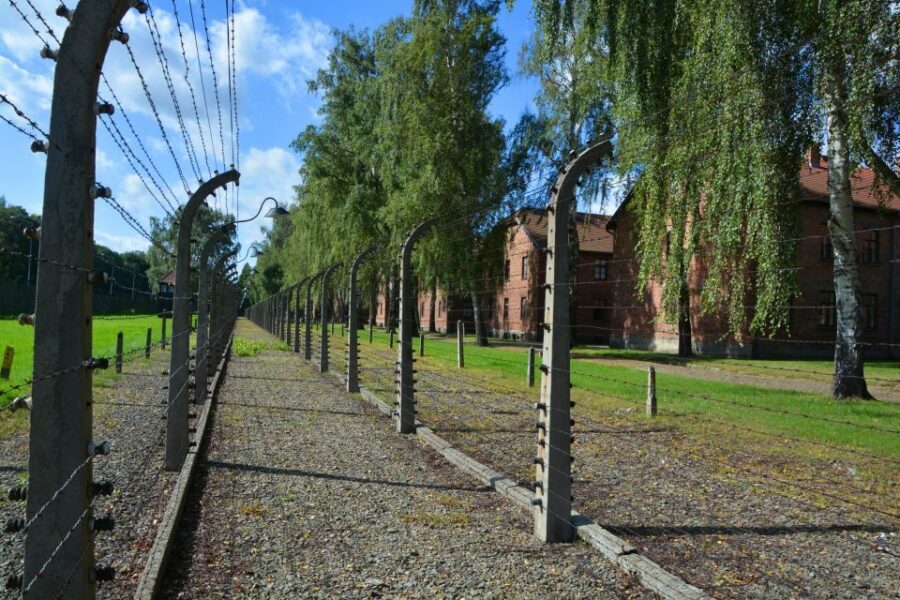
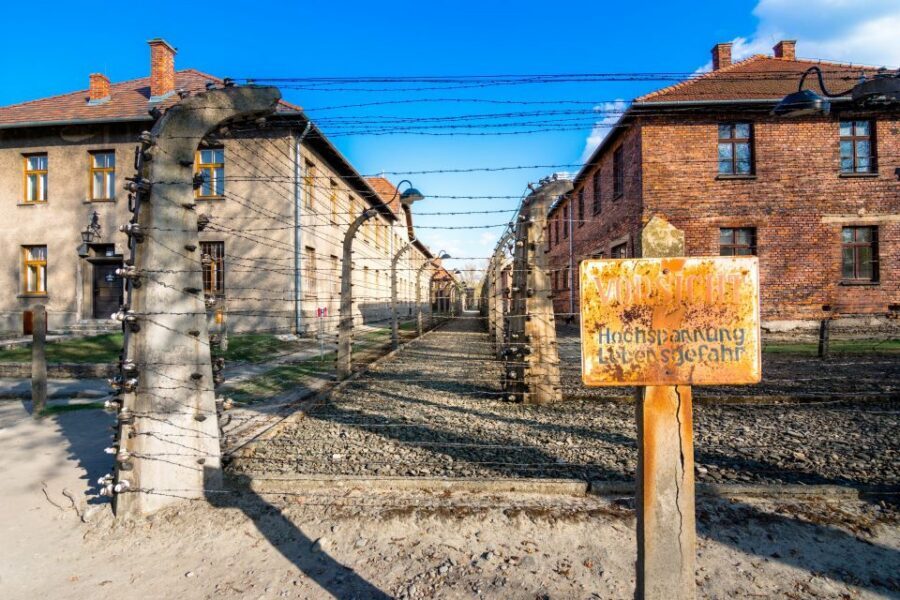
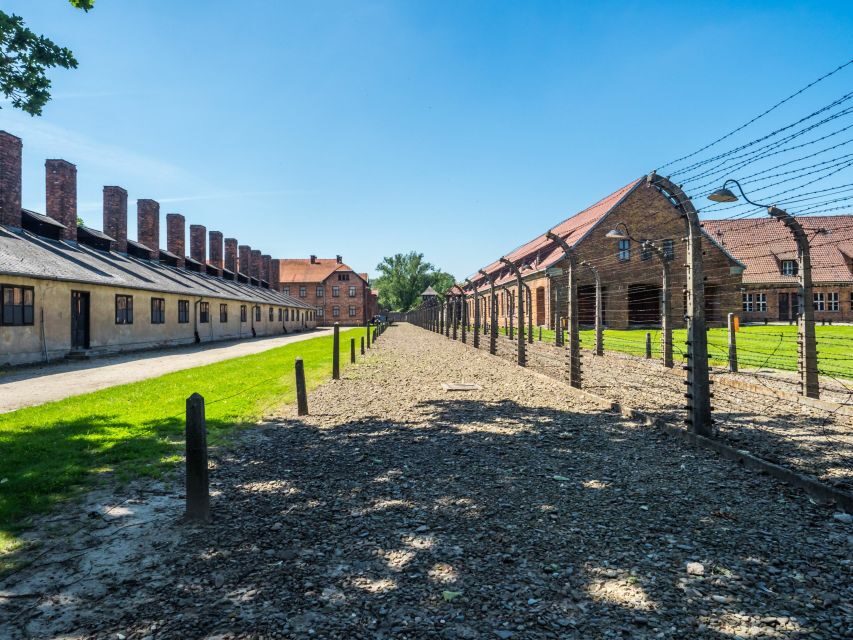
The core guided portion begins with your visit to Auschwitz I. Your local guide leads you for roughly 2 hours here, and the route includes exhibitions in preserved prison blocks and prisoner rooms. You also walk past some of the sites that most visitors picture from documentaries and books: the death wall, and the gas chambers and crematoria buildings.
This part works best if you treat it like a guided study, not a sightseeing loop. Your guide’s job is to connect what you’re seeing to what happened, and to explain why these surviving structures matter. I like that the tour doesn’t just point and move; it gives you context while you’re still standing in front of the objects.
There’s also a practical benefit. Auschwitz I can be overwhelming because it’s dense with information, objects, and meaning. With a guide in front, you’re more likely to understand what you’re looking at rather than trying to decode everything on your own.
The main drawback is time pressure in a place that deserves slow attention. Even if you’re absorbing every sentence, the tour is paced by the memorial’s visitor service. That can make you feel like you’re always one step behind what you want to process.
The exhibitions and preserved rooms: why a guide changes everything
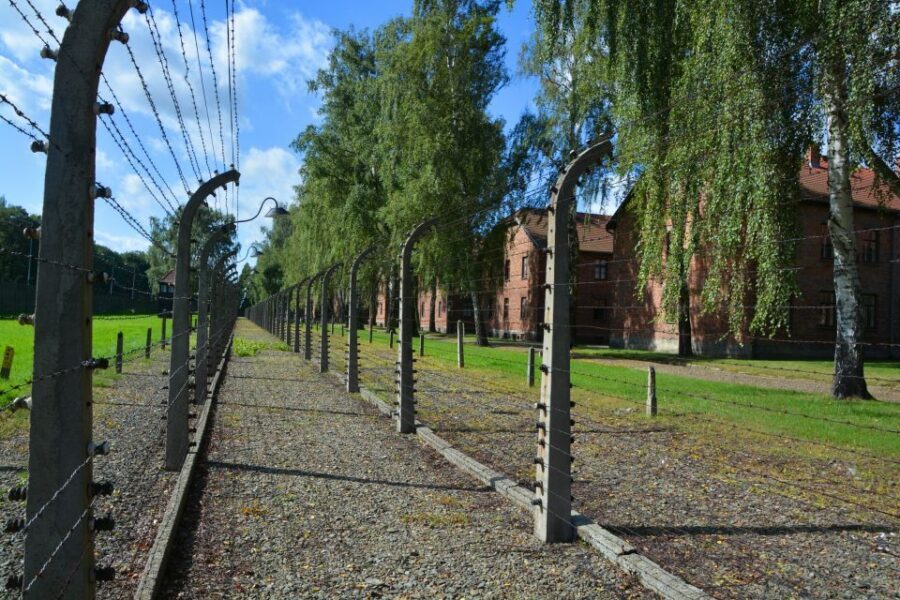
One of the most valuable parts of this tour is the emphasis on what remains. Auschwitz I and its attached exhibition spaces aren’t just buildings; they’re parts of the original site. The tour includes remaining prison blocks and prisoner rooms, plus original objects that show everyday camp reality and the treatment of imprisoned people.
I find that a guide helps you avoid two extremes. You don’t just skim the facts, and you don’t fall into numbness. Instead, you get an explanation that keeps the story anchored to what’s physically present.
You’ll also see how the tour structure tries to balance groups. Even though other visitor groups will be around inside, the pacing and guidance help maintain order, so you’re not constantly bumping into chaos. In some departures, groups are given headphones so you can hear your guide clearly while passing through areas where you might otherwise have trouble hearing.
Crossing to Birkenau: the shift from museum rooms to vast, exposed reality
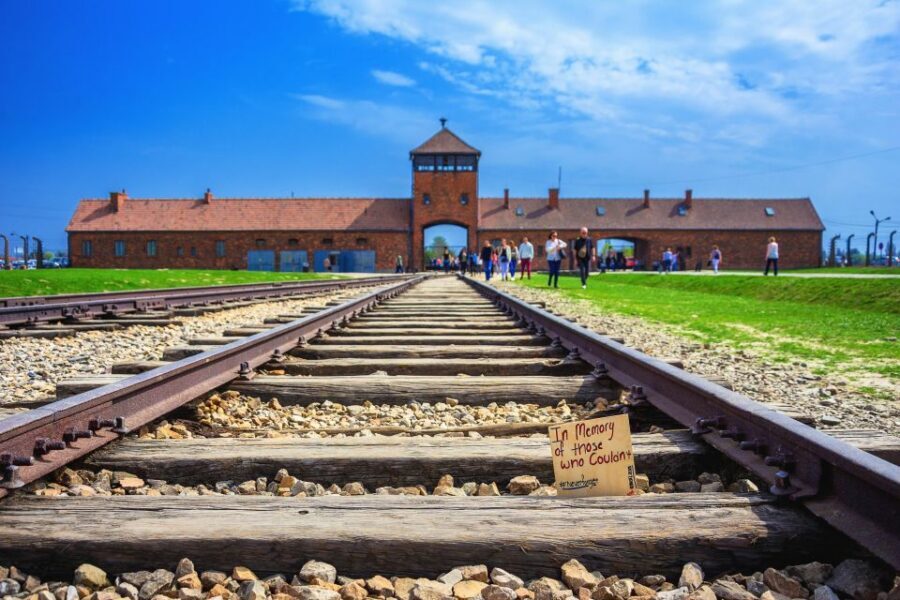
After the first camp segment, you transition by coach to Auschwitz II-Birkenau. The itinerary includes a short transfer, around 15 minutes, and then a guided walk of about 1.5 hours in Birkenau.
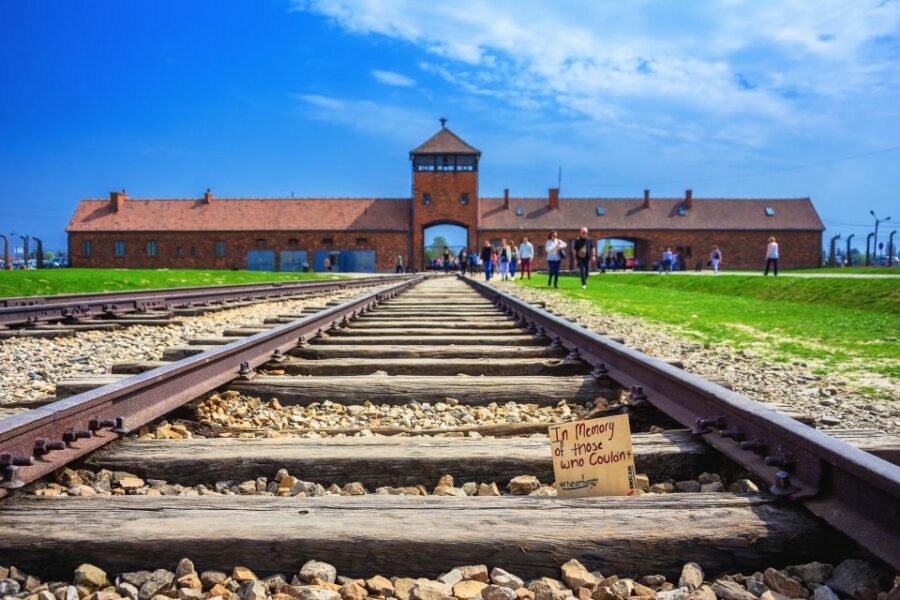
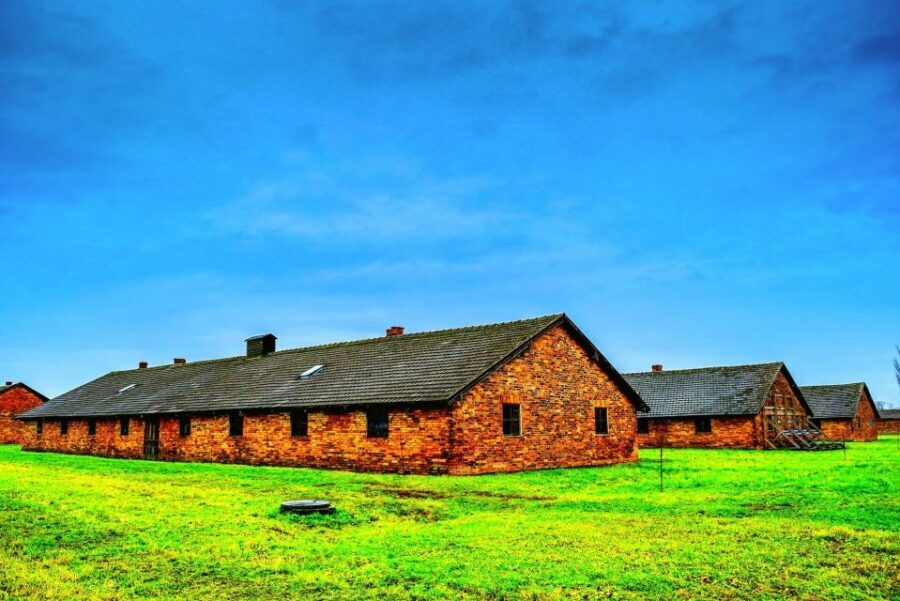
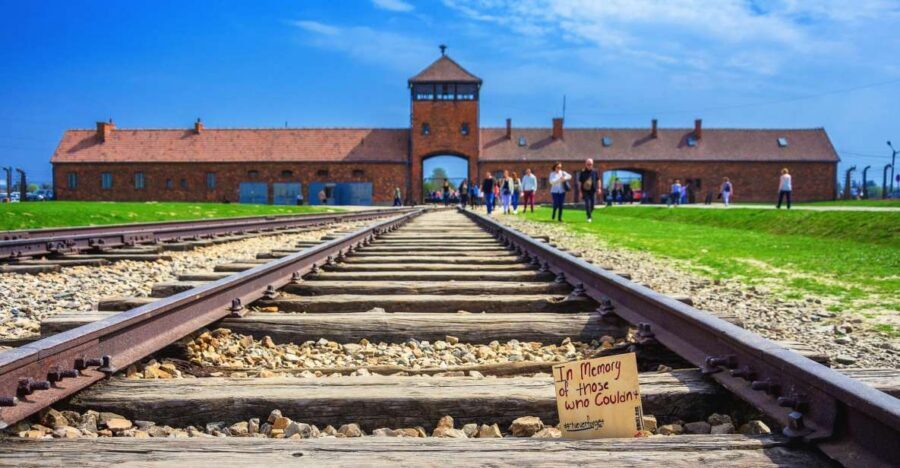
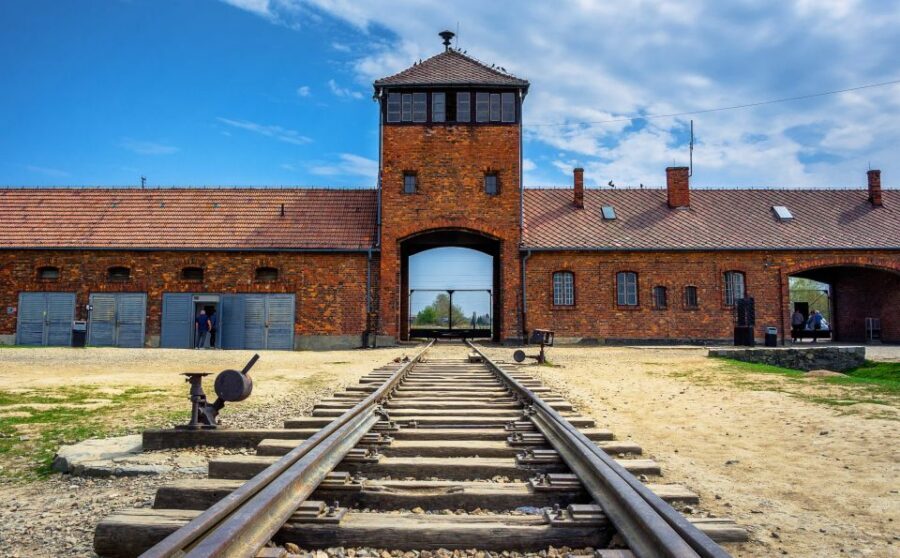
This is where the experience changes shape. Auschwitz I feels enclosed and museum-like. Birkenau is more open and more spread out, with large sections of surviving barracks, the railway ramp, and long sightlines that are hard to forget.
In a practical sense, that scale means you’ll want good shoes and a steady pace. In an emotional sense, it means the story hits differently when you’re standing near the places tied to transport and internment at that much larger scale.


Birkenau highlights: railway ramp, barracks, and the surviving layout
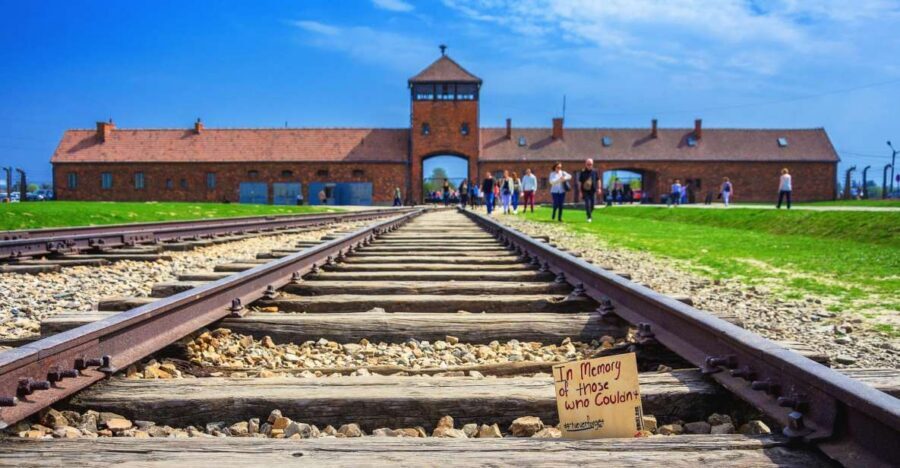
In Birkenau, your guide takes you to major elements that visitors expect to see and, in many cases, that historians have focused on for decades. The tour includes the railway ramp in Birkenau, remaining barracks, and multiple preserved areas that communicate how the camp functioned in practice.
You’ll also see components that match what you learned in Auschwitz I, like structures tied to the camp’s mechanisms, including the ongoing presence of gas chamber and crematoria sites in the broader Auschwitz complex. The key is that you’re connecting systems across two camps rather than treating them as separate stops.
One small caution: Birkenau can feel very long even in a 1.5-hour guided window. If you’re someone who likes to stop and stand in silence, you’ll have to do it in short gaps. The group has to keep moving, and your guide needs to keep the schedule aligned.
Skip-the-line entry: what it saves and what it doesn’t
This tour specifically includes skip-the-line tickets. In reality, that usually helps most with entry into the museum/camp system and reduces some of the friction of ticketing on arrival.
It doesn’t erase everything. You’ll still go through security and you’ll still be subject to visitor flow. If 3–5 different group buses hit the same time window, there can still be a wait before you’re fully staged for your guided portion.
Still, compared with DIY entry, skip-the-line can be a big quality-of-life improvement. It helps you start the actual learning part sooner, which matters because your guided time is limited and emotional processing benefits from structure.
Transportation timing: why the day feels long even when it’s well run
This outing runs about 210 minutes to 7 hours, depending on the starting time and how the memorial schedules visitor service. That range matters because you’re not just spending time inside; you’re also moving between Krakow and Oświęcim, and between the two camps.
The schedule is built in segments: the coach ride out, guided time at Auschwitz I, a transfer, guided time at Birkenau, then the return coach trip. If your start time shifts due to museum decisions, your day plan should stay flexible. The tour provider notes that your start time may change based on the Auschwitz Museum’s decisions, so save the whole day.
A long day is not a dealbreaker, but it is a reality check. People often underestimate how tiring emotional sites are. I recommend treating this like a full-day commitment, not a half-day activity you can stack with other plans.
What’s included in the value of the price (and where the value shows up)
At about $69 per person, what makes this feel like solid value is the combination of things you’d otherwise have to coordinate yourself: round-trip coach transport (if that option is selected), skip-the-line entry, and a local guide leading both camps.
You’re also getting an English-speaking driver/tour leader, which helps with the “where do we go next” side of the day. And the local guide brings the key advantage of being on-the-ground with the site’s current visitor flow, rather than you trying to interpret it from scratch.
This isn’t a low-cost attraction, but it is a highly structured one. When you factor in two camps, guided time, and the transfer logistics, the price-to-time ratio often feels fair—especially if you don’t want to deal with transportation, ticket timing, and group coordination on your own.
Group experience: comfortable coach, clear communication, and the human touch
Most people come here for meaning, not comfort. Still, comfort supports the experience. Many departures run on a comfortable van or coach with air-conditioning, and pickup instructions tend to be detailed and straightforward.
The guide part is where you’ll feel the biggest difference. Guides can vary, but the ones described here share clear pacing, respectful handling of questions, and an ability to keep the group engaged without turning the site into a lecture that ignores people. In at least some departures, the coach host and guide also make practical recommendations, like which exhibits to focus on and even which books to look for in the nearby bookshop.
If your guide or coach host is Konrad, you might notice extra emphasis on practical orientation and small helps that make your visit feel more navigable. If your host is Jan, you might see clear attentiveness to logistics as well, including day-before scheduling changes in some cases.
One extra stop to know about: short art exhibit time
Some schedules appear to include a short additional stop after Auschwitz. One account describes a stop of about 40 minutes at an art exhibition. It may not be universal for all departures, so if you have a tightly planned afternoon, treat this as a “possible” add-on rather than a guarantee.
If you can, plan nothing important right after you return to Krakow. Your emotions and your legs both need the buffer.
Who this tour is best for (and who should consider alternatives)
This is best for you if you want structure and context. If you’re the type who reads before you go and likes explanations that connect what you’re seeing to what it means, a guided Auschwitz I + Birkenau day is a good fit.
It’s also a smart choice if you’re visiting from elsewhere in Europe or don’t want to deal with onsite navigation and timing. The coach transfers reduce decision fatigue.
It’s not a good fit for people with mobility impairments. The tour information is explicit about that, and you should take it seriously.
Practical packing checklist that actually matters
Here’s what I’d do to avoid stress on the day:
- Bring your passport or ID card and make sure the name matches your booking.
- Wear comfortable clothes and comfortable shoes because you’ll walk through preserved sites and exhibitions.
- Keep hand luggage under 30x20x10 cm (12x8x4 in).
- Skip alcohol during the tour; it’s forbidden.
- Leave extra bulky items at home. Larger luggage may need to be left on the bus.
Also, expect a day with a lot of sensory input. Bring a calm mindset, not a strict itinerary of your own.
Should you book this Auschwitz I and Birkenau guided tour?
Yes, I’d book it if you want the most time-efficient way to see Auschwitz I and Birkenau with guidance and skip-the-line entry. The value comes from having transport handled, guided time in both camps, and a structure that helps you focus on meaning rather than logistics.
You should consider a different approach if you’re hoping to move slowly on your own terms, because the pace is set by the memorial. And if your goal is accessibility-first travel, this isn’t designed for mobility impairments.
If you book, do the prep seriously: ID name match, pack light, and save the whole day in Krakow’s time zone. Plan to be changed by what you see, and let the guide bring order to the facts so you can process them with dignity.
FAQ
Where is the meeting point for the Krakow Auschwitz Birkenau tour?
The tour meeting point is 14 Straszewskiego Street in Krakow, though it can vary depending on which starting option you book. The tour also ends back at Straszewskiego 14.
How long is the tour from Krakow to Auschwitz and Birkenau?
The experience runs 210 minutes to 7 hours, depending on the starting time and the memorial visitor service schedule.
Does the tour include skip-the-line tickets?
Yes. The tour includes skip-the-line tickets for entry.
Do I need an ID, and does it need to match my booking?
Yes. You must bring a passport or ID card, and the name on your booking must match the name on your ID or you may be refused entry.
What language options are available for the guide?
The tour offers live guides in English, Polish, French, Italian, German, and Spanish. If the minimum group size for a language isn’t met, the tour is provided in English.
Are large bags or luggage allowed during the visit?
No. Luggage or large bags aren’t allowed. Hand luggage is limited to 12x8x4 inches (30x20x10 cm), and larger items must be left on the bus.