REVIEW · WARSAW
Jewish Legacy in Warsaw. Private Tour with the best local specialist.
Book on Viator →Operated by Trips and Travels Poland · Bookable on Viator
Warsaw remembers, and you can walk it. This private Jewish Legacy tour links major Jewish Warsaw landmarks, from the oldest surviving synagogue to ghetto sites tied to deportations. I love the focus on Nozyk Synagogue and POLIN Muzeum Historii Zydow Polskich, because you see both living heritage and the way history was preserved and explained for visitors.
The best part for practical travelers is that it’s a true private setup for up to 3 people, with pickup around Warsaw and an English-speaking guide. My one consideration: since the tour starts at 9:00 and pickup is involved, you’ll want to confirm your exact pickup plan the day before and be ready to call quickly if anything goes off-schedule.
In This Review
- Key highlights at a glance
- Jewish Legacy in Warsaw: what this private tour feels like
- Price and value: why $361 per group can make sense
- Pickup and timing: starting at 9:00am in Warsaw
- The route: how the itinerary tells one connected story
- Nozyk Synagogue: why a single building matters
- POLIN Museum: the indoor lesson you can’t replace with street photos
- Fragment of the Ghetto Wall: what’s left and why it matters
- Umschlagplatz: the cargo rail terminal story
- Memorial at Mila 18: the bunker and the resistance chapter
- Willy Brandt monument: why apology and reconciliation get a place here
- Monument to the Heroes of Warsaw: honoring the people behind the uprising
- Chlodna Street footbridge: the ghetto’s connection points
- Praga Polnoc film streets and the optional villa stop
- Who this tour is best for
- Practical notes: tickets, transport, and sensible expectations
- Should you book Jewish Legacy in Warsaw?
- FAQ
- What time does the Jewish Legacy in Warsaw private tour start?
- Is pickup included, and can they pick me up anywhere in Warsaw?
- How much does the tour cost?
- What language is the tour offered in?
- What kind of ticket do I get?
- What locations are included?
- Is the villa visit in Praga Polnoc guaranteed?
- How long are the stops?
- Is this tour private or shared with others?
- Can I cancel, and what is the cutoff?
Key highlights at a glance
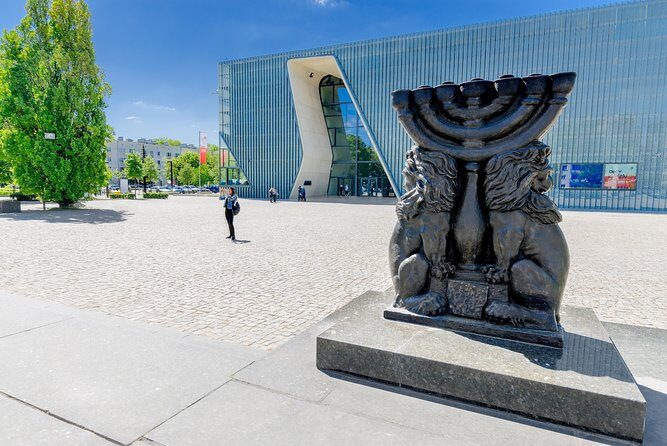
- Private group of up to 3 with a specialist guide in English
- Pickup around Warsaw so you spend less time wrestling transit
- POLIN Museum time with a quick look inside the interior design and key context
- Ghetto-era stops in sequence from wall fragment to Umschlagplatz to Mila 18
- Praga Polnoc film streets plus an optional villa stop depending on your interest
Jewish Legacy in Warsaw: what this private tour feels like
This is the kind of Warsaw tour that doesn’t rush. You move from one high-impact location to the next, and the story builds step by step: older community life, the ghetto’s infrastructure, the deportations, and finally the sites tied to resistance.
I also like how the itinerary mixes indoor and outdoor stops. That matters because Jewish history in Warsaw isn’t only about buildings. It’s about geography—alleys, bridges, walls, and rail access—and how those shaped what people could do.
And it’s designed to be workable. The experience runs on a schedule starting at 9:00am, and you’ll hit several locations with short focused stays, so you get a lot without needing an all-day endurance contest.
You can also read our reviews of more private tours in Warsaw
Price and value: why $361 per group can make sense
The price is $361.23 per group for up to 3 people. That sounds high if you’re thinking per person, but private touring changes the math fast—especially when pickup is included from all around Warsaw.
If you’re traveling as a pair or with a small group, the value comes from three things you can actually feel:
- You’re not competing with a big crowd for hearing time at the most serious sites.
- You can ask questions at places like the ghetto wall fragment or the Mila 18 bunker without feeling rushed.
- Pickup saves time and confusion, which is often where travel plans quietly fall apart.
So, the deal here isn’t bargain-basement. It’s controlled pacing plus local interpretation at places that deserve it.
Pickup and timing: starting at 9:00am in Warsaw
The tour starts at 9:00am and includes pickup, with the provider picking up guests from around Warsaw. That’s great if you don’t want to map bus lines or walk in the cold with a heavy daypack.
You’ll get a confirmation at booking, and there’s a mobile ticket. Since you start in the morning and the itinerary is structured, I recommend you do one small prep step: check your email the day before and be ready at your pickup spot a bit early.
The route: how the itinerary tells one connected story
The sequence is intentional. You begin with a surviving symbol of Jewish religious life, then shift into museum context, then into ghetto remains and the places tied to deportation routes and the resistance.
That ordering helps your brain file things correctly. If you jump randomly between sites, it’s easy to miss how each stop answers a different question: What existed? What changed? How did the system work? Where did people hide or fight back?
Here’s how the stops work in a practical, “you’ll know what you’re seeing” way.
Nozyk Synagogue: why a single building matters
Your first major stop is Nozyk Synagogue at Twarda 6. This is described as the oldest existing synagogue in Warsaw, and the explanation you’ll hear centers on why it survived when so much else was destroyed.
The big idea to carry with you here: survival wasn’t random. The tour notes that the Nazi did not destroy it because of its location and usefulness during the ending chapter of the ghetto period. That detail turns the building into more than a pretty landmark—it becomes evidence of how the occupation shaped even what was allowed to remain.
The stop is short, about 20 minutes, so aim to use it to get your bearings: where the synagogue sits in today’s Warsaw, and what kind of place it represented before and after the worst years.





POLIN Museum: the indoor lesson you can’t replace with street photos
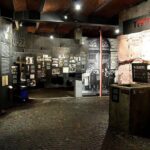
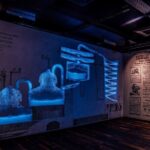
Next is a visit at POLIN Muzeum Historii Zydow Polskich at ul. Mordechaja Anielewicza 6. You’ll spend about 50 minutes here, including a look at the museum location and a quick look inside the interior design.
Even with the shorter museum time, the value is clear: this is framed as a key place for Jewish legacy in Poland, and also one of the earlier institutions to present the topic in a wide and proper perspective. If you’ve ever felt that Warsaw’s Jewish history is too big to fit in a quick sightseeing loop, the museum is where you get structure.
My practical tip: use the museum time to anchor terms and dates in your head. Later, when you stand at the ghetto wall fragment or Umschlagplatz, the meanings connect faster.
Fragment of the Ghetto Wall: what’s left and why it matters
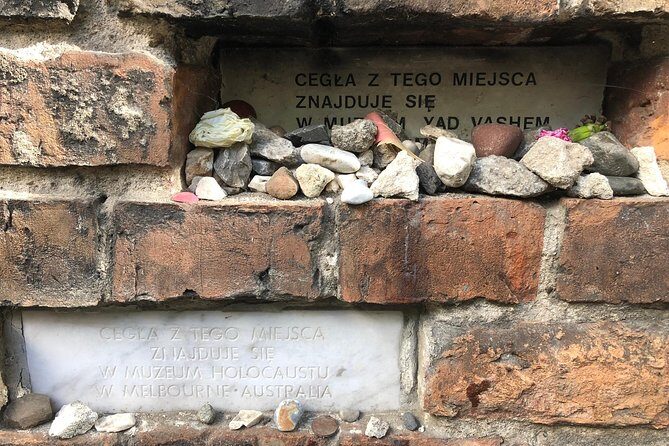
Then you move to the Fragment of Ghetto Wall at ul. Zlota 60. This stop is about 20 minutes, and it’s powerful because it’s specific: you’re seeing the only remaining fragment of the largest Jewish ghetto that ever existed.
The tour highlights an official recognition point: Chaim Herzog recognized this in 1992, and it’s visited by thousands of guests each year. That’s a reminder that history doesn’t only live in archives. It also lives in preserved pieces of a place that people walk by every day.
What I’d focus on here is the feeling of scale. A wall fragment is small in area, but it represents the boundary system that reshaped lives. Take a minute to look at surroundings and imagine how confinement worked in real space.
Umschlagplatz: the cargo rail terminal story
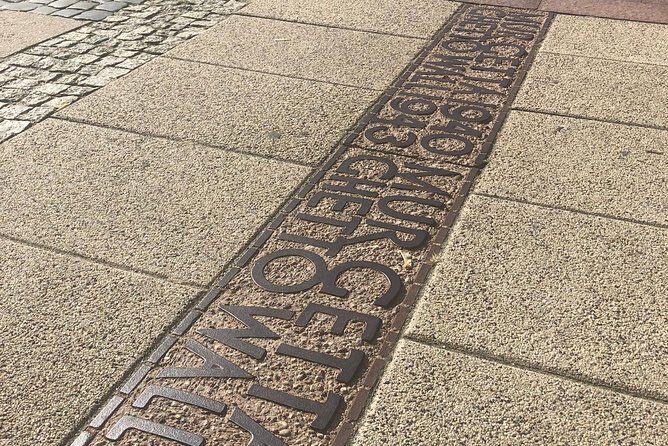
Your next stop is Umschlagplatz, at the corner of Stawki and Dzika. The tour frames it as the ghetto cargo railroad terminal, and it’s connected directly to deportations toward the Treblinka death camp.
This is again about 20 minutes, but don’t let the time fool you. Umschlagplatz is not just a stop—it’s a pivot point in the story. The meaning comes from the fact that this is where people were taken to be transported. It’s logistics with consequences.
If you want to get the most out of this stop, keep your questions simple: how did the occupation turn daily life into transport flow, and what does a rail terminal represent in human terms?
Memorial at Mila 18: the bunker and the resistance chapter
Then you’ll reach the Memorial at Mila 18, at Mila corner with Dubois. This stop is described as the largest bunker in the Jewish ghetto in Warsaw, and it centers on leaders and fighters who hid here during the uprising.
The tour notes that Mordechaj Anielewicz—the leader of the uprising—plus nearly 30 other members of the Jewish fighting organization would hide away here. That’s a crucial shift in tone: from systematic destruction to resistance and survival under extreme pressure.
You’ll also spend about 20 minutes here, so you won’t get a long lecture. Still, the stop works because it adds agency to the narrative. People weren’t only trapped. They organized, fought, and tried to endure.
Willy Brandt monument: why apology and reconciliation get a place here
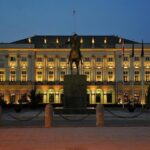
Between ghetto-focused stops, you pass Pomnik Willy’ego Brandta near the POLIN Museum area, in Willy Brandt Square. It’s a monument commemorating the gesture of Willy Brandt, the German chancellor, who knelt in front of the monument of the heroes of the ghetto as a symbol of apology and reconciliation.
This is a pass-by stop, not a long one, but it gives you a long view. After you’ve visited preserved sites of confinement and deportation, this helps you understand how post-war memory is staged in public space.
It’s also a useful reminder that Warsaw’s Jewish legacy isn’t only about what was lost. It’s also about what later generations chose to acknowledge.
Monument to the Heroes of Warsaw: honoring the people behind the uprising
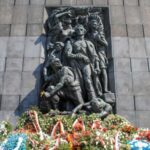
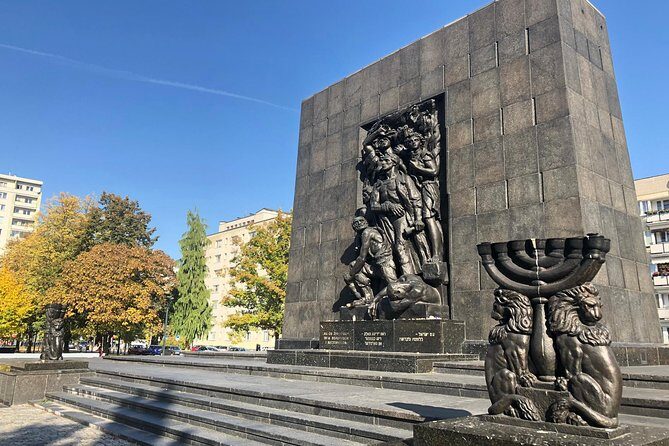
Next is the Monument to the Heroes of Warsaw at Nowy Przejazd. You’ll spend about 50 minutes here, and the tour frames the monument as devoted to the memory of Jews who went through the ghetto nightmare.
Because this stop has more time than several others, it’s likely designed for reflection and explanation. It’s the kind of place where you might notice symbolism, names, and the way the memorial teaches through design.
My advice: don’t treat this like a quick photo stop. Let the meaning settle, then move on to the street-level remnants next, where history is mapped onto buildings and passageways.
Chlodna Street footbridge: the ghetto’s connection points
At Chlodna Street (ul. Chlodna), you’ll see a footbridge linking a small ghetto section with the larger ghetto part. The tour describes this area as the liveliest part of the ghetto and also one of the most dangerous.
It’s about 10 minutes, so this is more about orientation than lingering. But it’s an excellent stop because it adds a daily-life dimension: connection means movement, and movement in a ghetto meant exposure to risk.
If you’re imagining the ghetto only as a closed box, this kind of crossing point forces a different picture. Life still happened across boundaries; danger still followed it.
Praga Polnoc film streets and the optional villa stop
You’ll finish in Praga Polnoc at ul. Zabkowska, around 40 minutes total. The tour notes that these streets were used for Roman Polański’s The Pianist movie shots, and it also mentions an optional villa visit tied to the book The Zoo Keeper’s Wife.
This ending part is interesting because it connects history to modern storytelling. Just keep your expectations realistic: this is not a full museum-style lesson. It’s a guided walk through locations associated with filming and literature, with the villa visit dependent on your interest.
I’d consider this section a bonus if you like seeing how cultural works translate history into scenes you can recognize.
Who this tour is best for
This tour is a strong fit if you want a private, structured Jewish history experience in Warsaw with pickup and English interpretation.
You’ll likely enjoy it most if you:
- Care about understanding the timeline, not just collecting sites.
- Prefer shorter, guided stops over long museum marathons.
- Want a small-group feel while still covering several key locations.
If you’re looking for an ultra-flexible street wandering tour with no set sequence, this might feel more guided than you want—because the itinerary follows a clear route.
Practical notes: tickets, transport, and sensible expectations
The tour includes a mobile ticket, and pickup is offered from around Warsaw. You’re also told you’re near public transportation, which is helpful if your plans shift and you need a backup route to meeting points.
Most travelers can participate, and service animals are allowed. Still, because the stops involve walking between locations, wear comfortable shoes and plan for a serious emotional tone at the ghetto-related memorial sites.
Should you book Jewish Legacy in Warsaw?
I’d book this tour if you want a coherent, private way to see the major anchors of Jewish Warsaw: Nozyk Synagogue, POLIN Museum, the ghetto wall fragment, Umschlagplatz, and Mila 18.
I would hesitate only if your schedule is fragile around the 9:00 start, because private tours depend on the guide and pickup showing up on time. If you do book, take the boring-but-smart step of confirming pickup details the day before and being ready at the pickup point early.
FAQ
What time does the Jewish Legacy in Warsaw private tour start?
It starts at 9:00am.
Is pickup included, and can they pick me up anywhere in Warsaw?
Pickup is offered, and the provider picks up guests from around Warsaw.
How much does the tour cost?
The price is $361.23 per group (up to 3 people).
What language is the tour offered in?
The tour is offered in English.
What kind of ticket do I get?
You’ll receive a mobile ticket.
What locations are included?
The tour includes Nozyk Synagogue, POLIN Museum, Fragment of Ghetto Wall, Umschlagplatz, Memorial at Mila 18, Monument to the Heroes of Warsaw, a stop at Chlodna Street, and a finish in Praga Polnoc with a possible optional villa visit.
Is the villa visit in Praga Polnoc guaranteed?
No. The villa visit is optional and depends on your interest.
How long are the stops?
Stops range from about 10 minutes (Chlodna Street) to about 50 minutes (POLIN Museum and Monument to the Heroes of Warsaw), with several around 20 minutes for the ghetto-related sites.
Is this tour private or shared with others?
It’s private. Only your group will participate.
Can I cancel, and what is the cutoff?
Free cancellation is available. You can cancel up to 24 hours in advance for a full refund.