REVIEW · WARSAW
Jewish heritage in Warsaw
Book on Viator →Operated by Renata Kopczewska · Bookable on Viator
Five hours can change how you see Warsaw.
This private tour is built for Jewish heritage in Warsaw, linking major WWII sites with one surviving synagogue, and doing the hard planning for you. I like the no-fuss hotel pickup and the way the route hits several meaningful stops without you hunting for transit. One thing to factor in: the group rides in a small car, and if you need extra legroom, that could feel tight.
Renata Kopczewska leads with a steady pace and answers questions clearly. You’ll also get film connections, including The Pianist filming locations, plus context at memorials like Umschlagplatz. If you’re visiting on a Saturday, there’s schedule reality to plan around: the Jewish Cemetery is closed on Saturdays, and Nozyk Synagogue has prayer-only access.
In This Review
- Quick reasons to book this Warsaw Jewish heritage route
- Jewish heritage in Warsaw: why this route works
- Price and logistics for a private group (up to 4) with pickup
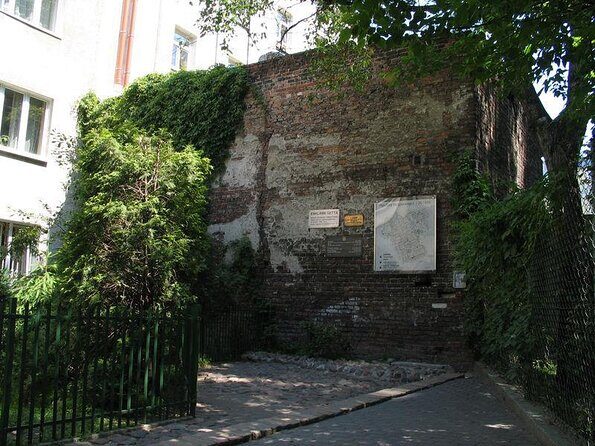
- Stop 1: Warsaw Ghetto markers, Rappaport monument, Mila 18, and memorials
- Stop 2: Jewish Cemetery (Cmentarz Żydowski) and how to read matzevot
- Stop 3: Umschlagplatz, the deportation railhead, and the 300 first names
- Stop 4: Nozyk Synagogue, the surviving synagogue that still functions
- Stop 5: Praga Północ Jewish traces, including Menachem Begin and a puppet theater
- Stop 6: Jewish Historical Institute (former Judaistic Library) and ghetto archives
- The Pianist filming locations: using film to understand real places
- Pacing, questions, and how to make the time count
- Who should book this Warsaw Jewish heritage tour—and who might not
- Should you book this tour?
- FAQ
- FAQ
- How long is the Warsaw Jewish heritage tour?
- What’s included in the price?
- Are entrance fees included?
- Is the tour private, and how many people can join?
- Does it include transport from my hotel?
- Does the tour work on Saturdays?
- Can I cancel for a full refund?
Quick reasons to book this Warsaw Jewish heritage route
- Hotel pickup and drop-off saves you time and stress
- Surviving Nozyk Synagogue gives you a living WWII connection
- Umschlagplatz memorial marks the deportation railhead with symbolic details
- Jewish Cemetery shows history through preserved matzevot and major WWII memorials
- Praga Północ Jewish landmarks include places tied to Menachem Begin and a former mykveh
- Jewish Historical Institute highlights WWII survival, including fire traces on the floor and ghetto archives
Jewish heritage in Warsaw: why this route works
Warsaw’s Jewish story isn’t one place. It’s a chain—streets, courtyards, rail platforms, cemeteries, and the stubborn survival of a few buildings. What I like about this tour is that it treats the city like a map you can actually read in a few hours, not like a checklist you rush through.
You start with the ghetto’s footprints, then move to places tied to deportation and survival, and end with surviving institutional memory. That order matters. It helps you connect the dots between the Warsaw Ghetto period, what happened in 1942, and how Jewish community life left traces even after the war. And with a private group (up to 4), you can ask questions when something doesn’t add up.
You can also read our reviews of more historical tours in Warsaw


Price and logistics for a private group (up to 4) with pickup
The price is $270.00 per group for up to 4 people, for about 5 hours. That’s not a bargain price, but it can still feel like good value if you’re weighing your own planning time and transport hassle.
Here’s where the value comes from:
- Pickup and drop-off means you’re not coordinating trams or taxis between distant stops.
- You get a driver/guide to explain what you’re seeing, so you’re not standing at memorials trying to piece together meaning from signs alone.
- Some stops are free to visit, including key external memorial sites, which helps keep the overall cost predictable.
Main consideration: a small vehicle is part of the package. One past experience included cramped legroom. If you’re tall or have mobility needs, mention it early and plan accordingly. Also, lunch isn’t included, so build in time for a snack plan before or after.
Stop 1: Warsaw Ghetto markers, Rappaport monument, Mila 18, and memorials
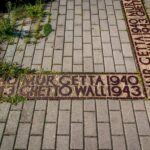
Your day opens around the former Warsaw Ghetto area—specifically the parts marked with monuments and memorial points. The ghetto itself was destroyed after the uprising collapsed, so what you see now are reminders: stone, plaques, and location-based memory.
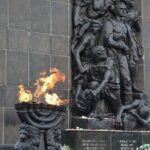
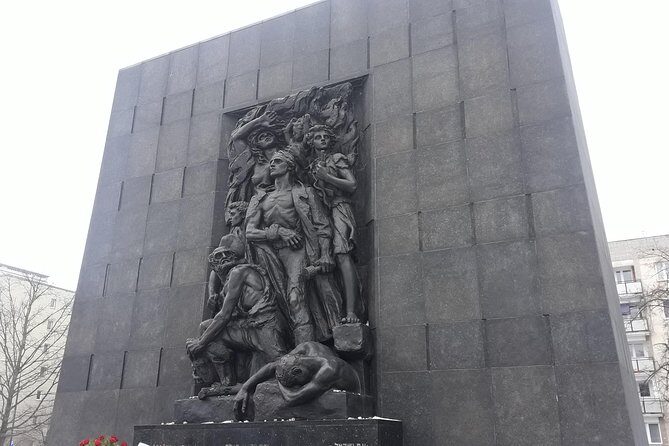
You’ll visit the Rappaport monument dedicated to Heroes of the ghetto, along with Mila 18 and the Umschlagplatz area (and related memorial points, including the Shmul Zygielbojm memorial). Even when there’s no building left, the guide’s job is to anchor the story in place.
The practical benefit of this first stop: you get context before you reach the places that hit hardest emotionally. You’ll also get a clearer sense of the ghetto’s layout and why certain locations became symbols—so the later sites don’t feel disconnected.
Stop 2: Jewish Cemetery (Cmentarz Żydowski) and how to read matzevot
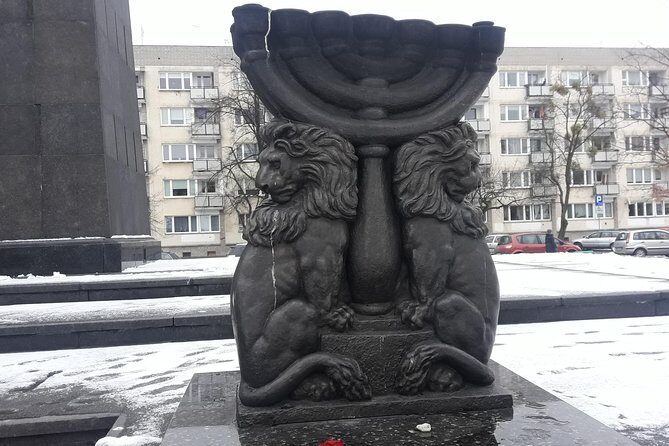
Next comes the Jewish Cemetery (Cmentarz Żydowski), a stop that makes Jewish Warsaw feel real in a different way. Instead of monuments only about the Holocaust, you’re looking at preserved matzevot—grave markers that can teach you a lot about Jewish life and learning in Warsaw, including connections to Polish literature, science, and art.
This stop also includes symbolic WWII memory:
- Mass graves from WWII
- Symbolic stones dedicated to people who perished in extermination camp in Treblinka
Two key tips for getting the most from this cemetery visit:
- Move slowly. The information is in the details, and a cemetery rewards patience.
- Pay attention to the stories your guide points out—name, community ties, and how the cemetery reflects Warsaw’s Jewish presence over time.
Timing note: the cemetery is closed on Saturdays. If your trip includes a Saturday, you may need to adjust expectations around this stop.
Stop 3: Umschlagplatz, the deportation railhead, and the 300 first names
At Umschlagplatz, you’re standing in the site of a former railway station where about 300,000 Jews from Warsaw ghetto were deported to death camp in Treblinka in summer 1942. This is the point where history becomes painfully specific: dates, routes, and the industrial logic of deportation.
One of the most striking details here is the symbolic memorial wall with 300 first names in alphabetical order—names of those who started their last journey. It’s not the kind of memorial that tells you what to feel; it gives you something to read and remember, which is a different kind of impact.
The guide’s interpretation matters a lot at Umschlagplatz. Without explanation, it can turn into just another outdoor memorial. With it, you understand why the location was chosen and what it meant for the people moving through it.
This stop is 15 minutes and free, which means it fits smoothly into the overall pacing.




Stop 4: Nozyk Synagogue, the surviving synagogue that still functions
Then you reach Nozyk Synagogue, described as the only synagogue in Warsaw that survived WWII and is still functioning. That single fact changes the atmosphere instantly. You’re not only looking at a memorial or a ruin; you’re looking at a living institution with continuity.
The tour includes time to see it and understand why its survival mattered. In practical terms, this is the kind of stop where photos can’t replace the feeling of standing somewhere that endured when so much else disappeared.
Saturday note (important for planning): on Saturdays, Nozyk Synagogue is opened only for prayers, and no admission fee charged at that time. If you’re touring on a Saturday, ask your guide how that affects access so you’re not surprised.
Time here is short—about 15 minutes—so try to let the meaning land rather than rushing for pictures.
Stop 5: Praga Północ Jewish traces, including Menachem Begin and a puppet theater
The route shifts to Praga Północ, an area where more Jewish-era buildings survived compared with central Warsaw. This is a smart move for your understanding because it shows that Jewish Warsaw wasn’t only the ghetto center and the wartime landmarks. It was also students, services, shelters, and daily routines.
You’ll see several specific preserved Jewish-related places, including:
- A students’ dormitory where Menachem Begin lived as a student
- A shelter for poor people and orphans, which is now a puppet theater
- A former mykveh that survived and is now a high school
The value here is in learning to recognize traces in an everyday city. Praga is the kind of place where your eye changes after this stop. You’ll start noticing how buildings get repurposed—and you’ll understand that repurposing doesn’t erase the original story.
This segment is about 30 minutes and free, so it won’t eat your time, but it adds variety that makes the full tour feel less repetitive.
Stop 6: Jewish Historical Institute (former Judaistic Library) and ghetto archives
The final major stop is the Jewish Historical Institute, described as the former Judaistic Library that survived WWII. This is one of those places where physical evidence carries extra weight.
You’ll get to see features tied to wartime survival, including:
- Traces of fire on the floor, connected to the nearby Great Synagogue area, which was blown up
- A map of prewar Poland showing former shtetles
- Exhibition items connected to ghetto archives that miraculously survived
This stop is about 45 minutes, and it’s not included in terms of admission fees. That’s a common pattern in cultural institutions: the tour brings you close, and you handle any ticket cost separately. If you want to avoid surprises, plan a little budget for these last details.
Even if museums aren’t your main interest, the Institute can add something important. It turns the stories you’ve heard outdoors into something documented—maps, archive material, and the tangible survival of records.
The Pianist filming locations: using film to understand real places
One highlight includes filming locations from the movie The Pianist. Even if you don’t care about film trivia, this can be a helpful way to “translate” Warsaw for your eyes.
Film scenes can give you a mental snapshot, but only a guide can connect that snapshot to the actual history of the street, the memorial, and the community life around it. In other words: the movie helps you orient, and the tour gives you accuracy.
If you’ve seen the film, you’ll probably recognize some places visually. If you haven’t, you’ll still get something useful: a sense that the city’s wartime story isn’t abstract—it’s written into the streetscape.
Pacing, questions, and how to make the time count
This is about 5 hours total, with multiple stops and short time at each. That’s enough to see key places without turning it into a marathon. It’s also a format where your questions matter. Having a guide means you’re not stuck guessing at meaning, especially at sites like Umschlagplatz and the ghetto markers, where context can dramatically change how you read what’s there.
Renata Kopczewska’s approach is noted as friendly and professional, with strong knowledge and answers. In a tour like this, that matters. Jewish heritage in Warsaw includes layered facts—dates, place names, community life, and WWII events—and it’s easy to get muddled without someone to keep the timeline straight.
Physical consideration: the tour asks for moderate physical fitness. The route includes walking time across several areas, so comfortable shoes are a smart call. Also, because lunch isn’t included, it helps to plan a light snack before you start and a proper meal afterward.
Who should book this Warsaw Jewish heritage tour—and who might not
This tour fits best if you:
- Want major Jewish WWII sites in a tight, organized route
- Like history with place-based explanation, not just a lecture
- Prefer hotel pickup and drop-off over figuring out transport between stops
- Are traveling with a small group (up to 4) and want private pacing
You might hesitate if:
- You’re very sensitive to legroom in a small car
- You’re visiting on a Saturday and rely on specific timing for the cemetery or synagogue access
- You strongly dislike added entrance fees at stops where admission isn’t included
The good news: the main structure—ghetto markers, Umschlagplatz, and Praga external sites—can still work even when individual indoor access differs on weekends.
Should you book this tour?
If your goal is to see Jewish heritage in Warsaw without spending your vacation time researching routes, I think this is a strong choice. The mix is practical: ghetto memory, deportation context, a surviving synagogue, surviving neighborhood traces, and an institute where archives and evidence are part of the story. You’ll leave with a clearer map of meaning, not just a set of photos.
Book it if you like a guided thread through emotional places and you want someone to help you connect names, locations, and events. Skip it only if you know you won’t manage with a small-vehicle ride or you need a highly flexible schedule that accounts for Saturday closures and prayer-only access.
FAQ
FAQ
How long is the Warsaw Jewish heritage tour?
It’s about 5 hours (approx.).
What’s included in the price?
Hotel pickup and drop-off, a driver/guide, and fuel surcharge are included.
Are entrance fees included?
Not all of them. Entrance fees to museums or specific sites are not included. The Jewish Cemetery and Nozyk Synagogue are listed as not included, and the Jewish Historical Institute is also not included. Some stops are free.
Is the tour private, and how many people can join?
Yes, it’s a private tour/activity, and only your group participates. It’s up to 4 people.
Does it include transport from my hotel?
Yes. Pickup and drop-off are offered.
Does the tour work on Saturdays?
The Jewish Cemetery is closed on Saturdays. Nozyk Synagogue is opened on Saturdays for prayers only, and no admission fee is charged in that situation.
Can I cancel for a full refund?
Yes. You can cancel up to 24 hours in advance for a full refund. If you cancel less than 24 hours before the start time, the amount you paid won’t be refunded.