REVIEW · GDANSK
Gdańsk: City Tour by Electric Golf Cart
Book on GetYourGuide →Operated by City Tour Sightseeing Gdansk · Bookable on GetYourGuide
Gdańsk makes sense faster from a cart. This one-hour electric golf cart tour is an easy way to cover the Old Town’s big landmarks and understand the city’s role in Solidarity and the fall of communism. I especially like how the stops mix medieval gates and churches with 20th-century memory, and how a local guide keeps the ride relaxing while still giving you plenty to think about. One thing to consider: it runs rain or shine, so you’ll want proper outerwear.
You’ll meet your guide right at the Golden Gate area, then roll through the historic core with a calm, story-led pace. I like that it’s private, so you can ask questions without feeling rushed. If the weather turns nasty, the cart uses rain protection that may not feel photo-friendly for everyone, but it keeps the experience going.
In This Review
- Key Highlights You’ll Actually Notice
- Where the Tour Starts: Golden Gate and Targ Węglowy
- Electric Golf Cart Comfort (and Why It Helps)
- Old Town Gates: Highland Gate and Golden Gate as Context
- Prison Tower and Torture Chamber: Where the Story Gets Real
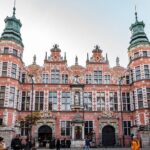
- Great Armory and Brotherhood Court: Medieval Power with Human Details
- St. Mary’s Church and St. John’s: Two Churches, Two Ways to Feel Gdańsk
- Granary Island and the Crane: Shipyard-Era Energy Without the Lecture Tone
- The Polish Post Office and Solidarity Square: Modern Memory in Plain Sight
- The Final Museum Stop: A Good Optional Landing Pad
- Price and Time: Is $19 Worth One Hour?
- Who This Tour Fits Best (and Who Might Skip It)
- Guide Energy: Humor, Answers, and Real Local Flow
- Weather Reality: Rain or Shine Means You’ll Still See the City
- Should You Book This Gdańsk Electric Golf Cart Tour?
- FAQ
- How long is the Gdańsk city tour by electric golf cart?
- How much does the tour cost?
- Where do I meet the guide?
- Is the tour private or shared?
- What languages are available for the live guide?
- Does the tour run in bad weather?
- Is the tour wheelchair accessible?
- What should I bring?
Key Highlights You’ll Actually Notice
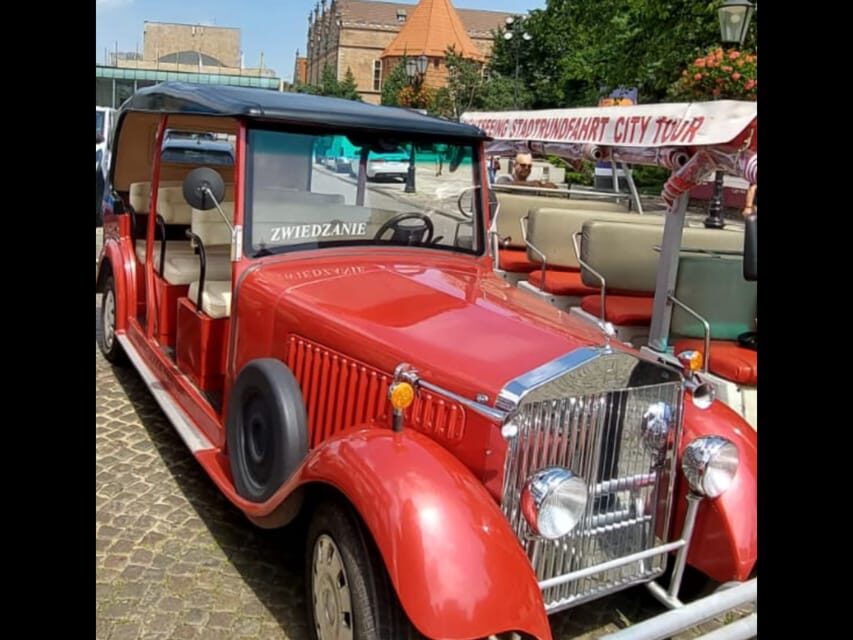
- Electric golf cart comfort for cobblestones and short distances, without the usual walking grind
- Old Town gates and defenses like the Highland Gate and Golden Gate, explained in plain language
- Prison Tower and Torture Chamber as a stark reality check on Gdańsk’s past
- Solidarity Square and the shipyard story tied to the fall of communism
- Churches plus civic sites (St. Mary’s, St. John’s, Polish Post Office) so the city feels complete
- Guides with humor and Q&A energy, with names like Damian and Tomasz often praised for it
Where the Tour Starts: Golden Gate and Targ Węglowy
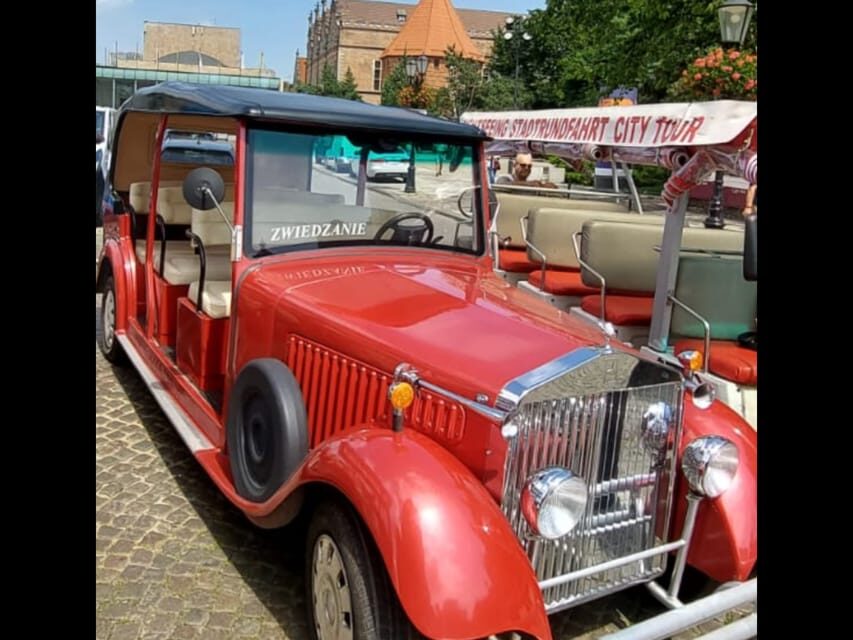
Starting points matter. Here, it’s simple: meet in front of the Golden Gate on the side street Targ Węglowy. Even if you’re not a map person, the Golden Gate area is a natural visual anchor, which reduces that first-day stress of figuring out where tours begin.
Once you’re with the group, you’ll get oriented quickly to how the ride works—basically, you’ll hop between nearby highlights instead of doing a long loop on foot. That’s a big deal in Gdańsk, where the Old Town streets can be uneven and there’s a lot to see. The tour is built for getting your bearings fast, not for slow wandering.
You can also read our reviews of more city tours in Gdansk
Electric Golf Cart Comfort (and Why It Helps)
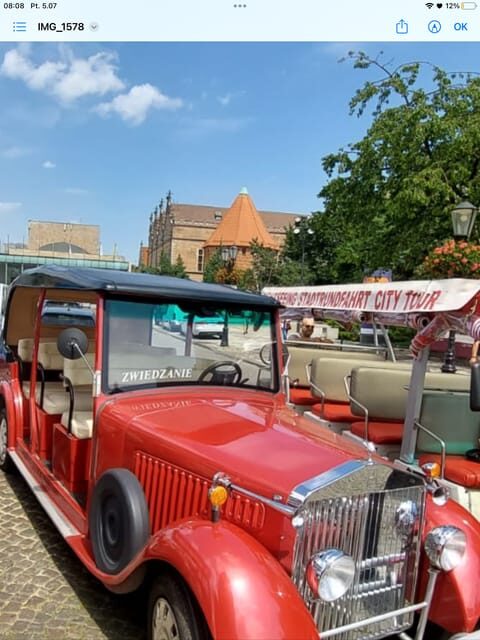
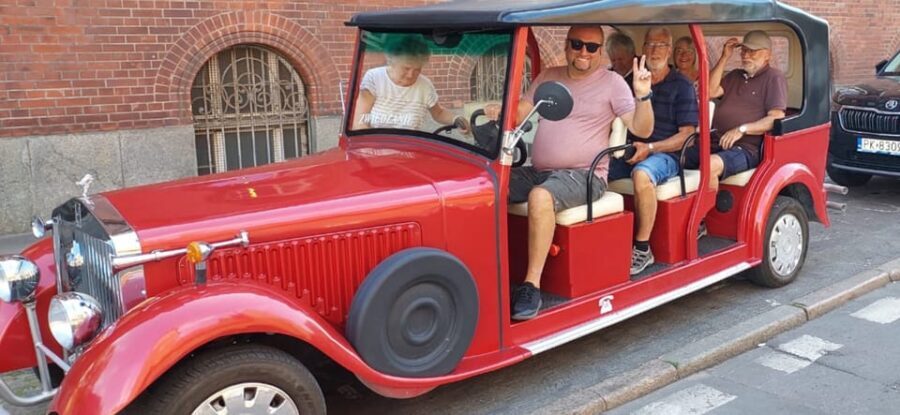
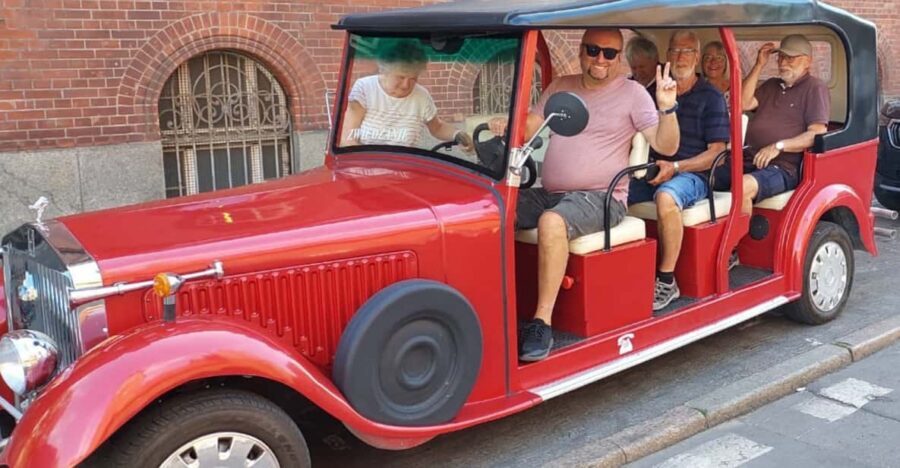
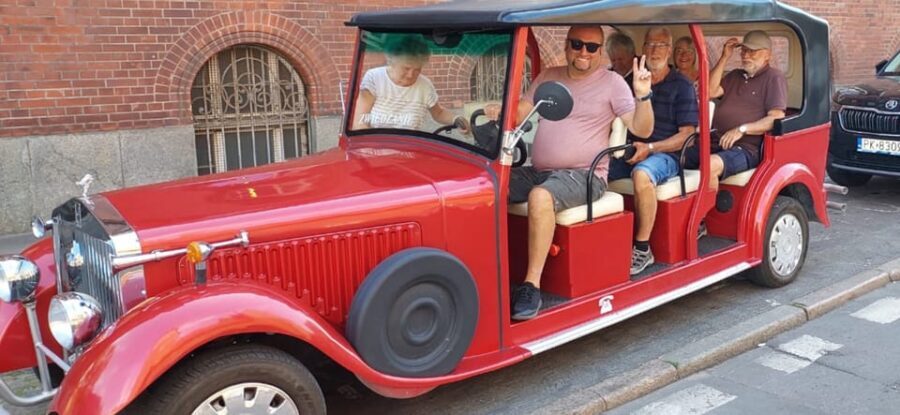
This is an electric golf cart tour, which changes the whole feel of a historic-city visit. Yes, you’ll still be seeing real sights, but you’re not worn out by the logistics of getting from gate to church to square.
In cold or wet weather, the cart setup is designed to keep you comfortable, and you’ll get rain blinds when it’s raining. One practical note: those rain flaps can be a bit hazy depending on the day, so if you’re hoping for crisp phone photos through the plastic, plan for a few shots during breaks and at the most photogenic stops.
For me, the value is not just convenience. It’s that you can stay present. When you’re not fighting the terrain, you can actually listen—especially during the more serious parts of the story.
Old Town Gates: Highland Gate and Golden Gate as Context
The tour visits the Highland Gate and Golden Gate, and this isn’t just gate-spotting. City gates are where you learn what power looked like in everyday form—walls, control points, and the city’s sense of identity.
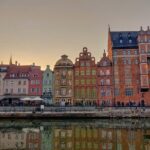
Highland Gate gives you the defensive logic of the area. It helps you picture Gdańsk as a place that had to protect itself and manage arrivals. Then the Golden Gate pulls that theme into a more recognizable landmark you’ll likely see in photos—one of those spots where you can stand still for a moment and let your guide connect details to the bigger story.
Because you’re on a cart, you can also get the flow of the Old Town layout. You don’t just see one gate; you feel how the pieces fit together.
Prison Tower and Torture Chamber: Where the Story Gets Real
If you only take one part of this tour seriously, make it the Prison Tower and Torture Chamber. This stop shifts the mood from sightseeing to consequences. The Old Town can look beautiful, but these sites remind you that history isn’t only architecture—it’s what happened inside those walls.
A good guide makes this bearable without turning it into a lecture. On this tour, the pacing is designed so you’re not overwhelmed, but you still get clear explanations and space for questions. This is where you’ll likely feel the most emotional weight—and where your understanding of the 20th-century parts later will click into place.
Tip: go in ready to absorb. Don’t treat it as a quick photo stop. Let the meaning land.
Great Armory and Brotherhood Court: Medieval Power with Human Details
Next come civic and religious landmarks tied to how the city organized itself.
The Great Armory helps you understand how a port city worked when defense, trade, and status all mattered. Even if you’re not a military-history person, the armory concept is easy to grasp: what you store reflects what you fear and what you’re preparing for.
Then there’s the Court of St. George’s Brotherhood. Courts like this point to a city where groups had roles beyond politics—community structure, obligations, and the social fabric behind the scenes. In a tour like this, the court works because it doesn’t feel random. It sits naturally between the defensive sites and the later symbols of resistance and change.
If you like when a tour explains the “why” behind buildings, these middle stops are a strong payoff.




St. Mary’s Church and St. John’s: Two Churches, Two Ways to Feel Gdańsk
You’ll see St. Mary’s Church and St. John’s Church, and that matters because churches in Gdańsk aren’t just religious stops. They’re visual statements of a city’s ambitions and identity.
St. Mary’s gives you the bigger, more monumental presence—one of those anchors that makes the Old Town skyline make sense. St. John’s shifts the focus slightly, giving a different flavor of how important sacred spaces were to community life.
What I like about including both: you don’t end up with “one church too many.” You get contrast. And since the tour keeps you moving by cart, you can give each church a few minutes of attention without losing the rest of the itinerary.
Granary Island and the Crane: Shipyard-Era Energy Without the Lecture Tone
One of the tour’s smartest choices is bringing you toward the water. Granary Island and the Crane connect Gdańsk’s medieval and early-modern economy to the port power that later becomes essential to the shipyard story.
This is one of those areas where a guide can explain the city’s economics in a way that doesn’t feel like reading a textbook. You’ll get the sense of how goods moved, how labor mattered, and why control over industry meant control over people’s futures. That’s the bridge between old-world commerce and the later struggle tied to Solidarity.
If you enjoy seeing how architecture and industry tell the same story, these stops do a lot of work for you.
The Polish Post Office and Solidarity Square: Modern Memory in Plain Sight
This is where the tour earns its keep. Gdańsk isn’t only about the distant past. It’s about a city that helped shape political change in the region.
The Polish Post Office stop connects to the idea that public spaces can become symbols. Then Solidarity Square brings the story into a more direct, modern focus tied to Solidarity and the wider collapse of the communist era.
Here’s what makes these stops valuable: they aren’t just named. The guide ties them together so you can feel the sequence—how communities organized, how shipyard life mattered, and why symbols of resistance show up exactly where you’d expect public attention to gather.
You’ll likely leave this section with better context for what you see on your own later, like plaques, memorials, and the way the city talks about its role in history.
The Final Museum Stop: A Good Optional Landing Pad
The itinerary includes a museum stop, but the specific museum details aren’t listed in the tour info you provided. Still, the purpose is clear: after gates, churches, and the Solidarity sites, the museum helps you pack everything into something more structured.
This is where I recommend you stay flexible. If you feel like you’re learning fast and want more detail, museums are useful. If you’re getting visually saturated, you can treat it as a way to confirm what stood out most during the walk-and-ride portion.
Either way, the museum stop is a strong close because it gives your brain a place to organize the big themes.
Price and Time: Is $19 Worth One Hour?
Let’s be practical. $19 per person for a one-hour private electric golf cart tour is not a “cheap” add-on, but it can be good value if you care about context over checklist travel.
You’re paying for three main things:
- a local guide telling a connected story (not just reading names off signs),
- electric transport that reduces strain in cobbled Old Town zones,
- a targeted route hitting the major historical layers without wasting half a day.
If you have only a short window in Gdańsk, this is the kind of tour that helps you decide what to revisit on your own. You’ll notice more on the second pass. That’s where the money turns into usefulness.
Also, the tour has a private-group feel, which generally means fewer coordination hassles and more time for questions.
Who This Tour Fits Best (and Who Might Skip It)
This tour is a smart match if you want:
- a fast orientation to Gdańsk’s Old Town,
- clear explanations tied to Solidarity and the fall of communism,
- a comfortable way to see lots without long walking.
You might skip it if you already know the city well and prefer unstructured wandering. This tour is more guided than freestyle. It’s designed to give you meaning and momentum, not to let you roam at your own pace for hours.
Guide Energy: Humor, Answers, and Real Local Flow
One of the most consistently praised parts of this tour is the guide. Names like Damian and Tomasz (also spelled Tomaz) come up often, and the recurring theme is that guides combine facts with humor. That matters more than you might think.
History can turn heavy fast—especially when you’re talking about prisons, torture chamber sites, and political upheaval. When the guide can lighten the mood without flattening the seriousness, you stay engaged. You also get better answers, because you’re listening instead of bracing for the next topic.
There’s also a practical reliability angle. In at least one case, the guide reached out to re-arrange after a missed time slot, which tells you the operator is watching the details, not treating tours like a production line.
Weather Reality: Rain or Shine Means You’ll Still See the City
This tour runs in rain or shine. If it’s raining, rain blinds are available. That’s a big plus in a place where your plans can get derailed by a single drizzle.
My advice is simple:
- wear weather-appropriate clothing,
- bring a layer you can move in,
- and don’t assume the plastic rain coverings will give perfect photo clarity.
If you’re flexible, this turns weather from a problem into a minor inconvenience.
Should You Book This Gdańsk Electric Golf Cart Tour?
I’d book it if you’re arriving in Gdańsk with limited time and you want the city’s big story—Old Town heritage plus Solidarity-era meaning—explained in a relaxed, comfortable way. It’s also a great choice if you like when a guide makes you laugh while still giving you real context, and if you want to avoid getting exhausted on a day packed with sights.
I would hesitate only if you strongly prefer walking tours where you control every step and you already know Gdańsk history well enough to skip guided interpretation. Otherwise, for $19 and about an hour, you’re getting an efficient, meaningful snapshot of the places that shape this city.
FAQ
How long is the Gdańsk city tour by electric golf cart?
The tour duration is listed as 1 hour.
How much does the tour cost?
The price is $19 per person.
Where do I meet the guide?
Meet your guide in front of the Golden Gate on the side street Targ Węglowy.
Is the tour private or shared?
It is a private group tour.
What languages are available for the live guide?
English, German, Russian, Polish, Italian, Turkish, and Spanish.
Does the tour run in bad weather?
Yes, it runs rain or shine, and rain blinds are available on rainy days.
Is the tour wheelchair accessible?
Yes, it is wheelchair accessible.
What should I bring?
Bring weather-appropriate clothing.