REVIEW · KRAKOW
From Krakow: Wieliczka Salt Mine Tour
Book on GetYourGuide →Operated by INTERCRAC Ltd. · Bookable on GetYourGuide
Down under, the world turns into salt magic. You go from Krakow into an underground UNESCO site carved by miners, with chapels and a surreal “underground city” feeling. I especially like the way the tour mixes big underground spaces with up-close religious salt artistry, and then keeps moving with a steady 2.5 km guided route. One thing to plan for: the descent includes a lot of stairs, and the mine is not a good match if you have claustrophobia or mobility limits.
The best part for me is the St Kinga Chapel area—chandeliers, statues, and religious figures carved out of salt—followed by the long walk through monumental chambers connected by pathways. You’ll also get a practical lift back up at the end, so you’re not trapped doing stairs twice. The only drawback is simple: the tour is cold year-round, so you need warm clothes, even when Krakow is behaving like summer.
In This Review
- Key highlights worth your time
- Krakow to Wieliczka in an air-conditioned ride that actually works
- The 380-step descent: not brutal, but still real stairs
- 20 chambers connected by a 2.5 km route you’ll actually follow
- St Kinga Chapel: chandeliers and salt sculpture that feels hands-on
- Statues, myths, and the 18th-century details that reward your attention
- The last stop: souvenirs, snacks, and the lift back up
- What to wear in a 14°C salt world
- Price and value: is $99 worth a 4-hour UNESCO ticket?
- Who should book this (and who should think twice)?
- Should you book from Krakow?
- FAQ
- How long is the Wieliczka Salt Mine tour from Krakow?
- How much does the tour cost?
- Does the price include transportation from Krakow?
- Can I skip the ticket line?
- What languages are the live guides available in?
- How many steps do you climb or descend?
- How deep do you go, and how do you get back up?
- How much walking is inside the mine?
- Is food included?
- Is this tour suitable for wheelchair users or claustrophobia?
Key highlights worth your time
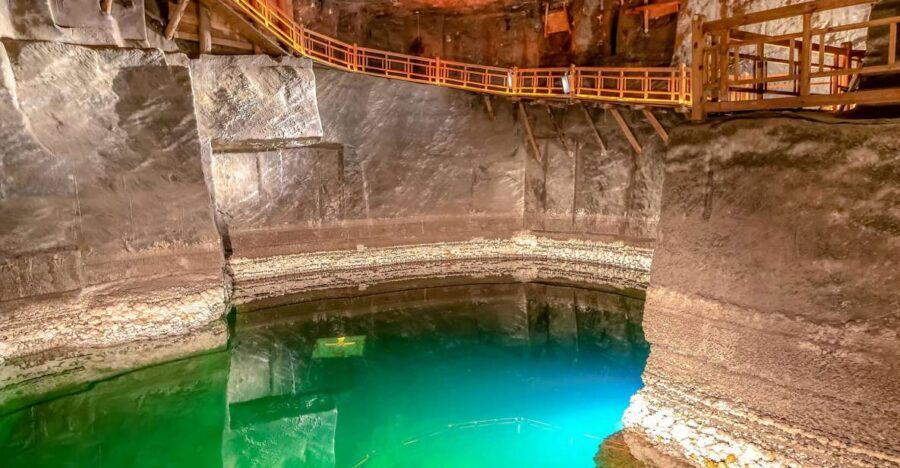
- UNESCO underground artistry: chapels carved hundreds of meters below the surface
- St Kinga Chapel: religious figures, sculptures, and chandeliers made from salt
- A real walking route: 20 chambers connected by 2.5 km of pathways
- The “underground city” vibe: caverns, lakes, and statues that change the scale of everything
- Skip-the-line convenience: you waste less time before going underground
Krakow to Wieliczka in an air-conditioned ride that actually works
This tour is built around the idea that you shouldn’t spend your limited time wrestling with transit. You’re picked up from central Krakow hotels in an air-conditioned vehicle when that option is chosen, then transferred to Wieliczka.
If you select hotel pickup, you’ll need to be ready at the hotel reception about 5 minutes before your scheduled time. That small detail matters because the timing runs on a tight loop: one group’s late arrival can turn into everyone’s late start. If your hotel isn’t serviced, or you skip pickup, you’ll go to the main departure point on your own.
Once you’re together with the group, you also benefit from skip-the-ticket-line entry. That helps a lot on peak days, when the line can feel like its own mini-attraction. A live local guide then takes over and keeps things moving once you’re underground.
Language support is solid: guides operate in English, Italian, and Spanish. If you’re traveling with mixed languages in your group, this kind of setup makes the tour feel smoother instead of fragmented.
You can also read our reviews of more tours and experiences in Krakow.


The 380-step descent: not brutal, but still real stairs
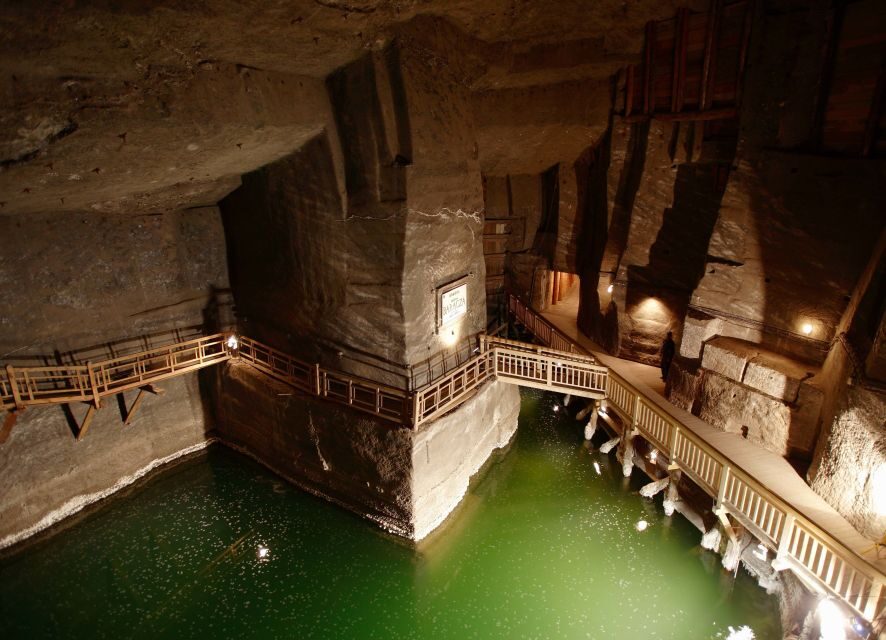
The first shock is the stairs count. You descend a staircase with 380 steps to Level 1, which sits 64 meters below the surface. The walk inside isn’t described as strenuous, but the number of steps is high enough that you should treat it like a workout-lite.
Here’s how I’d plan it: pace yourself on the way down. Don’t sprint to prove you can. If you have any walking hesitation, take it slow for the first stretch right away—because that’s where your legs feel the change most.
If you’re sensitive to enclosed spaces, treat that seriously. The tour is not recommended for claustrophobia, and the mine is underground for long stretches. Even if you’re fine with crowds, the walls, air, and enclosed chambers can feel tight.
The good news: you’re not going down in one long scary straight line. The route is structured, and you’re guided through chambers and connected areas as you go.
20 chambers connected by a 2.5 km route you’ll actually follow
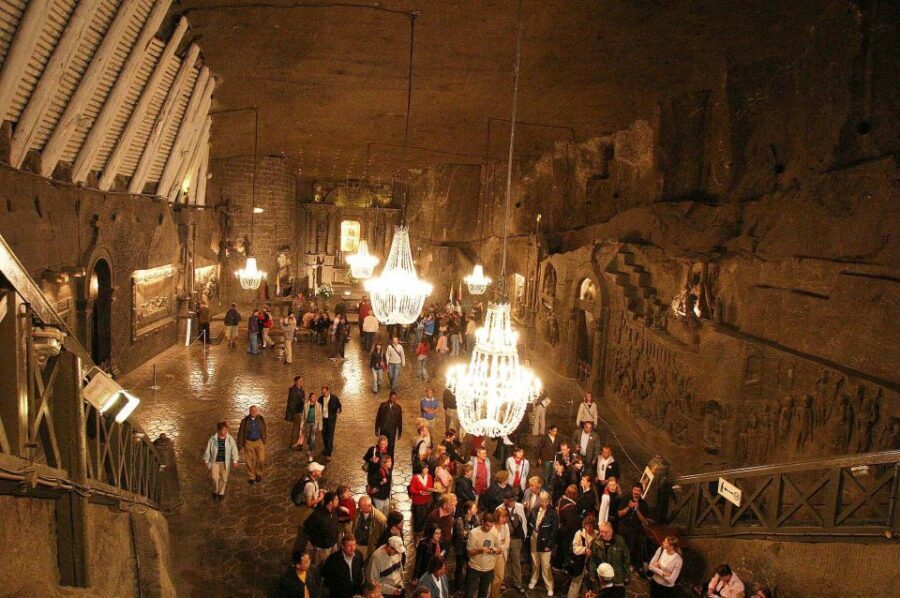
Inside, the tour becomes a guided walk through 20 monumental chambers joined by about 1.5 miles (2.5 km) of pathways. That routing is important. A lot of “big attraction” tours feel like a quick loop where you barely catch your bearings. This one works better because it’s built around progression—chamber to chamber—so you can keep track of what you’re seeing.
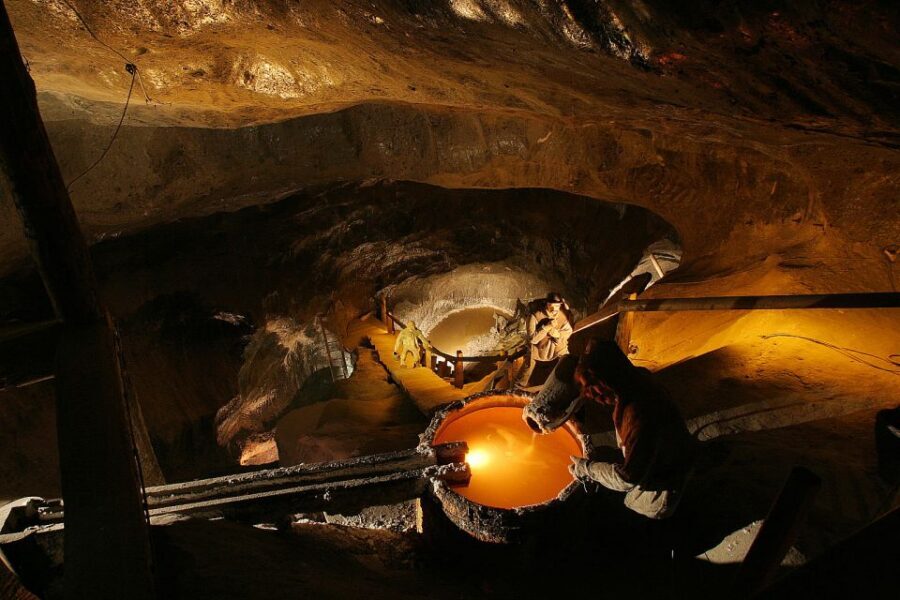
You’ll pass through an underground world that feels like it has neighborhoods: huge caverns, underground lakes, and then tighter spaces where details matter. The scale shift is what makes Wieliczka stand out in practice. You don’t just see one big room. You feel like you’re traveling through a place.
The walk also includes stops that give your eyes time to refocus. You won’t just stare forward the whole time. You’ll pause at major chapels, then move onward past statues and carved scenes that break the monotony.
The tradeoff is time and walking. This is a 4-hour experience total, and most of that is tied to the guided underground route. If you’re the type who likes to sit down often, you’ll need to adapt your expectations. Bring your patience, not just your camera.
St Kinga Chapel: chandeliers and salt sculpture that feels hands-on
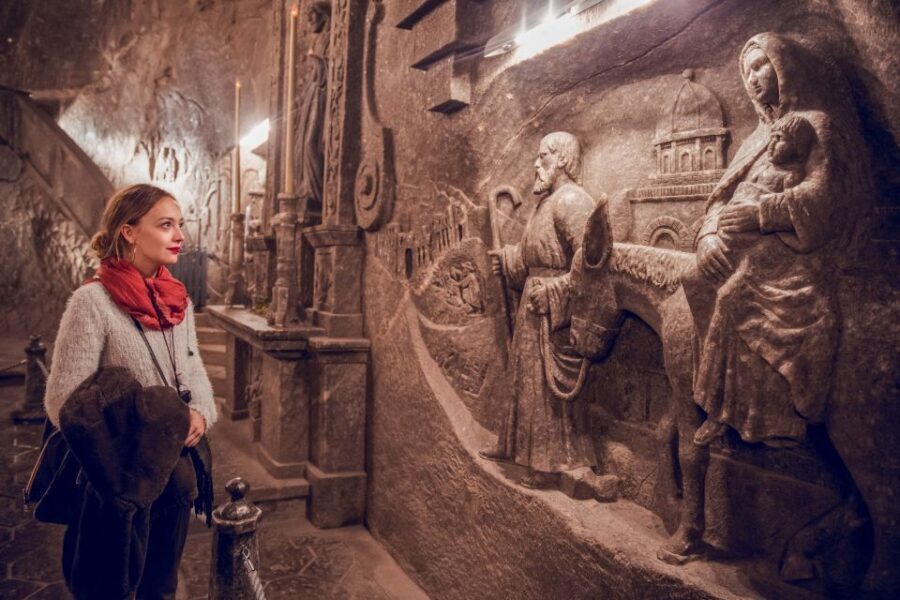
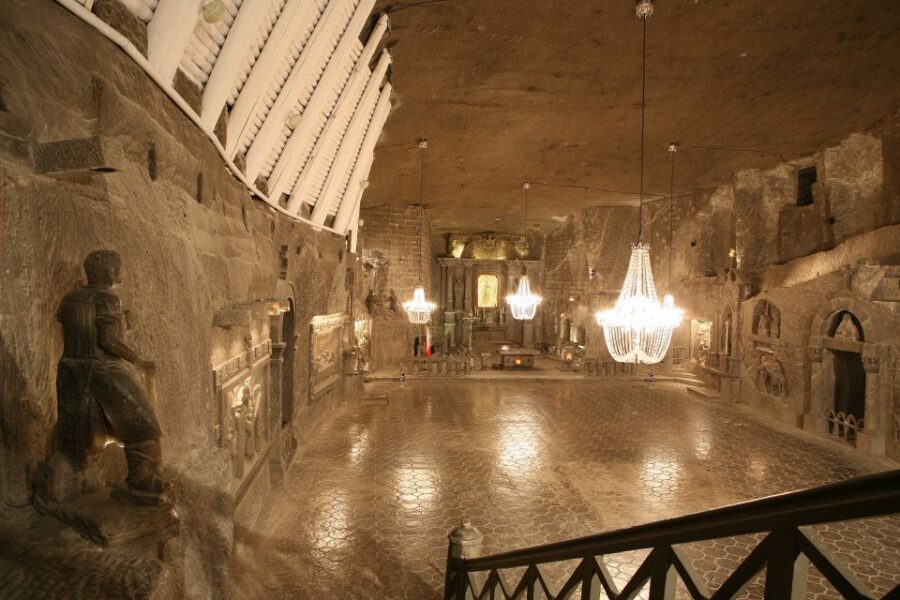
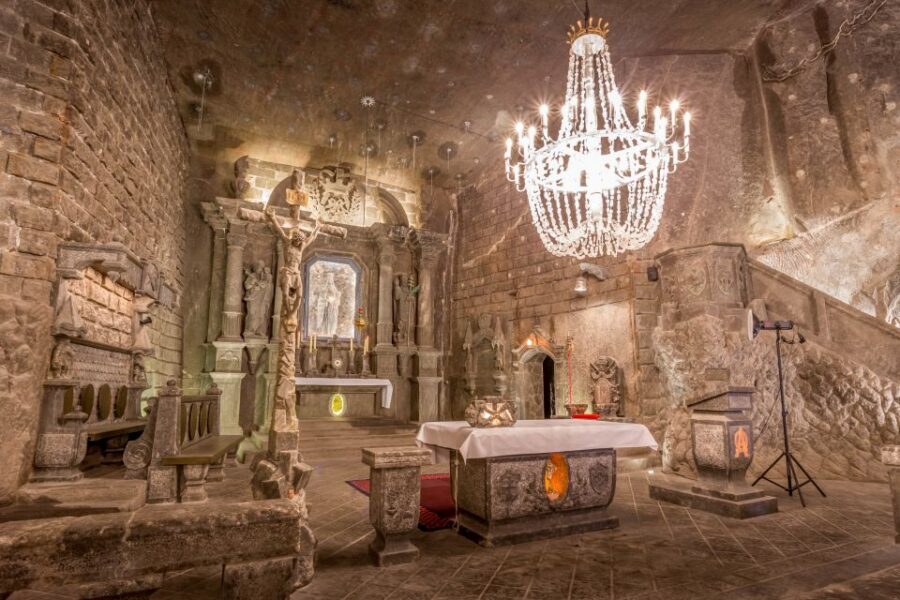
Your biggest “wow” stop is the largest chapel, dedicated to St Kinga, the patron saint of salt miners. This is the core reason many people put Wieliczka on their Poland trip.
What you’ll see here is more than decorations. You’re looking at a subterranean church where the main visuals—chandeliers, sculptures, and religious figures—are carved out of salt. The effect is both spiritual and weirdly impressive in a practical way: humans made this deep underground using what they already had.
If you’re the kind of visitor who likes details, slow down at this stop. Look at the carved forms and how they hold up as you move around. Salt carving isn’t just “pretty.” It’s technical craft. It’s also why the mine earned its UNESCO World Cultural Heritage status in the first place: creativity shaped the site into something sacred, not just industrial.
One tip from how this tour flows: treat St Kinga Chapel like your anchor. Once you’ve seen it, the other chambers and statues feel easier to connect mentally. You start understanding the mine as a planned underground environment instead of a random cave system.
Statues, myths, and the 18th-century details that reward your attention
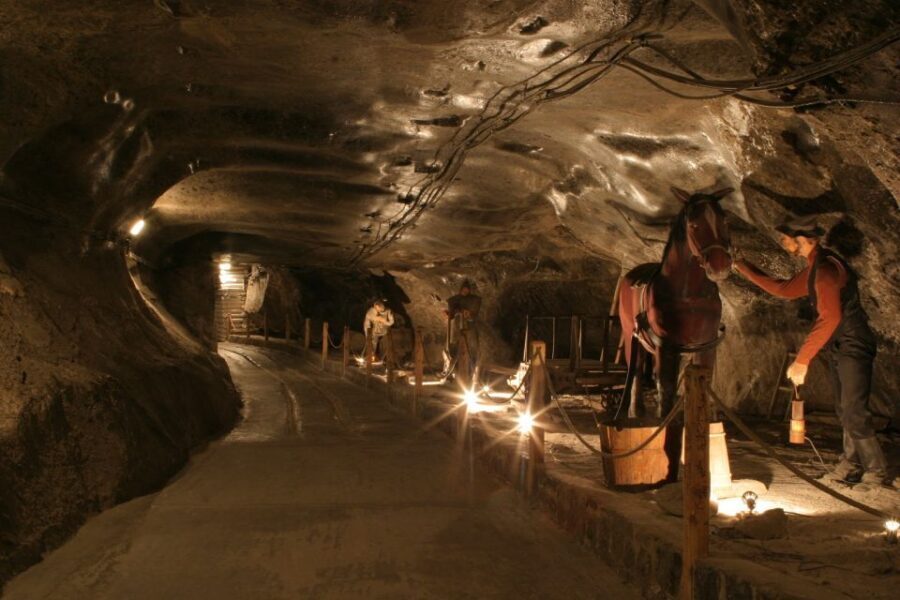
After the main chapel, the route continues through monumental spaces where you’ll pass statues dating back to the 18th century. The figures are described as depicting mythical, historical, and religious characters, which helps explain why the mine doesn’t feel like a single-theme museum.
This part of the walk is where I’d switch from big-picture mode to detail mode. The underground setting already changes the scale, so when you add carved statues, you get a layered effect: the walls and ceilings are massive, and yet the figures still communicate personality.
You’ll also encounter an underground world that includes caverns and underground lakes. Even when you’re not staring at every surface, the mix of open cavern space and nearby carved works helps the tour keep feeling cinematic rather than repetitive.
And yes, you’ll eventually reach the stop with the more modern purpose: souvenirs and a snack bar.



The last stop: souvenirs, snacks, and the lift back up
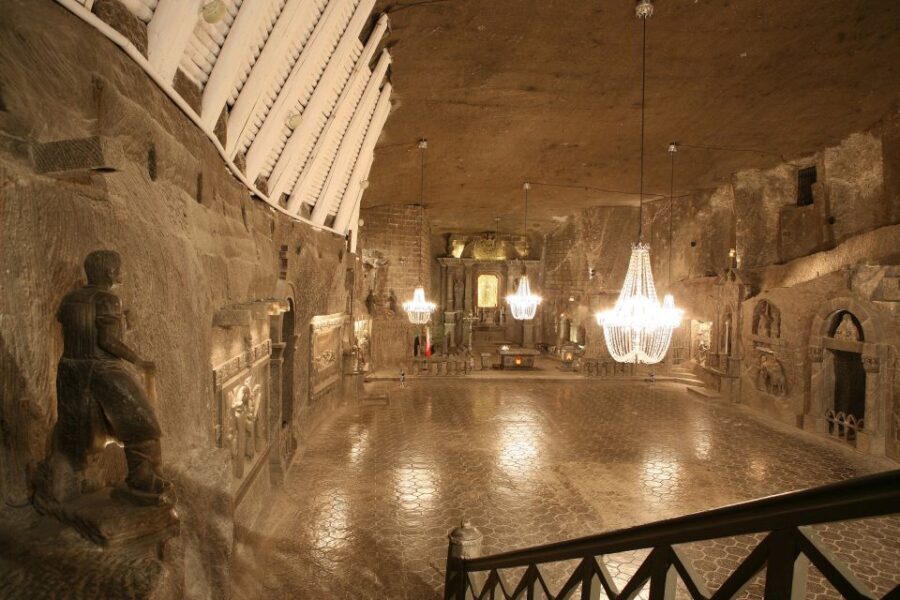
At the end of the guided route, you come to the souvenir shop and snack bar. This is where you can reset your energy without turning the mine visit into a full meal stop.
After that, you exit by lift. The return is via the Danilowicz Shaft from Level 3, which is 135 meters below ground. So while the descent is mostly stairs, your climb back is done mechanically. That matters if your legs feel heavy after the 380 steps.
Plan to take your time at the final area. Exiting is when people rush the most, then realize they’re cold and hungry. The mine is cool even in warmer months, so you’ll likely appreciate grabbing something before you head back toward Krakow.
What to wear in a 14°C salt world
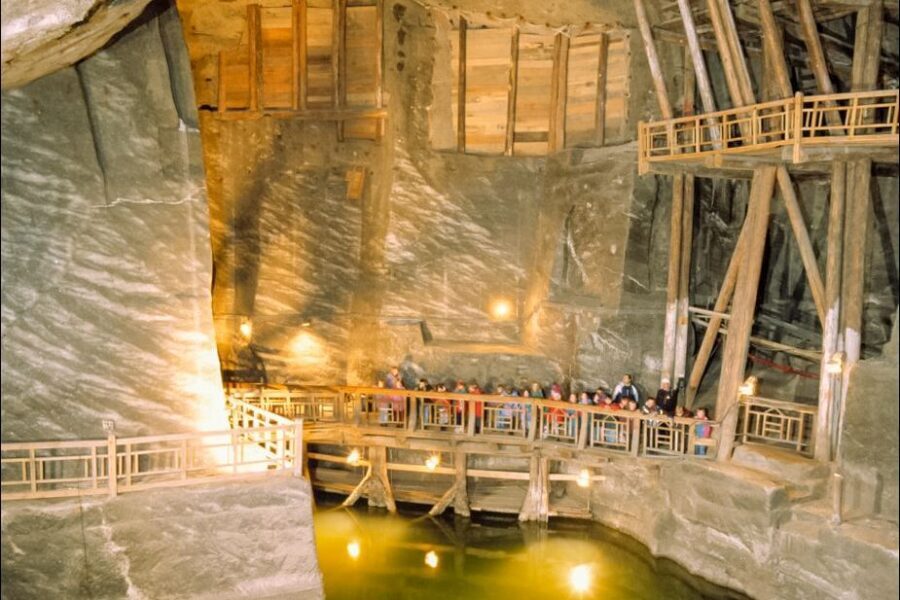
The mine stays at a constant temperature of around 14°C (57°F). That’s not “comfortable cool.” It’s jacket weather no matter what season you’re in.
Wear something warm and easy to move in. Closed-toe shoes help for the stairs and pathways. The good part is that the walk inside is not described as strenuous, so you don’t need hiking gear—just solid footwear and a layer.
If you tend to get cold fast, bring an extra top. Salt mines have a way of making you feel colder than the number says. Also, remember you’ll be underground for a while, so one thin shirt isn’t enough just because Krakow is sunny.
Price and value: is $99 worth a 4-hour UNESCO ticket?
At $99 per person for a 4-hour tour, the price is mainly about three things you’d otherwise have to solve yourself:
- Transport from Krakow (and optional hotel pickup)
- A live guide in multiple languages
- Entry and an elevator ride back to the surface
If you were to book these separately—private transport, a guided entry, and tickets—you’d likely spend similar or more once you factor in time and hassle. The “skip ticket line” detail also adds value. That’s time saved, and it can turn a stressful start into a calm one.
The tour also saves you mental energy. You show up, get routed down, follow a guided sequence of chambers, then leave with the lift. It’s structured. That structure is part of the value.
One thing to remember: food and drink aren’t included. There’s a snack bar at the end, but you still need to plan around it. If you want a full meal beforehand, eat in Krakow and treat the mine snack bar as a bonus rather than your dinner plan.
Who should book this (and who should think twice)?
This tour makes the most sense if you:
- Want a guided way to experience a UNESCO site without getting lost in the flow
- Enjoy underground spaces, carved art, and religious craftsmanship made from salt
- Can handle stairs at the start—especially that 380-step descent
It may not be your best choice if you:
- Use a wheelchair or need step-free access, since it’s not recommended for wheelchair users
- Have claustrophobia, since it’s described as not suitable
Also, if you’re traveling with kids, note that infants must sit on laps. That’s not a dealbreaker, but it’s something you should plan for ahead of time.
For most people, the experience is a strong mix of awe and clarity: you see the big masterpieces (St Kinga Chapel), then follow a route that keeps you moving through monumental chambers and carved statues.
Should you book from Krakow?
If you want a well-organized, 4-hour UNESCO experience with transport from Krakow, this is an easy yes—especially if you like guided pacing and want to see the mine as an underground world, not just a quick photo stop.
Book it if you’re comfortable with stairs and you dress warm for a constant 14°C interior. Skip it if you have walking limitations that make 380 steps hard, or if enclosed spaces trigger anxiety.
For everyone else: it’s one of those rare tours where the “how did they do that” feeling is earned. The mine is not just pretty. It’s the work of people carving a living place out of salt—deep enough that it still feels unreal.
FAQ
How long is the Wieliczka Salt Mine tour from Krakow?
The tour lasts about 4 hours.
How much does the tour cost?
The price is $99 per person.
Does the price include transportation from Krakow?
Yes. It includes transport Krakow–Wieliczka–Krakow in an air-conditioned vehicle, and hotel pickup is optional if you choose it.
Can I skip the ticket line?
Yes, you get skip-the-ticket-line entry.
What languages are the live guides available in?
The live guide is available in Italian, English, and Spanish.
How many steps do you climb or descend?
You descend 380 steps to Level 1 on the way into the mine. The return is by lift.
How deep do you go, and how do you get back up?
You descend to Level 1, 64 meters below ground, and return by lift from Level 3, 135 meters below ground.
How much walking is inside the mine?
The guided walk is about 2.5 kilometers and goes through 20 monumental chambers.
Is food included?
No. Food and drink aren’t included, though there is a snack bar at the end near the souvenir shop.
Is this tour suitable for wheelchair users or claustrophobia?
No. It is not recommended for wheelchair users and is not suitable for participants with claustrophobia.