REVIEW · KRAKOW
From Kracow: Auschwitz Complex Alternative Tour
Book on GetYourGuide →Operated by Pavel Travel Paweł Rosół · Bookable on GetYourGuide
Auschwitz, but beyond the usual route. This alternative Auschwitz complex tour gives you a clearer sense of how the system expanded—especially around Auschwitz III (Monowitz) and the sites tied to the daily machinery of killing. I like that it’s structured like a story you can follow on foot, with meaningful stops rather than just a long bus-and-photo routine.
Two things I really like: first, you get specific, high-impact locations such as the Polish Ramp and the Old Jewish Ramp, which help you understand selection and deportation without vague generalities. Second, the tour includes areas tied to punishment and execution, from the commandant’s villa to the gravel pits, so you can connect policies to physical places.
The main drawback is simple: this is a long day—8 hours—and it involves a significant amount of walking, plus very sensitive content. If you need a lighter pace, or if you’re hoping for the full, classic Auschwitz I and Auschwitz II-Birkenau main-camp itinerary, this one won’t match that expectation.
In This Review
- Key highlights worth planning for
- What makes this Auschwitz complex route different from the standard one
- Getting there from Krakow: the 8-hour flow and what “skip the line” means
- Auschwitz III (Monowitz): why the “final victims” stop lands hard
- Camp extension sites: SS barracks, the last women’s camp, and execution ground
- The pre-war theater and Zyklon B storage: what you’re seeing is chilling by design
- Polish Ramp and Old Jewish Ramp: selection sites you can map in your head
- Commandant’s villa and gravel pits: punishment where the ground has a story
- Birkenau’s Death Gate and main SS barracks: the arrival logic becomes visible
- The extermination zone: Bunker 1, Bunker 2, the remains of dressing rooms, and the Soviet POW cemetery
- The sauna building: disinfection and belongings processing, shown as part of the system
- Auschwitz-Monowitz memorial again: how the January 1945 mass grave changes your mental map
- Price and value: what $55 buys you for an 8-hour guided route
- Who this tour suits best (and who should think twice)
- Should you book this Auschwitz complex alternative tour?
- FAQ
- Does this tour include Auschwitz I or Auschwitz II-Birkenau main camps?
- Where does the tour start and end?
- How long is the tour?
- What meeting point is listed?
- Is the tour guide English-speaking?
- Does the tour help with waiting in lines?
- What should I bring?
Key highlights worth planning for
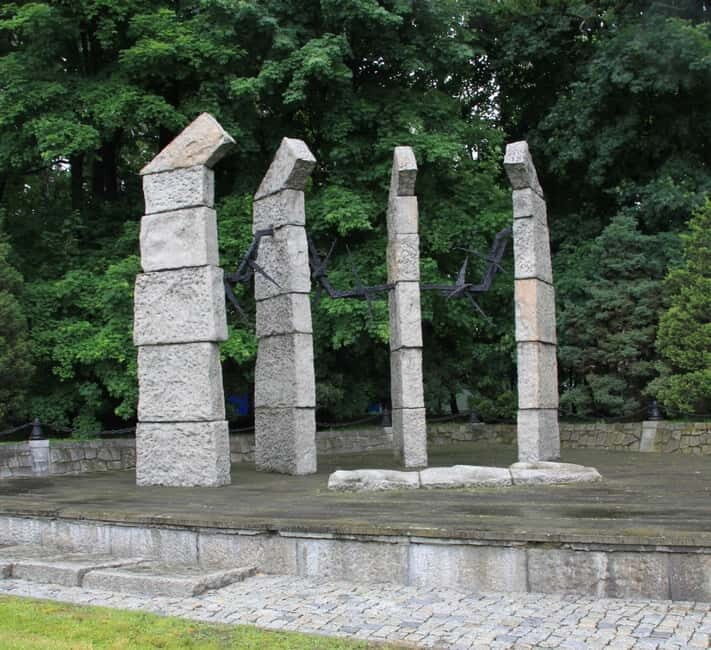
- Monowitz focus with a visit to the Auschwitz-Monowitz memorial to the final victims
- Camp extension sites including SS barracks and the last women’s camp areas
- Zyklon B storage and selection ramps like the pre-war theater and both Polish/Old Jewish Ramps
- Execution-linked locations such as the commandant’s villa and gravel pits
- Birkenau’s key structures including the Death Gate, main SS barracks, and parts of the extermination zone
- Interest Zone orientation using maps and aerial photographs from 1944
What makes this Auschwitz complex route different from the standard one
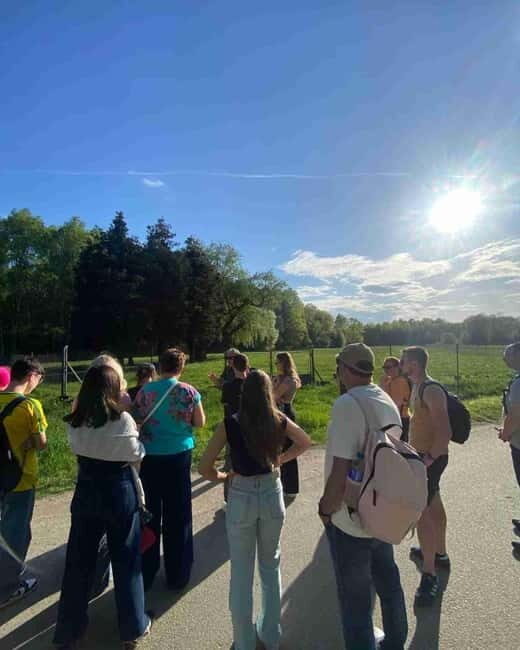
Most Auschwitz visits you’ll hear about focus on the headline parts: Auschwitz I and Auschwitz II-Birkenau as a whole. This tour takes a different angle. You still get major sites tied to the camp system, but the emphasis shifts toward the places that explain how the Auschwitz complex worked as it grew.
That matters, because Auschwitz wasn’t only one location. It was a network—administration, transport, forced labor, killing sites, and the “buffer” world in between. By visiting the Auschwitz-Monowitz memorial and surrounding areas, plus key Birkenau structures, you get a more complete picture of how the system functioned beyond the most famous photo points.
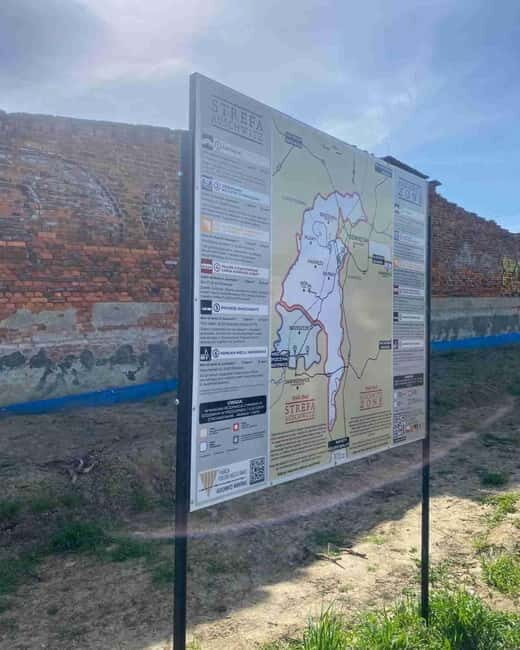
You’ll also notice the tour is carefully framed around interpretation tools. You spend time with maps and aerial photos from 1944 to understand the “Interest Zone.” In practice, that gives you orientation when the landscape feels confusing. You start connecting what you’re standing near to what the Nazis were planning and controlling.
You can also read our reviews of more tours and experiences in Krakow.
Getting there from Krakow: the 8-hour flow and what “skip the line” means
The day starts and ends in Krakow, with round-trip transportation built in. The meeting point is the K+R bus stop, and the total time on the schedule is 8 hours. Since you’re not driving yourself, your main job is to show up ready to walk and to absorb.
A small but real quality-of-life detail: the tour includes skip-the-line access through a separate entrance. That helps because the last thing you want is to lose time in a queue when you have limited hours for sites that require your full attention.
Your guide is English-speaking, and the experience is designed for question time. In at least one recent booking, the guide was praised for answering questions clearly and staying polite with the group. Another highlight from those comments: the ride can be handled by a driver named Ollie, who was described as friendly yet professional and focused on making everyone comfortable before you set off.
Auschwitz III (Monowitz): why the “final victims” stop lands hard
One of the strongest reasons to choose this route is that it ends at the Auschwitz-Monowitz memorial for the final victims. This isn’t a generic finale. The day includes the memorial for the final victims of Auschwitz and a mass grave connected to the January 1945 evacuation, where 700 prisoners were shot.
That stop changes the emotional arc of the visit. Instead of only looking at Auschwitz as a machine operating in the years when it was fully running, you’re also seeing what happened at the end—when the camp system was being broken down and people were left behind. If you come away feeling that the suffering didn’t stop when the front lines got near, that’s the point of including this.
There’s also something practical here: ending at Monowitz can help your brain “hold” the bigger structure you’ve been tracing all day. If you visited only the most famous areas early, you might feel like you’re ticking boxes. Ending with the memorial gives the route a final, specific meaning.
Camp extension sites: SS barracks, the last women’s camp, and execution ground
A key part of the tour is what’s often treated as a side story elsewhere: the Auschwitz camp extension. Here you’ll explore new SS barracks, the area associated with the last women’s camp, and locations tied to the final public execution.
This is where the “network” idea becomes real. Prisoners weren’t held in only one uniform type of space. The camp expanded, specialized, and reorganized. Seeing the barracks and women’s camp areas helps you visualize how control and confinement worked day after day, not just in one “main yard.”
The execution-related parts of the route are especially difficult. The tour includes stops connected to the site of the final public execution, and it also points out how punishment played out in physical places you can locate. Be ready for the fact that some locations are tightly linked to violence, even when there’s not much left standing.
The pre-war theater and Zyklon B storage: what you’re seeing is chilling by design
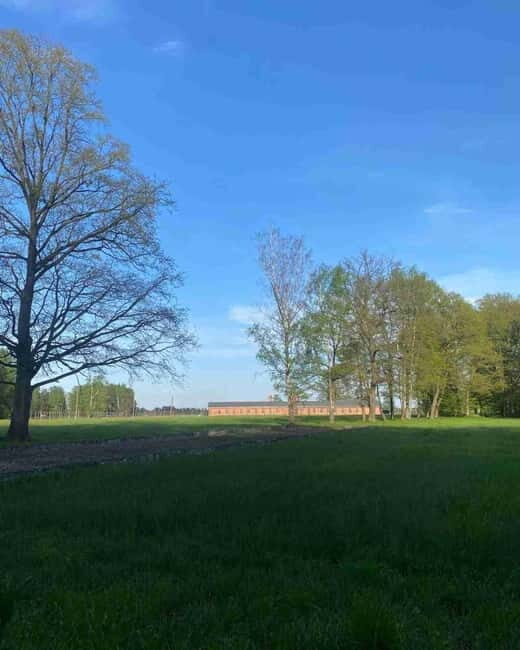
One of the most specific stops is the pre-war theater, later used for Zyklon B storage. This detail is important because it forces you to confront something many people miss: the killing process relied on logistics. It wasn’t only ideology; it needed storage, transport, and controlled handling.
Standing near a building repurposed for that purpose can be unsettling because you’re not just looking at ruins—you’re looking at infrastructure that still carries the feel of a different use. That contrast helps your mind fill in gaps: someone decided this building would serve extermination rather than theater.
It’s the kind of stop that rewards a slower pace. If you rush through, you’ll miss the significance of why the tour staff emphasizes Zyklon B by name and place.

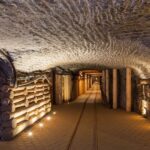
Polish Ramp and Old Jewish Ramp: selection sites you can map in your head
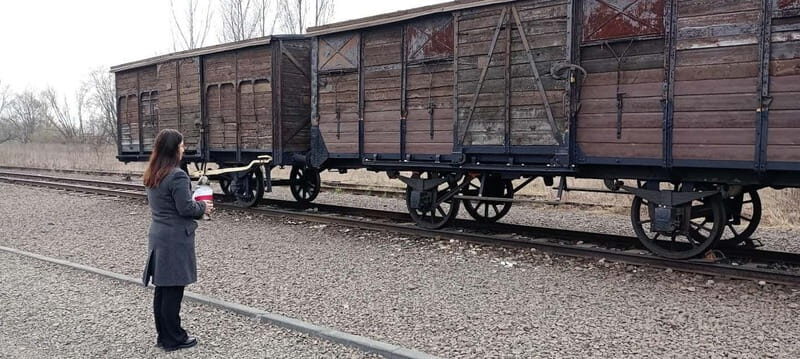
The tour includes both the Polish Ramp and the Old Jewish Ramp—two connected pieces of the transport story.
At the Polish Ramp, you’ll see the first prisoner transport platform. At the Old Jewish Ramp, you’ll see the main selection site for European Jews. Those descriptions may sound technical, but they’re exactly what you need to understand what happened after people were deported: selection wasn’t abstract. It happened on platforms with a sequence.
Here’s why I think this part is so valuable: it turns “deportation” into something you can visualize as a process. When your guide points out what these ramps were for, you can connect the earlier parts of the day (transport logistics and camp growth) to what you’re standing next to.
One practical tip: take a moment before you move on to anchor yourself. Look for landmarks and then ask your guide a simple question like: what happened first here, and what followed after people were processed? Your brain locks in faster when you pin down the order.
Commandant’s villa and gravel pits: punishment where the ground has a story
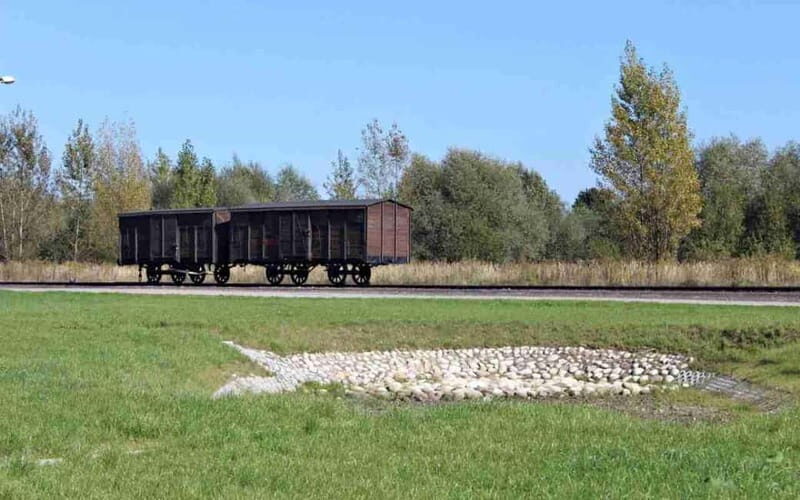
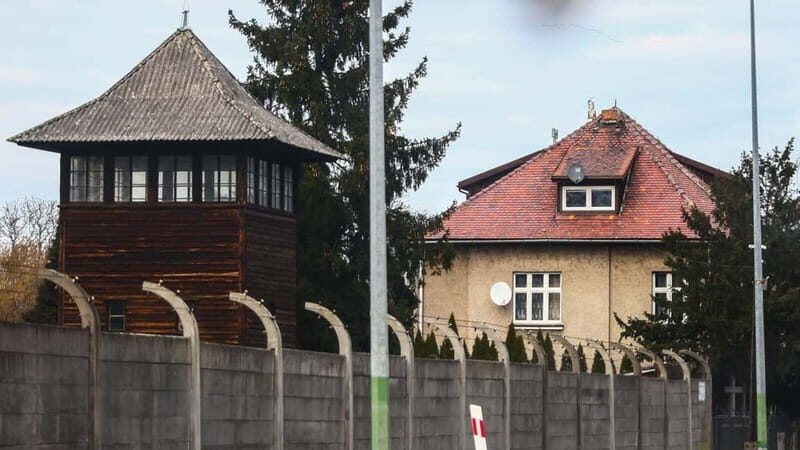
The tour doesn’t stop at buildings tied to extermination technology. You also get stops tied to punishment and execution: the commandant’s villa and the gravel pits where executions took place.
These locations matter because they show authority and violence in the same spatial frame. A commandant’s villa represents governance and distance. Gravel pits represent what that distance led to in practice—execution of people including clergy and members of the Polish intelligentsia.
If you’re someone who worries about whether the tour is “balanced,” these stops are part of the reason you can trust it more than a pure sightseeing run. The guide isn’t just pointing at the gas chamber and leaving you there. You also see the power structure and the punishment system that fed the camp.
Birkenau’s Death Gate and main SS barracks: the arrival logic becomes visible
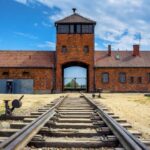
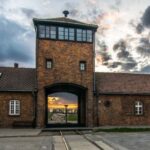
After orientation from the Interest Zone maps and aerial photos, you’ll move into the Birkenau portion of the day. You’ll see the Death Gate and the main SS barracks. Even if you’ve seen photos before, these are places where scale and layout suddenly make the story feel less like images and more like movement.
The Death Gate is the type of landmark that your brain remembers, because it signals a switch from ordinary movement to “arrival for the camp system.” The main SS barracks help you see who occupied power and oversight in that zone.
The extermination zone: Bunker 1, Bunker 2, the remains of dressing rooms, and the Soviet POW cemetery
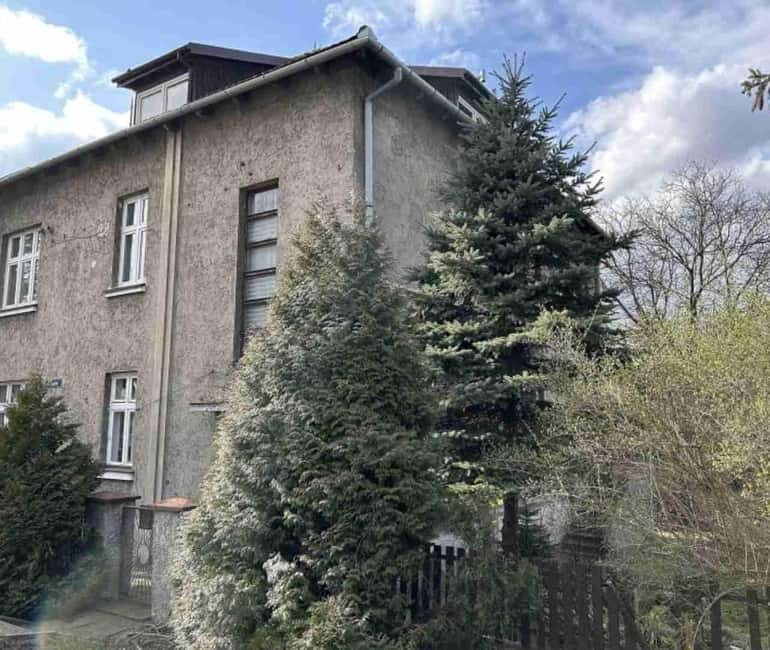
This tour includes key parts of the extermination zone. You’ll see the first crematorium and gas chamber, plus areas including:
- Bunker 1 (Red House)
- Bunker 2 (White House)
- Remains of dressing rooms for victims
- A cemetery of Soviet POWs
I’m not going to pretend any of this is “easy to look at.” But it’s also not random. The tour’s value here is that it connects the sequence you’re learning about: victims processed, facilities used, and people from different categories killed or buried within the camp system.
If you’re sensitive to crowds, know this tour is designed for a full-day schedule and multiple stops. You might find it helps to pause at the cemetery area and then continue only after you’ve regained your bearings.
The sauna building: disinfection and belongings processing, shown as part of the system
Another specific inclusion is the sauna building used for prisoner disinfection and belongings processing.
This is one of those details that can quietly hit hardest. It shows how the system worked through steps that were presented as routine—processing, sorting, disinfecting—while the reality was imprisonment and mass death.
You don’t need to look for dramatic signage. Your guide’s explanation will help you connect this building to what happened before and after people entered the killing process. It’s a grim kind of efficiency, and it’s exactly the sort of “how it worked” detail this alternative route does well.
Auschwitz-Monowitz memorial again: how the January 1945 mass grave changes your mental map
The day returns to the emotional anchor: the Auschwitz-Monowitz memorial for the final victims. You’ll hear about the mass grave of 700 prisoners shot during the evacuation in January 1945.
This is where the tour’s focus on the camp system’s wider arc pays off. By the time you reach this memorial stop, you’ve already tracked selection points, camp expansion, extermination-related facilities, and the logic of deportation. Seeing what happened during the final chaos gives you a sharper understanding of the cruelty: even when Auschwitz’s function was being disrupted, people were still killed.
If you want to make the most of this ending, give yourself a few minutes of quiet. Look at the memorial space and let the weight settle. Then ask your guide one last question: how should we understand this final stage compared with earlier years? The answer is often what makes the entire day feel coherent.
Price and value: what $55 buys you for an 8-hour guided route
At $55 per person for an 8-hour day with round-trip transportation from Krakow, a live English guide, and a full set of major stops across Auschwitz III and Birkenau-linked sites, this is fairly good value if your goal is the camp complex as a system rather than only the headline camps.
The value isn’t just the number of places. It’s the combination of:
- transport that keeps the day manageable
- a structured narrative from maps to specific buildings
- skip-the-line access via a separate entrance
- a focus on locations tied to logistics, selection, punishment, and killing steps
Also, the tour is described as wheelchair accessible, which is meaningful if you want to choose a guided program instead of piecing together your own transport and stops.
The trade-off is that it doesn’t include the Auschwitz I and Auschwitz II-Birkenau main camps as a standard full visit. If that’s what you want, you’ll need to plan for a different style of itinerary.
Who this tour suits best (and who should think twice)
You’ll probably love this tour if:
- you want an alternative route that explains the Auschwitz complex as a network
- you’re comfortable with sensitive content and long, structured walking days
- you care about specific sites tied to transport, selection, and camp expansion, not only the most famous ruins
You might think twice if:
- you were hoping for a full, classic tour of Auschwitz I and Auschwitz II-Birkenau main camps
- you’re looking for a shorter day or minimal walking
- you’re not ready for execution- and extermination-linked areas
One more small note for your planning: bring a camera if you want it, but also be ready that some people prefer to keep their camera away. You’ll still benefit from the explanations regardless.
Should you book this Auschwitz complex alternative tour?
If you want to understand Auschwitz as a connected system—Monowitz, the camp extension, ramps, extermination-linked structures, and the final victims memorial—this route is a strong choice. The day’s shape helps your brain build a map: logistics to selection, selection to punishment, and punishment to killing facilities, ending with the January 1945 aftermath.
Book it if you value clarity and specific sites, and if you can handle a long, emotionally heavy walk.
Skip it only if you specifically need the full Auschwitz I and Auschwitz II-Birkenau main-camp experience. Otherwise, this alternative focus can give you a more grounded, less rushed understanding of how the camp complex worked.
FAQ
Does this tour include Auschwitz I or Auschwitz II-Birkenau main camps?
No. This tour does not include visits to Auschwitz I or Auschwitz II-Birkenau main camps.
Where does the tour start and end?
It starts and ends in Krakow, with round-trip transportation included.
How long is the tour?
The duration is 8 hours.
What meeting point is listed?
The meeting point is the K+R bus stop.
Is the tour guide English-speaking?
Yes, the tour includes a live English guide.
Does the tour help with waiting in lines?
Yes. It includes skip-the-line access through a separate entrance.
What should I bring?
Bring comfortable shoes, water, and a camera, plus weather-appropriate clothing.