REVIEW · WARSAW
Discover the Dark Side of Warsaw in Praga District by Retro Bus
Book on Viator →Operated by WPT1313 Warsaw Private Tours · Bookable on Viator
Praga has a darker side, and it’s fun. This retro-bus outing is one of the easier ways to understand Warsaw beyond the Royal Castle postcard shots, with WWII and Communist-era stories mixed into real neighborhoods and street scenes. You’ll ride a vintage-style coach, stop for local landmark time, and come away with a clearer sense of why Praga feels different.
I love two things most: the hot chocolate from E.Wedel, served as a quick break with extra context, and the guide talent for making tough history feel human. Whether it’s Marcin’s humor or Konrad and Paweł’s storytelling style, you get live commentary that links buildings, places, and names to what Warsaw went through.
One thing to consider: the pace can feel fast. Some stops are short, and on busier departures the group can be loud or restless, which can cut into your walking time and photos.
In This Review
- Key points before you go
- Meeting at Pałac Kultury i Nauki: the day’s setup
- Riding the vintage coach across Warsaw’s edges
- Weather and comfort reality check
- From the Palace to stories in the center: quick stops that matter
- E.Wedel hot chocolate: the sweet break with serious backstory
- Sacred Heart of Jesus and other landmarks you might miss
- Koneser Vodka Factory: industry meets identity
- Praga Polnoc: the dark side label actually makes sense
- One more filming-location beat: The Pianist streets
- Różycki’s Bazaar, black-market stories, and why murals matter
- New Praga courtyards and the founder story
- A movie-and-pop-culture left turn: the Zoo mention
- Final stretch: Vistula crossing and a different ending view
- Price and value: what $42.34 really buys you
- Who this tour fits best (and who should pick something else)
- Should you book the Retro Bus Dark Side of Warsaw?
- FAQ
- How much does the Dark Side of Warsaw in Praga District by Retro Bus cost?
- About how long is the tour?
- Where do I meet the tour?
- Is the tour offered in English?
- Do I get a mobile ticket?
- What’s included in the price?
- How big is the group?
- Will I get a refund if I cancel?
- Does it run in bad weather?
Key points before you go
- Retro bus ride gives the day a classic feel and keeps you moving without wrestling with transit
- E.Wedel hot chocolate is included and comes with factory-area stories
- Praga Polnoc is the highlight for gritty atmosphere, courtyards, and that Bermuda Triangle nickname
- Film and street-art stops connect politics, survival, and modern identity in one route
- Short landmark visits mean comfy shoes help, even if you’re not walking all day
- English live commentary makes the WWII-era details easier to follow
Meeting at Pałac Kultury i Nauki: the day’s setup
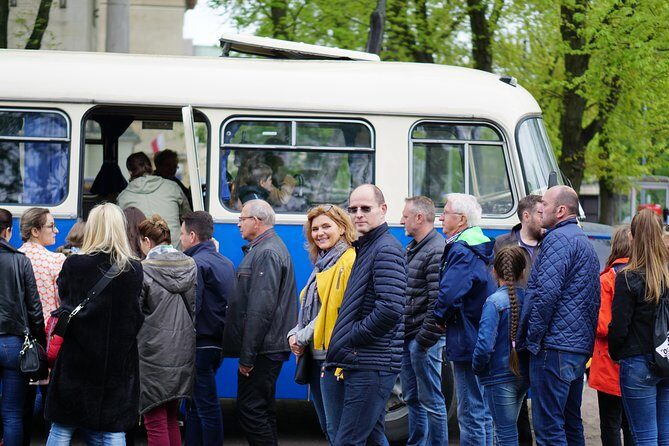
You start at the Warsaw Tourist Information office in front of Pałac Kultury i Nauki (Palace of Culture and Science). It’s a dramatic starting point—this landmark has the kind of political weight that fits perfectly with the tour’s focus. You’ll gather, meet your guide, and then head out on the retro-style coach.
The tour start time is listed as 11:00am, and the day begins with bus waiting at 10:30am. Either way, plan to show up early. There’s no hotel pickup here. You’ll be responsible for getting yourself to the meeting point, which is also near public transportation.
This is a smart approach for independent travelers: you get a guided route without needing to coordinate with a car service or a hotel lobby schedule. For most people, the trade-off is simply time—standing in one place early—and making sure you can find the Tourist Information building by the Palace.
You can also read our reviews of more tours and experiences in Warsaw.


Riding the vintage coach across Warsaw’s edges
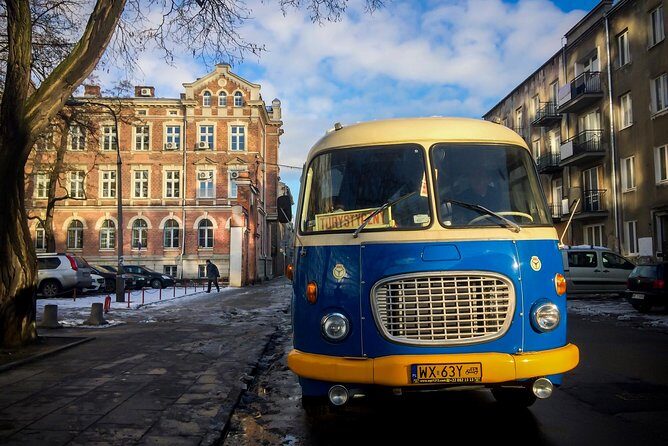
Once you’re onboard, the ride is part of the show. This isn’t a sit-and-watch slideshow. You’ll get live commentary on the bus as you drive, and the guide uses the moving views to explain what you’re seeing. That matters in Warsaw, because big history sits right next to everyday life.
A nice bonus: you get a short introduction even before you hit Praga. Your guide talks about Praga as a former independent city and explains why this part of town earned its reputation as darker, tougher, and more complicated—especially in the 20th century.
Also, this is a practical route style. You’re traveling around Warsaw East/Praga areas where it’s easy to feel lost if you’re on your own. The retro coach helps you build a mental map fast: where you are, how the neighborhoods connect, and why certain street blocks matter.
Weather and comfort reality check
The tour operates in all weather conditions, so dress for that. And because it’s a coach-style ride, you should prepare for the reality of being outside at short stops. One guest noted the bus felt like it wasn’t running with much comfort on a very warm day, so on hot weather, bring your own water if you can and wear breathable clothes.
From the Palace to stories in the center: quick stops that matter
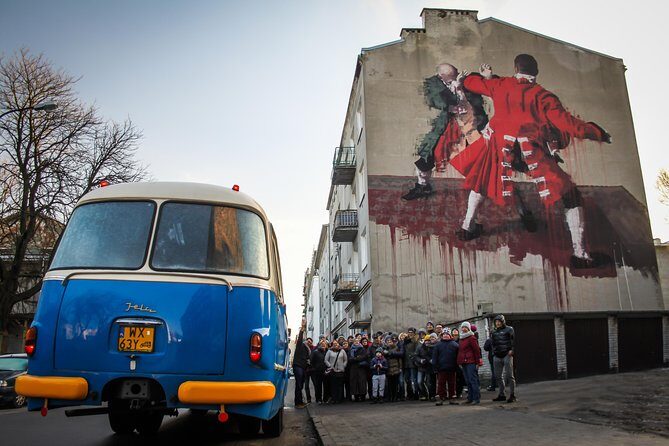
Early on, you’ll get a string of local legends and wartime context, even before you fully reach Praga. These are the moments that help you understand the “why” behind the route.
Some of the brief stops and topics include:
- The story connected to a Date Palm Tree in Warsaw’s city center
- WWII-era secrets tied to what was hidden in the basement of the National Museum
- A glance at a football stadium built for UEFA Euro 2012
These aren’t museum-feel stops that take forever. They’re short, but they work as anchoring points. You’re building context that makes later Praga details click—especially when you start seeing murals and hearing about document forging, black-market trading, and the way Communism shaped daily life.
If you’re the kind of traveler who loves connections—between a building and an event—this middle stretch is where the tour earns its value.
E.Wedel hot chocolate: the sweet break with serious backstory
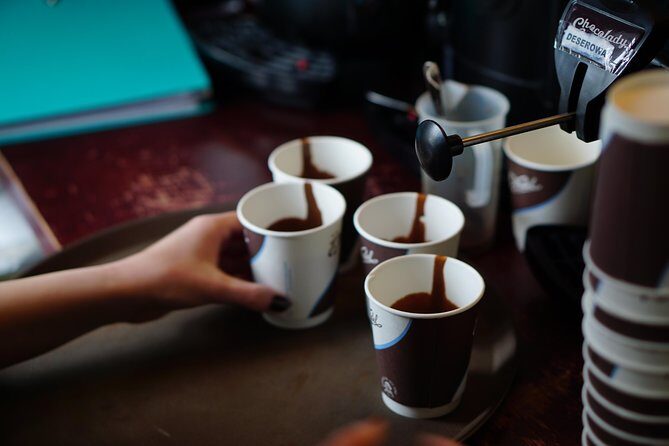
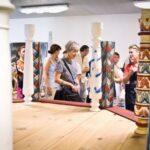
One of the most concrete, satisfying parts is the stop at E.Wedel, the 19th-century chocolate factory. You get around 20 minutes here, plus a cup of hot chocolate (included).
Why this stop works: it’s not just a snack break. The factory is treated as a historical object in its own right. You’ll hear stories about the factory and why it matters to Warsaw beyond taste. Even if you’re not normally a factory-tour person, a 19th-century brand stop is a good way to slow down and reset your brain before you get hit with heavier Praga material.
And yes, it’s genuinely enjoyable. Guests described the hot chocolate as very good, even on warm weather. So if you’ve been caffeine-chasing all morning already, this feels like a purposeful pause—not a random included drink.
Practical tip: treat this as your main “refuel” moment. Food beyond the hot chocolate isn’t included unless specified, so plan around that.


Sacred Heart of Jesus and other landmarks you might miss
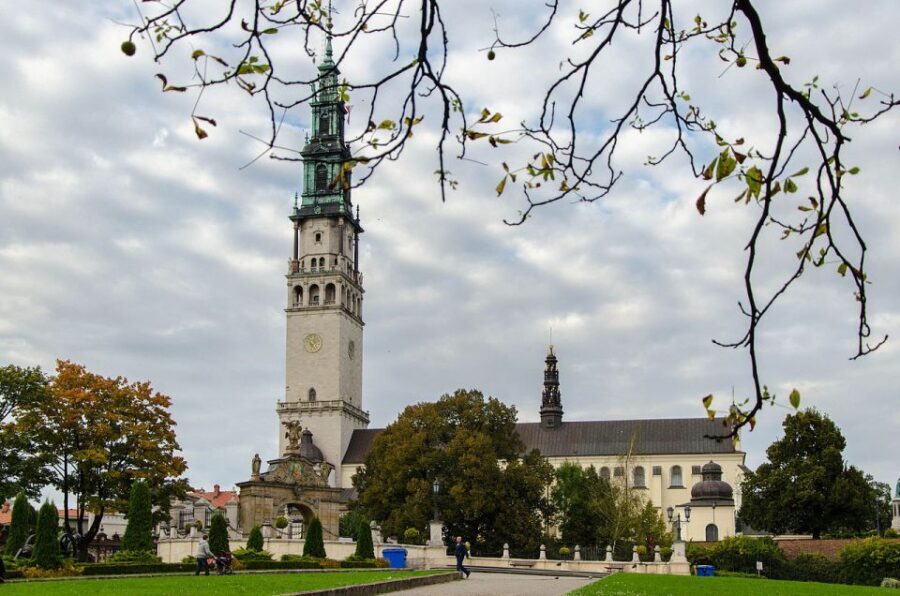
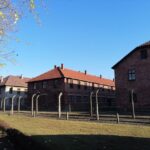
Next you’ll see the Basilica of the Sacred Heart of Jesus. Like E.Wedel, it comes with a roughly 20-minute visit and free admission for this stop. The tour frames the basilica as one of Poland’s beautiful churches, and it’s a welcome change of tone: you move from industrial history and street politics into architecture and faith.
You’ll also hear guide stories about large-scale Warsaw features as the route continues. The tour includes quick introductions for a few big “Warsaw fact” moments, like:
- Warsaw East railway station, discussed as one of the most beautiful stations in Warsaw
- A stop to talk about the longest building in Warsaw
- The way WWII and later rebuilding affected what survived, what got altered, and what got replaced
These bits are short, but they help you stop looking at Warsaw as a single postcard view. You start seeing it as layers—some planned, some accidental, some forced by history.
Koneser Vodka Factory: industry meets identity
Praga has always carried an industrial edge, and that shows up clearly at Koneser Warsaw Vodka Factory. Here you’ll have about 20 minutes, and the tour gives you the story of the former vodka factory and whether vodka had an impact on the district.
This stop is useful for two reasons:
- You see a real industrial complex rather than just passing a street corner.
- You get the explanation that turns a building into a social clue. You start to understand how jobs, trade, and nightlife shaped the neighborhood’s reputation.
If you like tours that connect economics to culture—how people lived, worked, and spent time—Koneser is a strong segment. It’s also one of the few stops where the tour theme feels both gritty and approachable.
Praga Polnoc: the dark side label actually makes sense
Now you get to the core idea. The tour spends about one hour in Praga Polnoc, introduced as the reason this area is called the dark side of Warsaw.
This is where the route becomes more than sightseeing. You’ll notice pre-war architecture, and you’ll hear how some buildings were spared by WWII bombings while other areas were transformed. You’ll also encounter the idea of the Praga Bermuda Triangle—a nickname tied to courtyards and a maze-like street feel that can be hard to describe until you’re standing in it.
This is also the time for street-level reality:
- Courtyards and residential blocks
- A neighborhood vibe that feels less curated than the center
- Wall space for murals that reflect Poland’s history and political climate
- The way modern Praga bars and cafes exist alongside old bones
You’ll likely feel this stop most if you’re into urban atmosphere and photography. But it also rewards people who prefer history done through place-based storytelling instead of lectures.
One more filming-location beat: The Pianist streets
From there, you’ll see a picturesque street that became a movie set for Roman Polański’s The Pianist. This is a great kind of stop because it ties the tour’s emotional weight to something cinematic and familiar.
Even if you haven’t memorized every scene, you’ll get the feeling quickly: certain street layouts and building facades shaped the film look. It’s an easy way to connect the past to the way we remember it today.
Różycki’s Bazaar, black-market stories, and why murals matter
Some of the most memorable context comes from the guide’s explanation of what once happened in the area now known for street art and trendy spots.
You’ll hear about Różycki’s Bazaar, described as a former black market where customers could buy forged documents. That’s heavy material, but it’s presented as part of the neighborhood’s evolution—how survival and power worked on the ground during WWII and after.
You’ll also pass areas like Brzeska and Stalowa, where colorful murals depict Poland’s history and political climate. This matters because murals aren’t random decoration here. They’re visual commentary. In a tour like this, you don’t just see art—you see why people paint it and what they want to say across generations.
If you want a version of Warsaw that explains the moral and political complexity rather than just presenting landmarks, this is a major reason to pick the tour.
New Praga courtyards and the founder story
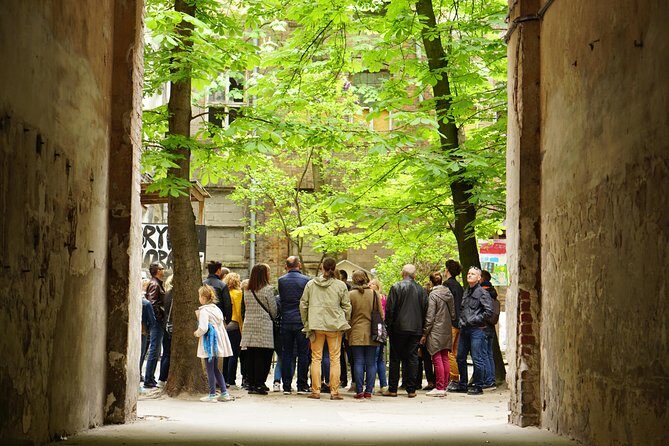
Another short but meaningful segment is New Praga, where you’ll hear about the founder of Nowa Praga district. You’ll also get a look at the inner courtyard of a prewar residential house.
This is a smart way to break up the heavier moments. Courtyards offer a calmer, slower feel than street corners packed with murals and fast-moving history. They also help you understand how community space works in Praga—how people lived in dense blocks and still had these semi-private interior pockets.
If you like small architectural moments, don’t treat this segment as optional. It’s quick, but it’s exactly the kind of place-based detail that makes the Bermuda Triangle idea feel real.
A movie-and-pop-culture left turn: the Zoo mention
The tour also includes a pop-culture stop tied to a famous film. You’ll be pointed toward a spot associated with the Warsaw Zoo and the movie The Zookeeper’s Wife.
Now, you’re not spending hours inside the zoo on this format. Still, it’s useful because it shows another side of Warsaw: modern stories, filmed memories, and how global culture recognizes Polish history.
If you’re traveling with teens or you’re the kind of adult who still likes film connections, this kind of stop can keep the energy up while the day covers difficult themes.
Final stretch: Vistula crossing and a different ending view
Toward the end, you cross the Vistula River, the major artery of Poland. This helps the day feel like a full loop—Praga to the center again—rather than just a one-direction “go east and come back” trip.
You’ll then get panorama views tied to major Warsaw highlights:
- Views of the Royal Castle
- A final mention of Warsaw Nike, a memorial associated with those who died in Warsaw during WWII
- The main street in Warsaw, enlarged after WWII
This ending works well because it contrasts what you saw earlier. You start the day with the Palace of Culture and Science. You end with the Royal Castle area and the memorial language of remembrance.
The result is a timeline in your head: power, war, survival, rebuilding, and the Warsaw we recognize now.
Price and value: what $42.34 really buys you
At $42.34 per person for roughly 2 hours 30 minutes, you’re paying for a tight package:
- a professional guide with live commentary
- transport by a 1980s/retro-style coach
- one included drink (hot chocolate)
- access to multiple short landmark stops with no separate admission cost indicated for key stops
For Warsaw, this price is fair if you want guidance. Without a guide, you’d probably spend time figuring out transport, then still miss the meaning behind what you’re seeing. Here, the guide stitches together WWII survival details, Communist-era context, and modern Praga identity.
If you’re the type who can enjoy short segments—20 minutes here, 15 minutes there—this tour is good value. If you need long walking time or deep museum access, you might find the schedule a bit “stop, listen, move.”
Still, the included hot chocolate and the retro-bus vibe aren’t the only reasons people love it. It’s the way Praga’s story is told through real places instead of abstract history.
Who this tour fits best (and who should pick something else)
This tour is a great match if:
- you want an alternative Warsaw that goes beyond the Royal Castle and old-town loops
- you like history told through streets, courtyards, factories, and murals
- you enjoy movie-related places and can appreciate how films shape our impressions
It’s less ideal if:
- you dislike walking at multiple quick stops
- you need lots of quiet time to photograph slowly
- you’re sensitive to group energy, since this can run with larger crowds on some days
One more practical note: bring comfortable shoes and plan for short bursts outdoors. You’ll get plenty of “look quickly, then listen,” which rewards a flexible travel pace.
Should you book the Retro Bus Dark Side of Warsaw?
I’d book it if you want a guided taste of Praga’s complexity with minimal planning effort. The retro coach keeps you comfortable, the E.Wedel hot chocolate gives you a real included break, and the Praga Polnoc segment is the heart of the day—where the stories, architecture, murals, and courtyards all start to make sense together.
I would hesitate only if you hate short stops, or if you expect a calm, slow neighborhood stroll with no rush. This is more “guided route with context” than “wander freely.”
FAQ
How much does the Dark Side of Warsaw in Praga District by Retro Bus cost?
It costs $42.34 per person.
About how long is the tour?
The duration is approximately 2 hours 30 minutes.
Where do I meet the tour?
Meet at the Warsaw Tourist Information office at Pałac Kultury i Nauki, pl. Defilad 1, 00-901 Warszawa, Poland.
Is the tour offered in English?
Yes, it’s offered in English.
Do I get a mobile ticket?
Yes, the tour includes a mobile ticket.
What’s included in the price?
You get a professional guide, live commentary on board, transport by a retro-style coach, and a cup of hot chocolate.
How big is the group?
The tour has a maximum of 40 travelers.
Will I get a refund if I cancel?
You can cancel for free up to 24 hours in advance for a full refund.
Does it run in bad weather?
Yes, it operates in all weather conditions, so dress appropriately.