REVIEW · KRAKOW
Auschwitz – Birkenau Private, 6-hr Study Tour
Book on Viator →Operated by Prime Tours Krakow · Bookable on Viator
Auschwitz is heavy, so timing matters. What makes this tour practical is the door-to-door transfer from Krakow plus a structured, guided visit through both Auschwitz I and Auschwitz II-Birkenau, so you’re not left figuring anything out. I also like that it’s set up as a private tour, meaning your group stays together and you return to Krakow with transport handled end to end.
Here’s the catch: the day is long, and the tour runs on a tight schedule. If you arrive late due to traffic, you can lose your place and miss the in-progress visit—so build in cushion for that early 7:30am start.
In This Review
- Key things to know before you go
- Why this private Auschwitz–Birkenau tour makes logistics easy
- Price and time: what $292.80 buys you
- The 7:30am pickup: how to make the schedule work
- Entering Auschwitz I: the museum route and what you’ll see
- Auschwitz II-Birkenau: understanding the camp system at a larger scale
- The educator’s study approach: how the learning is organized
- Pickup, driver, comfort, and the private-car advantage
- Who should book this Auschwitz–Birkenau private study tour
- Should you book this Auschwitz–Birkenau private study tour?
- FAQ
- FAQ
- What sites are included in the tour?
- How long is the Auschwitz–Birkenau private study tour?
- What time does the tour start?
- Do you provide pickup and drop-off in Krakow?
- Is the tour offered in English?
- Is admission included?
- Is this a private tour?
- Can I cancel for a refund?
Key things to know before you go
- Both sites, one coherent route: You visit Auschwitz I and Auschwitz II-Birkenau, not just one camp area.
- Guided study focus: The educator explains what happened in Nazi-occupied Poland, including key parts of the extermination plan and medical experiments.
- Fast start from Krakow: Pickup is arranged from your Krakow hotel or another Krakow address (within a 15 km radius of the city center).
- English support: The tour is offered in English, and the drivers speak very good English.
- Museum immersion through artifacts: You’ll see preserved displays tied to the camps, including belongings and clothing, not just photos.
- Respectful, personal remembering: The experience includes moments designed to bring victims’ names and human stories forward, including the Book of Names concept.
Why this private Auschwitz–Birkenau tour makes logistics easy
Auschwitz isn’t the kind of place where you want to be hunting bus schedules or re-planning in the parking lot. This tour is built around one job: get you from Krakow to the sites and back without the stress. Pickup is available from any address in Krakow, and you’ll be dropped off either back at your hotel or another location in the city after the tour.
I like the private setup because it keeps things calmer. You’re not sharing the process with a crowd that you can’t control, and the travel rhythm stays consistent from pickup to return.
That comfort matters on a long day. Auschwitz-Birkenau isn’t just long in time—it’s long in emotional weight. Having the car waiting at the right times helps you stay focused on the learning part, not the clock-watching part.
You can also read our reviews of more private tours in Krakow

Price and time: what $292.80 buys you
At $292.80 per person, this isn’t a budget excursion. But it’s priced more like a “remove friction” service: you’re paying for door-to-door transfer, an English-speaking driver, and a guided group study route that covers two different camp areas.
Also, the duration being listed around 9 to 10 hours makes sense when you think about two stops, museum entry, time with an educator, and travel time from Krakow. This is more than a half-day drive-by. You should plan for a full day that leaves you mentally tired even after the ride home.
One more value note: admission is included (at least for the main museum segment described as including the ticket). That reduces the hassle of figuring out what you still need to purchase when you’re already dealing with early morning logistics.
The 7:30am pickup: how to make the schedule work
The start time is 7:30am, with pickup arranged from your Krakow hotel or another Krakow address (up to 15 km from the city center). Afterward, you’ll be dropped off at your hotel or another chosen spot in Krakow.
This is where I’d be most practical: plan to be ready early. Even if pickup is smooth, traffic can still slow the schedule, and the experience can’t always wait. One downside shared in the overall feedback is that being late can mean missing the visit that’s already in progress. So give yourself a buffer—especially in the early hours when the day is just starting but you still might hit slow roads.
The good news is that the travel part is handled in comfortable cars that are exclusively for your group. That means less standing around, less confusion, and more predictable timing.
Entering Auschwitz I: the museum route and what you’ll see
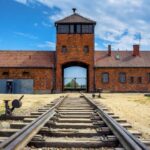
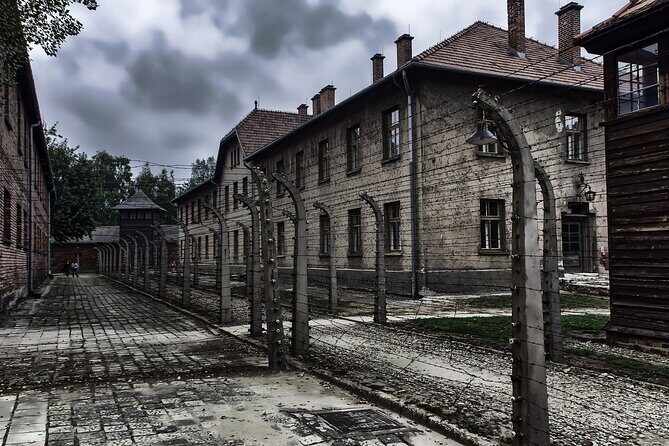
Auschwitz I is where the day gets very real, very fast. You start by walking through the camp gates with the infamous sign Arbeit Macht Frei (Work Sets You Free). From there, the route moves through the camp area that remains nearly untouched in the way it was left in January 1945, with features and paths that help you picture how the camp was laid out.
You’ll then enter the blocks that are now museum spaces. Each block is identified by number and name, and the exhibits use explanation panels, signs, and pictures to guide you through what happened.
In terms of content, expect the museum to focus on both daily mechanisms and the machinery of terror. The educator will show you interiors connected to the extermination plan. You’ll also see what’s presented about medical experiments attributed to Dr. Mengele, plus the artifacts and displays tied to victims.
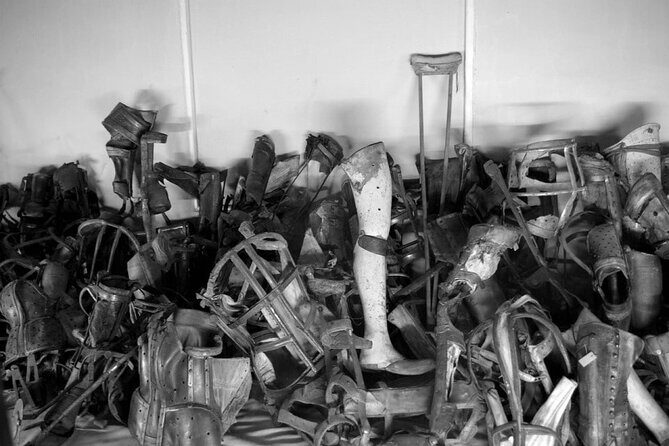
The emotional weight here comes from the objects. You’ll be looking at items such as victims’ belongings, clothes, suitcases, and even worn, unpaired shoes. These aren’t displayed as random relics. They’re used to tell a story about identity being erased and then, later, carefully restored in memory.
Drawback to consider: Auschwitz I can be visually dense. There’s a lot to read and process in a short time. If you want to take your time, remember you may need to do a balance: keep moving with the group while still giving yourself moments to absorb what’s in front of you.
Auschwitz II-Birkenau: understanding the camp system at a larger scale
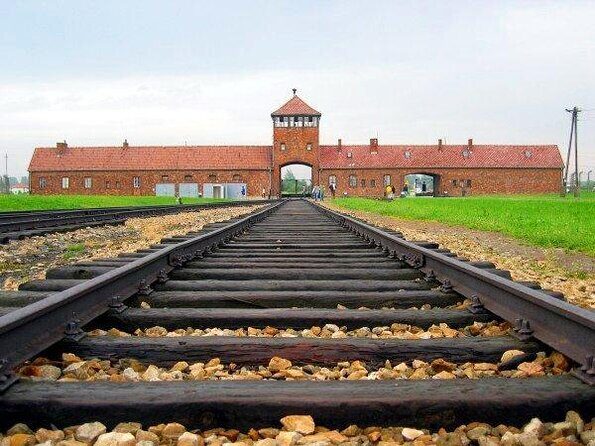
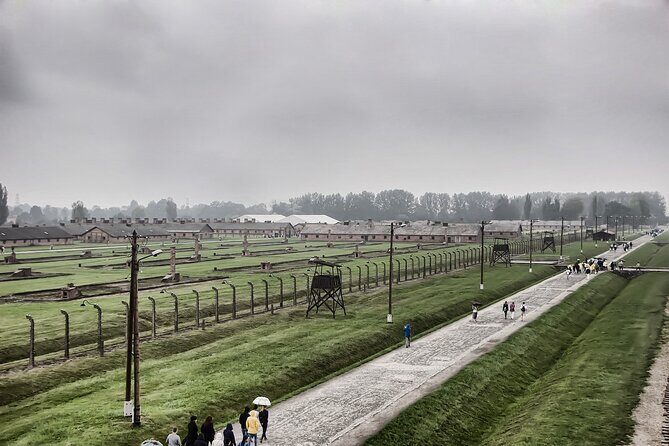
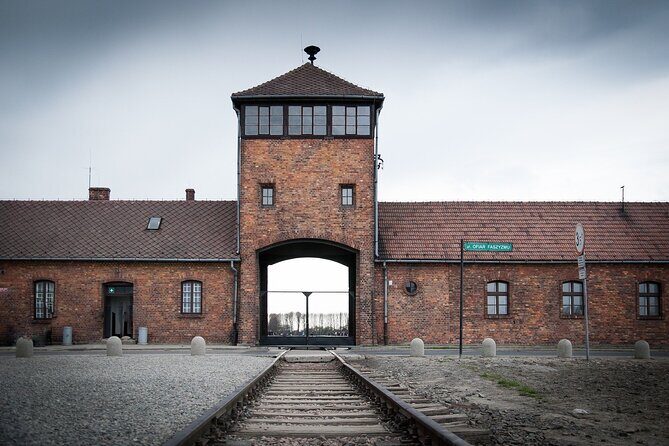
After Auschwitz I, you shift to Auschwitz II-Birkenau, the better-known site of the larger extermination complex. This is where the scale changes how you understand what you’re seeing. The route typically highlights the camp’s layout and operational structures, not just individual buildings.
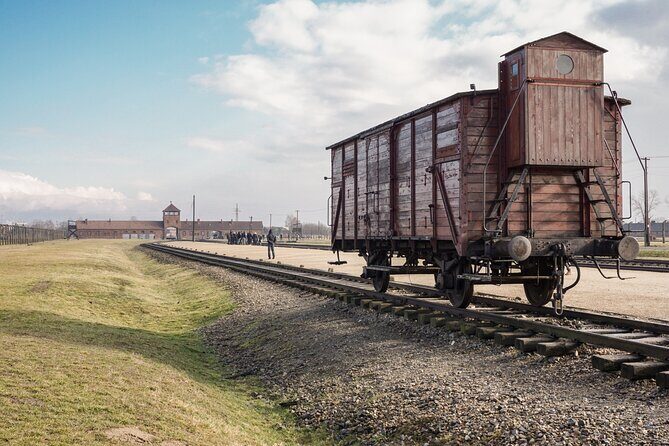
You can expect to see areas described as the unloading platform, watchtowers, fences, barracks, and the camp bathhouse. The tour also references the execution wall and jail cells—spaces that help explain how control and punishment worked alongside the broader system of genocide.
The value of including Birkenau is that it connects the dots. Auschwitz I gives you the museum blocks and documentation-heavy exhibits. Birkenau helps you understand the operational geography: where people moved, where structures were built, and how the camp system was designed to function.
One thing to know for your comfort: Birkenau can feel open and exposed depending on weather. The layout includes lots of outdoor walking, so dress for the day you’re going. Also, bring a mindset that the day is educational, not scenic. You’re walking through history that was built to destroy lives.


The educator’s study approach: how the learning is organized
This tour is guided in a group format, with an educator leading the story. The emphasis is on helping you learn about Nazi-occupied Poland and the events that unfolded through the concentration camp system.
What I appreciate in a study-focused tour is how it reduces the guesswork. Instead of you trying to interpret everything alone, you get context in the exact spaces where the exhibits connect. The educator’s role—showing blocks tied to the extermination plan and medical experiments, and directing you through the museum rooms—turns “seeing” into actual understanding.
The tour also aims to honor victims on a personal level. One detail that stands out is the mention of the Book of Names. Even without knowing the exact format ahead of time, that theme matters: it shifts you from thinking only about institutions and dates to recognizing human beings, by name and memory.
Practical note: you’ll likely spend a lot of time on your feet, reading, and processing. If you know you get overwhelmed in museums, plan to pace yourself mentally. Step with the group, but take small breathing breaks when you can.
Pickup, driver, comfort, and the private-car advantage
Transport can ruin a serious day when it’s stressful. Here, the transfer model is meant to protect the experience.
You’ll be collected from your Krakow address within the city-center radius, driven in comfortable cars, and returned afterward to either your hotel or another Krakow drop-off point. The drivers speak very good English, so you can ask quick practical questions without a language gap turning into a hassle.
The private setup is also stated clearly: only your group participates. That matters because in a museum setting, mixed pacing can be hard. When the group is smaller and stays together, you’re less likely to miss parts of the narrative.
If you’re sensitive to crowd pressure or you want more control over your day, a private arrangement like this is usually a better fit than a large join-the-bus model.
Who should book this Auschwitz–Birkenau private study tour
This works best if you want:
- A guided learning day focused on the camp system across Auschwitz I and Auschwitz II-Birkenau.
- Simplified Krakow logistics with door-to-door pickup and return.
- A private group experience where your schedule is less tangled with other visitors.
It’s also a good choice if you’re traveling with family and want structure. One of the most strongly positive sentiments in the feedback is about the importance of teaching younger people the truth with respect—before they grow into positions of influence. This isn’t entertainment. It’s education with dignity.
You might consider another format if you’re looking for a shorter, lighter day. At around 9 to 10 hours, this is a long commitment.
Should you book this Auschwitz–Birkenau private study tour?
If you value smooth logistics, clear guidance, and a route that covers both Auschwitz I and Auschwitz II-Birkenau, I think this is a strong option to consider. The big “yes” is the door-to-door transport from Krakow plus an educator-led route that helps you make sense of what you’re seeing in the exact locations where history happened.
Book it if you can commit to the early start and you’re comfortable with a long, emotionally serious day. Skip it or look elsewhere if you know you’ll struggle with punctuality or you can’t reliably make a strict 7:30am start time.
FAQ
FAQ
What sites are included in the tour?
The tour covers Auschwitz I and Auschwitz II-Birkenau, with a visit to the Auschwitz-Birkenau Memorial and Museum.
How long is the Auschwitz–Birkenau private study tour?
The experience is listed as lasting about 9 to 10 hours.
What time does the tour start?
The start time is 7:30am.
Do you provide pickup and drop-off in Krakow?
Yes. You can be picked up from your Krakow hotel or another Krakow address, including within 15 km of Krakow city centre. After the tour, you’ll be dropped off either at your hotel or another place in Krakow.
Is the tour offered in English?
Yes, it is offered in English.
Is admission included?
Admission is included for the Auschwitz-Birkenau Memorial and Museum portion described as 6 hours with the admission ticket included.
Is this a private tour?
Yes. It’s described as private, with only your group participating.
Can I cancel for a refund?
Yes. You can cancel for a full refund up to 24 hours in advance of the experience start time.