REVIEW · KRAKOW
Auschwitz and Birkenau Tour with Hotel Pick up from Krakow
Book on Viator →Operated by GR8WAY · Bookable on Viator
Auschwitz demands more than curiosity. This tour mixes hotel pickup with an English guide and headsets so you can follow every stop without guessing your way through a crowded site; the catch is the very early departure and the real chance of waiting around for timed entry.
What I like is the setup: you get round-trip shared transfer in an air-conditioned vehicle, and admission tickets for both Auschwitz I and Birkenau Memorial. That means you can focus on what’s in front of you, not on last-minute ticket hunting.
The practical part still matters. The day is long enough to feel rushed, but you also can’t truly set your own pace due to crowd flow, security, and museum rules—plus a big chunk is outdoors, especially at Birkenau.
In This Review
- Key points before you go
- Getting to Auschwitz from Krakow: shared transfer and early pickup reality
- Auschwitz I: what you’ll see and how to handle the site rules
- Birkenau Memorial: why the outdoors time hits harder
- Ticket timing, crowds, and the limits of moving at your own pace
- English guide + headsets: turning noise into understanding
- What to bring: ID, luggage limits, and weather prep for 70% outdoors
- Price and value at about $120: when this tour is worth it
- Communication and reliability: what to watch with GR8WAY
- Should you book this Auschwitz and Birkenau tour from Krakow?
- FAQ
- How long is the Auschwitz and Birkenau tour from Krakow?
- Is hotel pickup included?
- Are admission tickets included?
- Is the tour guide in English?
- What’s the meeting point in Krakow?
- What ID do I need to bring?
- Is there a luggage size limit?
- Will it be cold or rainy during the visit?
- Can I get a full refund if I cancel?
Key points before you go
- Early departures can be very early depending on museum availability for your time slot
- English guided visit with headsets helps you hear clearly in large groups
- Admission tickets for Auschwitz I and Birkenau are included
- Expect lots of outdoor time (up to 70%), especially at Birkenau
- Luggage is limited to 30x20x10 cm, with larger bags left on-site in a locked bus
- Small group limit of 30 people for this tour format
Getting to Auschwitz from Krakow: shared transfer and early pickup reality
This is a half-day style trip that runs about 7 to 8 hours total, starting very early. Pickup can happen between 4:00am and 1:30pm, depending on what entrance slots the museum can support that day. Translation: you might think you booked a later morning departure, but your schedule can still get pushed up if the site’s availability demands it.
The upside of shared transfer is value. You’re paying roughly $120.36 per person for transport plus English guiding and admission. The tradeoff is you’re not in full control. It’s a group flow day, so expect a structured timeline, a fixed route, and the kind of pace where you move when the group moves.
Also note a real-world Krakow detail: some hotels sit in traffic-restricted zones, so direct pickup might not be possible. In those cases, you’ll be taken to the closest permitted pickup point instead of right at your door. If your hotel is near the Old Town and has limited access, plan to walk a bit.
If you’re the type who likes a slow morning with coffee and zero stress, this tour’s start time can be the biggest curveball. If you can handle early, it’s a strong way to see both Auschwitz and Birkenau without organizing transport and timing yourself.
You can also read our reviews of more tours and experiences in Krakow.
Auschwitz I: what you’ll see and how to handle the site rules
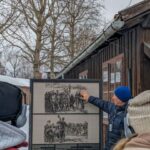
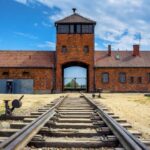
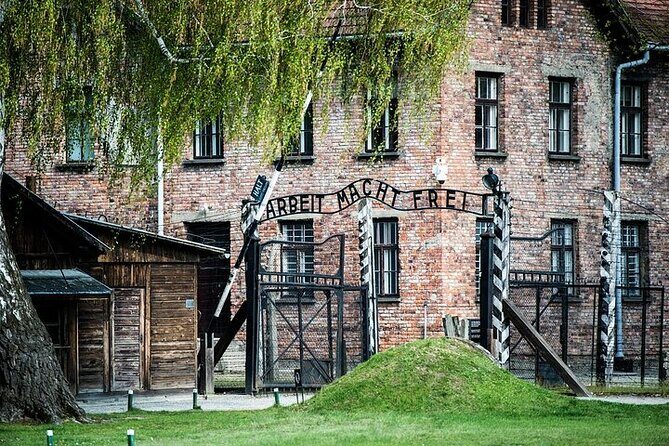
Auschwitz I is the heart of the camp complex that most people picture when they hear the name Auschwitz. The visit here lasts about 3 hours, with an English guided tour. You’ll see key remains and memorialized areas tied to the camp’s history, including areas that help you understand how the Nazi system operated and how prisoners were processed and held.
This is also where museum rules and solemn conduct matter most. The site is not a typical sightseeing stop. You should assume that behavior expectations are strict and that the guide will keep you moving with the flow of hundreds of other visitors.
One thing to prepare for: the pace won’t be your pace. Even if you want extra time in one area, you may not get it. The best way to handle this is mentally shift from sightseeing to witnessing. Take in what you can, ask questions when you have them (through the guide), and don’t beat yourself up if you can’t absorb everything in one pass.
Practically, the headset is a big help here. Auschwitz I can get noisy and crowded. Hearing the guide clearly makes the difference between a tour that feels like facts on repeat and one that feels anchored in context.
Birkenau Memorial: why the outdoors time hits harder
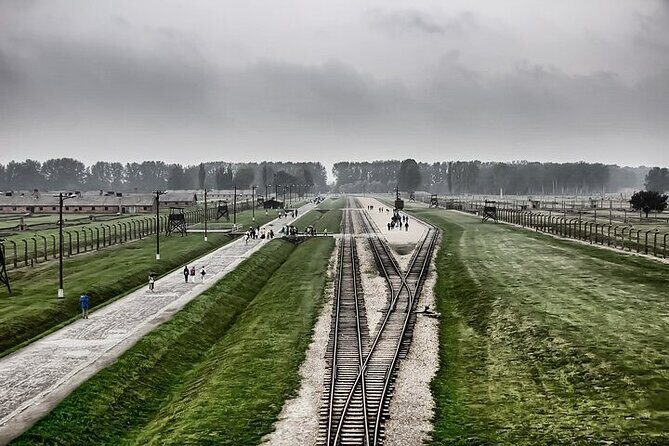
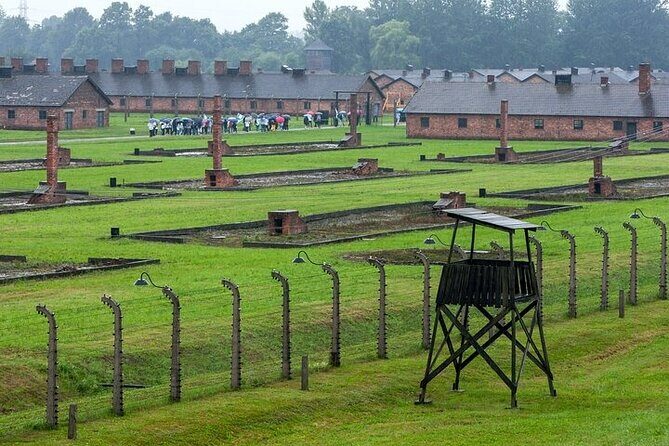
Birkenau is Auschwitz II, and it’s where the scale can really land in your body. The visit here is about 1 hour in the memorial section, and it’s the part of the day where you’ll likely feel the outdoor conditions most.
The tour description signals that up to 70% of the time is outdoors, especially at Birkenau. That matters because Birkenau is exposed, and weather can turn a short visit into a physically uncomfortable one. If it’s cold, windy, or rainy, you’ll want clothing that you’d actually wear for a long walk outside—not just for a quick photo stop.
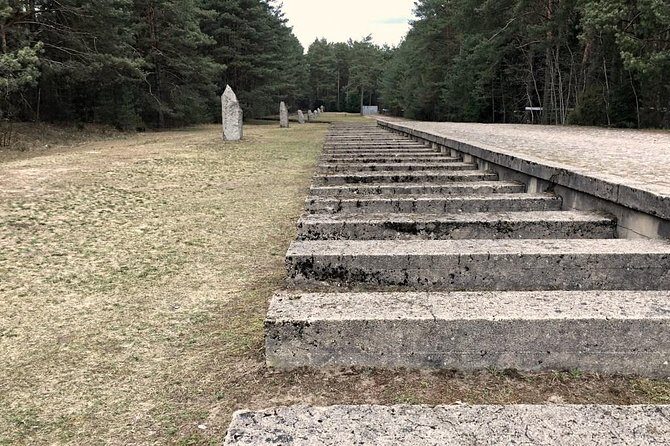
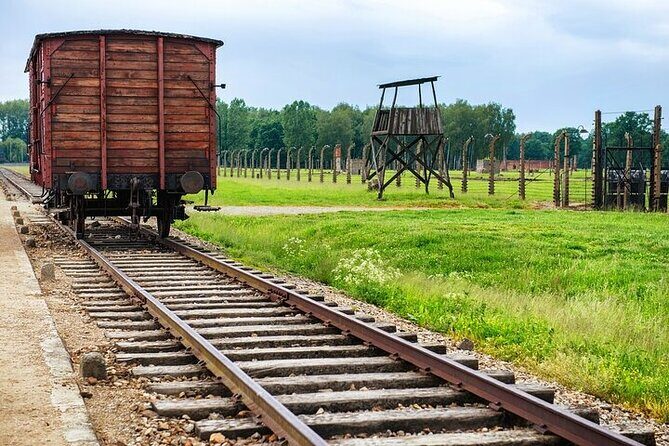
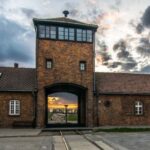
Birkenau is also where you’ll encounter major camp-related remains and memorial objects such as barracks, gas chambers, crematoria, and the railway ramp. You’re not just looking at structures. The guide’s job is to explain what these pieces mean and how they connect to the broader Nazi campaign against Europe’s Jewish population—along with the persecution of Poles and Roma.
Because the time here is short, I recommend you arrive with a mindset of focus, not completion. You won’t be able to see everything at the deep level most people want in a single half day. Instead, let the guide help you connect the biggest points: how prisoners lived, how the system ran, and what remains are there to preserve memory.
Ticket timing, crowds, and the limits of moving at your own pace
This is where expectations can make or break your day. The tour’s structure is built around museum operations and group logistics. The museum sees hundreds of visitors daily, and the guidance specifically notes that keeping your own pace isn’t possible.
In practice, that can mean two things:
- You might spend time waiting where queues form (especially around ticketing or entry flow).
- Your departure time can shift earlier than you expected based on the museum’s availability for tours.
I’d treat the schedule as a framework, not a promise. The most reliable way to have a calmer experience is to plan your day around the camp visit itself, not around tight connections or nonrefundable deadlines immediately after you return to Krakow.
Also watch for what you bring to the site. Your bag and ID requirements affect entry speed. A small item mistake can turn a short delay into a longer one.
If you’re arriving with a strict timeline for dinner or a train, build in buffer time for the return trip. You’re going to a place that runs on controlled access. It’s not the day for tight watch-to-watch planning.
English guide + headsets: turning noise into understanding
The tour includes an English guide and headsets to help you hear clearly. That sounds like a small detail until you’re standing with a crowd. Auschwitz and Birkenau are full of visual cues, signage, and spoken explanations. Without clear audio, you miss the meaning fast.
Where this can feel especially valuable is when you’re trying to understand the logic behind what you’re seeing: how prisoners were held, what daily conditions were like, and how specific structures relate to the camp’s functions. A good guide doesn’t just point and name. They connect the remains to the human reality behind them.
The day also has built-in pacing limits. The headset helps you stay oriented even when you’re moving through busy sections. In other words, the system reduces frustration. You spend less mental energy trying to hear and more energy absorbing what the guide is explaining.
And yes, this can get emotional. If you’re the type who needs time to process quietly, use the guide’s moments for direction, then step back mentally during breaks the group allows. Don’t try to force a perfect emotional script. Let the site do its job, and use the guide for context.


What to bring: ID, luggage limits, and weather prep for 70% outdoors
Before you pack, read the practical rules twice. Your ability to enter smoothly depends on them.
Bring ID documents. Entry requires ID to verify visitors, and without it, security might refuse entry. Don’t assume your passport will be optional. Bring it.
Luggage is capped at 30x20x10 cm—about the size of an A4 sheet. A small handbag or wallet is usually fine, but anything larger needs a plan. The tour notes that if your luggage is bigger, you can leave it in a locked bus parked next to the museum, and the driver will look after it while you’re away.
For weather, plan like you’ll be outside longer than you think—because you might. With up to 70% outdoors time, pack layers. Wear shoes you can stand in for a while. If you’re visiting in winter, treat this like a long outdoor walk, not a short stop.
One more tip: because you can’t fully control your pace, keep essentials easy to reach. If your bag is tight on space, pack light but smart—ID, a warm layer, and something small to drink if allowed by your own preferences (food and drinks are not included on the tour).
Price and value at about $120: when this tour is worth it
For roughly $120.36 per person, you’re getting more than “a ride to the site.” The tour includes:
- English guided visits at Auschwitz I and the Birkenau memorial portion
- Admission tickets included for both stops
- Round-trip shared transfer in an air-conditioned vehicle
- Headsets so you can hear the guide clearly
What you’re not getting is food and drinks. So you’ll need to plan that separately, and because you may start very early, having a simple breakfast strategy before pickup can save stress.
Is it good value? For many people, yes—because it bundles the hardest parts: transport, entry, and guided interpretation. Planning these elements yourself also takes time and mental load, especially with timed entry and museum rules.
But there’s a key value question you should ask yourself:
Can you handle operational uncertainty (pickup changes, time slots, possible waiting)?
If the answer is yes, this format can be efficient. If the answer is no—especially if you have non-negotiable plans right after—then you may want a plan that gives you more control.
Communication and reliability: what to watch with GR8WAY
Here’s the reality check. This tour is run by GR8WAY, and the biggest risk factor shown in the available information is operational communication—especially around pickup times and last-minute changes.
The schedule can vary by museum availability, and pickup times can be adjusted with short notice. Some people also describe situations where the pickup didn’t happen as expected or where the experience didn’t match what was promised. That’s not something you want to discover on the morning of your visit.
So I’d approach this tour with a simple discipline:
- Confirm your exact pickup location and time in writing whenever you receive it.
- Set alerts on your phone in case the operator updates details.
- Have your ID ready and your luggage plan decided the night before.
- Keep your post-tour plans flexible.
If you’re traveling during a busy season or with early commitments, don’t schedule a tight connection right after the camp visit. Give yourself cushion for delays in entry flow and the return ride.
This doesn’t mean the tour can’t be great. The same information also suggests that some runs are excellent, with on-time pickup and strong guiding. It just means you should protect yourself with flexibility.
Should you book this Auschwitz and Birkenau tour from Krakow?
If your goal is to see both Auschwitz I and Birkenau with an English guide, admission tickets included, and a straightforward pickup-and-return day, this tour can make sense. The headset and included tickets remove two big friction points.
You should book if:
- you can handle early mornings and a structured pace
- you want a guided explanation rather than trying to self-navigate
- you’re okay with shared transport logistics
You might skip it if:
- you have a tight schedule immediately after you return to Krakow
- you’re someone who needs guaranteed timing with zero last-minute changes
- you’d struggle with the possibility of waiting due to museum crowds and slot availability
My best advice: treat this like a mission day, not a casual sightseeing morning. If you plan for early pickup, outdoor weather, ID rules, and the fact you won’t control your pace, you’ll get far more out of the experience.
FAQ
How long is the Auschwitz and Birkenau tour from Krakow?
The tour is listed as approximately 7 to 8 hours. It includes about 3 hours at the Auschwitz-Birkenau State Museum and about 1 hour at the memorial and museum area.
Is hotel pickup included?
Pickup is offered. Some hotels in Krakow Old Town are in traffic-restricted areas, so direct pickup may not be available and you may be taken to the closest possible pickup point.
Are admission tickets included?
Yes. Admission tickets are included for both stops: the Auschwitz-Birkenau State Museum and the Auschwitz-Birkenau memorial and museum area.
Is the tour guide in English?
Yes. The tour includes a guided visit in English, and you’ll be given headsets to hear the guide clearly.
What’s the meeting point in Krakow?
The start point is Floriana Straszewskiego 14, 33-332 Kraków, Poland.
What ID do I need to bring?
You must bring ID documents to verify your identity. If you don’t, security might refuse entry.
Is there a luggage size limit?
Yes. The maximum allowed luggage size is 30x20x10 cm. If your bag is bigger, you can leave it in a locked bus parked next to the museum while you’re inside.
Will it be cold or rainy during the visit?
You’ll spend up to 70% of the time outdoors, especially at Birkenau. Bring weather-appropriate clothing.
Can I get a full refund if I cancel?
Yes. The tour offers free cancellation, and you can cancel up to 24 hours in advance for a full refund. If you cancel less than 24 hours before, the amount paid is not refunded.