REVIEW · KRAKOW
3-Hour E-Bike Tour In Krakow
Book on Viator →Operated by Cool Tour Company · Bookable on Viator
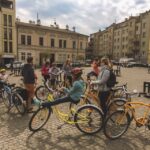
Krakow is easier to read from the saddle. This 3-hour e-bike tour strings together the city’s biggest highlights—Stare Miasto, Wawel, and Kazimierz—plus stops tied to Copernicus and Schindler. I like that you spend your time riding between places instead of wasting it on transit or aimless wandering.
Second, I really like the pacing: frequent short stops let you look, take photos, and ask questions without turning the ride into a marathon. You also get a small group feel, with a maximum of 15 people, and guides like Michael, Chris, Krzysztof, Alex, and Tom are known for telling stories with local detail.
One thing to consider: the old-city core can feel busy, especially at peak times. Plan to be patient through pedestrian-heavy areas, and don’t expect museum entry tickets—this tour focuses on seeing landmarks from the outside.
In This Review
- Key Points You’ll Care About
- E-Bike Intro to Krakow: What You Really Get in 3 Hours
- Sławkowska 11 Meeting Point and Bike Setup That Keeps You Moving
- Stare Miasto Highlights: Cloth Hall, St. Mary’s, and Town Hall Remnants
- Collegium Maius and Copernicus: Science Where You Can Still Feel the Old Study Rooms
- Wawel Hill: The Dragon Legend and the Royal Castle View
- Vistula River Ride: One of Krakow’s Most Enjoyable Cycle Sections
- Kazimierz: The Former Jewish District in Present-Day Streets
- Schindler Sites: Szeroka Street, Empty Chairs, and the Factory Building
- Green Garden, Barbican, and St. Florian’s Gate: Ending with Strong City Edges
- How Much Effort? Flat-Feel Riding With a Real Comfort Boost
- Price and Value: What $66.37 Covers (and What It Doesn’t)
- Should You Book This 3-Hour Krakow E-Bike Tour?
Key Points You’ll Care About
- Small-group ride (up to 15 people) that keeps you from feeling lost in a crowd
- Top-value route that links Stare Miasto, Wawel Hill, Kazimierz, and Schindler-related sites in 3 hours
- Local guides with personality, including Michael, Chris, Krzysztof, Alex, and Tom
- Comfort boosts: e-bikes with an electric assist and practical suspension for Krakow’s cobbles
- No museum admissions included, so you get a fast overview first, then choose what to go into later
E-Bike Intro to Krakow: What You Really Get in 3 Hours
This tour is built for people who want to understand Krakow quickly. In about three hours, you cover the core medieval center, the iconic Wawel hill, and the Kazimierz district—then finish with fortification and gate views that help the whole city “click” in your head.
The best part is how the ride supports your curiosity. You don’t just hop off at one postcard stop and back on again. You get enough time at each key landmark—think 10 to 20 minutes—to read the place, spot the story, and keep moving.
At $66.37 per person, you’re mostly paying for two things: (1) a guide who connects the dots, and (2) your bike time. You are not paying for museum tickets. That’s a smart trade if you’re trying to plan the rest of your trip with confidence.
It also scores well—4.9 out of 5 from 79 reviews—and the common theme is simple: people feel they came away knowing where to go next. If you’re doing Krakow for the first time, this is a very efficient first-day move.
You can also read our reviews of more cycling tours in Krakow
Sławkowska 11 Meeting Point and Bike Setup That Keeps You Moving
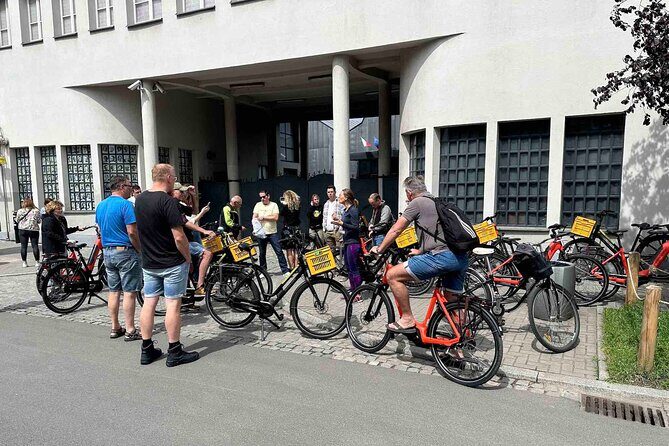
You start and end at Sławkowska 11 (31-016 Kraków), right in the city’s historic zone. That matters more than you might think. If your tour begins far outside the center, you spend part of your precious hours getting there. Here, you’re close to the action almost immediately.
The first part is practical: you’re set up on the bikes, and the staff helps you find the right fit. Instructions are given if you need them, and there’s even a toilet available at the start. That’s an underrated quality-of-life detail in a 3-hour tour.
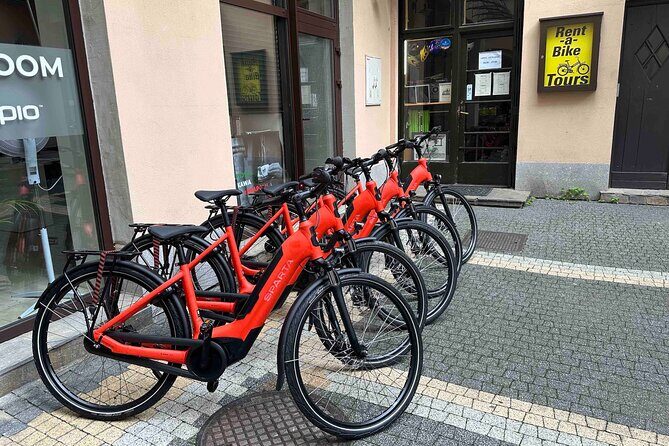
The bike itself is an e-bike (Sparta C-Grid is mentioned in feedback), and what people notice is comfort. One review notes the ride stays easy even on cobbled areas, thanks to front suspension and the electric assist. You’ll still pedal when you want, but you won’t feel like you’re battling the city.
Also, you’ll get a mobile ticket, and the tour operates in English. If you’re traveling with kids, children must be accompanied by an adult.
Stare Miasto Highlights: Cloth Hall, St. Mary’s, and Town Hall Remnants
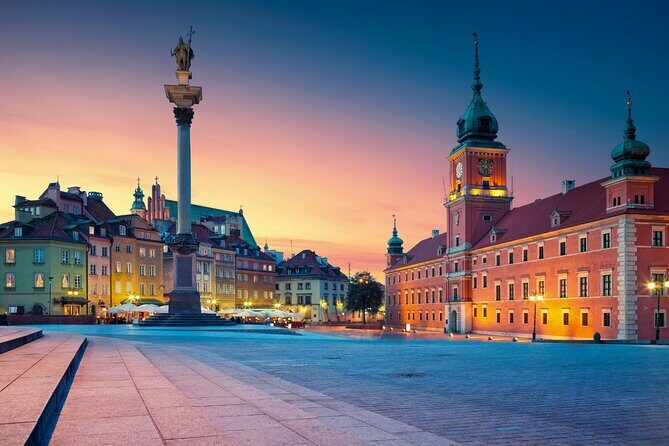
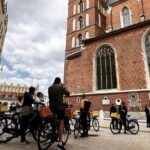
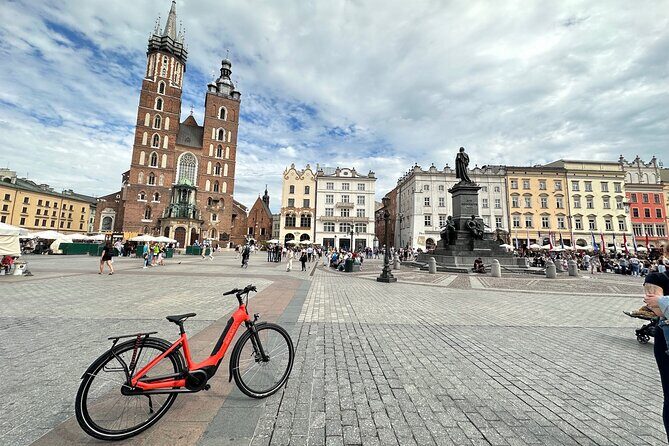
Your first real sightseeing moment comes at Stare Miasto, Krakow’s largest medieval main market square. This is where you see the city’s medieval engine room: the monumental Cloth Hall, St. Mary’s Church, and remnants tied to the old town hall tower.
The value here isn’t just “big buildings.” It’s context. Once you’ve seen the Cloth Hall area and the church silhouette in person, you can better understand what this place meant when Krakow was trading and thriving.
You get a short 15-minute stop, which is perfect for:
- quick photos without rushing,
- orienting yourself to the square’s scale,
- and listening for the guide’s main takeaways (how the market shaped the city and why certain buildings mattered).
A mild caution: market squares can get crowded. If you’re sensitive to tight spaces, just go with the flow and position yourself where you can hear the guide.
Collegium Maius and Copernicus: Science Where You Can Still Feel the Old Study Rooms
Next up is Muzeum Uniwersytetu Jagiellonskiego Collegium Maius, Krakow’s oldest university building. This stop is more than a university photo moment—it connects you to Nicolaus Copernicus, who studied there.
Why it works on an e-bike tour: you’re not bogged down in paperwork, long museum routes, or ticket queues. You spend around 10 minutes at the site, just enough to place the building in your trip story.
If you’re the type who likes connections—astronomy to place, thinkers to streets—this stop gives you a thread to pull later. You’ll know where to look when you research more about Krakow’s intellectual history.
Even better, this is exactly the kind of stop that helps you “shape” the rest of your day. When you know where Copernicus studied, other Krakow landmarks don’t feel random. They feel part of a bigger timeline.
Wawel Hill: The Dragon Legend and the Royal Castle View
Then the tour shifts to Wawel, and it does it the fun way: by starting with the Monument of the Wawel Dragon. You hear the legend of the fire-breathing monster and the smart cobbler who defeats it with a trick.
That legend matters because it’s Krakow’s style of storytelling: myth mixed with local humor, passed down through landmarks people can point to. Seeing the dragon monument gives the story a physical anchor, so it sticks.
After that, you move to Wawel Royal Castle and learn what Wawel hill meant as a seat of Polish kings. You get another short stop (about 10 minutes)—again, enough time to understand the importance without turning it into a day-long castle visit.
Practical tip: if you want a deeper look later, this tour is designed to tee it up. You’ll be able to decide what’s worth your time and ticket money once you know what you’re actually looking at.
A few more Krakow tours and experiences worth a look

Vistula River Ride: One of Krakow’s Most Enjoyable Cycle Sections
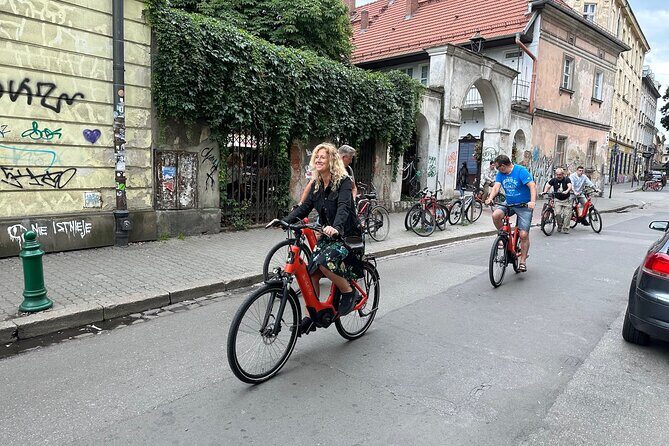
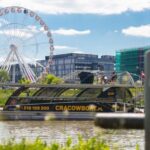
Between districts, you get a payoff moment: gliding along the Vistula river. The route uses one of the nicest cycle paths in the city, which is a breather from traffic and crowd pressure.
On an e-bike, this stretch feels especially good. You get momentum with less effort, and the scenery keeps you relaxed while you reposition for the next historic area.
One review also hints that people would like an even longer river section sometimes. So if you love riverside time, think of this as a taste, not a full-on river vacation.
Still, it’s a smart inclusion. This is how you keep the tour from feeling like a checklist. You’re seeing, yes—but you’re also riding like Krakow is meant to be traveled.
Kazimierz: The Former Jewish District in Present-Day Streets
Now you move into Kazimierz, Krakow’s former Jewish district. This is where the story becomes layered. The tour shows you how the area used to be a vibrant seat of the Jewish community and how it now functions as a neighborhood with trendy cafes, bars, and small art galleries.
You’ll spend around 20 minutes in this general zone, which gives you enough time to absorb the vibe change. It’s not a frozen historical set. It’s a living neighborhood.
You also pass the medieval main market area of Kazimierz (with a 10-minute stop), helping you connect earlier growth with later layers. This is useful because Kazimierz can feel confusing at first glance—lots of streets that look similar until you understand the original “center.”
If you’re planning meals later, this is a good moment to mentally tag where you’d like to come back. Many people leave this tour with a short list of places to try.
Schindler Sites: Szeroka Street, Empty Chairs, and the Factory Building
The tour’s Kazimierz section builds toward sites connected to Oskar Schindler.
You’ll stop at Szeroka Street, which looks more like a square in places and has a connection to the story of Schindler (often referenced through Steven Spielberg’s film). This stop is about place and layout: where the community’s heart sat in older days.
From there, you see Plac Bohaterow Getta, the square with the famous empty chairs monument. It’s one of those landmarks that feels quiet even when the area around it is active. Having it placed inside a bike ride schedule keeps it from being overwhelming, while still giving it room to land.
Then you reach the Fabryka Emalia Oskara Schindlera, the main building of the Schindler factory. The tour stop here is brief—about 10 minutes—and there’s no mention of museum entry. That means you’re seeing the outside and the story context, not doing a full interior visit.
This setup is good for most visitors. You get the orientation and the emotional geography first. Later, if you want more, you’ll know exactly what to prioritize.
Green Garden, Barbican, and St. Florian’s Gate: Ending with Strong City Edges
After the heavier themes, the tour shifts into calmer motion with a relaxing ride through the green garden of Krakow. Think of it as a mental reset: picturesque alleys and a slower feel that helps you process everything you just saw.
Then you hit Barbican and the Museum of Krakow area, where you see remnants of medieval fortifications. This is a great counterpoint to the earlier market-and-castle story. Fortifications explain why cities grew where they did and how they defended themselves.
Finally, you reach St. Florian’s Gate, the medieval main entrance to Krakow’s old city. This gate is tied to the beginning of the Royal Way, which monarchs followed when visiting. Even if you’ve never heard that exact phrase before, the “main entrance as ceremony” idea comes through quickly once you’re standing there.
You end back at the meeting point, so the loop feels tidy. After three hours, you’re not exhausted—you’re just more informed.
How Much Effort? Flat-Feel Riding With a Real Comfort Boost
Krakow is largely flat, and that’s part of why biking works so well here. One helpful note from feedback: on regular bikes, the tour can still feel manageable because big hills aren’t the main challenge.
So why the e-bike? Two reasons:
- It makes the cobbled center more comfortable.
- It reduces fatigue so you arrive at each stop feeling present, not spent.
The electric motor does the heavy lifting, and the bike setup also matters. People specifically mention comfort and ease with Sparta C-Grid e-bikes, including suspension help on rougher surfaces. On a city tour like this, that translates into more time looking up at buildings and less time thinking about your legs.
Still, this isn’t a high-adrenaline ride. It’s a guided, city-friendly crawl at human pace. If you want a workout-first bike day, this might feel too gentle. If you want a smart overview ride, it hits the target.
Also, bring practical gear. One tip that keeps showing up in feedback: pack a hat, scarf, and gloves, especially outside peak summer.
Price and Value: What $66.37 Covers (and What It Doesn’t)
Let’s keep this grounded. You pay $66.37 per person for about 3 hours, with:
- a local guide,
- use of a bicycle,
- local taxes,
- and a rain poncho if necessary.
What you do not pay for is entrance into museums or ticketed buildings. The stops are primarily viewing and storytelling. That can be a plus, because you’re not committing to indoor schedules. You can then decide later what you actually want to pay to enter.
For value, I like how the tour covers different types of highlights:
- squares and churches (Stare Miasto),
- a key university site (Collegium Maius),
- Wawel’s legends and power symbolism (dragon + castle),
- neighborhoods and memorial geography (Kazimierz + empty chairs + factory building),
- and defensive architecture (Barbican + gate).
That mix is hard to stitch together with only walking and buses in a short time. For many visitors, it’s the best way to build a “map in your head” quickly.
Should You Book This 3-Hour Krakow E-Bike Tour?
Book it if you want a fast, guided orientation that covers the places most first-timers miss—or underestimate. This is especially useful if you’ll spend the rest of your Krakow days picking neighborhoods and sights intentionally. Start with this, get oriented, then return on your own to the things you loved.
Skip it or rethink if:
- you want deep museum time and interior tickets,
- you hate busy city-center areas,
- or you’re looking for a serious workout bike ride.
One more practical idea: schedule this early in your trip. It’s the kind of tour that helps you choose where to go next, including food ideas shared by your guide.
If you want the simplest answer: this is a strong 3-hour Krakow highlights ride with smart pacing and enough story to make the city feel personal.