REVIEW · WARSAW
Warsaw Uprising Museum (1944) + POLIN Museum : SMALL GROUP /inc. Pick-up/
Book on Viator →Operated by Visiting-Warsaw.Com · Bookable on Viator
A city’s history hits different when it sounds real. This combo pairs the Warsaw Rising Museum with POLIN, and you get included admission plus audio guides so you can move at your own pace without a big group crowding you. In about 4 hours, you also get stress-free door-to-door pickup—no buses to fight, no map gymnastics.
What I like most is the way the Rising Museum turns 1944 into something you can experience, not just read about. I also appreciate that POLIN doesn’t treat Jewish history as an add-on; it presents how Polish and Jewish life intertwined for centuries, using multimedia spaces you can actually explore. A key consideration: this is more of a transport + self-guided audio set-up than a long, talk-heavy guided museum tour.
In This Review
- Key Things to Know Before You Go
- Warsaw Rising Museum: 1944 Becomes a Time Machine
- POLIN Museum: Polish-Jewish History You Can Actually Navigate
- Door-to-Door Van Pickup: The Real Time Saver
- Price and Value: Is It Worth $114.28?
- Timing That Fits Real Life (and How to Use It)
- Who This Tour Suits Best
- Should You Book This Combo?
- FAQ
- How long is the tour?
- Are admission tickets included?
- Do I get pickup from my hotel or apartment?
- Is this tour wheelchair accessible?
- What languages are audio guides available in?
- Can I cancel for a full refund?
Key Things to Know Before You Go

- Hotel pickup by car/van means easy, local, door-to-door movement through Warsaw
- Included admission tickets to both museums save time and hassle
- Audio guides in English and many other languages let you tailor the pace and depth
- Short, focused visits (about 1 hour 15 minutes each) keep the day efficient
- A small group size (up to 15) helps keep queues and waiting more manageable
- Wheelchair accessible transport and museum access are part of the plan
Warsaw Rising Museum: 1944 Becomes a Time Machine
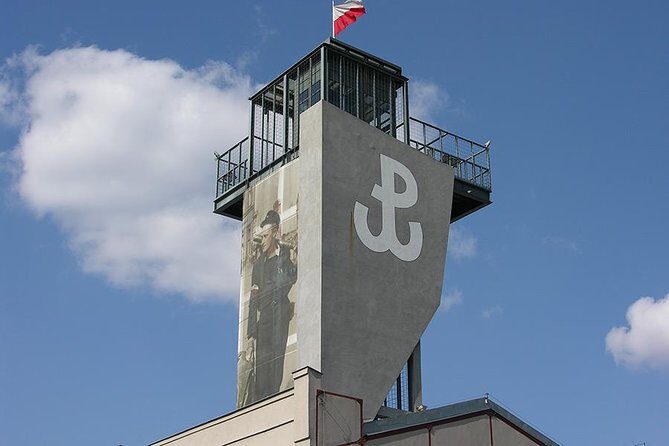
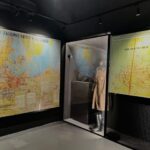
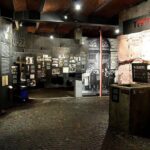
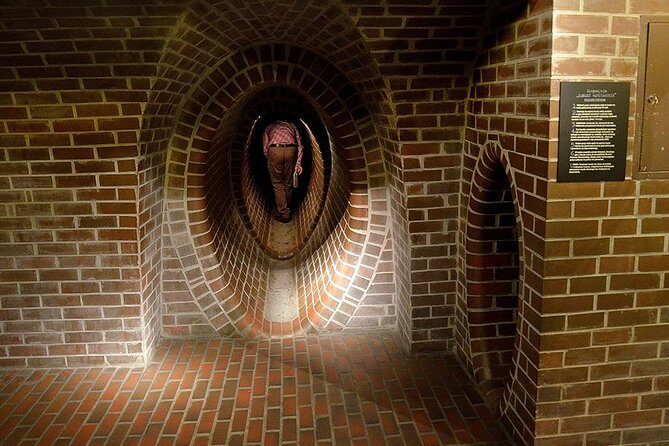
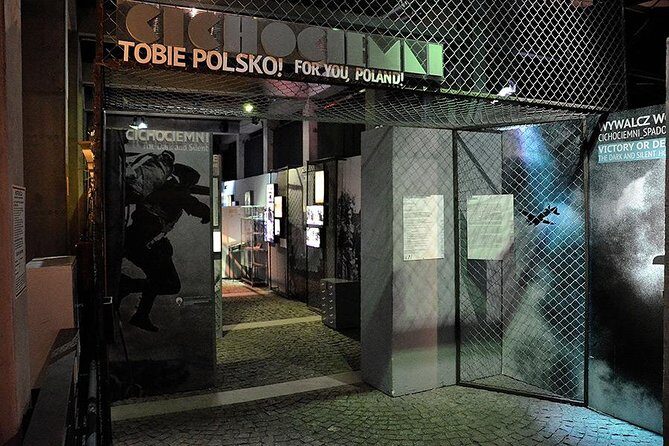
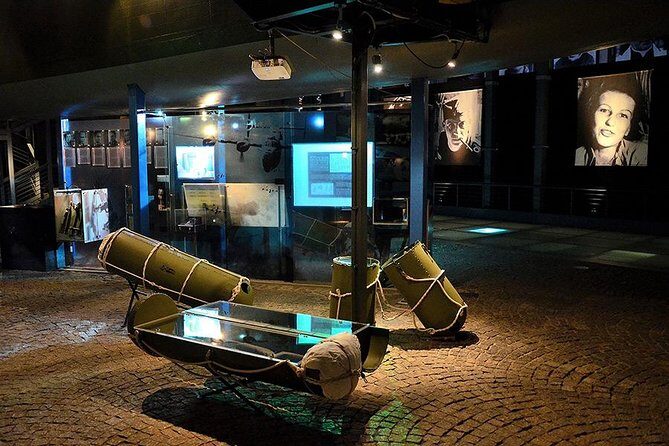
The Warsaw Rising Museum is not a typical sit-and-stare museum. It’s designed to feel like you’re walking through moments from 1944, with images and sounds that build the story step by step. If you’ve ever visited a museum and felt like you were reading labels only, this one works differently. It uses tech and dramatic presentation to help you understand what the city was facing.
You start with the basics: Warsaw in 1944 was a mix of beauty and brutality. The museum frames the city as the Pearl of the North before it was almost erased—nearly every building, brick, and neighborhood affected. It also emphasizes the human cost, including the fact that many fighters were not even 20 when they perished. It’s heavy stuff. Still, the museum keeps asking one question underneath everything: what pushed Poles to rise, and was the price for freedom too high?
One of the smartest parts of the experience is how it shows the “before,” the phases of the uprising, and the eventual failure in a clear sequence. You’re not left guessing what happened when. Instead, the museum builds a timeline you can follow, then lets you linger where you want.
You also get a quick 3D moment: a 5-minute simulation flight over devastated, desolate Warsaw. It’s short, but it helps you “see” what the words are describing. And when you look for details, the museum delivers: it houses over 1,000 authentic exhibits plus 1,500 photographs and films. That’s a lot of material for one stop, so having that audio guide matters.
Possible drawback to consider: this experience is set up so you’re mostly self-guided once you’re there. The transportation coordinator helps you get set with tickets, and there may be some pointing out during the drive, but you shouldn’t expect a long, lecturer-style tour inside the galleries.
You can also read our reviews of more museum experiences in Warsaw
POLIN Museum: Polish-Jewish History You Can Actually Navigate
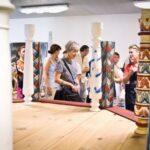
After 1944, POLIN shifts you into a much longer timeline. POLIN is the Museum of the History of Polish Jews, and it focuses on centuries of life in Poland—how Jewish communities shaped culture, economy, and science, and how relationships between neighbors evolved over time.
I like the way POLIN doesn’t treat Jewish life as a single story with only one tone. It presents multiple centuries, including everyday family and neighborly relations, and it also addresses the Jewish-Christian relationship. For many visitors, that’s the missing piece: you come away understanding how intertwined the communities were, not just what changed in crisis periods.
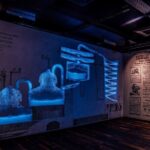
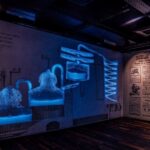
The museum uses multimedia in a way that makes learning feel less like “reading a wall.” In the virtual library, you can explore Hebrew and Yiddish literature through multimedia content, including religious, philosophical, and moral works. There’s even an option to print a title page from a 16th-century book using the museum press feature. You get the sense that the museum wants you to interact, not just observe.
In practical terms, this stop rewards curiosity. There’s enough structure that you won’t feel lost, but plenty of room to pick a few spaces to focus on. The time allotment (about 1 hour 15 minutes) means you’ll likely do highlights rather than every exhibit. If you’re the kind of person who reads every label, you may want to prioritize what you most care about before you arrive.
How to make it work for you: go in with at least one theme in mind—everyday life, literature, or the broader timeline. POLIN is the kind of museum where a small plan helps you leave feeling like you actually learned something specific.
Door-to-Door Van Pickup: The Real Time Saver
The biggest “quiet win” here is logistics. This tour handles door-to-door hotel/apartment pickup by car or van, not big buses. That matters in Warsaw. You spend less time coordinating meeting points and more time using the day.
The coordinator/driver waits before you enter the building, holding a card with your name and surname. That sounds minor, but it prevents the usual stress of searching lobbies or asking strangers where the van is. You also get a mobile ticket, which usually cuts down on friction at the museums.
Because the group is capped at 15 people, the day tends to feel controlled. You’re not bouncing around with a crowd. And the schedule is built around two equal museum chunks—about 1 hour 15 minutes at each—so you don’t feel like one museum eats the whole day.
One more detail I appreciate: the transport is wheelchair accessible. If you’re traveling with mobility needs, it’s a real comfort to know accessibility is part of how the tour operates, not an afterthought.
Price and Value: Is It Worth $114.28?
At $114.28 per person for about 4 hours, the value comes from three things added together:
- Admission tickets are included for both museums.
- Audio guides come with the tour (available in many languages).
- Round-trip pickup and transport is included, again using car/van rather than buses.
If you compare that to paying for museum tickets yourself plus arranging transport, the math can make sense—especially if you don’t want to spend time figuring out transit, timing, or ticket windows. This is also a good option if you’re short on time and want a clean plan from start to finish.
That said, there’s a clear trade-off. Some visitors come expecting a guided walkthrough with a lot of narration inside the galleries. Instead, what you’re getting is more like “transport + self-guided museum time with audio.” If you’re comfortable doing that on your own—arranging a taxi or transit, buying tickets, and using audio—you might find a lower-cost alternative.
So here’s the practical way I’d decide: if convenience and included admissions are what you value, this package is fair. If your goal is maximum guided interpretation, you may feel you can DIY it more cheaply and direct your own route.
Timing That Fits Real Life (and How to Use It)
The schedule is tight in a good way: two museum stops, 1 hour 15 minutes each, plus travel time, for roughly 4 hours total. That structure is ideal for first-timers or for visitors who already have other plans later in the day.
Audio guides are central here, and they’re offered in English plus a long list of other languages. If you’re not fluent in Polish, English audio can make the difference between enjoying the museum and feeling like you’re missing context. The Rising Museum also provides audio options in a range of languages, which helps for mixed-language groups.
For the best results, don’t try to “do everything.” With limited time, you’ll get more from choosing key areas. In the Rising Museum, focus on the sequence: what led up to the uprising, how it unfolded, and what happened at the end. For POLIN, pick one or two concepts you want to understand deeply—literature and the virtual library can be a great anchor, or family and neighborhood life.
Also, a small expectation check helps: a day like this is designed for momentum. You’ll leave with a strong overview, not every detail.





Who This Tour Suits Best
This is a good fit if:
- You want two major Warsaw museums without spending your day arranging transport.
- You like learning through audio guides and your own pace rather than constant narration.
- You’re traveling with limited time and want a plan that actually protects it.
- You need wheelchair-accessible transport.
It might not be ideal if:
- You expect a hands-on, guided museum lecture throughout each stop.
- You’re very price-sensitive and happy to handle tickets and transport independently.
Should You Book This Combo?
I think this is a smart booking for most visitors who want a hassle-free, high-impact day. The included admissions, the audio guides, and the door-to-door pickup do real work for your time. And both museums are worth it for different reasons: the Rising Museum makes 1944 tangible, while POLIN helps you understand how Polish and Jewish history evolved together over centuries.
My final advice: book it if you want an efficient plan with less stress. If you’re the kind of traveler who loves going fully on your own and you already know how you’ll handle museum tickets and transport, you can probably replicate parts of this with a do-it-yourself route for less. But for many people, paying for the clean flow is the point.
FAQ
How long is the tour?
It runs for about 4 hours total, with roughly 1 hour 15 minutes at the Warsaw Rising Museum and 1 hour 15 minutes at POLIN.
Are admission tickets included?
Yes. Admission tickets for both the Warsaw Rising Museum and POLIN are included.
Do I get pickup from my hotel or apartment?
Yes. The tour includes door-to-door transport from your hotel/apartment by car or van, and also return transport back after the museums.
Is this tour wheelchair accessible?
Yes. The transport and the tour are listed as wheelchair accessible.
What languages are audio guides available in?
Audio guides are offered in English and also in many other languages (the tour lists a wide range, including several European languages and others).
Can I cancel for a full refund?
Yes. You can cancel for a full refund if you cancel at least 24 hours before the experience start time, and the tour allows free cancellation.