REVIEW · WARSAW
Warsaw Behind the Scenes – small group tour with hotel pickup
Book on Viator →Operated by Warsaw Behind the Scenes · Bookable on Viator
War-torn Warsaw, told in moving streets. This small-group tour threads together architecture, culture, and hard history, with hotel pickup and a guide who brings the city’s layers to life. You’ll hop between neighborhoods that look ordinary today, but sit on top of major events from the 1940s onward.
I especially like the way the WWII-focused stops don’t feel like a lecture. At places like Muranów and the ghetto bridge area, guides use photos and location-based storytelling so you can picture how the city once worked. I also love the tour’s pacing and flexibility, with guides such as Tom and Marcin described as funny, engaging, and quick to answer questions.
One thing to consider: this is a mostly walking + transfers tour in vintage-style minibuses. Some vehicles don’t have air conditioning, and seat belts aren’t always present (historic-vehicle rules). If comfort and lots of cushioning matter to you, dress smart, wear sturdy shoes, and expect short stops rather than long museum time.
In This Review
- Key highlights you’ll feel on the ground
- Hotel Pickup and the Zuk Minibus Experience
- Getting Context Fast: Why the Intro Matters
- Muranów: Where “Ordinary Housing” Sits Over a Ghetto
- Chłodna Street and the Wooden Ghetto Bridge (From The Pianist)
- Nowolipki: The Uprising and the Way Commemoration Lives On
- Bielańska: WWII’s Bigger Picture and the Destruction of Warsaw
- Praga Polnoc: Crossing the Vistula to a Prewar-Feeling District
- Śródmieście and 1989: Rebuilding Under Communism, Then Changing Direction
- Price and Value: Is $133.08 Worth It?
- What to Expect From the Guides (And Why It Changes Everything)
- Comfort Notes: Shoes, Weather, and Vintage Van Reality
- Who This Tour Fits Best (and Who Might Want Something Else)
- Should You Book Warsaw Behind the Scenes?
- FAQ
- How long is the Warsaw Behind the Scenes tour?
- Is hotel pickup included?
- What language is the tour offered in?
- How big are the groups?
- Is the tour available if I’m traveling alone?
- What should I wear?
- Will the vehicles have air conditioning and seat belts?
- Can I cancel and get a refund?
Key highlights you’ll feel on the ground
- Hotel pickup that saves you time on a first or busy day in Warsaw
- Muranów and the ghetto footprint under today’s streets and housing blocks
- The wooden ghetto bridge location connected to The Pianist
- Praga Polnoc across the Vistula with a prewar-feeling neighborhood vibe
- 1989 to the present: rebuilds, politics, and what changed for everyday life
Hotel Pickup and the Zuk Minibus Experience

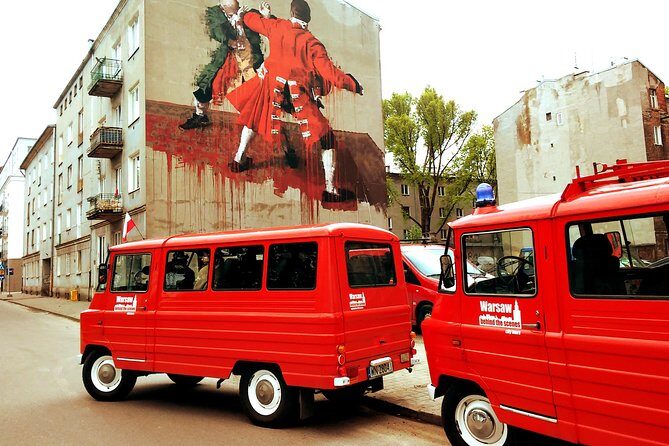
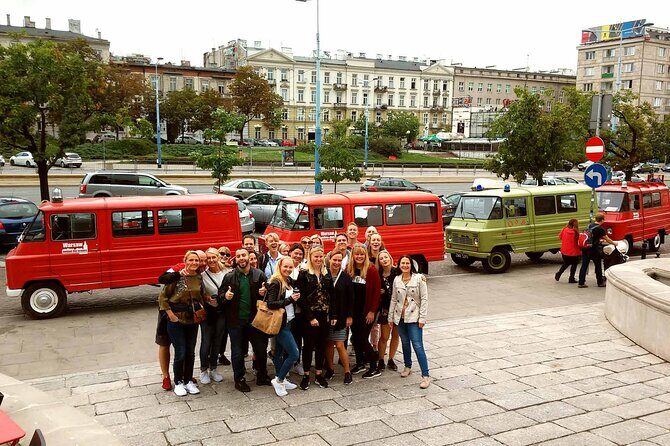
This tour starts with pickup from your hotel (only for listed hotels). That matters in Warsaw, because “getting out to the right places” can eat time fast. Once you’re collected, you’ll ride between sites in a small minibus. The operator runs a fleet of 5, and each vehicle takes up to 8 passengers, so you’re not stuck in a giant herd.
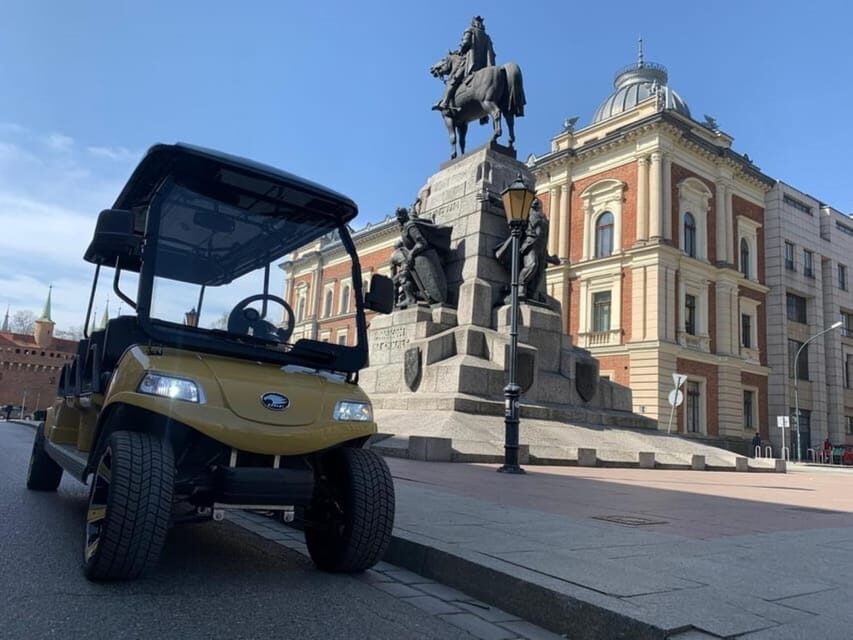
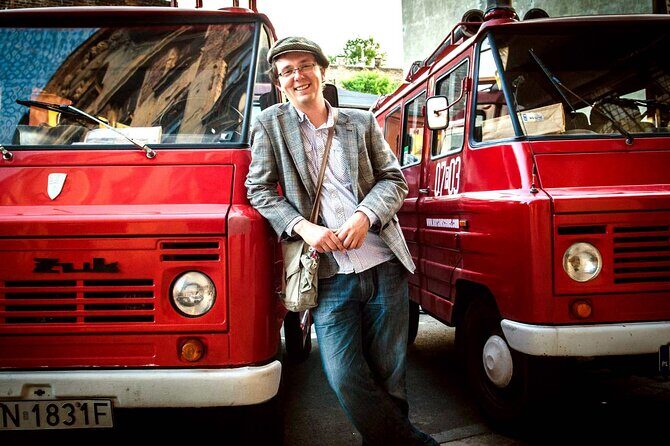
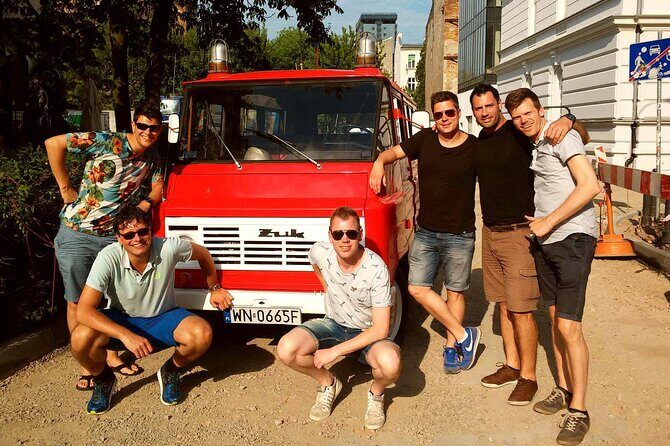
Many guides use a classic Zuk-style minibus, and that vehicle often becomes part of the show. One guest even called it “Take the Zuk,” and multiple reviews mention the van as quirky and fun. The effect is simple: you feel like you’re doing something local, not touring from behind glass.
Practical note: these classic minibuses may lack air conditioning, and some don’t have seat belts. On the plus side, there’s heating for winter. So your comfort depends on season and what you wear. Bring layers in cold weather, and keep your shoes comfortable for the walk segments.
You can also read our reviews of more tours and experiences in Warsaw.


Getting Context Fast: Why the Intro Matters
The tour begins with a short introduction to Warsaw and Poland. It’s not a long history class, but it’s the key setup you need before the WWII sites start hitting you. I like how this helps you make sense of why neighborhoods look the way they do—why one area feels preserved, why another feels rebuilt, and why the city’s layout carries political decisions long after the fighting ended.
This also helps if you’re doing the tour on your first day. Several review comments focus on orientation: you leave with a mental map of where things are and how the city fits together. Guides like Tom and Marcin also appear in reviews as strong storytellers who adjust to questions, which can turn “history stops” into something you actually remember.
Muranów: Where “Ordinary Housing” Sits Over a Ghetto
The first major neighborhood stop is Muranów, built on the former site of the Jewish Ghetto established by Nazi Germany in 1940. From street level, it can look like postwar apartment blocks. But your guide steers you to the deeper reality: the ground beneath everyday buildings once held a sealed, controlled world.
What makes this stop work is the contrast. You’re not only told that the ghetto existed—you’re shown how the district was destroyed and then reconstructed. That’s a big theme in Warsaw: the city rebuilds, but it doesn’t fully erase what happened. The result is heavy, but it’s also empowering, because you can see history embedded in plain sight.
Timing is short here (about 20 minutes), so you’ll want to stay mentally ready. If you tend to get overwhelmed, keep your expectations realistic: you’re learning enough to understand the story, not processing the whole tragedy in one go.
Chłodna Street and the Wooden Ghetto Bridge (From The Pianist)
Next, you visit the intersection area linked with the iconic wooden ghetto bridge—the one people often connect to The Pianist. It once ran high above the street, allowing traffic underneath while connecting two sealed parts of the ghetto.
Your guide uses historical photos to help you picture the bridge in action. That matters, because today the streets don’t explain themselves. Without visuals and storytelling, you’d likely walk past and miss why this location is so important.
One caution: the stop is brief (about 15 minutes). If you’re a film fan, you might feel an extra jolt, because the bridge is a dramatic image. But even if you’ve never seen the movie, the location still has meaning: it shows how controlled movement was built into the city’s infrastructure.
Nowolipki: The Uprising and the Way Commemoration Lives On
At Nowolipki, the tour turns to the Warsaw Ghetto Uprising of 1943. This was when Jewish resistance fighters launched a final stand against deportation. After weeks of fighting, the ghetto was completely razed.
This stop tends to hit emotionally, but it’s also where you get a sense of how remembrance works in Warsaw. Your guide explains how the tragedy is commemorated and how history is layered into the modern cityscape. That’s the part I appreciate: you’re not only learning dates and events, you’re learning how the present keeps speaking to the past.
Expect more interpretation than monuments. Since you’re moving through street-level locations, the story arrives in pieces. If you want extra context later, it helps to remember what you heard here so you can connect dots when you see museums or memorials.



Bielańska: WWII’s Bigger Picture and the Destruction of Warsaw
The tour continues with a broader wartime and political timeline at Bielańska. Here, you connect local events to international decisions. Agreements between the Western Allies and Stalin placed Poland under Soviet control, setting up the later conflict of power.
Then the tour moves to the Warsaw Uprising of 1944 and what followed. After its collapse, Nazi forces systematically destroyed around 85% of Warsaw. The Red Army entered the deserted ruins in January 1945.
This is where the tour can feel like a reality check. You’re seeing a city that rebuilt itself again and again, yet you’re learning how much was lost. Reviews praise certain guides for candor and empathy when discussing antisemitism and the war, including comments mentioning Mark and his approach. If you value honest storytelling (without sugarcoating), this segment is likely to be one of the most memorable.
Praga Polnoc: Crossing the Vistula to a Prewar-Feeling District
After the heavier WWII stops, you cross the Vistula River to Praga Polnoc. This district is described as one of Warsaw’s most distinctive neighborhoods, and it’s also a relief in tone: Praga survived much of the war largely intact.
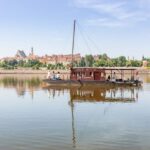
You’ll enjoy views of the riverbank before exploring. The neighborhood has Belle Époque buildings and traditional courtyards, plus a strong local identity. One of the most useful things about this stop is that it shows the city’s present-day character without forcing it to stay in museum mode. Praga also gets attention now as a creative district, with far less mass tourism than central Warsaw.
This segment lasts about 30 minutes, so you have more time to absorb the neighborhood feel. If you like wandering a bit and thinking about how culture grows after conflict, Praga is where that idea becomes real.
Śródmieście and 1989: Rebuilding Under Communism, Then Changing Direction
Back in central Warsaw, you stop near the former Polish Communist Party headquarters at Śródmieście. This is the “postwar rebuild” chapter. Your guide explains how communist authorities faced the challenge of rebuilding a destroyed capital after 1945.
Architects aimed to create a modern, functional city. But their plans also had to fit Soviet-inspired ideological demands. As you explore the area, you’ll see what those compromises look like in everyday streetscape form.
Then the tour finishes with the turning point of 1989—when the Solidarity movement and Pope John Paul II played key roles in ending communist rule. Warsaw then shifted again toward democracy and capitalism, and the city underwent another dramatic transformation.
I like that the ending isn’t a clean “and then everything got better” story. It’s more honest: Warsaw’s past keeps steering the present, and the architecture and urban design reflect politics more than you’d expect.
Price and Value: Is $133.08 Worth It?
At $133.08 per person for about 3 hours, you’re paying for more than walking sightseeing. You’re getting:
- Hotel pickup and drop-off (time saved, especially on day one)
- A small group (up to 8 per minibus, max 39 total)
- Multiple WWII-linked stops across several neighborhoods
- A guide who uses visual aids like historical photos
- Transfers between areas, so you’re not piecing together transit on the fly
The best value here is the “interpretation” part. Anyone can follow a map to famous points. What you’re buying is someone helping you connect locations to how life was lived—especially in the ghetto areas where the city doesn’t broadcast the truth in obvious signage.
On food value: some review notes mention a stop connected to local bakery and drinks, and even an authentic Polish cafe for lunch plus cucumber vodka. That may vary by day and guide flow, but it’s a good sign the tour can include simple, local tastings rather than only standing and staring.
One pricing reality check: this is not an all-day museum crawl. The stops are timed. If you want long, sit-down depth at memorials, museums may still be worth adding later.
What to Expect From the Guides (And Why It Changes Everything)
The guide quality shows up repeatedly in reviews. Names like Tom, Marcin, Karol, Mark, Arturo, and Luke come up with the same pattern: people describe guides as engaging, funny, and ready to answer questions.
That matters because the subject matter needs control. WWII stories can go flat if the guide just lists facts. On this tour, the strong reviews suggest the guides keep things moving—using photos, explaining why a place matters, and adjusting when you ask for more scene-setting.
One review also praised flexibility to meet interests. That’s worth your attention if you’re the kind of traveler who wants to ask “why here?” after you see something that doesn’t seem obvious.
Comfort Notes: Shoes, Weather, and Vintage Van Reality
This tour is partly walking. You’ll also be in transit for the transfers, since vehicles are mainly used to move between locations. The operator says wearing comfortable clothing and suitable footwear is important.
In winter, minibuses are heated, which helps. But classic minibuses may not have air conditioning, and some may not have seat belts. So plan for physical reality, not wishful thinking: bring a layer, wear shoes you can stand and walk in, and keep a light jacket handy even in shoulder seasons if you tend to get cold.
Also, if you’re traveling with kids: the tour accepts adults and children over 150 cm. For a child under that height, seat boosters are mandatory in Poland, and you need to check availability in advance.
Who This Tour Fits Best (and Who Might Want Something Else)
This is a great match if you:
- Want a first-day orientation to Warsaw, with a human-sized group
- Like history tied to streets and buildings, not only museum labels
- Prefer guided storytelling with photos, especially for ghetto sites
- Appreciate a balanced arc: WWII, the rebuild, then the shift of 1989
It might feel less ideal if you:
- Get overwhelmed by heavy WWII themes and want lighter sightseeing only
- Hate short stops and would rather spend longer at fewer places
- Expect modern comfort features like air conditioning in every vehicle
If you fall in the middle, you can still make it work. Wear layers, set your emotional expectations, and treat the tour like a strong “map + meaning” starter.
Should You Book Warsaw Behind the Scenes?
If you want one tour that connects Warsaw’s streets to the events that shaped them, I think this is a smart buy. The hotel pickup, small-group feel, and guide-led storytelling are the big reasons it works, and the mix of WWII sites plus Praga’s prewar atmosphere gives you a fuller sense of the city than a single-spot tour would.
Book it if you’re ready for real history presented clearly and respectfully, and if you want to get oriented quickly. Skip it if your ideal Warsaw day is mostly about long museum time or you want to avoid the hardest chapters entirely.
If you’re torn, here’s the practical approach: if your schedule allows only one guided “behind the scenes” experience in Warsaw, this one is built for exactly that.
FAQ
How long is the Warsaw Behind the Scenes tour?
The tour is about 3 hours.
Is hotel pickup included?
Pickup is offered, and pickup and drop-off service is available only for hotels listed above.
What language is the tour offered in?
The tour is offered in English.
How big are the groups?
It’s a small-group tour. Each minibus accommodates up to 8 passengers, and the overall tour has a maximum of 39 travelers.
Is the tour available if I’m traveling alone?
A solitary traveler may join if there is another booking for at least 2 people. The minimum number of people required to launch the tour is 2.
What should I wear?
Wear comfortable clothing and suitable footwear, since there are walking segments at each stop.
Will the vehicles have air conditioning and seat belts?
Some vintage minibuses are not equipped with air conditioning, and some do not have seat belts (which is permitted for historic vehicles). Vehicles have heating for the winter season.
Can I cancel and get a refund?
Yes. You can cancel up to 24 hours in advance for a full refund. Canceling less than 24 hours before the experience start time does not get refunded.