REVIEW · WARSAW
Tour of the Warsaw Ghetto
Book on Viator →Operated by PolinTours · Bookable on Viator
Walking the Warsaw Ghetto makes the past real. This 3-hour route links major sites with clear, respectful storytelling in English. You’ll also start with hotel pickup (city center) using a PolinTours sign.
What I like most is the way the tour anchors you at places you could miss on your own: the surviving Nozyk Synagogue (still operating) and the street-level fragments tied to the ghetto’s daily life. You also get practical context at the places that shaped the tragedy, including Umschlagplatz and key memorial points tied to the uprising and deportations.
One thing to consider: it’s a lot of time on your feet. You’re looking at about 2.5 hours walking plus around 30 minutes of bus/tram/underground, and the tour is not suitable for children. Also, synagogue visits are skipped on certain days (Friday afternoons from 1 p.m., Saturdays, and Jewish holidays).
In This Review
- Key highlights at a glance
- Why this Warsaw Ghetto route works in just 3 hours
- Nozyk Synagogue: a survivor you can still step into
- Próżna and Waliców: street corners that still tell the story
- Chłodna Street and the bridge symbolism between ghettos
- Umschlagplatz: the place where deportation planning became reality
- POLIN Muzeum Historii Żydów Polskich: what the tour includes (and what it doesn’t)
- Willy Brandt’s Kneefall point, Mila 18 memorial, and Pawiak Prison
- Pace, transport, and getting the most from your time
- Price and value: what about $102.78 gets you
- Who should book this tour (and who should skip it)
- Should you book this Warsaw Ghetto Tour?
- FAQ
- How long is the Warsaw Ghetto Tour?
- Is hotel pickup included?
- Do I need to pay extra for Nozyk Synagogue?
- Is the main POLIN Museum exhibition included?
- Will you visit the synagogue on every day?
- How much of the tour is walking?
- Is this tour suitable for children?
Key highlights at a glance
- Nozyk Synagogue visit (admission not included; it’s still in operation)
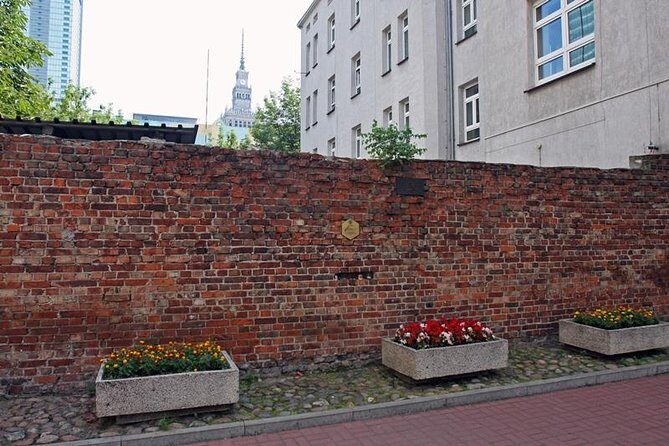
- Real street corridors at Próżna and Waliców, including surviving wall fragments
- Chłodna Street bridge symbolism—the connection between the small and big ghetto
- Umschlagplatz—where the Final Solution was put into practice
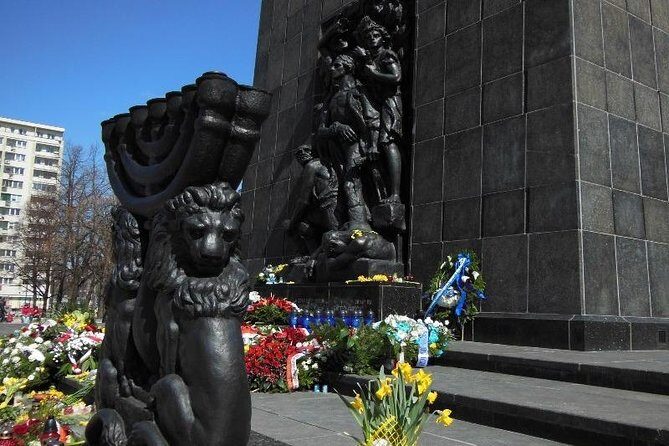
- POLIN Museum area stops with the Ghettohelden Memorial and Willy Brandt’s Kniefall point
- Memorial and museum moments at Mila 18 and Pawiak Prison Museum
Why this Warsaw Ghetto route works in just 3 hours
This is not a museum-in-one-building experience. It’s a guided walk through the locations where Nazi policies became daily reality—then the route stops so you can process what you’re seeing.
The timing is a big part of the value. You’ll spend about 2.5 hours on foot, then use public transport for part of the circuit (around 30 minutes total). That keeps the tour moving without turning it into a rushed bus ride where you barely notice the surroundings.
I also like the “begin-to-end” feeling. You go from the surviving synagogue and ghetto neighborhoods, toward the mechanisms of deportation, and then into the memorial landscape tied to resistance. If you’re short on time in Warsaw, this structure helps you build a clear mental timeline.
You can also read our reviews of more tours and experiences in Warsaw.


Nozyk Synagogue: a survivor you can still step into
The tour starts at Nozyk Synagogue, described as the only synagogue that survived World War II and remains in operation. That detail matters. It’s not just a site marker—it’s a functioning place of Jewish life, which adds emotional weight to everything you’ll learn next.
You’ll have about 15 minutes there. Expect to hear how Jewish religious and community life persisted right up until it was crushed, and why the survival of this building is so meaningful.
Practical catch: Nozyk Synagogue admission is not included. The tour lists an extra fee of €5.00 per person. If you want the smoothest morning, have that amount ready.
One more scheduling note: on Friday afternoons (from 1 p.m.), Saturdays, and Jewish holidays, the tour is conducted without visiting the synagogue. So if Nozyk Synagogue is top of your list, pick your day carefully.
Próżna and Waliców: street corners that still tell the story
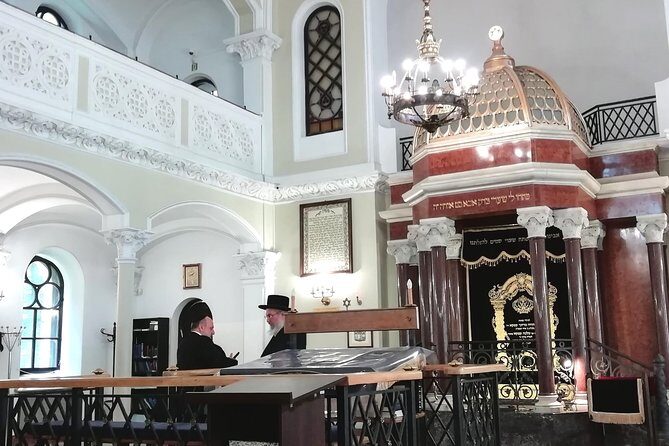
After Nozyk, you move into the older ghetto geography—Próżna and then Waliców. These stops are designed to feel like walking through “the last surviving streets and neighborhoods” within the ghetto.
At Próżna, you get around 20 minutes. This is where the guide helps you picture what changed when the ghetto became a closed system: how neighborhoods were structured, how daily routines shifted, and how people tried to live inside impossible limits.
Then Waliców gives you about 15 minutes focused on surviving wall fragments. This is the kind of stop that’s hard to understand at a glance, especially if you’re used to sightseeing. With a guide, the wall becomes a timeline: origins of the ghetto, everyday life under occupation, and the 1943 uprising.
In practice, these neighborhood stops are where you’ll start connecting facts to real space—so later memorial points hit harder.
Chłodna Street and the bridge symbolism between ghettos
At Chłodna Street, you stop at the point where the bridge between the small and big ghetto once stood. This bridge is described as a symbol of the Warsaw ghetto, and that’s exactly what you’ll want to pay attention to during the stop.
You get about 20 minutes here, and the guide ties the location to how the ghetto was organized—physically and psychologically. The stop also connects to pop-culture familiarity: it’s linked to scenes associated with The Pianist, including the character Władysław Szpilman.
Even if you’ve seen the film, the real-world location often reshapes what you thought the story meant. The bridge isn’t just a set piece—it’s a reminder of controlled movement and forced separation.
If you’re the type who likes learning by mapping details, this is one of the best stops on the route. It helps you orient the entire experience.
Umschlagplatz: the place where deportation planning became reality
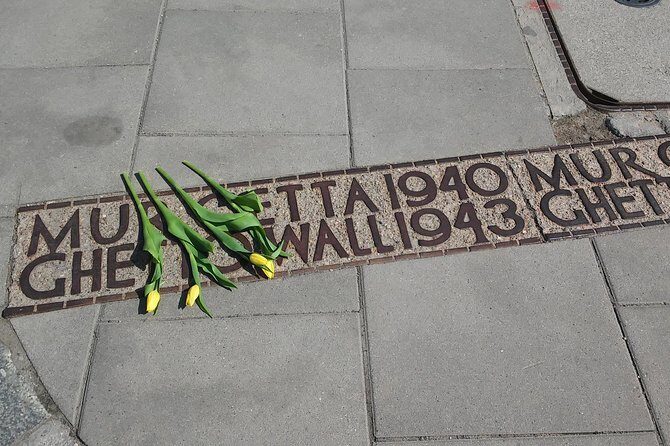
Umschlagplatz is one of the most serious stops on the tour. You’ll get about 15 minutes here, focused on the real places where the “Final Solution” plan was put into practice.
This stop isn’t framed as abstract history. It’s grounded in purpose: how the deportations worked, and why Umschlagplatz later became symbolic. The guide’s job is to connect the logistics of persecution to the human cost—without turning it into a lecture you can tune out.
One thing I appreciate is how the route positions Umschlagplatz after you’ve seen everyday ghetto life sites. That makes the contrast sharper. You’re not jumping straight from buildings to mass murder. You’ve already learned what life was like before the mechanisms took over.
If you want to keep your brain from melting, prepare for this stop as your “breathing space moment.” It’s normal if you feel slowed down here.




POLIN Muzeum Historii Żydów Polskich: what the tour includes (and what it doesn’t)
This tour includes a visit to the POLIN Museum area, but it specifically says you will not visit the main exhibition inside the museum.
You’ll get about 15 minutes connected to the museum grounds and symbolism, including the Ghettohelden Memorial. The guide also ties it to Willy Brandt’s famous Kniefall (his kneeling gesture), which is a key visual marker in post-war memory.
Here’s the practical implication: if you care about museum exhibits, plan extra time. The tour recommends doing the main exhibition separately with audio guides (noted as available in German), and you should allow about 2.5 hours for that.
Opening hours included in the tour info are:
- Mo., Do., Fr.: 10.00 am to 6.00 pm
- Tue.: closed
- Wed., Sa., So.: 10 a.m. to 8 p.m.
The tour ends at the POLIN Museum address (Mordechaja Anielewicza 6), so you can step right into your next phase of visiting without having to re-navigate the city.
Willy Brandt’s Kneefall point, Mila 18 memorial, and Pawiak Prison
The last stretch shifts from ghetto geography to memory and aftermath.
At the Pomnik Willy’ego Brandta, you’ll spend about 10 minutes at the spot associated with Brandt’s kneeling gesture. This stop acts like a hinge: it’s where the story leaves wartime implementation and turns toward international recognition and remembrance.
Then the tour moves to the Memorial at Mila 18, with about 10 minutes at the former location of the bunker at Miła Street 18. This is tied to the events of the resistance and the people who fought back. It’s a short stop, but it has a clear emotional purpose.
Finally, you finish at Pawiak Prison Museum for about 10 minutes. You’ll learn about the prison and what it represented in the broader system of oppression.
This section also matches the way the tour is paced. The walking time has already done its work, so these shorter stops help you process without keeping you in “go, go, go” mode.
Pace, transport, and getting the most from your time
The format is mixed: it’s partly walking and partly public transport. You’re about 2.5 hours on foot and about 30 minutes by bus/tram/underground. If you have tight mobility or you’re traveling with heavy bags, I’d keep your packing light for this day.
The tour also starts and ends at specific points. The start is Próżna 11, 00-107 Warszawa, and it ends at POLIN Museum (Mordechaja Anielewicza 6, 00-157 Warszawa).
Pickup is offered with conditions:
- If your hotel is in the city center, the guide picks you up at the reception.
- If you’re in an apartment or outside the city-center pickup area, you wait outside.
- The guide carries a sign: PolinTours.
Another small but helpful detail: the order of visits is adapted to where your hotel is, so the experience should feel less like a rigid route and more like a planned circuit.
Because the topic is heavy, I recommend bringing water and using the guide’s pauses. If you’re tempted to rush ahead for photos, slow down. Some of these locations don’t reward a quick snapshot.
Price and value: what about $102.78 gets you
At about $102.78 per person for roughly 3 hours, this tour isn’t “cheap,” but it’s also not trying to be. The value comes from several things you can’t easily replicate on your own in the same way.
First, it’s private for your group—so you don’t get stuck with a random pace or questions answered only for someone else’s interests. The tour info states it’s private, and your group is the only group participating.
Second, you get hotel-area pickup where available, plus mobile ticketing. That’s less stress on a day when you’ll already be mentally overloaded.
Third, the route uses city space as the curriculum. That matters because Warsaw has an “everything is within sight” feel, but the meaning isn’t always obvious. Here, the guide provides the missing links—why a street fragment matters, why a bridge site is symbolic, why a specific square became a turning point.
The only real extra cost you should plan for is the Nozyk Synagogue admission (€5.00 per person). Everything else listed for stops is noted as free.
Lastly, this tour is booked an average of 64 days in advance, and it carries a 5-star average rating from 119 reviews in the provided details. That doesn’t guarantee your guide will be perfect, but it’s a strong sign the format lands with people.
Who should book this tour (and who should skip it)
This is a strong pick if you want a structured, respectful introduction to the Warsaw Ghetto sites without spending an entire day in one museum hall. It’s also a good choice if you like learning with photos and maps—the tour description notes that visual material is used to help you see how neighborhoods looked before destruction and how they changed afterward.
If you’re a fan of WWII history, the guide-led sequencing helps you understand origins, daily life, resistance, and the machinery of deportation in one arc.
On the other hand, it’s not suitable for children, so plan a different activity if you’re traveling with kids. Also, it’s not ideal if you dislike long walking days on serious topics.
English is available, and it’s noted as near public transportation, which is helpful for planning if you’re not staying in the city-center pickup zone.
Finally, I’d treat it as a “start your memory work” tour. After you leave POLIN’s grounds, consider adding time for the main POLIN Museum exhibition with audio guides, since the big indoor portion isn’t included here.
Should you book this Warsaw Ghetto Tour?
Book it if you want a clear, guided walk through the key Warsaw Ghetto locations with real-world stops that make the story easier to hold in your head. The route is short enough to fit a busy itinerary, but structured enough that you don’t feel lost when you hit places like Waliców wall fragments or Umschlagplatz.
You might want to skip it (or add a different format) if you’re not up for 2.5 hours on foot and you need something more relaxed. Also, if your travel dates include Friday afternoon after 1 p.m., Saturdays, or Jewish holidays, know that the tour skips visiting the synagogue, so Nozyk Synagogue may not be part of your experience.
My practical final advice: pair this tour with the POLIN Museum main exhibition on the same day if you can. The tour gives you the “where and why.” The museum gives you the “what it was really like,” and the two together make the overall picture click faster.
FAQ
How long is the Warsaw Ghetto Tour?
It runs for about 3 hours.
Is hotel pickup included?
Yes. Pickup from your hotel in the city center is included, and the guide uses a PolinTours sign. If you’re staying outside the city-center pickup area (like an apartment), you wait outside.
Do I need to pay extra for Nozyk Synagogue?
Yes. Nozyk Synagogue admission is not included, and the tour lists an extra fee of €5.00 per person.
Is the main POLIN Museum exhibition included?
No. The tour does not include the main exhibition. You’re advised to visit the main exhibition separately using audio guides (noted as available in German), with about 2.5 hours allowed.
Will you visit the synagogue on every day?
No. On Friday afternoons from 1 p.m., Saturdays, and Jewish holidays, the tour is conducted without visiting the synagogue.
How much of the tour is walking?
You should expect about 2.5 hours on foot, plus around 30 minutes of bus/tram/underground.
Is this tour suitable for children?
No. The tour info states it is not suitable for children.