REVIEW · KRAKOW
Lesser Poland Wooden Architecture Trail UNESCO Private Tour from Krakow
Book on Viator →Operated by Poland Active · Bookable on Viator
Wooden churches make the best kind of history. This Lesser Poland Wooden Architecture Trail links together UNESCO-listed wooden churches and related sacred buildings in the countryside, with a guide who explains how this building style took root in the region. I also like that you get hotel pickup and drop-off, so your day starts easy and stays focused on what matters: these churches.
The one thing to keep in mind is the pace. Expect a long outing (about 10 to 12 hours) with multiple stops and roughly half-hour visits, so if you want slow, lingering museum-style time in every church, you may feel short on-site time. Still, the tour is designed to balance seeing a lot with keeping it human.
In This Review
- Key points before you go
- Wooden Architecture in Lesser Poland: Why This Route Works
- 10–12 Hours from Kraków: Logistics That Keep It Comfortable
- The 6 Wooden Churches You’ll Visit (And What to Watch For)
- Lipnica Murowana: St. Leonard’s Church (late 15th century)
- Wooden XV-century church: the Church of the Visitation of Mary (30 minutes)
- Binarowa: Church of St. Michael the Archangel
- Sękowa: St. Philip and St. James the Apostles, the Pearl of Beskid Niski
- Owczary: Greek Catholic Church of the Protection of Our Most Holy Lady
- Kwiaton: Church of St. Parasceve
- Making It Inside: How to Use 30 Minutes Like a Pro
- Price and Value: Is $299.53 Worth It?
- Who This Tour Suits Best (And Who Should Think Twice)
- Should You Book This Wooden Architecture Trail from Kraków?
- FAQ
- How long is the Lesser Poland Wooden Architecture Trail tour?
- What does the tour cost?
- Is this a private tour?
- Is hotel pickup and drop-off included?
- What language is the tour offered in?
- Are entrance fees included?
- Are food and drinks included?
- Where does the tour start and end in Kraków?
- What is the cancellation policy?
Key points before you go
- Private group, English guide: Only your group, not a shared bus zoo.
- Up to 6 focused church stops: Plus the guide can adjust the day’s pace if you want to see more.
- UNESCO-linked wooden architecture: You’ll track the style across different towns and traditions.
- Mixed religious heritage: Catholic and Greek Catholic/Lemko churches all in one route.
- Free admission at the stops listed: You’re paying mainly for the guide and the ride, not ticket fees.
- Built-in time for breaks: The plan includes time to regroup and grab lunch.
Wooden Architecture in Lesser Poland: Why This Route Works
This is the kind of tour that makes you look twice at ordinary villages. Instead of big-city monuments, you get living architecture made from wood and shaped by local craft traditions. The big idea of the Lesser Poland Wooden Architecture Trail is simple: you’re not just ticking churches off a list. You’re learning how and why this style flourished across southern Lesser Poland, where religious communities and local builders produced buildings with a strong visual identity.
What I like about this approach is that it’s comparative. You’ll see wooden churches that reflect different periods and design choices, including late Gothic forms and the regional “how it was built” logic behind them. That makes the day feel coherent. Even if you’re not an architecture super-nerd, you’ll still come away able to describe what you saw: the proportions, the craftsmanship, and the way wood can look both delicate and serious at the same time.
You also get variety in spiritual and cultural background. Along the route you’ll visit churches tied to Catholic tradition as well as a Greek Catholic/Lemko tserkov. That mix matters because wooden church heritage isn’t one single story. It’s several stories happening in the same region, using similar materials but different religious communities and aesthetics.
You can also read our reviews of more private tours in Krakow


10–12 Hours from Kraków: Logistics That Keep It Comfortable
This tour is built around a full day. Starting from Krakow, you’ll ride in an air-conditioned mini-bus, then spend the day moving village to village. Hotel pickup and drop-off means you don’t lose time wrestling with public transit or figuring out how to get back on your own.
Timing is also part of the deal. The tour runs Wednesday through Sunday, and the pickup window is early (7:00 AM to 8:00 AM). For a day like this, early starts are worth it because you want daylight for the countryside roads and enough time for churches that may have changing visiting hours. Also, in a private tour, you’re not stuck with other people’s pacing. The guide can ask your group how fast you want to go, and you can adjust.
From the way the day is described, you should plan for short, concentrated visits. The listed stops are about 30 minutes each, which can feel like “quick photo and go” if you’re in a hurry. But the better way to think about it is focused browsing: arrive, get the guide context fast, step inside if possible, and then move on before you start losing momentum.
The 6 Wooden Churches You’ll Visit (And What to Watch For)
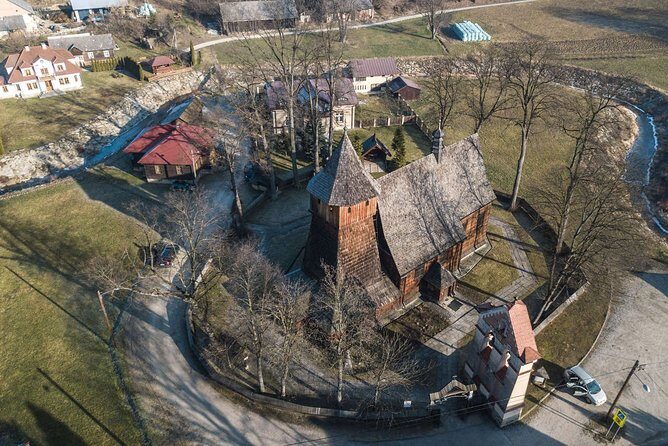
Here’s what the day centers on: a route that strings together six named stops, with free admission noted for each. Each one has its own style and historical flavor, so don’t treat them all as the same church repeated in different villages.
Lipnica Murowana: St. Leonard’s Church (late 15th century)
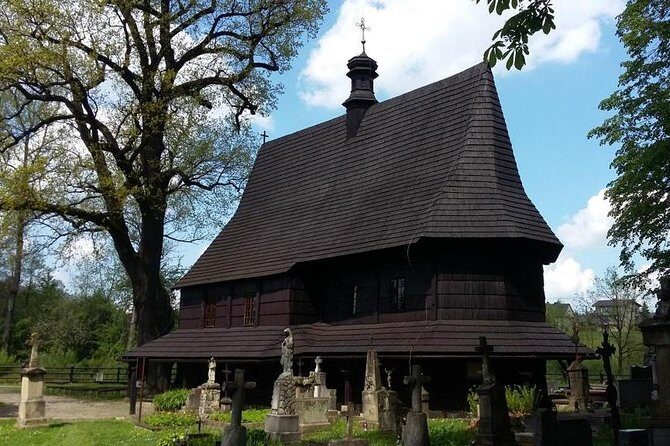
Your first stop is Lipnica Murowana and St. Leonard’s church, built at the end of the 15th century. This is one of the six wooden churches in southern Lesser Poland tied to the UNESCO World Heritage listing.
I’d approach this first stop like a warm-up. You’re getting your bearings on what “wooden Gothic” and regional craftsmanship look like in this specific area. If you only have energy for a quick sweep, still make sure you spend time inside if it’s open. Early in the day, it’s easiest to notice construction details because your eyes aren’t tired yet. Admission is free, so there’s no cost barrier to a proper look.
Wooden XV-century church: the Church of the Visitation of Mary (30 minutes)
Next comes a wooden 15th-century church, listed as Kosciół p.w. Nawiedzenia NajSwietszej Maryi Panny. Again, admission is free and the visit is about 30 minutes.
This stop is useful because it keeps the theme moving through time and variation. A single “wooden church day” can start feeling repetitive. This second church helps you see what stays consistent—wood form, sacred layout—and what changes—details tied to era and local preferences. If you want to get something out of every stop, ask your guide to point out one difference you might miss on your own.

Binarowa: Church of St. Michael the Archangel
Then you head to Binarowa for St. Michael the Archangel’s church. This is described as a very valuable example of late Gothic architecture in Poland.
This is the stop where late Gothic details may catch your eye most. Look for how the design tries to bring verticality and drama into wood construction. Even if you don’t know Gothic vocabulary, you can still “read” the structure: lines, proportions, and how light plays against wooden surfaces. If the church is open for interior viewing, it’s worth prioritizing that moment rather than only photographing the exterior.
Sękowa: St. Philip and St. James the Apostles, the Pearl of Beskid Niski
The next church is in the village of Sękowa: St. Philip and St. James the Apostles. This one is called the Pearl of Beskid Niski, and it was built in the beginning of the 15th century.
Why this one gets a nickname matters. Names like this usually signal a combination of beauty and distinctiveness. In practice, it means you should treat it as a “slow down” stop. If you’re choosing how to spend your energy, I’d spend a few extra minutes here if the schedule allows and the church is open.
Because it’s also early 15th century, it can work like a reference point: you’ll compare it mentally to the later Gothic feel you may have seen at Binarowa. That contrast helps the day’s story land.
Owczary: Greek Catholic Church of the Protection of Our Most Holy Lady
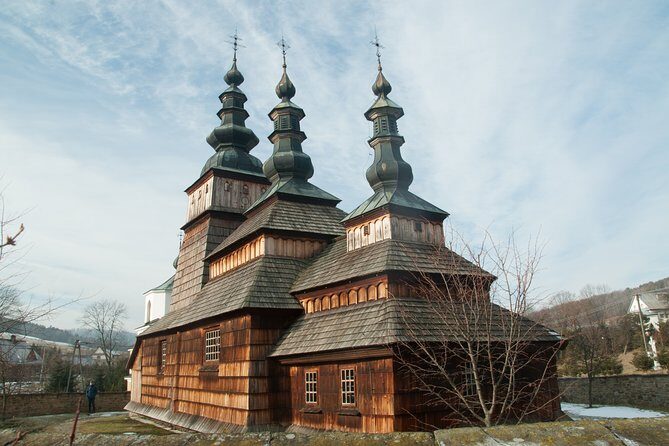
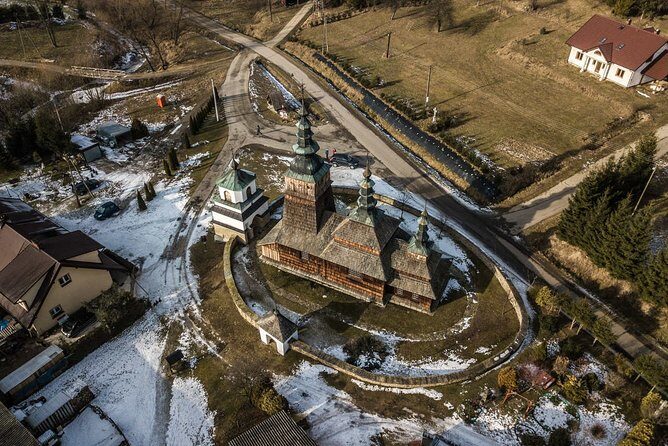
In Owczary, you’ll visit a Greek Catholic church: the Protection of Our Most Holy Lady. It’s described as one of the oldest Lemko tserkovs, erected in the second half of the 17th century.
This stop is where the tour’s cultural mix becomes real. A Lemko tserkov is a different tradition from a Latin Catholic church, even if the material—wood—looks familiar. The experience you’re getting here is not just architectural, but cultural: how communities built sacred spaces that felt meaningful for their own liturgical life.
Watch how the church feels different from the others. It may not be “more beautiful” in a universal way, but it will likely feel more specific to its community. Let the guide explain what to notice so you’re not guessing.
Kwiaton: Church of St. Parasceve
Your final named stop is the Church of St. Parasceve in Kwiaton. It’s described as one of the most beautiful wooden churches in Lesser Poland.
If you’ve been photographing all day, save some attention for this one. The last stop is easy to treat like a quick finish line, but the tour’s strongest ending is usually the place that leaves the most visual memory. If the church interior is accessible, take a minute to look up and around rather than only at the main view you’d naturally photograph from the entrance.
Making It Inside: How to Use 30 Minutes Like a Pro
The big advantage of this tour is not just where you go—it’s how you experience each stop. The plan is built around guided viewing, and the approach is time-conscious without being sloppy. You should expect that most churches can be visited inside with the guide’s help, and if you prefer self-paced listening, an audioguide option may be available.
Here’s how to use the time best:
- Arrive ready with questions. One good question beats five random ones.
- Choose your “first look” strategy: either exterior details first, then interior, or the reverse. Don’t do both halfway.
- Prioritize interior access where possible. These churches are meant to be experienced, not only seen.
- Don’t let the group rush you. In a private tour, the guide can adjust to your group’s pace.
The day also includes flexibility. The guide asks your group about the pace, and the schedule can stretch to see more than the core set on a given day. There’s also a practical safety net: the guide is expected to keep the group moving and to wait promptly if someone arrives on the late side at a stop.
Lastly, plan your lunch attitude. This tour includes about an hour for lunch at a village restaurant. If you want a straightforward local meal, Polish traditional dishes are the obvious choice.
Price and Value: Is $299.53 Worth It?
At $299.53 per person, this isn’t the bargain-bin version of a Krakow day trip. But it’s also not just transport and a checklist. This price includes:
- professional guide service
- hotel pickup and drop-off
- air-conditioned mini-bus transport
- entrance fees
Even better: the listed admissions at the six stops are marked as free. That means you’re mostly paying for the guide’s planning, timing, and on-the-ground explanation—exactly the part that turns wooden churches from “pretty buildings” into “I get what this means.”
So who benefits most from this pricing? You get good value if you:
- want a coherent story across multiple churches
- dislike navigating rural logistics on your own
- prefer a private setting where you can control pace
- care about understanding design, not just collecting photos
Where the price can feel heavy is if you’d rather travel independently and already know the architecture details. But for most visitors, paying for the guide and the ride is what makes the day work smoothly.
Also, the private nature matters. A shared group tour can mean your time at stops is slower or more constrained. Here, you can usually keep a rhythm that matches your interests.
Who This Tour Suits Best (And Who Should Think Twice)
This is ideal for you if you love:
- architecture that looks human-scale and crafted, not mass-produced
- religious heritage outside the biggest tourist circuits
- calm, guided pacing through countryside villages
It’s also a strong fit if you’re the type who wants to come away with a better ability to describe what you saw—why certain churches got attention, and how different traditions share the same wood-building language.
You might want to think twice if:
- you need long time inside each church to fully read everything
- you dislike early mornings and long day drives
- you’re mainly in it for a single famous site and not for the broader comparison
Because the visits are planned around short stops, the day favors focus over slow wandering. If that matches your style, you’ll have a good time.
Should You Book This Wooden Architecture Trail from Kraków?
I’d book it if you want one day that stitches together UNESCO-linked wooden churches, late Gothic examples, and a Lemko tserkov—without the hassle of arranging rural travel on your own. The private setup and guide-led pacing are the real value. You also get free admission at the listed stops, which lets your money go where it should: explanation, timing, and comfort.
If you’re someone who hates running from place to place, you can still succeed—just speak up with your guide about your pace from the start. The best days on this route are the ones where you choose how fast you want to see the churches, not the ones where you try to do everything at a sprint.
FAQ
How long is the Lesser Poland Wooden Architecture Trail tour?
It runs about 10 to 12 hours.
What does the tour cost?
The price is $299.53 per person.
Is this a private tour?
Yes. It’s a private tour/activity, with only your group participating.
Is hotel pickup and drop-off included?
Yes. Pickup and drop-off are included for accommodations in Krakow.
What language is the tour offered in?
The tour is offered in English.
Are entrance fees included?
Yes. Entrance fees are included in the tour price, and the listed stops show free admission tickets.
Are food and drinks included?
No. Food and drinks are not included.
Where does the tour start and end in Kraków?
It starts at Kiss&Ride Zyblikiewicza Mikołaja Zyblikiewicza 2, 31-029 Kraków, Poland, and ends back at the same meeting point.
What is the cancellation policy?
You can cancel for a full refund up to 24 hours before the experience’s start time.
If you want, tell me your travel dates and whether you’re okay with an early start. I can suggest the best way to plan the rest of your Krakow days around this outing.