REVIEW · KRAKOW
Krakow: Old Town – Kazimierz – Ghetto by Electric Golf Cart
Book on GetYourGuide →Operated by FHU PATART PATRYK TLAŁKA · Bookable on GetYourGuide
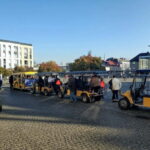
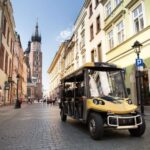
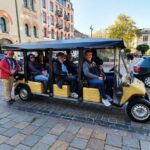
Old Krakow looks different from a cart. I like the electric golf cart setup for an easy overview, and I like how the tour blends history with meeting new people on a group ride. The Old Town, Kazimierz, and Podgorze route is paced to fit a 150-minute circuit, so you won’t have time for long, wandering stops if you want to linger.
What makes this feel especially practical is the mix of a live tour guide plus an audio guide system, in Polish or English. You’ll join at the Kiss&Ride parking opposite the Żabka store, then glide past a long list of major sights while the story keeps moving with you.
In This Review
- Key points worth knowing before you go
- Electric golf cart touring in Krakow: fast bearings, low effort
- Old Town, Kazimierz, Podgorze: what those neighborhoods mean on one route
- From Planty to Wawel: the Old Town highlights you’ll actually notice
- Kazimierz synagogues and street names: how the Jewish Quarter comes alive
- Podgorze and the former ghetto area: what to focus on on this leg
- Price and value: is $41 for 150 minutes fair?
- Language options and the guide experience you should expect
- Practical tips: what to bring and what will block you
- Should you book this Krakow Old Town–Kazimierz–Ghetto cart tour?
Key points worth knowing before you go
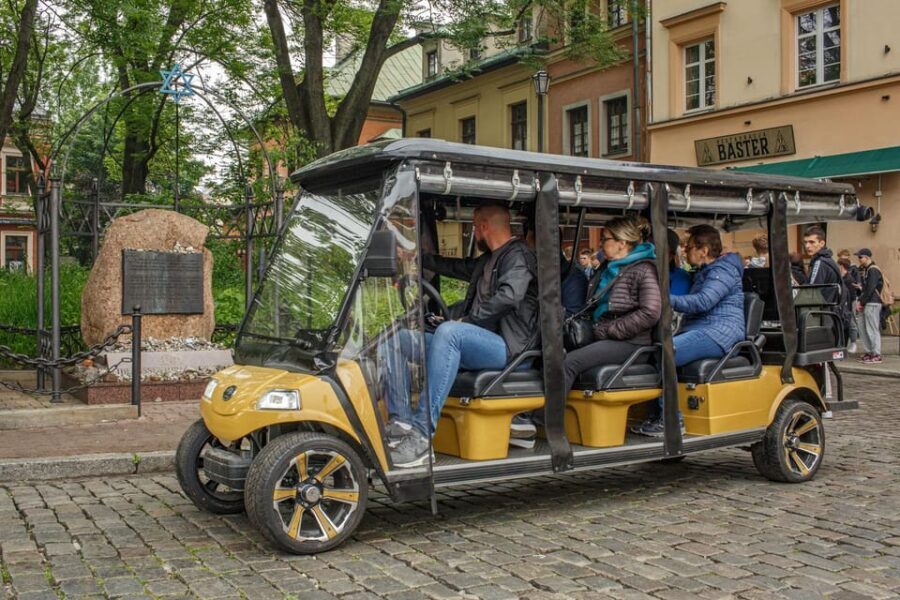
- Electric cart route: See far more than a walking-only plan in the same time window.
- Live guide + audio guide: You get human context plus language support (Polish or English).
- Three core districts: Old Town, Kazimierz, and Podgorze all in one run.
- Big names and defining places: Main Square, Wawel, multiple synagogues, and the former ghetto area.
- Strict rules for comfort and safety: No smoking, no bags, and there are specific age/height limits.
Electric golf cart touring in Krakow: fast bearings, low effort
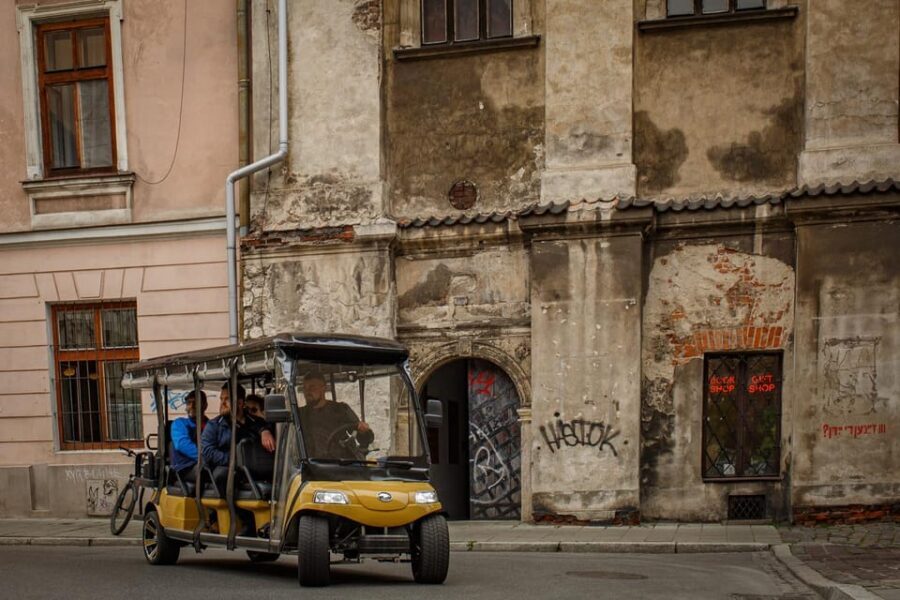
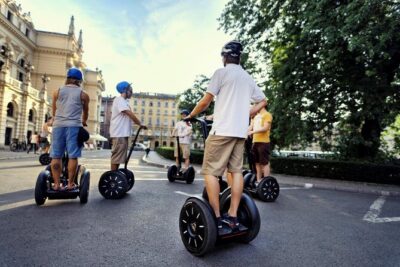
This tour is built around one idea: help you get oriented quickly without turning your day into a marathon. An electric golf cart keeps the ride smooth, and it changes the feeling of the city. You’re not only looking at streets and facades; you’re moving through neighborhoods as a connected whole.
I also like that the tour uses a live guide and an audio guide system together. That combo matters in Krakow because the story shifts dramatically from the Old Town center to Kazimierz and then to the former ghetto area. When information comes from two angles, it’s easier to keep up and less likely you miss something important.
One practical thing: the ride is planned for 150 minutes, so it’s a touring pace. If you want long photo pauses or extra time right at one corner, you’ll need to plan an additional block of time on your own later.
You can also read our reviews of more tours and experiences in Krakow.
Old Town, Kazimierz, Podgorze: what those neighborhoods mean on one route
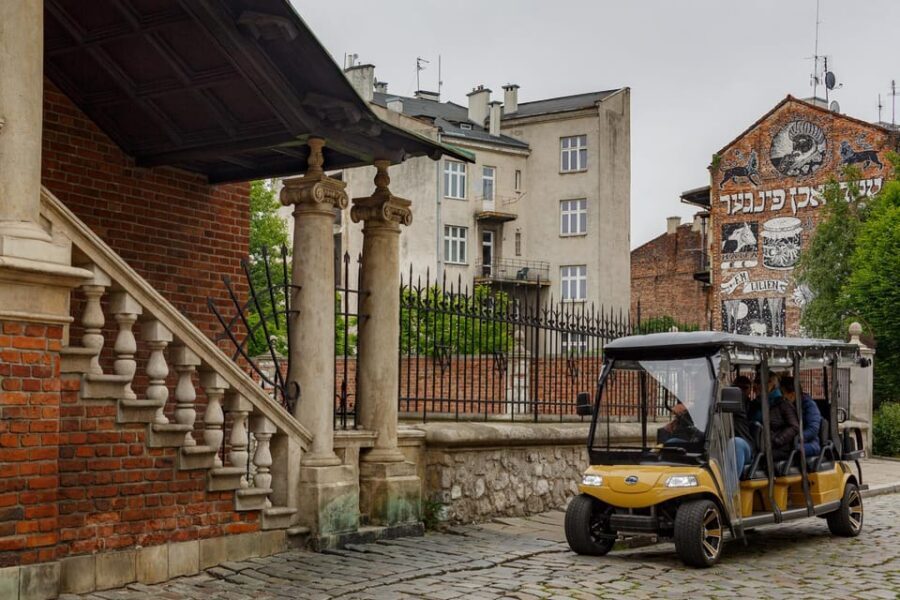
Krakow is easiest to understand when you treat it like three chapters. This tour does that by focusing on the Old Town first, then switching to Kazimierz (the Jewish district), and finishing in Podgorze, tied to the former ghetto area.
Old Town gives you the foundation: the city’s central landmarks, street patterns, and classic viewpoints. Kazimierz shifts the mood toward religious sites and everyday street-level history. Podgorze narrows the lens to memorial places tied to the ghetto story.
I like that the tour doesn’t treat these as separate day trips. You get a single flow, and that makes it easier for you to connect what you see with the explanations you hear while you’re still in the “right” context.
From Planty to Wawel: the Old Town highlights you’ll actually notice
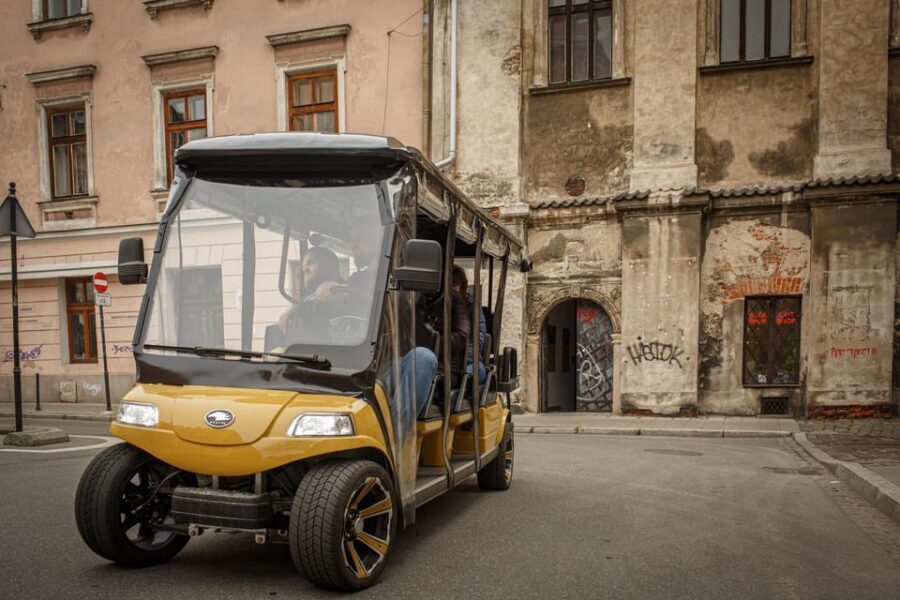
The day opens with the kind of sights that help you place Krakow on a map in your head. You’ll start with a history overview of the city, then move into the green ring of Krakow’s Planty. Seeing Planty early works because it sets up your sense of where the older city boundaries would have felt close.
From there, the tour keeps steering you toward iconic edges of the center. You’ll pass the Church of St. Cross, then the Słowacki Theater area, both of which help you recognize Krakow’s mix of religious and cultural landmarks. The route also takes you past former city walls and the Barbican, which are big clues for how the old defensive city looked and why the Old Town layout feels the way it does.
A short stretch later, you reach Jan Matejko Square, and the vibe becomes more monumental. As you continue, the Church of St. Florian and Sławkowska Street help you notice the layering of architecture styles around the center.
Next comes Czartoryski Museum, then St. John’s Street and Church. This is where the cart pace can actually help. You’re not stuck trying to read every detail at walking speed. Instead, you’re catching the main forms and names—exactly what you want early on.
Then the tour hits the heart of the center: Main Square. It’s a major visual anchor, and it’s also the right place to think, okay, this is the core everyone orbits. From there you move to Plac Szczepański, the Palace of Art, and St. Anne’s Church, along with Town Hall and the Franciscan Church.
The final Old Town payoff is Wawel Castle. Even if you don’t plan a separate visit to the castle interiors during this tour, seeing it from the route gives you a “north star” for your next day. You’ll know where to aim and what to build around.
Kazimierz synagogues and street names: how the Jewish Quarter comes alive
Kazimierz is where the tour’s story focus becomes very clear. As you shift into the Jewish Quarter, you get explanations that frame what you’re seeing—description of the Jewish district, plus the sequence of religious sites and street-level landmarks.
You’ll start with Skałka Church, then head past the Church of St. Catherine. These early stops matter because they act like signposts. They tell you that Kazimierz is not one single museum room; it’s a working neighborhood with landmarks that stand in for real community life.
Wolnica Square is next, including the Jewish City Hall. That’s a good moment to slow your brain down. It’s easy to think of history as only what happened in the past, but places like this remind you history also includes institutions, addresses, and civic spaces.
The route then moves to the Church of Corpus Christi and toward multiple synagogue stops. You’ll pass the Tempel Synagogue, the Kupa Synagogue, and the Isaac Synagogue. Continuing on, the tour brings you to Ciemna Street, then the Old Synagogue and Popper Synagogue.
Street names and building names do a lot of heavy lifting here. Even if you’re not reading a plaque at every stop, the audio guide system gives you context while the cart keeps you moving, so you can build a coherent mental map of Kazimierz instead of a pile of disconnected names.
One of my favorite ways this part pays off is through the mix of religious sites and everyday streets. You’ll also encounter Family House of Helena Rubinstein, Remuh Synagogue and the old cemetery, and a memorial stone tied to the Nissembaum Family Foundation. Those locations help you feel the blend of remembrance and continuity.
The tour also includes Old Jewish Shops. That’s a smart inclusion because it helps break the pattern of “only big landmarks.” It gives you a sense of the neighborhood as a place with daily life, not just a list of famous buildings.
Podgorze and the former ghetto area: what to focus on on this leg
Podgorze is handled differently from the cheerful “look and learn” energy of a classic Old Town loop. This section is tied to the former ghetto area, and the tour includes descriptions of the ghetto story and life in the ghetto as you move through the places connected to those themes.
You’ll reach Ghetto Heroes Square as a key memorial point. From there, the tour goes to Pharmacy under the Eagle, described as the residence of Tadeusz Pankiewicz. That combination of place name and personal association helps you anchor the story in a specific location you can point to later.
Next comes Oskar Schindler’s history, followed by Life in Ghetto descriptions. The cart route is long enough here to keep the pace from feeling chaotic, but it’s still guided and structured so you can track what the audio is explaining at each stage.
You’ll also see the Ghetto Wall, which is the kind of sight that changes how you interpret everything around it. Even without lingering, it’s a strong visual reminder that the story isn’t abstract. It’s tied to real physical boundaries.
The tour finishes this major arc with Church of St. Joseph. Ending with a church may feel like a tonal shift, but it also helps you transition from the most painful part of the story back into the broader city you’ll continue exploring after this tour.

Price and value: is $41 for 150 minutes fair?
At $41 per person for about 150 minutes, you’re paying for three things at once: an electric vehicle tour, a live tour guide, and an audio guide system. In other words, you’re not just paying for information. You’re also paying for transportation and a guided pacing strategy.
That’s where the value really shows. If you tried to replicate this yourself with multiple meetups, taxis, or a patchwork of bus stops, it would likely cost more in both money and time. Here, the cart covers a lot of ground while the guide keeps everything linked.
The price also makes sense for first-time visits. The tour isn’t trying to replace every museum or walking tour. It’s meant to get you oriented and give you a structured overview across Old Town, Kazimierz, and Podgorze—exactly the kind of day that sets up your follow-on planning.
Language options and the guide experience you should expect
The tour is offered with Polish and English. The live guide also runs in Polish and English, and the audio guide system supports your chosen language during the ride.
Names come up in real-life experience. Past participants have highlighted guides such as Radar and Natalie for being clear and well prepared, and they’ve also praised a young man guide for strong expertise. The consistent theme is that you’ll get explanations that keep the long list of stops from feeling random.
If you care about understanding rather than just seeing, the language setup is a big plus. You can keep your attention on what you’re looking at while the audio does the heavy work of connecting sights to story.
Practical tips: what to bring and what will block you
Bring water. This tour doesn’t list any other required items, but staying hydrated helps because you’ll be on the move for the full 150 minutes.
Keep your packing light. Smoking isn’t allowed in the vehicle, and bags are not allowed. Electric wheelchairs, bikes, and alcoholic drinks in the vehicle are also not allowed. If you’re planning a separate museum or a lunch after, consider what you’ll carry before you meet the cart.
There are also strict suitability limits. The tour data lists many age restrictions (including children under 2 and also limits up through under 18) and specific height and age constraints. If you’re traveling with kids or if age matters for your group, double-check the operator’s suitability rules before booking.
Should you book this Krakow Old Town–Kazimierz–Ghetto cart tour?
Book it if you want an efficient Krakow overview that connects Old Town, Kazimierz, and the former ghetto area in one organized sweep. This is especially useful on a first trip, or on a day when you want to reduce walking but still want strong context from both a live guide and an audio guide system.
Skip or plan carefully if your priority is long independent exploration at one location. The 150-minute format is designed to keep the route moving, not to give you hours in one square or outside one church.
If you want a day that helps you understand where to go next in Krakow—without turning your feet into a problem—this electric golf cart tour is a smart choice.