REVIEW · KRAKOW
Krakow Jewish Quarter and Ghetto Tour by Electric Golf Cart
Book on Viator →Operated by Cracow Boat · Bookable on Viator
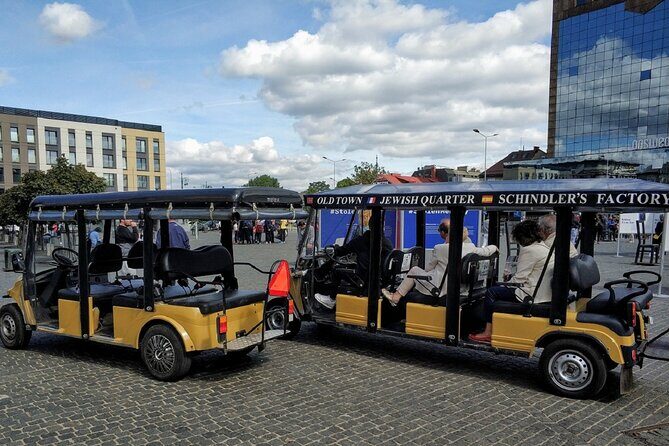
A golf cart saves your feet in Kazimierz. This tour is interesting because it strings together the Jewish story of Krakow, from Szeroka Street to the former ghetto area, with stops that actually let you step inside buildings. I like the electric comfort for a 1.5-hour route that would take much longer on foot. I also like that the narration is built in with an audio guide, so the history stays clear as you move. One drawback to consider: the schedule is tight, and some stops can feel like quick photo-and-look moments rather than long visits.
You’ll cover a lot—over 20 important cultural monuments in Kazimierz—in about 1 hour 30 minutes, and the driver speaks English. The group is kept to a maximum of 50 people, which helps the cart-boarding flow and keeps the tour from feeling chaotic.
In This Review
- Key highlights before you go
- Why an electric cart works so well in Kazimierz
- Meet at Mikołaja Zyblikiewicza: simple start, different end
- Szeroka Street: the Jewish heart of Kazimierz
- One of Poland’s oldest synagogues: what the stop reveals
- St Joseph Church over Podgórze Market Square: why it matters here
- The ghetto wall fragment: a short stop with long weight
- Plac Zgody to Umschlagplatz: where deportations began
- The pharmacy stop: small acts inside a brutal system
- Audio guide reality: listening clearly in a moving group
- Price and value: what $34.75 buys you
- Getting the most out of the stops (without feeling rushed)
- Who should book this tour?
- Should you book the Krakow Jewish Quarter and Ghetto Tour by Electric Golf Cart?
- FAQ
- How long is the Krakow Jewish Quarter and Ghetto Tour by Electric Golf Cart?
- What is included in the tour price?
- Is the tour offered in English?
- Where do I meet for the tour, and where does it end?
- Is hotel pickup or drop-off included?
- Can I cancel for a full refund?
Key highlights before you go
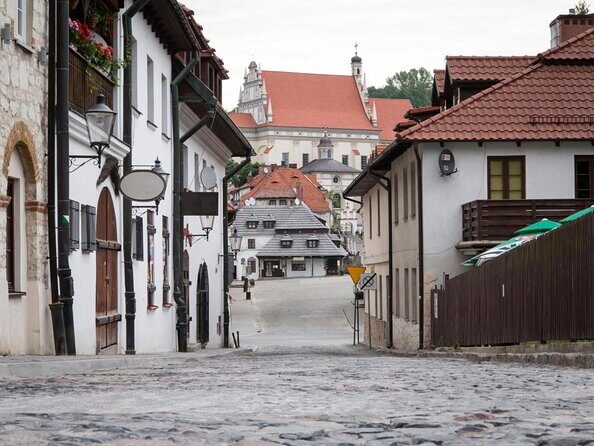
- Electric golf cart touring: easier pacing across Kazimierz and the Podgórze area, especially in hot or cold weather
- Szeroka Street focus: you learn why this street mattered, including the surprising fact that four synagogues once stood here
- Older synagogue stop: you get time at one of Poland’s oldest synagogues, preserved in notably good condition
- Ghetto wall fragment and plaque: a brief but powerful moment tied to the fate of the people imprisoned there
- Umschlagplatz at Plac Zgody: a key deportation-site landmark that you see in context, not just as a name
- Audio guide support: helps you follow the story even when you’re moving between short stops
Why an electric cart works so well in Kazimierz
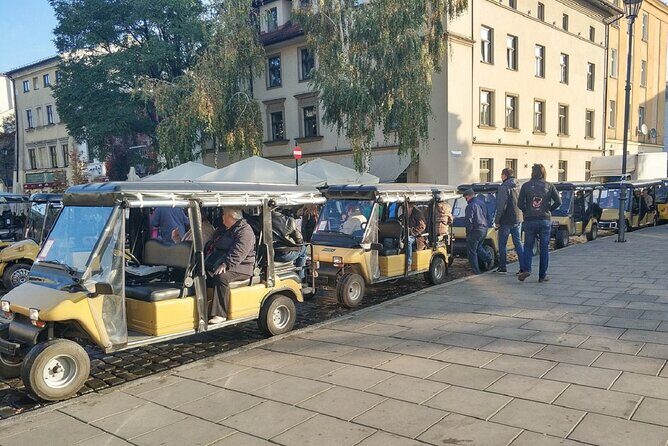
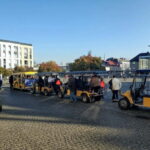
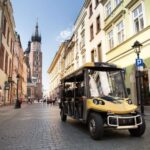
Kazimierz isn’t one neat straight line. It’s a web of streets, squares, and corners where the past and present sit side by side. A golf cart gives you the big win: you don’t have to burn half your energy simply getting around.
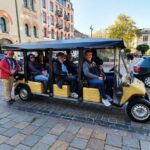
This tour is built for efficiency. In about 1.5 hours, you’re meant to see over 20 cultural monuments, and the cart helps you actually reach them all without turning the experience into a tiring endurance test. In the colder months, people mention the cart being warm; on hot days, it’s a major relief not to be walking between stops.
The other smart piece is that the route doesn’t just point. You get short windows to pop in and look at sites. That matters because some of the meaning of Kazimierz is visual—architecture, street layout, and what’s preserved.
One caution: because it’s fast-moving and time-boxed, you’ll likely want to plan a follow-up visit on foot afterward if you want slow, detailed browsing.
You can also read our reviews of more tours and experiences in Krakow.
Meet at Mikołaja Zyblikiewicza: simple start, different end
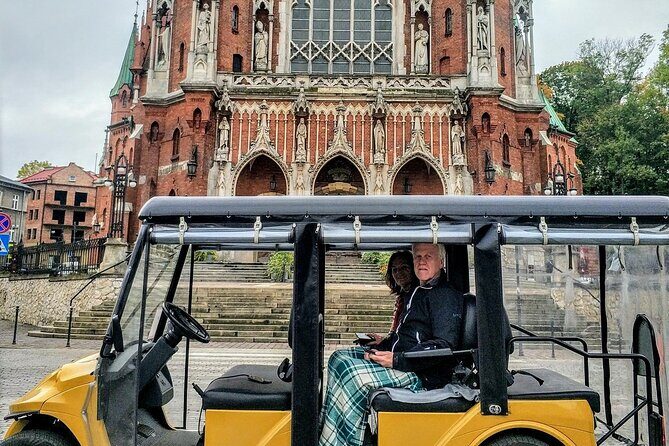
The tour starts at Mikołaja Zyblikiewicza 2 and ends at Mikołaja Kopernika 3. There’s no hotel pickup, so you’ll want to be on time at the meeting point.
Good news: it’s listed as near public transportation, so you won’t need a taxi plan just to get there. You’ll also receive a mobile ticket confirmation, and your booking is confirmed at the time of booking.
A practical tip: with a tour that ends at a different spot, I’d map out what you’ll do afterward. If you’re heading for dinner, allow a little buffer so you’re not rushing across the city at the end of something emotionally heavy.
Szeroka Street: the Jewish heart of Kazimierz
If you only knew Kazimierz as a “nice old neighborhood,” this is where the meaning snaps into focus.
Szeroka Street is described as the heart of Jewish Kazimierz. What makes the stop especially memorable is the detail that four synagogues once stood on this street, something described as unheard of elsewhere in Europe. That single fact gives you a mental picture: this was not a small cluster of buildings. It was a real center.
You’ll also connect Szeroka Street with cultural life. One part of the tour points out a location associated with the final concert of the Jewish Culture Festival—another reminder that this wasn’t only about worship and hardship. There was also music, public life, and community gathering.
What to do during your time here:
- Look at the street “corridors” where buildings feel close together. That’s part of why the area’s atmosphere is so specific.
- Take a slow look at signage and façades even if you’re not going inside every place. The tour’s narration is meant to help you read what you’re seeing.
- If you’re taking photos, remember that short stops mean you’ll need to decide quickly where to focus.
One of Poland’s oldest synagogues: what the stop reveals
The tour includes a stop on Szeroka Street at one of the oldest synagogues in Poland, preserved in such good condition that it still feels like something you can almost step back into.
This is where you get a real “look and understand” moment. When a building survives with its structure intact, it anchors the story. You’re not imagining an erased past; you’re looking at a physical witness.
Also, because the tour is paced to fit multiple sites, you may not get a long, museum-style visit. Still, even a brief look can be powerful—especially if the guide explains what made synagogues more than just religious spaces in Jewish life.
If you care about architecture, this is a good place to linger a minute and absorb details: entrance layout, how the interior is arranged (if you can go inside), and the way the building sits against the street.
St Joseph Church over Podgórze Market Square: why it matters here
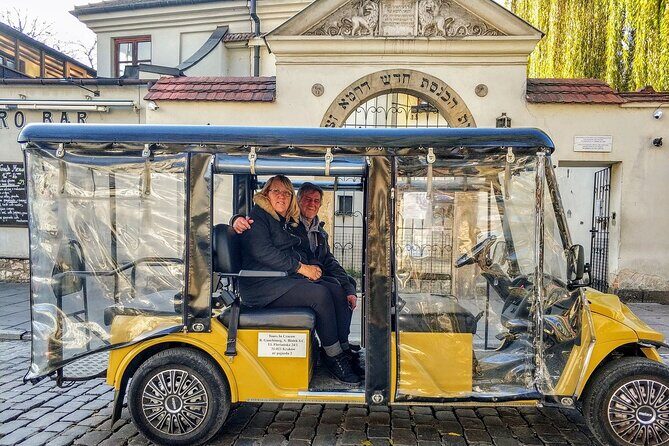
Kazimierz and nearby Podgórze are often remembered for Jewish history, but the city’s religious landmarks are part of the layered story. The tour includes the parish church of St Joseph, a recognizable devotional landmark that dominates Podgórze Market Square.
This stop connects past and present. The area is described as a central point that was incorporated into Krakow only in the 20th century. That timing helps you understand why neighborhoods and identities shifted over time—and why “where” matters, not just “what.”
You might also get time to view interiors. Some people find this adds depth; others wish the tour spent more minutes in explicitly Jewish sites. Either way, expect that St Joseph is a strong visual anchor in the route, not a random detour.
My practical takeaway: if you want the Jewish focus to feel strongest, use the narration time to ask yourself what the church stop is doing in the story. It’s usually meant to show how different communities and eras share the same physical geography.

The ghetto wall fragment: a short stop with long weight
Then the tour shifts. You see a small fragment of the original wall around the former ghetto, preserved with a commemorative plaque attached.
Even when it’s just a small piece of masonry, the impact can land hard. That’s because it’s not a dramatic reconstruction. It’s a leftover boundary—one of the few physical reminders that still exists in the everyday city.
This is the moment I’d treat as a slow down point. Put your phone away for a minute. Read the plaque. Let the guide’s context settle before you move on. The tour is time-limited, so your attitude matters: quick scanning makes it lighter; respectful attention makes it meaningful.
If you’re sensitive to heavy historical content, this stop is likely the turning point of the tour.
Plac Zgody to Umschlagplatz: where deportations began
Another landmark stop brings you to Podgórze district sites tied to the Krakow Ghetto. In 1941, the area was turned into the ghetto, and Plac Zgody (Concord Square) was designated Umschlagplatz under Nazi occupation—the place where Jews were forced to congregate before deportation.
This is one of the most direct “name-to-place” moments in the tour. You don’t just hear the terms. You stand at a location that carried them, and that changes how the information lands in your mind.
What I like about how this is handled is the framing around “everyday life next to world war.” That contrast is a key part of why sites like this matter: history isn’t only about battles. It’s about people waiting, hoping, and being moved like cargo.
Practical advice: if you’re traveling with kids or you’re someone who needs a mental break from intense topics, talk to each other before this segment about how you’ll handle the emotional weight.
The pharmacy stop: small acts inside a brutal system
One symbolic place on the route is tied to the then Polish pharmacy. The tour explains it acted as an asylum or embassy-like refuge, providing shelter during deportation and helping with messages or packages inside and outside the ghetto.
This detail is important because it brings nuance. Even in a place defined by confinement and loss, there were human actions—sometimes hidden, sometimes risky—that helped people survive and communicate.
If you feel the tour is moving fast, this is the stop that can re-center the story. It shifts from only describing tragedy to showing how people tried to help each other.
Again, time matters here: you might not get a long explanation, so I’d listen closely and absorb what the pharmacy role means in practical terms—shelter, communication, connection.
Audio guide reality: listening clearly in a moving group
The tour includes an audio guide, and most people will benefit from it because it keeps the story consistent while you’re driving and transitioning between stops. On shorter visits, it’s easier to understand what you’re looking at when your narration is right there.
That said, one recurring theme in feedback is that audio can be less interactive than tours that use a louder, live narration. Since you’re sitting through a moving route, you may have limited chances for back-and-forth questions while you’re in motion.
My suggestion if you’re the type who likes to talk: save your questions for the stop moments when the guide is able to engage you, or use the audio narration to write down what you want to ask next.
Seat comfort also comes up. If you tend to get motion discomfort, try to get a position where you can look forward comfortably when you board.
Price and value: what $34.75 buys you
At $34.75 per person for about 1 hour 30 minutes, this tour sits in the value zone for a couple of reasons.
First, you’re getting transport by golf cart plus an English-speaking driver and an audio guide. That’s not just sightseeing; it’s guided context with built-in narration support.
Second, the route targets 20+ monuments, which is hard to match on foot without extending your day. If you have limited time in Krakow, this is exactly the kind of tour that helps you get the big picture fast—then decide what you want to return to later.
Is it cheap? No. But it’s not priced like a private bespoke experience either. It’s closer to a structured city orientation with heavy historical content.
My rule of thumb:
- If you want a quick, organized overview of Kazimierz and the ghetto sites, this is a solid deal.
- If you prefer slow, long interior visits and deep reading on-site, you may do better combining walking time with self-guided stops afterward.
Getting the most out of the stops (without feeling rushed)
Because the schedule is built around multiple locations, you’ll benefit from a small mindset shift. Don’t try to “finish the whole tour.” Instead, decide what you want to get from it.
I’d prioritize in this order:
- Learn what Szeroka Street was—community life concentrated into a few blocks.
- Sit with the ghetto boundary marker and the deportation context at Umschlagplatz.
- Use the pharmacy story to remember that help and communication still existed, even under extreme pressure.
Then, accept the trade-off: you’re seeing many places, but not every site becomes a long stay. That’s why this works best as a first or second pass, not your only Krakow Jewish history time.
Who should book this tour?
This is a good fit if:
- You want an organized way to cover Kazimierz plus the ghetto-related sites in a short window
- You’d rather ride in comfort than walk between clusters of locations
- You appreciate audio narration while you’re moving and want clear context without stopping every few minutes
It may be less ideal if:
- You want long interior visits focused only on Jewish buildings
- You strongly dislike headset-style audio or you need lots of room for questions on the fly
Most importantly, if you’re coming for the emotional and historical core, go in expecting that tone. This isn’t only about pretty streets—it’s about remembering specific people and events tied to specific ground.
Should you book the Krakow Jewish Quarter and Ghetto Tour by Electric Golf Cart?
If you want a time-efficient, guided way to connect the Jewish story of Kazimierz with the most crucial ghetto sites, I’d book it. The cart makes it doable in a tight schedule, and the route covers the key landmarks you’d otherwise struggle to stitch together quickly on your own.
I’d especially recommend it if you:
- Have limited time in Krakow
- Want a structured overview before returning on foot for deeper exploration
- Prefer a driver and audio guide to keep you oriented
Just keep your expectations realistic: short stops mean you’ll need follow-up time if you want to linger inside many buildings.
FAQ
How long is the Krakow Jewish Quarter and Ghetto Tour by Electric Golf Cart?
It’s about 1 hour 30 minutes.
What is included in the tour price?
You get an audio guide, transport by golf cart during the tour, and an English-speaking driver.
Is the tour offered in English?
Yes, it’s offered in English.
Where do I meet for the tour, and where does it end?
You start at Mikołaja Zyblikiewicza 2, 31-029 Kraków, Poland and end at Mikołaja Kopernika 3, 31-034 Kraków, Poland.
Is hotel pickup or drop-off included?
No, hotel pickup/drop-off is not included.
Can I cancel for a full refund?
Yes. You can cancel up to 24 hours in advance for a full refund. If you cancel less than 24 hours before the start time, the amount you paid will not be refunded.