REVIEW · KRAKOW
Krakow: City Sightseeing Tour by Shared or Private Golf Cart
Book on GetYourGuide →Operated by AiWTravel Aneta Czopek · Bookable on GetYourGuide
A golf cart tour in Krakow makes history feel close. You cover 24-plus stops in a tight 1.5 hours, moving from Old Town to Kazimierz and the former ghetto area with a guide who keeps the story moving. I like that it gives you an efficient overview without turning your day into a long walking test.
Two things I especially like: you get both a live guide (Polish or English) and an audio guide with many language choices, and the route connects medieval Krakow street scenes with the Jewish Quarter and Podgórze sites. One thing to consider: this is a moving sightseeing format, so if you’re hoping for long sits-down explanations at every stop, you might feel the pace is quick.
In This Review
- Key things to know before you go
- Price and what you really get for $55
- The golf cart approach: fewer steps, more city momentum
- Meet-up reality: how to avoid the biggest hassle
- Route highlights: from Planty Park to the Jewish Quarter and Podgórze
- Planty Park and the medieval-crakow orientation
- Skałka Church and the corridor of historic landmarks
- Wolnica Square and the Jewish city presence
- The synagogue sequence in Kazimierz
- Helena Rubinstein’s family house and Jewish everyday traces
- Memorial Stone of the Nissembaum Family Foundation
- Former ghetto area: from stories to specific locations
- What the guide style is like (and how humor fits in)
- Audio guide + live narration: a smart backup system
- Small group comfort: why it matters for questions
- Practical tips so the 1.5 hours feel worth it
- Should you book the Krakow golf cart tour?
- FAQ
- How long is the Krakow city sightseeing golf cart tour?
- What is included in the tour price?
- Are hotel pickup and drop-off included?
- What languages are offered for the live tour guide?
- Is there an audio guide if I do not speak Polish or English?
- How big is the group?
- Is the tour wheelchair accessible?
- Is luggage or large bags allowed?
- What places are covered during the tour?
Key things to know before you go
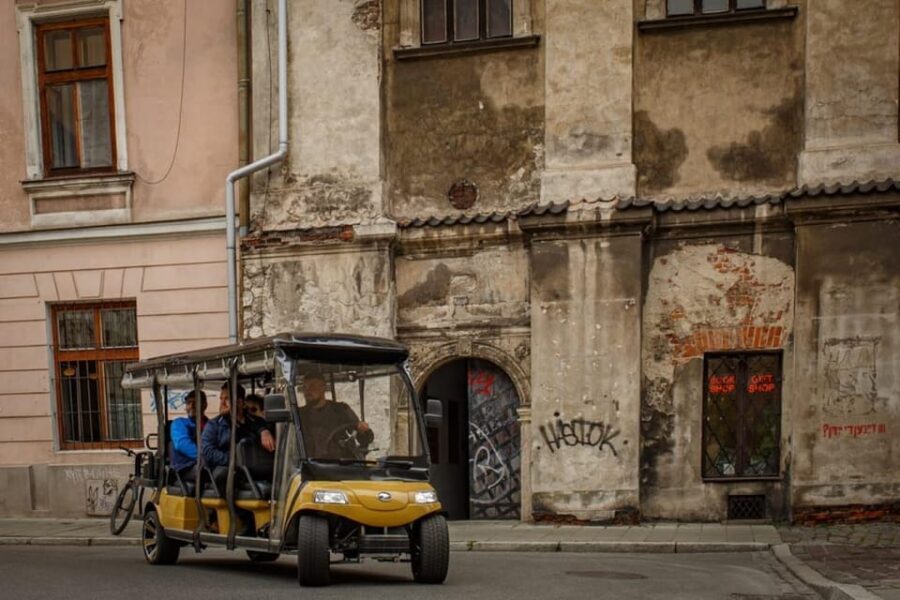
- Electric golf cart + small group (up to 10): easier sightseeing with time to ask questions
- Old Town to Kazimierz to Podgórze: one route that links medieval Krakow to WWII-era locations
- Live guide plus audio guide: you’ll hear the story in your language even when you’re moving
- 24-plus places in 1.5 hours: best if you’re short on time or want fewer steps
- No luggage or large bags: travel light for a smoother ride
Price and what you really get for $55
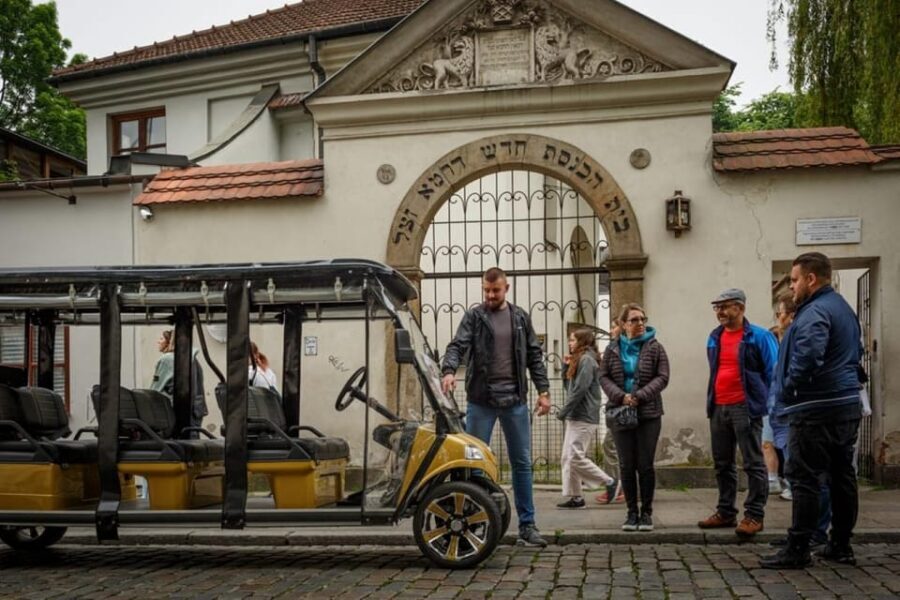
At about $55 per person for roughly 1.5 hours, the value here comes from what’s included: the electric golf cart, a driver, a live guide, and an audio guide. That matters in Krakow because getting between Old Town and the Jewish Quarter area can chew up time—especially if you’re doing it on foot or trying to stitch together separate attractions.
This is not a “sit in one place all day” tour. The pricing reflects a classic sightseeing idea: you’re paying to see a lot of important places efficiently, with context while you ride. You also get a small group setup (limited to 10), so you’re not drowned out by crowds.
The main trade-off is the format. Because you’re covering a lot of ground, explanations are designed to be clear and timely, not drawn out. If you love slow travel and deep, stop-by-stop storytelling for 45 minutes at a time, you may want to pair this with one slower add-on later.
You can also read our reviews of more city tours in Krakow
The golf cart approach: fewer steps, more city momentum
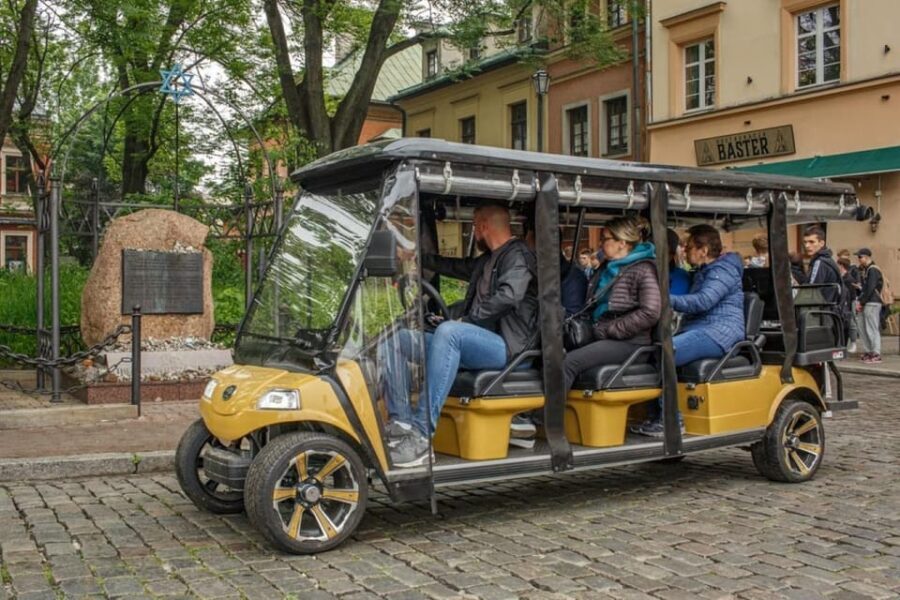
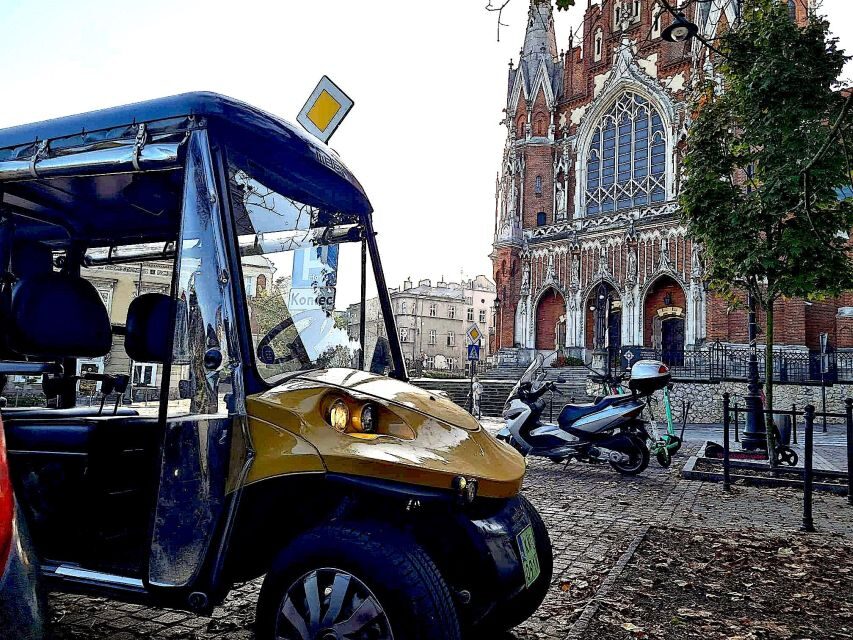
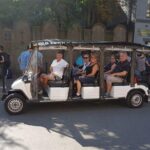
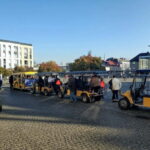
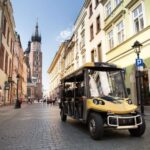
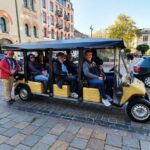
This tour is built for people who want to see Krakow without lots of walking. You’ll be on an electric golf cart for the bulk of the route, which is ideal if you’re traveling with limited mobility or you simply want to keep your energy for later in the day.
Even with a golf cart, you’ll still have moments where you’re outside, looking at buildings, plaques, and memorial spots, and those moments can still take a toll if you pack too many stairs or long museum days right before this. Bring comfortable shoes anyway—you’ll likely stand and look for stretches.
Also, be mindful of luggage: large bags and luggage aren’t allowed. If you’re coming from a hotel with bags still in tow, sort that first. Light carry makes everything easier at the meeting point and during the tour.
Meet-up reality: how to avoid the biggest hassle
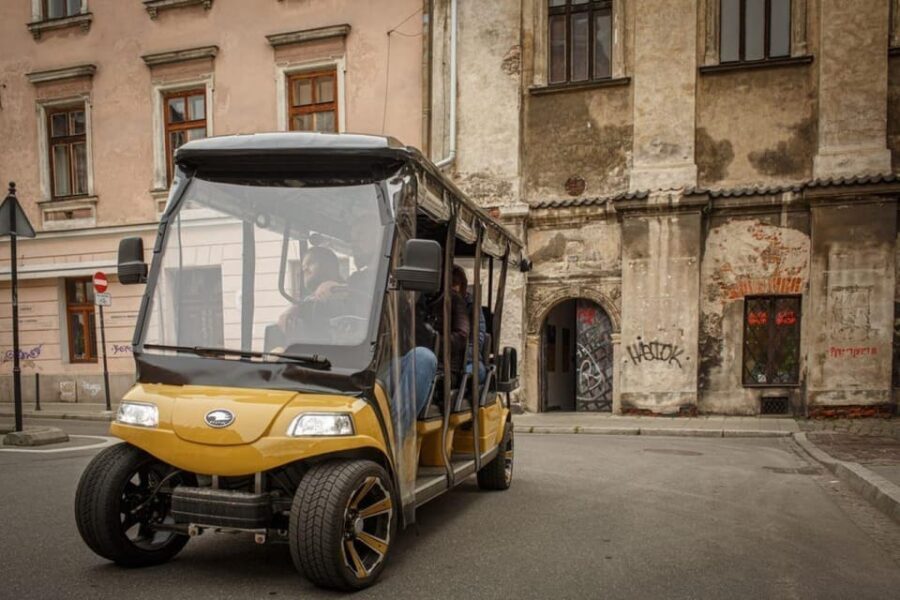
No one travels to have a timing problem. Still, with any small-group tour, smooth check-in matters. The tour uses a specific meeting place, and the group is picked up from there.
If you want this to go smoothly, show up a bit early and double-check you’re at the correct spot. Keep your phone ready in case you need to contact the operator. This is especially important because the tour doesn’t include hotel pickup or drop-off, so being at the right place on time is your responsibility.
Once you’re in the cart, the experience usually runs well—friendly, approachable guiding styles and a story that connects the dots between neighborhoods.
Route highlights: from Planty Park to the Jewish Quarter and Podgórze
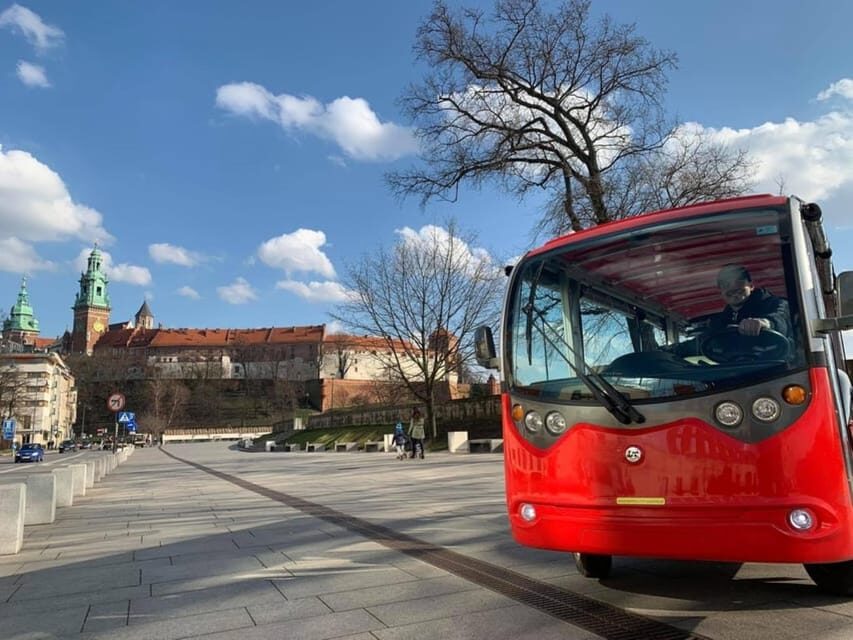
The tour flows through a compact set of major areas. You start with the Planty Park area, then move into an overview of medieval Krakow before heading into the Jewish Quarter sites around Kazimierz. From there, the route continues toward Podgórze, the former territory associated with the Krakow ghetto—ending at another important church stop.
What’s clever about this route is how it links “Krakow the city” with “Krakow the layered places.” You’re not only seeing religious sites and old streets; you’re also learning how the city’s different districts connect.
Planty Park and the medieval-crakow orientation
Planty Park works like a visual warm-up. It helps you get your bearings quickly, and it sets the stage for the medieval overview the guide gives you. You’re essentially being taught how to read the city before you start naming specific landmarks.
If you’re new to Krakow, this part can be a lifesaver. Instead of just taking photos, you get a map in your head: where the Old Town feeling begins and how the city changes as you travel toward the Jewish Quarter.
You can also read our reviews of more private tours in Krakow




Skałka Church and the corridor of historic landmarks
Next you’ll see Skałka Church, followed by a cluster of religious landmarks that anchor the story in real places. You also visit Church of St. Catherine and Church of Corpus Christi.
These stops are valuable because they ground the tour’s “history talk” in visible, recognizable points. You don’t need to be an architecture expert. Even from the outside, it’s easy to notice that this is a city built in layers, with different communities leaving their mark.
A practical note: because the cart route is time-efficient, you’ll likely spend less time at each stop than you would in a museum. Use quick photos, take in the surroundings, and let the guide’s explanation do the heavy lifting.
Wolnica Square and the Jewish city presence
At Wolnica Square, you’re placed in a key area tied to Jewish civic life—your stop includes the Jewish city hall (Wolnica Synagogue area context is part of what you’ll hear). The guide helps you understand why this section of Krakow mattered beyond just houses of worship.
This is one of the moments where a live guide really adds value. A written sign can tell you what something is. A guide helps you connect it to people and community life.
The synagogue sequence in Kazimierz
The heart of the tour is Kazimierz, and it shows through a strong run of synagogue stops, including:
- Tempel Synagogue
- Kupa Synagogue
- Isaac Synagogue
- Old Synagogue
- Popper Synagogue
- Remuh Synagogue and old cemetery
You move through these places in a way that feels like a guided “timeline through neighborhoods,” not a random list. The biggest benefit is clarity: you’ll get a sense of how many different institutions shaped community life, even if you only see them from viewpoints along the cart route.
Because these stops are numerous, the pace can feel packed, but that’s also the point of the golf cart speed. If you want more time at a single synagogue later, this tour is a solid way to decide which one deserves follow-up.
Helena Rubinstein’s family house and Jewish everyday traces
You also visit the Family House of Helena Rubinstein, which helps broaden the story beyond religious buildings. It signals that Jewish life in Krakow wasn’t only about worship spaces—it also included notable residents and community identity.
Near that, you’ll see Old Jewish Shops, which gives you a sense of how everyday life used to sit alongside the more formal landmarks. Even if you don’t stop long at each shop location, the idea sticks: this was a lived-in neighborhood, not a museum district.
Memorial Stone of the Nissembaum Family Foundation
One of the stops is the Memorial Stone of the Nissembaum Family Foundation. Memorial sites can be emotionally heavy, and the tour approach here is helpful: you get context from the guide and then you’re given a short window to absorb what the memorial represents.
Because the tour covers a lot in limited time, I recommend you slow down for photos only after you’ve taken in the guide’s explanation. Let the meaning land, not just the picture.
Former ghetto area: from stories to specific locations
Then the tour shifts into Podgórze and the former ghetto territory area, and this is where you really feel the tour’s purpose. You pass by:
- Former Ghetto context
- Ghetto Heroes Square
- Pharmacy under the Eagle (Residence of Tadeusz Pankiewicz)
- Life in Ghetto context
- Ghetto Wall
- Church of St. Joseph
This section is valuable because it turns abstract history into named places. You’re not just hearing that the ghetto existed—you’re connecting it to squares, walls, and specific sites tied to survival and memory.
The Pharmacy under the Eagle stop is especially poignant because it’s named for Tadeusz Pankiewicz. That matters. Instead of the ghetto being a single dark topic, the tour highlights specific human stories linked to real addresses.
And then you get Oskar Schindler’s history as a separate named moment on the route. That makes the tour more than a general overview. You’re given a few anchors that you can later research more deeply on your own if you want.
What the guide style is like (and how humor fits in)
Guides can set the tone fast, and the best part of this tour is that the guiding tends to be structured and friendly, with enough time for questions.
In particular, guides named Olivia have been highlighted for clearly explaining the Jewish Quarter and ghetto district in a way that makes sense during a moving tour. Another style you can expect: not constant talking, but an open attitude when you ask something.
One practical expectation: if you want more jokes, you may not get a lot of it. Some guiding styles lean serious on purpose, especially once you enter the ghetto-related portion.
Audio guide + live narration: a smart backup system
You don’t rely on one channel only. You’ll have a live guide in Polish or English, and you’ll also get an audio guide available in many languages. That audio includes choices like Arabic, Chinese, French, German, Hebrew, Italian, Japanese, Korean, Russian, Spanish, Turkish, Ukrainian, and more.
This is useful in two ways:
- If you need English but the group language isn’t your preference, the audio can keep you on track.
- When the cart moves quickly between stops, the audio helps you catch what you missed without interrupting the group.
If you’re the type who likes to reread things later, audio can also help you identify key names (synagogues, memorials, and people) so you can search them after your ride.
Small group comfort: why it matters for questions
The tour limits group size to 10 participants. That’s a big deal for a history-focused experience. With a larger group, your questions can die in the shuffle. With a smaller group, you’re more likely to get direct answers.
It also makes the cart experience less stressful. You can hear your guide better, and you won’t feel like you’re shouting over multiple conversations.
If you’re traveling with elders in your group, a small group setup usually feels kinder. You can move, watch, and listen without as much jostling.
Practical tips so the 1.5 hours feel worth it
Here’s how to get the most out of a quick ride through a lot of important places:
- Charge your phone. You’ll want photos and you might rely on the audio guide.
- Bring a light layer. You’ll be outside at multiple points even if the cart does most of the work.
- Keep your day flexible. This tour fits best when you’re doing other sightseeing later, not right after a heavy walking schedule.
- Travel light. No luggage or large bags.
- Arrive early to the meeting point and confirm you’re in the right place.
Should you book the Krakow golf cart tour?
I’d book this if:
- You want a fast, organized way to see medieval Krakow plus Kazimierz and the former ghetto area.
- You prefer fewer steps but still want meaningful context.
- You like small groups and value a guide who can explain while you ride.
I might skip it if:
- You want long, unhurried time inside specific sites (this is designed for covering a lot in limited time).
- You need a fully hands-off experience with no external stops or standing around.
- You’re carrying luggage or large bags and don’t have an easy way to store them.
If you’re visiting Krakow for the first time and you want a strong orientation to the Jewish Quarter and Podgórze story in a single outing, this is a smart purchase. It gives you named places, a clear flow, and enough context to decide what’s worth deeper follow-up.
FAQ
How long is the Krakow city sightseeing golf cart tour?
The tour lasts 1.5 hours.
What is included in the tour price?
It includes transportation by golf cart, an audio guide, and a driver. A live tour guide is also provided.
Are hotel pickup and drop-off included?
No, hotel pickup and drop-off are not included.
What languages are offered for the live tour guide?
The live tour guide is available in Polish and English.
Is there an audio guide if I do not speak Polish or English?
Yes. Audio guides are available in multiple languages, and English is included among them.
How big is the group?
The tour is limited to a small group, with a maximum of 10 participants.
Is the tour wheelchair accessible?
Yes, the tour is wheelchair accessible.
Is luggage or large bags allowed?
No. Luggage or large bags are not allowed.
What places are covered during the tour?
The route includes Old Town and major stops connected to Planty Park, the Jewish Quarter (Kazimierz), and the former ghetto area in Podgórze, including locations such as the Wolnica Square area, multiple synagogues, Ghetto Heroes Square, and sites related to Tadeusz Pankiewicz and Oskar Schindler’s history.