REVIEW · WARSAW
Jewish Warsaw & Stories from the Ghetto – Walking Tour
Book on GetYourGuide →Operated by Robert's Walking Tours & Photography · Bookable on GetYourGuide
A walk through Jewish Warsaw has a way of sticking with you. This 2-hour walking tour traces Jewish life before the war and the brutal reality of the Warsaw Ghetto, using surviving places and people’s stories to make history feel human. I especially love how the route balances pre-war context with the later tragedy, and how the guide keeps the pace steady enough to actually follow the timeline.
What I also liked: the storytelling is empathetic and personal, with names like Janusz Korczak and the staff of the Bersohn and Bauman Children’s Hospital, plus quiet ghetto remnants you can see in the modern city. One thing to consider is the subject matter is heavy, and it’s not aimed at younger kids (it isn’t suitable for children under 16).
In This Review
- Key things to know before you go
- Jewish Warsaw: why this walk matters on foot
- Meeting at Plac Grzybowski: setting the timeline fast
- Nożyk Synagogue: the wartime survivor you can still visit
- Janusz Korczak and the Children’s Hospital stories
- Ghetto Walls and Waliców Street: where everyday life becomes visible
- Warsaw Ghetto Museum stop: anchoring what the streets can’t explain
- Chłodna Street’s Footbridge of Memory and the ending that hurts
- Price and value: why $13 can make sense here
- Who this walking tour suits best (and who should skip it)
- Final call: should you book?
- FAQ
- How long is the Jewish Warsaw & Stories from the Ghetto walking tour?
- Where do I meet the guide?
- What languages is the guide available in?
- Is the tour wheelchair accessible?
- Are there any extra entry fees or costs during the tour?
- Is this tour suitable for children?
- Can I get a refund if I cancel?
Key things to know before you go
- Only-surviving synagogue on the route: You’ll see the Nożyk Synagogue, Warsaw’s lone wartime survivor among synagogues on this theme.
- Ghetto walls and remaining street scars: You’ll walk past Warsaw Ghetto Wall areas and Waliców Street, where the past is still written into the city.
- Stories with real names, not just dates: You’ll hear about Janusz Korczak and the Bersohn and Bauman Children’s Hospital staff.
- The Warsaw Ghetto Museum stop: You’ll get a museum moment to anchor what you’re seeing on the streets.
- Chłodna Street’s Footbridge of Memory: The walk ends at the wooden footbridge site, tied to the separation between ghetto areas and between Jewish and non-Jewish life.
- English and German guidance: Tours run with a live guide in English or German.
Jewish Warsaw: why this walk matters on foot
If you’ve ever tried to read about the Warsaw Ghetto and felt like you were staring at a timeline instead of a life, this kind of walk helps. Jewish history here isn’t abstract. It’s in street lines, surviving buildings, memorial choices, and the way one corner can lead to another with a new meaning.
This experience is built for understanding, not just sightseeing. You start in a square that frames the story of Jewish presence in Warsaw, then you move through the city to places tied to creation, daily life, and destruction. The guide’s job is to connect those dots so the walk feels like a single story with an ending you can handle.
And yes, it’s emotional. The tour is designed around memory, history, and emotion, and you should expect moments that may feel hard to sit with. If you’re the type who likes your history with context and compassion, you’ll probably find this fits your style.
You can also read our reviews of more walking tours in Warsaw


Meeting at Plac Grzybowski: setting the timeline fast
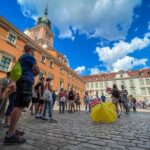
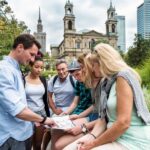
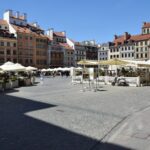
The tour begins at Plac Grzybowski, by the fountain, where you’ll find the guide wearing a brown flat cap. First impressions matter here: you’re in the wider city, but you’re about to learn how Jewish Warsaw shaped it and how that life was later torn apart.
At the start, you’re introduced to the history of Jewish presence and the city’s pre-war life—specifically the fact that before World War II, Warsaw was home to the largest Jewish community in Europe. That one detail is more than trivia. It explains why the ghetto was not just a policy; it was the destruction of an enormous, established community.
You’ll also get help getting your bearings fast. Rather than wandering, the guide builds a mental map of what you’ll see next. That pacing is a real quality-of-life factor in a topic this heavy.
Practical tip: give yourself a little buffer to arrive early. Starting on time helps the guide keep the flow, and you’ll waste less energy finding the meeting spot.
Nożyk Synagogue: the wartime survivor you can still visit
Next comes the Nożyk Synagogue, described as the only synagogue in Warsaw that survived the war. In a walking tour like this, that matters a lot. When a building makes it through, it doesn’t just look old—it becomes an anchor point you can emotionally trust.
From here, the story shifts from context to endurance: the city continued to exist after the devastation, but the community that once filled it had been shattered. Seeing a real, surviving synagogue helps you feel the contrast the tour aims for—what existed before versus what remained after.
Also, don’t treat this stop as a quick photo break. The guide will frame it so you understand why a single surviving site can carry more weight than a museum room full of objects.
Janusz Korczak and the Children’s Hospital stories
A key moment comes at the monument to Janusz Korczak. The tour doesn’t present him as a faceless historical figure. Instead, you learn about him as a silent hero, and you hear linked stories from the Bersohn and Bauman Children’s Hospital staff.
That’s one of the strongest parts of the experience: the tour chooses human-scale stories instead of only big-picture events. It’s not about turning tragedy into spectacle. It’s about making sure you remember that behind every ghetto statistic and wartime term were people with daily routines, responsibilities, fears, and moral choices.
The guide’s tone matters here. In German and English alike, the delivery is described as professional and empathetic, with the kind of careful attention that lets names land. If you find yourself wanting to ask questions as you go, this is also where the format usually works best—because your questions will be grounded in something you’ve just seen.
Practical tip: if you tend to get emotional on history tours, plan to pause and breathe during these monument moments. Nobody’s rushing you forward in a way that prevents reflection.
Ghetto Walls and Waliców Street: where everyday life becomes visible
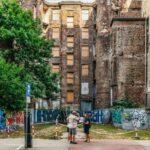
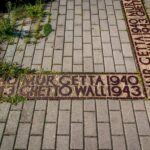
The walk then moves toward the Warsaw Ghetto Wall area and Waliców Street. These aren’t just “historical sights.” They’re pieces of a city that still carries the separation created by Nazi occupation and the ghetto system.
The guide explains the establishment of the ghetto and helps you connect the physical remnants to how people lived there day to day. That’s a subtle but powerful shift: you go from knowing the ghetto existed to understanding the ghetto as a lived environment—constrained, policed, and constantly threatened.
Waliców Street is important in this route because it helps you see how the ghetto wasn’t a distant concept. It was threaded into the city’s streets. Even when a modern visitor can’t see everything the way residents once did, the guide helps you read the space with better eyes.
A note on expectations: you might not feel “guided like a museum.” This is street history. The value is in learning to look, not in waiting for an exhibit panel.


Warsaw Ghetto Museum stop: anchoring what the streets can’t explain
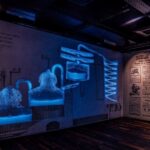
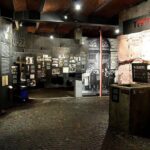
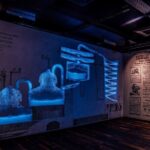
Next you’ll visit the Warsaw Ghetto Museum. In a walking tour, a museum stop can go either way: it can feel like a forced detour, or it can become the anchor that turns impressions into understanding. This one is positioned to help you interpret what you’ve been seeing along the route.
Since the tour covers the beginnings of Jewish life in Warsaw, the creation and daily reality of the ghetto, and then the liquidation and aftermath, the museum acts like a bridge. It’s where the guide’s narrative gets clearer and more structured.
What I like about this type of pairing is that you don’t have to choose between emotional street learning and more factual museum context. You get both in sequence.
Practical tip: if you’re sensitive to intense content, take your time at this stop. The guide’s pacing should help, but your own comfort matters.
Chłodna Street’s Footbridge of Memory and the ending that hurts
The tour finishes at the site of the wooden footbridge on Chłodna Street, called the A Footbridge of Memory. The guide frames it as a haunting symbol of separation—between small and large ghettos, and between Jewish and non-Jewish worlds.
This final stretch is where the tour’s emotional weight concentrates. And that’s also where the guide connects the route to major turning points, including the story of the Great Action of 1942 and the Warsaw Ghetto Uprising. In other words, you’re not just seeing where people were restricted—you’re learning about how events escalated and what resistance and survival meant in that moment.
Toward the end, you also hear the tragic story of deportations to the gas chambers. This isn’t the kind of ending you forget quickly, and it’s not meant to be. The tour uses the walk’s structure so the ending doesn’t feel random. By the time you reach the footbridge area, you’ve already been taught how to read the city as a memory map.
A helpful mindset for this last section: think of it less as an “attraction finale” and more as a closing act. The point is understanding, and then carrying that understanding respectfully into your day afterward.
Price and value: why $13 can make sense here
The tour is listed at $13 per person and lasts 2 hours. That’s not the kind of price you’d call “cheap,” but for a licensed guided walk focused on specific, sensitive sites in Warsaw, it’s a fair ask.
The bigger value piece is how the pricing works as a pay-what-you-wish style tour. The listed price covers the booking and guide service, and any additional tipping is entirely up to you. In plain terms: you’re not being forced into a “pay extra to see anything” scheme, and you can decide what you feel is right after the experience.
Also important: the tour notes that it does not require payment for entries or additional expenses. That means you can focus on the narrative and the walk, not on budgeting every stop.
Who pays well here tends to be the kind of traveler who respects storytelling time and the emotional labor of guiding a group through Holocaust-era history.
Who this walking tour suits best (and who should skip it)
This is a good fit if you want context with named stories. The guide uses real historical figures tied to children’s hospital history and ghetto resistance-era turning points, and you’ll also have time to ask questions along the way.
It’s also a solid choice if you’re traveling with someone who likes cities best on foot. The route is structured around sites that work as a sequence: square → surviving synagogue → monuments → ghetto remnants → museum → footbridge ending.
It may not be for you if you’re looking for light entertainment. This walk includes brutal, direct topics and ends with stories of deportations and the uprising era.
Finally, it’s not suitable for children under 16, so plan accordingly if you’re traveling as a family.
Final call: should you book?
Book it if you care about learning Jewish Warsaw as more than a headline. This tour gives you surviving places—like the Nożyk Synagogue—and then connects them to the ghetto’s creation, day-to-day life, liquidation, and major 1942 turning points. The guide’s empathetic storytelling and strong ability to handle questions in English or German are a big reason this works.
Skip it only if you’re not ready for heavy history, or if your group includes someone under 16. If you’re emotionally prepared and you want a route that makes the city readable, this one is worth your time.
FAQ
How long is the Jewish Warsaw & Stories from the Ghetto walking tour?
The tour lasts 2 hours.
Where do I meet the guide?
Meet at the fountain at Plac Grzybowski in Warsaw. The guide wears a brown flat cap.
What languages is the guide available in?
The live guide speaks English and German.
Is the tour wheelchair accessible?
Yes, the tour is listed as wheelchair accessible.
Are there any extra entry fees or costs during the tour?
No. The tour says it does not require payment for entries or additional expenses.
Is this tour suitable for children?
No. It is not suitable for children under 16.
Can I get a refund if I cancel?
Yes. Free cancellation is available up to 24 hours in advance for a full refund.