REVIEW · KRAKOW
Jewish Krakow in German
Book on GetYourGuide →Operated by Walkative Tours · Bookable on GetYourGuide
Krakow has two Jewish worlds on the same streets. This Jewish Krakow in German tour moves through Kazimierz and Podgórze, linking surviving synagogue architecture with where the Holocaust played out. You get a guided story in real locations, not a slideshow.
I love how the route ties meaning to place, from the seven older synagogues that endured World War II to what that survival signaled for the community. I also like the German delivery and the fact that the guide can set the tone with both context and sensitivity; one guide name, Max, shows up in feedback for clear, fact-based explanations and strong group leadership.
One possible downside is the pacing: 150 minutes is fast for such heavy material. If you’re the type who wants extra time inside a synagogue or at memorial spots, you’ll want to build in a return visit afterward.
In This Review
- Key highlights to look for
- Entering Jewish Krakow: what this tour actually does for you
- Starting at the stairs in front of the old synagogue
- Kazimierz’s Jewish quarter: synagogues, community life, and what survived
- The Second World War turn: from context to catastrophe
- Podgórze ghetto sites (1941–1943): reading a neighborhood after the war
- How a German-speaking guide shapes what you remember
- Price and value: is $26 worth 150 minutes on foot?
- Pace, timing, and what to wear for this kind of story
- Who should book Jewish Krakow in German (and who might want another format)
- Should you book Jewish Krakow in German?
- FAQ
- What language is the tour in?
- How long is Jewish Krakow in German?
- Where does the tour meet?
- What’s included in the ticket price?
- What’s not included?
- Is there free cancellation?
- Can I reserve now and pay later?
- Do I need to arrive early?
Key highlights to look for
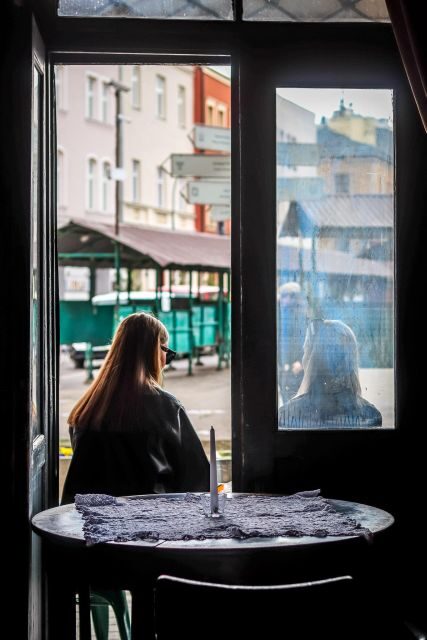
- Kazimierz’s historic Jewish quarter: a walk where synagogue life and modern neighborhood culture meet.
- Seven older synagogues that survived WWII: a rare physical reminder that the community was more than a chapter in a textbook.
- Second World War context, plainly explained: you connect historical events to what you see on the streets.
- Podgórze ghetto sites (1941–1943): the story turns from cultural life to the mechanisms of tragedy.
- A revival you can still feel today: the tour doesn’t stop at destruction; it shows what life looks like now.
Entering Jewish Krakow: what this tour actually does for you
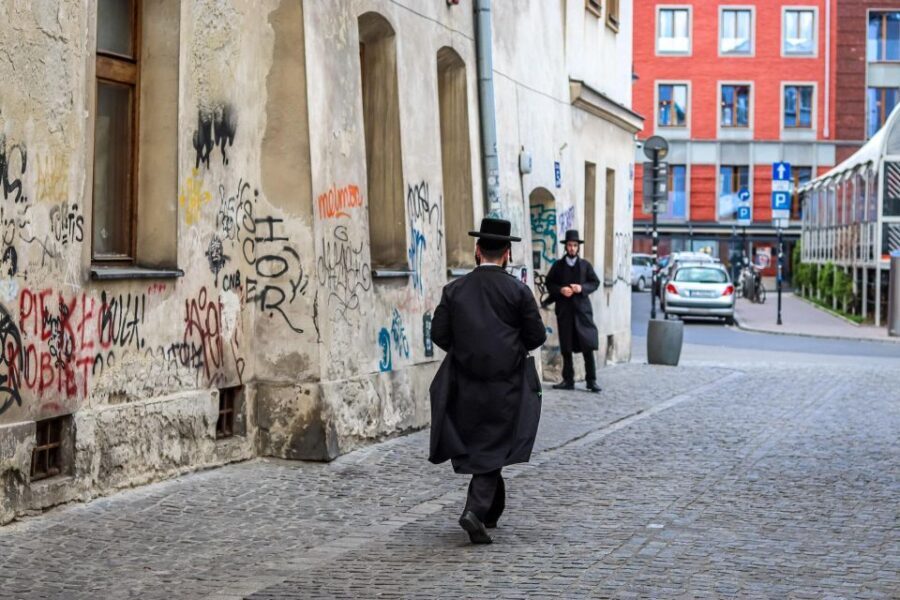
Jewish Krakow in German is built like a guided walk-through story, with the map serving the message. You start in the Jewish district area and move between neighborhoods that feel very different, yet belong to the same larger history. The big win is that you’re not just looking at buildings—you’re learning why they mattered.
You’ll see both sides of the Krakow picture: the flowering of Jewish community life and the rupture of the Second World War. Then, because Krakow is still living, you’ll also hear how Jewish culture has returned in today’s Kazimierz. That balance matters. It keeps the experience from becoming only sorrow, and it gives you a fuller understanding of what was lost and what endured.
The tour is also clearly structured, which is important when the subject is painful. A guided story helps you place events in order, and it helps you avoid the common trap of reading a few plaques but missing the bigger chain of cause and effect.
You can also read our reviews of more tours and experiences in Krakow.
Starting at the stairs in front of the old synagogue
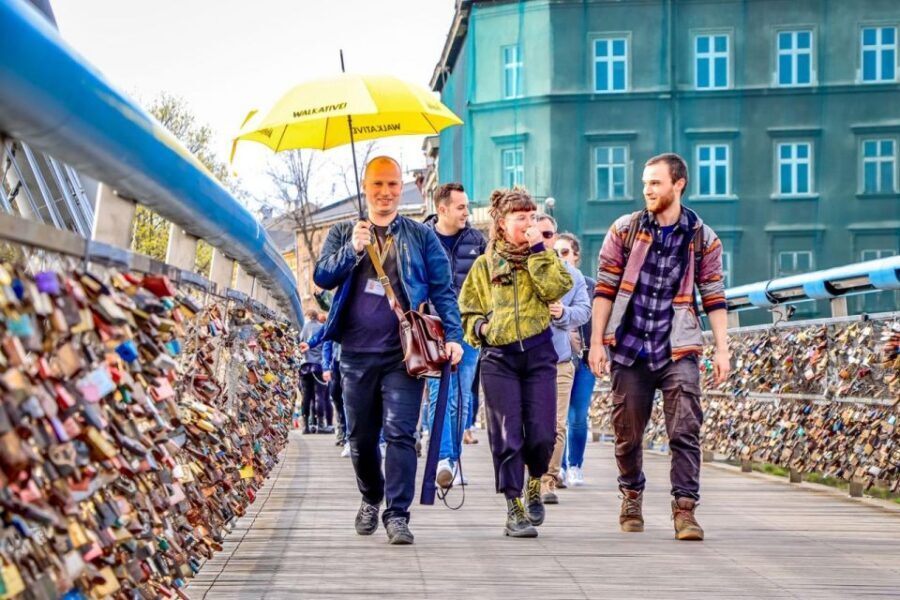
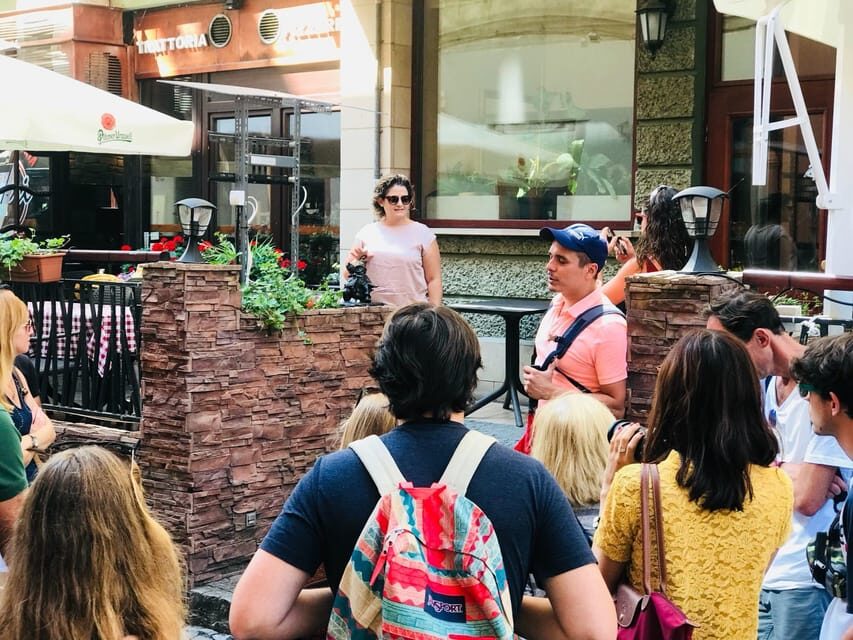
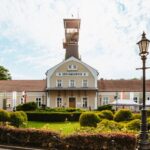
The meeting point is specific: you meet on the stairs in front of the old synagogue, on the main street of the Jewish district. That detail matters because it’s easy to show up thinking you’re in the right area, only to miss the exact spot where the group gathers.
Arriving about 10 minutes early is your best move. It gives you time to settle, check you’re in the correct spot, and avoid the stress of arriving late on a walking tour that runs on a tight schedule. Once everyone is together, you’ll begin with orientation—how to read the neighborhood as a historical document.
What I like about starting there is simple: synagogues aren’t just landmarks. They’re anchors. When you begin in front of one, the rest of the walk makes more sense right away.
Kazimierz’s Jewish quarter: synagogues, community life, and what survived
Kazimierz is the heart of the story, and the tour spends serious time on this historic Jewish quarter. The focus isn’t just architecture for its own sake. You’re learning about the community that shaped the area, how Jewish life grew here, and how the neighborhood’s physical form reflects that culture.
One of the most striking pieces you’re set up to understand is that there were seven older synagogues and that surprisingly, they survived World War II and the Holocaust. That fact is powerful because it shifts the usual mental image. Instead of thinking only about what was destroyed, you also look at what remained—and what that survival meant for memory and identity.
As you walk, you’ll connect historical context to what you see around you. You’ll hear about the Jewish community’s role as a major center in Poland, and how Krakow became a hub of that cultural life. The point here is not trivia. It’s to show why Kazimierz wasn’t random on the map—it was meaningful.
The tour also brings you forward to today. The current Kazimierz area functions as a cultural center within Krakow and still holds a small but lively Jewish community. That matters because it turns the neighborhood from a museum-like stop into a place you can understand as living.
The Second World War turn: from context to catastrophe
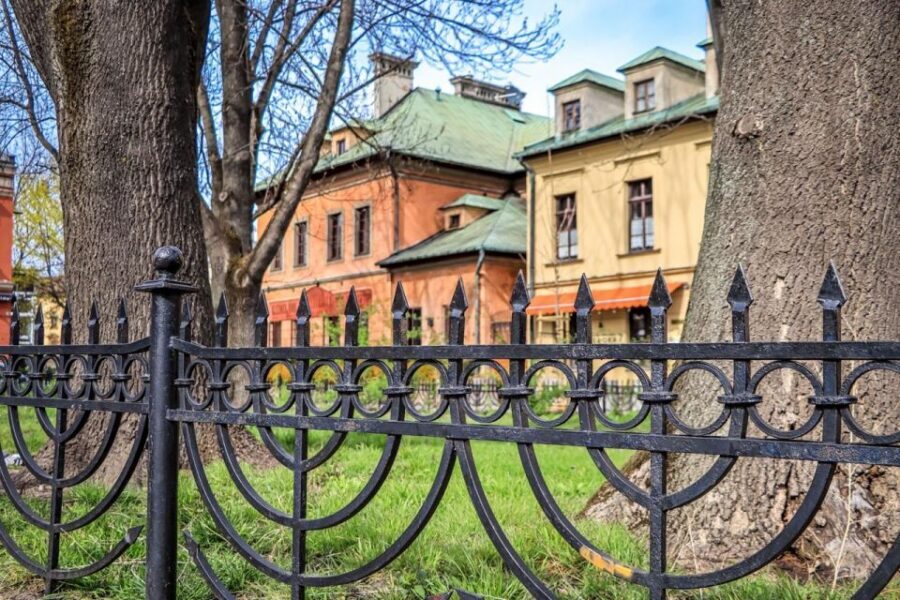
A good walking tour has a narrative arc. This one changes gears when it reaches the Second World War. You’re not just told that atrocities happened. You’re given historical context first, so later details land with more weight.
The tour specifically addresses death and destruction during WWII and frames what came afterward. This part is where a local travel guide adds real value. A guide can connect the timeline to geography, and can explain why certain locations matter for understanding how the Holocaust unfolded in Krakow.
You’ll also be guided to places where the Holocaust took place in Krakow. That wording is important. It means the tour isn’t only about general history. It’s grounded in the city’s own locations and the reality that the tragedy had a local, physical footprint.
At this stage, your job as a visitor is to stay present. Don’t rush ahead for photos. Let the guide walk you through the meaning. If you do, the neighborhood starts to feel like a historical map you can read with your feet.
Podgórze ghetto sites (1941–1943): reading a neighborhood after the war
After Kazimierz, the tone shifts toward Podgórze, described as the former Jewish ghetto area. This is where you see the story of 1941 to 1943, the years tied to the ghetto’s existence and the tragedy the original buildings experienced.
This part hits harder because you’re not looking at a distant event. You’re looking at a district that still tells the story of what happened when the ghetto took shape. The tour’s framing helps you understand the difference between a place that once supported community life and a place that became a site of confinement and destruction.
I like that the tour keeps the structure: it doesn’t just jump from WWII facts to ghetto references with no bridge. You’re prepared by what came before—what life was like, and then what was done to it.
And because the tour also points toward the revival of Jewish culture in today’s Krakow, you finish the experience with a fuller view of aftermath. Not everything is frozen in grief. The city keeps moving, and Jewish identity keeps finding ways to exist and be seen.

How a German-speaking guide shapes what you remember
The tour is in German and runs with a live guide. That’s not a small detail if you’re visiting from Germany or if German is your comfort language. You get fewer gaps. You also get the guide’s tone and phrasing, which can matter a lot when topics are sensitive.
Local expertise matters here because it’s not only about knowing facts—it’s about knowing how to explain them in a way that helps you connect places. Reviews for this tour highlight guides who speak excellent German and who keep the group engaged through solid storytelling. One mentioned name is Max, described as leading the group to different places with strong facts and a very effective, friendly delivery.
What you should expect from this kind of guiding is a carefully structured story. That usually translates into:
- clearer chronology (so you don’t mix events up)
- place-based explanations (so buildings and streets don’t become background noise)
- pacing that balances heavy material with moments of meaning and context
If you prefer tours where you can ask questions or follow an explanation line by line, this format should suit you well.
Price and value: is $26 worth 150 minutes on foot?
At $26 per person, this tour is priced in a way that can feel surprisingly accessible for a program that covers both cultural heritage and Holocaust-related sites. The duration is 150 minutes, which is long enough to make the story coherent, but not so long that you lose yourself in logistics.
Here’s where the value calculation becomes more honest: the tour includes an expert local travel guide and a carefully structured story. Those are the two ingredients that turn “a walk” into an experience with meaning. You’re paying for interpretation, not just time in a neighborhood.
Also, the tour is set up as a pay-as-you-wish style event. The amount you pay covers the reservation fee and the guide’s payment. That means you get the benefit of a staffed guide without the awkward feeling that you’re buying a fixed product. It’s a more flexible way to reward good guidance.
What’s not included is straightforward: collection from your hotel and return transport, plus a snack. That’s common, and it helps keep the price focused on the guide and story. If you’re going to take the tour during a day packed with sightseeing, plan for the snack gap by grabbing something nearby before you meet.
Pace, timing, and what to wear for this kind of story
This is a 150-minute walking tour, so you should plan on being on your feet and moving between areas. On a route that includes solemn stops, your comfort affects how much you can absorb. A simple rule: wear shoes you can trust for a few hours of walking.
As mentioned earlier, 150 minutes also means you won’t linger forever at every spot. Some stops are designed for quick orientation and explanation, then the tour moves on. That’s not a flaw—it’s the structure working—but it does mean you should treat it as the start of your deeper exploration, not the entire exploration itself.
If you want to study a particular synagogue area longer or spend more time reading, use this tour as a foundation. Then come back later on your own with better context, and you’ll notice details you would’ve missed the first time.
Who should book Jewish Krakow in German (and who might want another format)
This tour is a strong fit if you want:
- a guided walk through Kazimierz and Podgórze
- a German-language explanation with live interpretation
- a story that includes both the cultural rise and the destruction tied to WWII and the Holocaust
- a practical way to understand why specific places matter in Krakow
It’s also a good choice if you don’t want to piece the history together alone. The neighborhood can feel layered, and without guidance, it’s easy to get lost in names and forget the sequence of events.
You might consider a different plan if you know you need long, quiet time at memorial-related points. The tour is structured and paced, and it’s not built as a slow sit-down experience. In that case, you can still take this tour for orientation, then plan your own return time afterward.
Should you book Jewish Krakow in German?
Yes—if you want a guided, place-based story in German that connects surviving synagogue architecture, WWII history, and the Holocaust sites in Krakow without turning the experience into a chaotic self-guided scramble. The mix of Kazimierz today, Podgórze’s ghetto history, and the focus on meaning makes the 150 minutes feel purposeful rather than rushed.
I’d especially recommend it if you value strong local guiding and clear explanations. Reviews praise the German-speaking guides for strong delivery, and at least one guide name, Max, comes up for leading the group with facts and good energy.
If you’re sensitive to heavy history and want it handled with structure, this tour is set up for that. And if you’re the type who enjoys learning enough to explore further on your own, this tour gives you the map—and the context—to do exactly that.
FAQ
What language is the tour in?
The tour is offered with a live guide in German.
How long is Jewish Krakow in German?
The tour duration is 150 minutes.
Where does the tour meet?
You meet on the stairs in front of the old synagogue, on the main street of the Jewish district.
What’s included in the ticket price?
It includes an expert local travel guide and a carefully structured story.
What’s not included?
Hotel pickup or return transport is not included, and a snack is not included.
Is there free cancellation?
Yes, free cancellation is available up to 24 hours in advance for a full refund.
Can I reserve now and pay later?
Yes, you can reserve now and pay later.
Do I need to arrive early?
Yes. Please arrive at the meeting point 10 minutes before the activity starts.