REVIEW · WARSAW
From Warsaw Auschwitz and Krakow one day tour by train with pick up and drop off
Book on Viator →Operated by AB Everest Travel · Bookable on Viator
Auschwitz is intense, but the day runs well. This Warsaw-to-Krakow rail tour stitches together train transfers, guided time at Auschwitz-Birkenau, and a focused stop in Krakow’s medieval heart—so you spend less energy figuring out logistics and more on what matters.
I like the door-to-train support (pickup, help boarding, and name-card drivers). I also like that the Auschwitz visit is built in as the anchor of the day, with the museum admission included and a guide who keeps the story clear through both Auschwitz and Birkenau sections.
One thing to plan around: it’s a long day—about 16 hours—and everything depends on train timing. If trains run late (I’ve seen reports of major delays), the schedule can feel rushed, especially around the Birkenau portion.
In This Review
- Key things I’d note before you go
- Price and logistics: what you’re really paying for
- Getting from Warsaw to Krakow by train (and why timing matters)
- Krakow Old Town: your 3 hours are for getting your bearings
- Auschwitz-Birkenau: what’s included, what it feels like, and how to handle it
- Birkenau walkthrough pacing: where time can get tight
- The Krakow-to-Auschwitz drive: more than just transportation
- Comfort upgrades: the premium train option actually helps
- Who this tour fits best (and who should reconsider)
- Should you book the Warsaw–Krakow–Auschwitz train tour?
- FAQ
- What’s the duration of the tour?
- Does the tour include hotel pickup and drop-off in Warsaw?
- Where does the tour start?
- Are there specific train times from Warsaw to Krakow?
- Are there specific train times from Krakow back to Warsaw?
- Is the Auschwitz-Birkenau admission ticket included?
- Is there an entry fee for Krakow sightseeing?
- Is the tour offered in English?
- Can I upgrade to a premium train?
- What is the cancellation policy?
Key things I’d note before you go
Name-card pickup and train boarding help to reduce the usual Warsaw-to-Krakow stress.
Krakow Old Town time with real landmarks like Main Market Square and St. Mary’s Basilica.
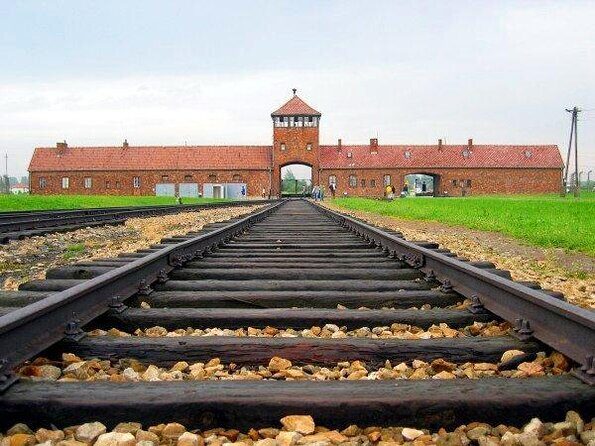
Auschwitz-Birkenau is the main event with museum admission included and a set time on site.
Audio matters at a site like this—bring patience if headsets or microphones act up.
Pick premium train options if you can to make the long travel day more comfortable.
Expect walking and low daylight in colder months since it gets dark early in winter/late fall.
Price and logistics: what you’re really paying for
At $182.23 per person for roughly 16 hours, you’re not just paying for a ticket. You’re paying for a chain of “keep-it-moving” services: pickup in Warsaw, help getting on the correct train, a guided Auschwitz-Birkenau visit, then a return back to Warsaw.
Value-wise, the biggest win is that Auschwitz museum admission is included, while Krakow’s main sightseeing walk is free (you’re not buying city entry fees). You’re also paying to avoid the headache of stitching together trains, taxis, and entry logistics yourself—especially important when Auschwitz-Birkenau can draw huge lines.
The tour is offered in English, and it’s described as private for your party, but the wider operation can include larger numbers (up to 99). Practically, that means you should still expect a standard group pace, headsets, and the need to stay together at key moments.
My practical take: if you’re the type who would otherwise over-plan transport, this is the kind of day tour that lets you relax. If you’re comfortable DIY’ing schedules and don’t mind hunting down connections, you could probably do it cheaper—but you’ll do it with more risk and more moving parts.
A few more Warsaw tours and experiences worth a look
Getting from Warsaw to Krakow by train (and why timing matters)
Your day starts at Warszawa Centralna (Al. Jerozolimskie 54, 00-019 Warszawa). If you choose pickup, you’ll share your address and the operator confirms whether a driver can pick you up from there. Drivers show up with a name card for the lead traveler, and pickup time varies based on which train you take.
There are two train options called out clearly:
- An express train at 5:35am from Warsaw to Krakow
- An express train at 8:47pm from Krakow to Warsaw
You can also pay extra (noted as 100 PLN / about 25 EUR) to upgrade to a premium train in one direction. Some guests mention the premium experience includes practical comfort items like Wi‑Fi, power outlets, and a bar car, which honestly can make a long day feel less like a marathon.
Here’s the real thing to watch: even when the plan is solid, trains can be delayed. In at least one case, the return train delay stretched to nearly two hours, turning the whole day into a longer slog. It won’t be the fault of your guide, but it’s something you should mentally budget for.
Tip that saves your mood: pack a snack and water, and bring something warm. Morning trains can start early enough that you’ll be grateful you didn’t rely on buying food later.
Krakow Old Town: your 3 hours are for getting your bearings
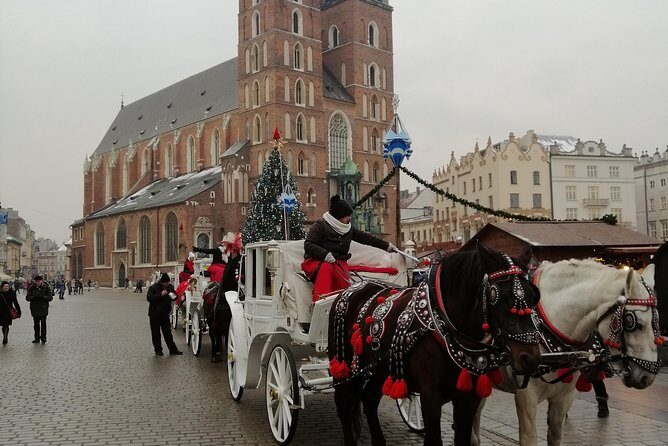
Once you arrive in Krakow, you get about 3 hours in the Old Town. This isn’t a full city day. It’s a “get oriented fast” slice, and it’s timed so you can enjoy the big-hitters without losing daylight or train time.
You’ll see the Main Market Square, one of Europe’s largest medieval squares, and then walk past or through key historic points including:
- Wawel Hill area (cathedral and royal castle, tied to coronations)
- Town Hall Tower
- St. Mary’s Basilica
- Krakow Barbican
- Sukiennice (Cloth Hall)
This is the part of the day that feels lighter emotionally compared with Auschwitz-Birkenau. You can grab a meal, stroll, and get your bearings for a city you might want to return to later.
A drawback: 90 minutes each way from Krakow to the Auschwitz region can make it feel tight to do more than a classic Old Town circuit. If you like deep museum time or want to roam outside the center, you’ll likely feel the limits.
Small practical point: in late fall and winter, daylight disappears fast. If your dates are in November, plan on your Krakow time happening under less-than-ideal light, and wear footwear that handles cobblestones.
Auschwitz-Birkenau: what’s included, what it feels like, and how to handle it
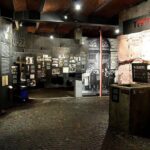
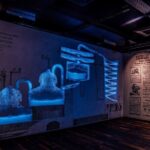
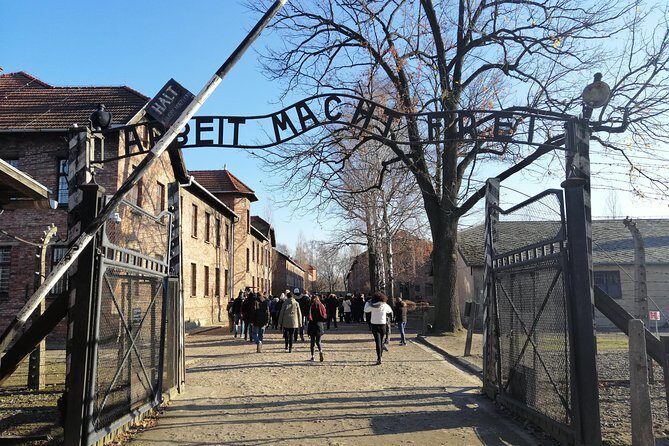
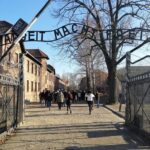
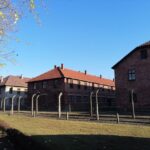
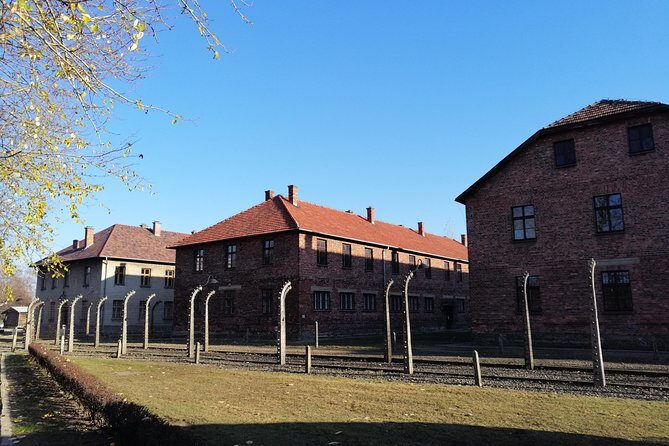
This is the core of the tour: a guided visit to Auschwitz-Birkenau with admission included. The site tells a story that is brutally factual—built from evidence of the genocide committed by Nazi Germany beginning in 1940, and expanded after the creation of Auschwitz II Birkenau in 1941.
You’ll hear specifics that matter, including:
- Block No. 11, also called the Death Block
- The Wall of Death
- An external gas chamber
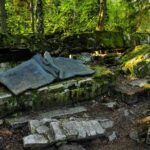
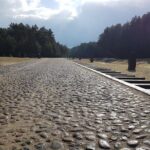
- Birkenau’s scale, including that around 1.5 million people lived and died there (with roughly 90% being Jewish, plus Poles, Roma groups, Russians, and prisoners from many countries)
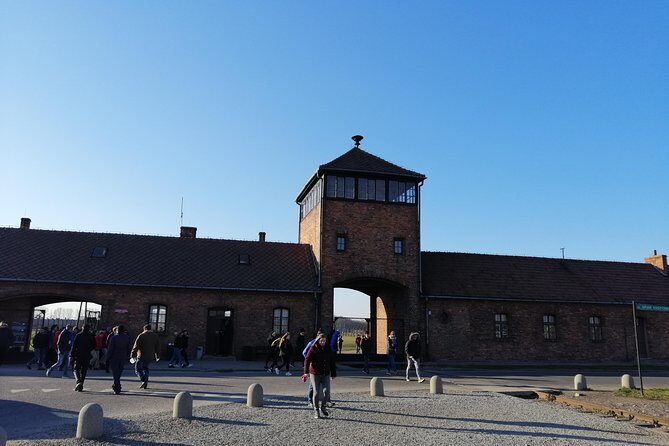
- The Gate of Death, where transports entered from 1944 onward
It’s also a UNESCO World Cultural and National Heritage site, listed in 1979, which is useful context when you’re trying to understand why the museum has rules, time limits, and a very guided flow.
What I like about doing this with a guide: your head is less likely to get lost in the sheer size and logistics of the grounds. The best tours help you connect the dots—why one area exists, what the layout meant, and how the system worked. From the tour experience descriptions, guides like Milek and Jacek stand out for their ability to explain the history clearly in English and to pace the group so you can actually absorb key moments instead of just rushing past signs.
What to watch for: the visit can be emotionally heavy and physically tiring. Expect standing and walking, and don’t plan on using this day to “power through” sightseeing fatigue. Bring water if allowed, and take the slow moments seriously.
Also, audio equipment isn’t always perfect. I’ve seen one report where a guide’s microphone cut out for about the first part of the visit. Another report mentions mixed audio on the transport (Italian listening during part of the ride). None of that changes the importance of the visit—but it does affect how much you catch.
My advice: use your headset if provided, keep it snug, and if audio fails, speak up politely right away so the team can fix it fast.
Birkenau walkthrough pacing: where time can get tight
Birkenau is massive. Even when the tour is well run, the museum controls the rhythm, routes, and stop points. That means your “Birkenau experience” often depends on factors outside your group—crowd flow, site regulations, and time left after Auschwitz.
In some experiences, the Birkenau portion can feel like it gets less time than you expect, with a shorter walk than you’d want. In other cases, it still hits the key areas. Either way, it’s smart to expect that you’ll get the main route rather than a long, slow exploration of every building.
How to make it work for you:
- Treat the walk as the main learning tool, not a photo mission.
- Look for the explanations about what you’re seeing, not just the structures themselves.
- If you’re the kind of person who reads every sign, you’ll need to balance that instinct with the group pace.
One more thing: the day is packed, and transport to and from the Auschwitz area takes time—so arriving with a “must see everything” mindset can backfire.



The Krakow-to-Auschwitz drive: more than just transportation
Your transfer between Krakow and Auschwitz generally runs over an hour each way, and in some accounts there’s also a stop for break timing. During the ride, you may get some background context, but it can vary.
A couple of details to keep in mind:
- Audio on the bus may not always match the language you booked. One account described Italian audio while an English tour was expected.
- Drivers sometimes focus heavily on logistics and less on conversation. That’s not a deal-breaker; it just means you shouldn’t count on the ride being a second lecture.
Drivers have been a bright spot. Names that came up include Maciej, who answered questions and kept the van stops under control, and Kris and Chris, who helped with boarding and making sure everything stayed on track.
If your day hinges on train accuracy, this is where a good driver earns their keep. You’ll feel it when pickup is on time and transfers don’t turn into a scramble.
Comfort upgrades: the premium train option actually helps
You can upgrade the train (extra 100 PLN) for at least one direction. If you’re sensitive to early starts or you just know you’ll be tired after a long Auschwitz day, that upgrade can be worth the money.
Why? Because you’re sitting for a long time on both legs of the journey. Some accounts describe premium trains as having Wi‑Fi and power outlets, plus a bar car. Even if you don’t plan to work, those outlets and a place to settle down can make the day feel more manageable.
My suggestion: choose premium in the direction that matches your energy needs. If you’re taking an early train from Warsaw, extra comfort there can help you arrive calmer. If you’re returning late from Auschwitz, it can help you recover after a heavy day.
Who this tour fits best (and who should reconsider)
This fits best if you:
- Want one-day Auschwitz access without juggling train schedules
- Prefer a structured, guided explanation rather than DIY reading
- Like historical focus and want the Auschwitz visit to be the anchor
- Are okay with a long day and planned group pace
It may feel less ideal if you:
- Want a full Krakow day with flexible timing
- Hate tight schedules and can’t handle the idea of train delays affecting the day
- Need lots of quiet time to read every sign slowly
If you want to reduce the chance of feeling rushed, give yourself the mindset that Krakow is a warm-up stop, and Auschwitz-Birkenau is the main event—then you’ll judge the day fairly.
Should you book the Warsaw–Krakow–Auschwitz train tour?
I’d book it if you want a smooth, guided day that handles the hard logistics for you. The price makes more sense when you factor in included Auschwitz admission plus transportation support and English-guided time at a site that doesn’t forgive mistakes.
I wouldn’t rush into it if your schedule is fragile or you can’t tolerate delays. This route depends on trains, and you’re packing a lot into about 16 hours. Also, if audio issues would ruin your experience, keep expectations flexible and rely on guide explanations and signage.
My final call: if you’re going to Poland specifically to see Auschwitz-Birkenau and you want the day to feel organized rather than chaotic, this is a strong way to do it.
FAQ
What’s the duration of the tour?
It runs for approximately 16 hours.
Does the tour include hotel pickup and drop-off in Warsaw?
Pickup is offered. You’ll share your address during reservation, and the operator confirms whether a driver can pick you up from that address. The tour ends back at the meeting point.
Where does the tour start?
It starts at Warszawa Centralna (Al. Jerozolimskie 54, 00-019 Warszawa, Poland).
Are there specific train times from Warsaw to Krakow?
Yes. One option listed is an express train at 5:35am from Warsaw to Krakow.
Are there specific train times from Krakow back to Warsaw?
Yes. One option listed is an express train at 8:47pm from Krakow to Warsaw.
Is the Auschwitz-Birkenau admission ticket included?
Yes. Admission for Auschwitz-Birkenau is listed as included.
Is there an entry fee for Krakow sightseeing?
The Krakow stop is described with admission ticket free.
Is the tour offered in English?
Yes, it’s offered in English.
Can I upgrade to a premium train?
Yes. Premium trains are available with an extra cost listed as 100 PLN (about 25 EUR).
What is the cancellation policy?
You can cancel up to 24 hours in advance for a full refund. If you cancel less than 24 hours before the start time, the amount paid is not refunded.