REVIEW · KRAKOW
Explore Katowice in 60 minutes with a Local
Book on Viator →Operated by LocalBini - The go-to platform for Experiences by Locals in Europe · Bookable on Viator
One hour in Katowice can feel priceless. This is a 60-minute small-group walk led by a local, starting at the Archcathedral of Christ the King and ending near the Silesian Theatre, so you get your bearings fast and learn what’s behind the city’s major landmarks. I love the small group setup (up to 8), because it makes the stories feel less like a lecture and more like a conversation.
One thing to consider: with only an hour, the emphasis can tilt toward architecture and quick context rather than slower, deeper local detail. If you want hands-on culture stops, you’ll have to add a follow-up activity after the walk.
In This Review
- Key Points You’ll Actually Care About
- Where the Tour Starts: Archcathedral of Christ the King
- Why This 60-Minute Walking Tour Works for First-Time Visitors
- Stop 1: Christ the King Cathedral and How It Shapes the City’s Mood
- Stop 2: Goldstein Palace and the Art of Not-So-Secret Architecture
- Stop 3: Market Square and the Everyday Pulse of People
- Stop 4: The Silesian Insurgents Tribute and Local Pride in Stone
- Stop 5: Silesian Theatre—Culture in a Preserved Venue
- Guide Style: Friendly, Personal, and Sometimes Architecture-Forward
- Price and Value: Is $80 for One Hour Worth It?
- Timing, Comfort, and Getting There Without Stress
- A Quick Reality Check: Last-Minute Changes Can Happen
- Should You Book This Katowice 60-Minute Walk?
- FAQ
- How long is the Katowice 60-minute local tour?
- What group size should I expect?
- Where do I meet the guide, and where does the tour end?
- How much does the tour cost?
- Is anything included besides the guide?
- Are entry tickets for museums or monuments included?
- Do I get a mobile ticket?
- What’s the cancellation option if my plans change?
- Is this tour suitable for people with mobility limitations?
Key Points You’ll Actually Care About
- Small group, max 8 people: easier questions, less waiting around, and a guide who can adapt to your pace.
- Perfect “first hour” route: big landmarks in a tight loop, starting at Christ the King and finishing near the Silesian Theatre.
- Real local talk + personalized recommendations: the guide shares practical what-to-do-next advice.
- Architecture and civic memory in one walk: cathedral, Goldstein Palace, a memorial for the Silesian insurgents, plus a performance venue.
- Mobile ticket and an easy meet-up point: you’ll know where to go, and the format is simple.
Where the Tour Starts: Archcathedral of Christ the King
You begin at the Archcathedral of Christ the King, which is a strong place to start because it immediately tells you what kind of city you’re in. Even if you’re not a “cathedral person,” the building sets the tone: Katowice isn’t hiding its identity.
This also matters practically. Starting at a major landmark keeps the first five minutes stress-free. You’re not hunting for an obscure corner or trying to match a vague meeting point with a blurry photo.
A few more Krakow tours and experiences worth a look



Why This 60-Minute Walking Tour Works for First-Time Visitors

This isn’t a half-day “see everything” plan. It’s a focused hour that gives you three useful things: direction, context, and names you’ll remember.
The best part is the pacing flexibility. The route can adapt to your interests and walking speed, and stops may shift based on weather. In real life, that means you’re less likely to feel dragged along or punished by cold hands and quick decisions.
A second benefit: you end in a different part of town than you started. Finishing near the Silesian Theatre is handy if you want to continue with coffee, a warm-up indoors, or a cultural evening.
Stop 1: Christ the King Cathedral and How It Shapes the City’s Mood
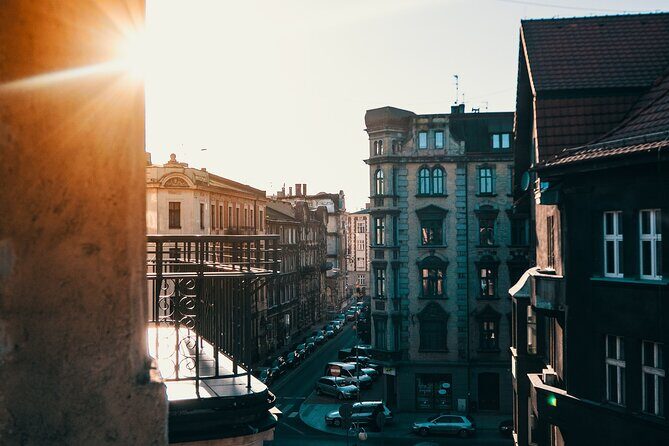
The tour’s first major stop is Katowice’s main religious site, known for its striking architecture and spiritual atmosphere. The point here isn’t just to look up and move on. A local guide can help you read the building like a visual language—what it signals about values, community, and how the city presents itself.
If you’re the type who loves details, you’ll probably enjoy how quickly the guide connects the architecture to local life. The one caution is that some guides may spend more time on building description than on broader storytelling. If you’re hoping for more everyday-life insights, ask questions early and steer the conversation.
Stop 2: Goldstein Palace and the Art of Not-So-Secret Architecture
Next comes Goldstein Palace, a historic building that reflects Katowice’s cultural heritage. This stop is where the walk shifts from “big landmark energy” to “wait, there’s meaning in that façade.”
A palace stop in an hour sounds like a lot, but it works because it’s compact. You get a lesson in why architecture matters: it can show who had influence, what styles were popular, and how a city communicates status and identity.
In one case, the tour experience was reported as more architecture-focused than expected. That’s not automatically bad—it can be great if you like buildings. Just know what you might be signing up for.
Stop 3: Market Square and the Everyday Pulse of People
Then you head to the Market Square, the heart of the city where local life plays out in real time. You’ll get a walk through the main public space and learn what makes it important beyond the obvious “it’s where things happen.”
This is the stop I think most visitors appreciate because it’s the most relatable. It’s where you can imagine yourself wandering later, grabbing a snack, or watching local routines.
Also, Market Square is usually an easy way to reset your bearings. If you’re the kind of traveler who likes landmarks you can reuse—meeting point, orientation point, or photo spot—this is a good one.



Stop 4: The Silesian Insurgents Tribute and Local Pride in Stone
After that, you pay respects at the monumental tribute to the Silesian insurgents. This kind of stop changes the temperature of a tour. It turns sightseeing into memory and identity.
Why this matters: Katowice’s story isn’t only about pretty buildings. It’s also about people who shaped the region, and the memorial helps you understand why certain symbols matter to locals. A guide’s commentary here can connect civic pride to real history and the meaning of monuments in everyday life.
If your tour is more architecture-heavy, this stop often brings the “why” back into focus. It’s a strong moment to ask a question like: What does this represent to locals today? You’ll usually get a sharper answer than from a phone app.
Stop 5: Silesian Theatre—Culture in a Preserved Venue
The walk ends near the Silesian Theatre, a beautifully preserved historic venue that hosts a variety of performances. Even if you’re not attending a show, finishing here is smart because it points you toward how the city spends its evenings.
This stop also gives you an “after the tour” option. If you still have energy, you can use the theatre area as your cultural anchor. If you don’t, it’s still a strong final backdrop for photos and a natural segue into dinner.
Guide Style: Friendly, Personal, and Sometimes Architecture-Forward
The tour is hosted by an independent local, and that personality part is not small. In one experience, the guide Agnieszka stood out for being super friendly and kind, including a warm welcome with typical Polish sweets. That kind of moment makes a short tour feel more human, even when time is tight.
The trade-off with any one-hour plan is focus. Some guides may emphasize architecture and building descriptions more than lifestyle or behind-the-scenes local habits. You can reduce that risk by asking what you actually want to know during the first stop: where locals go for a quick bite, what area you should explore next, or what you should do if it rains.
And yes, the guide provides insider tips and personalized recommendations. That’s the real value-add. Landmarks are fun, but recommendations save you time the rest of the day.
Price and Value: Is $80 for One Hour Worth It?
At $80.14 per person for about 1 hour, the price might look steep on paper. The value comes from three things you’re getting at once:
- A private local host with expert knowledge and guidance
- A small group experience capped at 8 people
- Practical, personalized recommendations, not just a list of sights
If you were to pay for a longer tour, or piece together multiple guided stops, this format can actually be good money. You’re buying speed plus context plus local direction.
One more thing: entry tickets for transportation, museums, and monuments are not included. That matters because a “walk” doesn’t automatically mean you’ll go inside everything. So view this as a guided orientation plus landmark storytelling. If you want interiors, plan to add them separately.
Timing, Comfort, and Getting There Without Stress
This tour is designed for people who can handle a walking experience. It also isn’t recommended for guests with impaired mobility.
It’s near public transportation, which is helpful if you’re building a day plan around it. And since the experience uses a mobile ticket, you won’t be stuck digging for paper tickets when you’re cold, tired, or both.
One small practical note: the itinerary can adapt to weather, and stops may vary. That’s good flexibility, but it also means you might not see every single moment exactly the same as someone else.
A Quick Reality Check: Last-Minute Changes Can Happen
In one reported situation, the tour was cancelled shortly before departure due to a guide receiving test results right before the experience. That’s not something you can control, but it’s worth keeping in mind if you’re relying on this tour as a hard anchor in your schedule.
If Katowice is a one-day stop for you, consider having a backup plan for the time window after the tour—something flexible you can pivot to fast.
Should You Book This Katowice 60-Minute Walk?
I think this tour is a good booking when you want a first-hour hit of Katowice. It’s especially worth it if you’re into architecture, civic monuments, and learning what the big landmarks mean in daily local life. The small group size helps a lot, and the chance to get personalized recommendations is a strong payoff for such a short time.
Skip it (or plan carefully) if you strongly prefer hands-on experiences, long explanations, or lots of interior stops. With only an hour, you’re likely to get quick, efficient storytelling—sometimes more building-focused than lifestyle-focused.
If you do book, go in with two questions ready for your guide. Ask what’s worth your time next, and ask what locals would do if they had only a few hours in Katowice. You’ll squeeze far more value out of the walk than just collecting photos.
FAQ
How long is the Katowice 60-minute local tour?
It lasts about 1 hour.
What group size should I expect?
It’s a small group with up to 8 travelers.
Where do I meet the guide, and where does the tour end?
You meet at the Archcathedral of Christ the King, Plebiscytowa 49A, 40-041 Katowice, Poland. The tour ends at the Silesian Theatre, Rynek 10, 40-003 Katowice, Poland.
How much does the tour cost?
The price is $80.14 per person.
Is anything included besides the guide?
Yes: a knowledgeable local guide, a small group experience, and personalized recommendations. Personal expenses are not included.
Are entry tickets for museums or monuments included?
No. Entry tickets for transportation, museums, and monuments are excluded.
Do I get a mobile ticket?
Yes, the tour offers a mobile ticket.
What’s the cancellation option if my plans change?
You can cancel for a full refund if you cancel at least 24 hours in advance.
Is this tour suitable for people with mobility limitations?
It is not recommended for guests with impaired mobility.
If you want, tell me your travel dates and what you like most (architecture, food, history, or just getting oriented). I can suggest a smart follow-up plan for the rest of your day in Katowice after the walk.