REVIEW · WROCLAW
Berlin Day Tour from Wroclaw
Book on Viator →Operated by Viadrina Tours · Bookable on Viator
One long day, two German histories. This Berlin tour from Wroclaw is interesting because it pairs a driver for an easier ride with WWII-focused commentary on the spots that shaped modern Germany.
I love how the walking portion is structured around major landmarks, not random photo stops. I also like the human part: clear, on-the-ground explanations from the guide (and the calm support of the driver), with names like James and Adam showing up in past schedules and helping the whole day feel smooth.
One drawback: it’s a long day (about 14–15 hours) and lunch isn’t included, so plan for meals/snacks and wear shoes that can take a city-center pace.
In This Review
- Key things to know
- Why this Wroclaw-to-Berlin day trip works better than DIY
- Price and value: what’s behind the $260.24 per person
- Getting there smoothly: pickup, timing, and the two departure options
- The guided Berlin walk: from Holocaust context to Brandenburg Gate
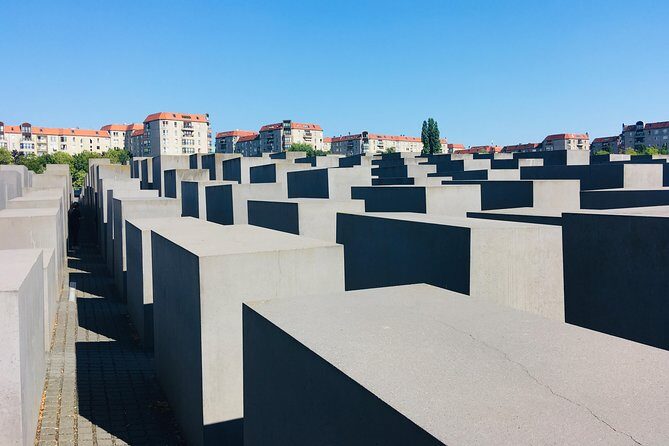
- Holocaust Memorial: your 30 minutes of gravity in the city center
- Checkpoint Charlie: seeing the Cold War border through one famous crossing
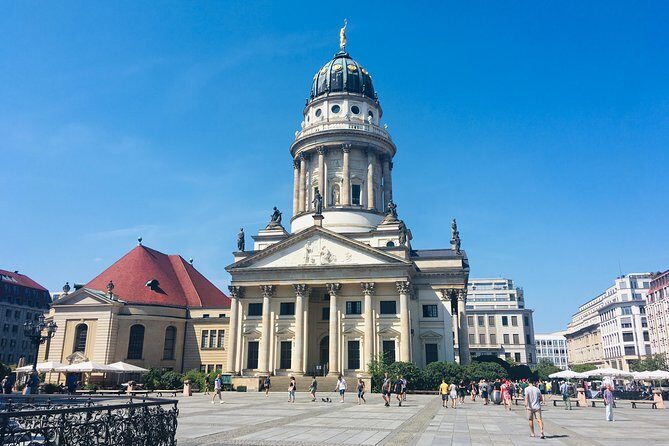
- Bebelplatz, Gendarmenmarkt, and the book burning memorial block
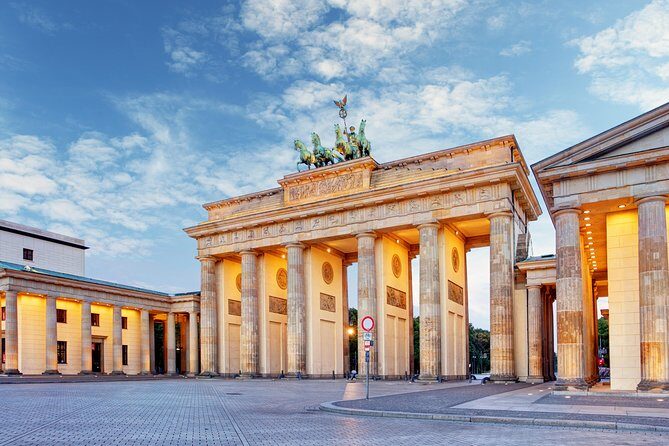
- Brandenburg Gate: the iconic end point that ties the story together
- Museum Island: a short guided look and how to balance your time
- Lunch and free time: how to handle the one missing piece
- Who should book this tour (and who should skip it)
- Should you book the Berlin Day Tour from Wroclaw?
- FAQ
- FAQ
- How long is the Berlin day tour from Wroclaw?
- What’s the price per person?
- Is pickup offered from Wroclaw?
- What languages is the guided tour?
- Are tickets to the main sights included?
- Is lunch included?
- How much time is there for Berlin on your own?
- How big is the group?
- What if I need to cancel?
Key things to know
- Up to two people in the group means you’re not swallowed by a huge crowd while you walk.
- Two Berlin arrival styles: an early departure (around 7:00 AM) or a later start that has you arriving around noon.
- Holocaust Memorial time is built in (about 30 minutes) so you’re not rushed at a deeply emotional site.
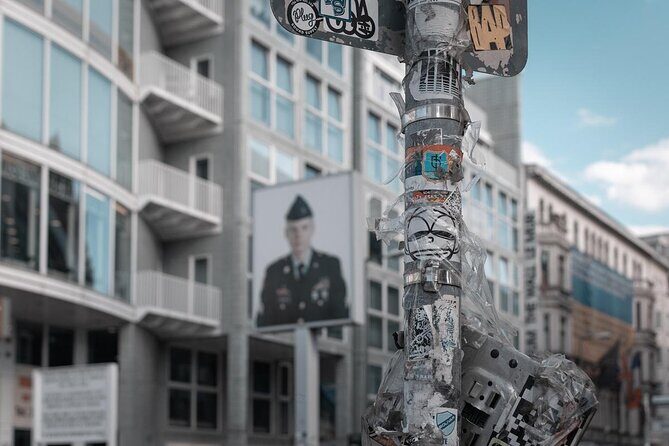
- Checkpoint Charlie gets its own stop (about 30 minutes), timed to connect with the city’s Cold War layout.
- Bebelplatz and the book burning memorial are part of the guided block, along with places like Gendarmenmarkt and traces of the Berlin Wall.
- Brandenburg Gate + Museum Island round things out with the city’s most famous icon and a short guided look at Museum Island.
Why this Wroclaw-to-Berlin day trip works better than DIY
Berlin is big, and doing it right takes time. This tour is built for people who want the highlights and the context without spending your precious hours figuring out transit and museum logistics.
The big practical win is that you get a driver doing the road work while you focus on the sights and listening. That matters when your day is already stretched to roughly 14 hours, with sightseeing placed at the right moments so you’re not sprinting across the city.
You also get a guided storyline rather than a checklist. The route connects WWII landmarks to Cold War borders, so the city stops feeling like separate postcards and starts feeling like one continuous story.
You can also read our reviews of more tours and experiences in Wroclaw.

Price and value: what’s behind the $260.24 per person
At $260.24 per person, this isn’t a bargain-bus deal. But it does include key pieces that add up if you try to build the day yourself: round-trip transportation from Wroclaw (with pickup), a guided walking experience in English/Spanish, and time at major sites where entry is marked as free.
Here’s what you’re really paying for: less friction and more meaning per hour. You don’t have to manage train times, station changes, or worry about missing the right street-level perspective at places like the memorials and former border points.
Lunch is not included, which is your main cost-control variable. If you handle food well (snack earlier, eat during the provided free time), the rest of the day is set up to avoid extra ticket purchases at the featured stops.
And if you’re traveling in a small group (up to two people), that value tends to rise. A smaller group means less waiting, less confusion, and more space to ask questions.
Getting there smoothly: pickup, timing, and the two departure options
The tour runs about 14 hours, give or take. The day feels long on paper, but the schedule helps: you get structured guided time plus breathing room for eating, shopping, and walking at your own pace.
There are two main timing styles:
- Early option (departure around 7:00 AM): you start your Berlin experience early and get about two hours to enjoy the city atmosphere before shifting into the guided sights.
- Later option (arrival around noon): you get time to dine and browse, then the tour starts around 14:00, with your return to Wroclaw after that.
Either way, the tour is designed so you’re not only doing a frantic march of landmarks. You also have time before or after the guided segment to reset, grab a meal, and get your bearings.
One more practical touch: the tour uses a mobile ticket and the meeting point is noted as being near public transportation. That’s helpful if your pickup logistics need a backup option.
The guided Berlin walk: from Holocaust context to Brandenburg Gate
The heart of the day is the guided walking sequence through central Berlin, with a clear historical thread. The guide’s job here is not just to point. It’s to connect what you see to what happened there—and to explain why people remember these places the way they do.
You start with a strong, reflective foundation at the Holocaust Memorial. From there, the route moves toward Cold War boundaries and then back into Berlin’s civic center—ending with big, iconic architecture at the Brandenburg Gate.
The pacing is important. Stops are time-boxed (for example, 30 minutes at key memorial/border locations and around an hour for the larger civic block), which prevents you from getting stuck in one spot too long. It also keeps the day from collapsing into a blurry jumble of photos.
If you like history you can actually see at street level, this structure is the sweet spot. If you’re the type who wants museums and long indoor time, you’ll probably wish for more, especially since it’s a day trip.
Holocaust Memorial: your 30 minutes of gravity in the city center
The Memorial to the Murdered Jews of Europe is the first major stop where the tour asks you to slow down. You’re given about 30 minutes, and that’s a meaningful amount of time for a site that carries real emotional weight.
One detail that makes this stop land: you’re also guided to the area above the former Hitler’s bunker. That geographic connection helps you understand how propaganda, power, and extermination were not distant abstractions. They were tied to specific streets and specific locations.
The best way to use this time is simple. Take a minute to just orient your bearings, then walk slowly through the memorial spaces. You don’t need to rush to “finish” it; the design encourages lingering.
Wear shoes you can stand in and don’t pack your day with extra expectations. This is the kind of stop that works better when you let it affect you a little.
Checkpoint Charlie: seeing the Cold War border through one famous crossing
Next comes Checkpoint Charlie, with about 30 minutes here as well. This is one of the best-known border crossings from the era when Berlin was divided, and the tour uses it to make the city’s political split feel concrete.
What I like about pairing this with the Holocaust Memorial is contrast. One stop forces you to face genocide and state violence. The other shows how Berlin became a stage for global tension, where control lines and border rules shaped daily movement.
At Checkpoint Charlie, the goal isn’t only photos. It’s understanding what a crossing means when you can’t simply walk across history.
Tip: if the site feels busy, keep moving through it. Give your brain a chance to go from seeing symbols to understanding systems.
Bebelplatz, Gendarmenmarkt, and the book burning memorial block
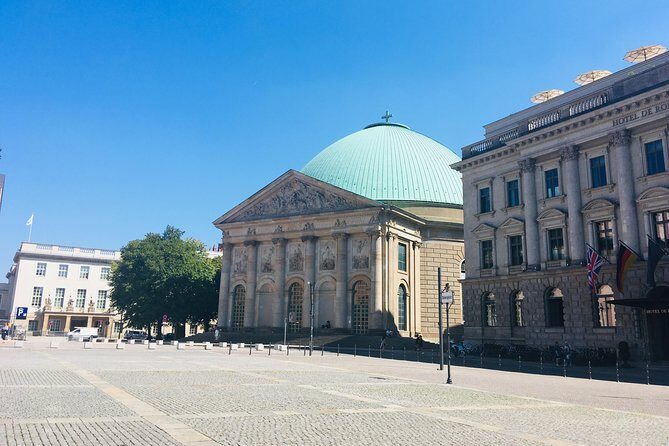
The longest guided walking block is about one hour, centered on Bebelplatz and nearby major sights. This is where the tour broadens from memorials and borders into Berlin’s cultural and civic heart.
You’ll also pass or visit related points such as:
- Gendarmenmarkt
- Remains/traces connected to the Berlin Wall
- Luftwaffe Headquarters
- The book burning memorial on Bebelplatz
The presence of the book burning memorial is a smart choice. It shifts the story from violence to control of ideas—showing how authoritarian regimes attack thought before they attack people.
This block also helps you understand Berlin’s “layers.” Modern streets sit over events that many people learned about only through textbooks. Seeing it grouped like this makes the legacy feel less random.
The drawback here is the obvious one: an hour is not a long time. If you want deeper time at any one place, you’ll likely want to return on another trip. Still, for a day tour, this is a solid way to cover a lot without turning the walk into a blur.
Brandenburg Gate: the iconic end point that ties the story together
The tour’s big photo-and-history marker is Brandenburg Gate, where you get about 30 minutes. This stop matters because it’s the kind of landmark people point at for years—without always knowing how much political meaning is attached to it.
By the time you reach this gate, the earlier stops have already done the heavy lifting. The gate doesn’t feel like a symbol floating in space. It feels like part of a country’s long route from dictatorship and division toward reunification.
Use the 30 minutes in two ways. First, take the classic views for your own map memory. Second, let the guide’s connections land before you move on.
If you only do this place on your own later, it’s easy to reduce it to a postcard. With this tour’s setup, it’s easier to see it as a historical punctuation mark.
Museum Island: a short guided look and how to balance your time
At Museum Island, you get a short guided tour of about 20 minutes. This is not a full museum visit, so don’t treat it like one. Think of it as a focused orientation: where you are, why the island matters, and what Berlin’s museum district represents in the city’s identity.
The advantage is that it fits neatly into a day trip rhythm. After so many heavy stops, Museum Island can feel like a shift back to the city’s cultural life and how people rebuild public meaning through art, learning, and institutions.
If you want to go deeper, you can use the free time after the guided block to linger around the island area and decide what (if anything) you want to do next on a future visit.
Lunch and free time: how to handle the one missing piece
Lunch is not included. That sounds minor until you’re trying to find food while you’re also managing walking time and meeting points.
The good news is you’re given free time at the edges of the day. Depending on the departure option, you get about two hours of time in Berlin along with additional breaks for dining and browsing shops.
My practical suggestion is to treat meals like anchors:
- Eat once during the planned free time.
- Bring a snack or two so you don’t get stuck hungry during the guided parts.
- Keep water with you, especially on memorial/busy central streets.
This is a long day. The difference between a good experience and a frustrating one is often your energy level, not the schedule.
Who should book this tour (and who should skip it)
This is a good fit if you:
- Want a guided day that covers major WWII and Cold War landmarks in one go
- Prefer a driver so you’re not stressed about getting around
- Like explanations that connect what you see to the bigger picture
It may not be the best fit if you:
- Want lots of museum time (the guided Museum Island stop is short)
- Hate long days and prefer slower travel with fewer stops
- Plan to spend most of your time indoors, since this is built around walking and street-level landmarks
The small group size (maximum of two travelers) is a strong reason to consider it. It’s easier to ask questions and stay focused when the group is not huge.
Should you book the Berlin Day Tour from Wroclaw?
If your goal is to see Berlin’s biggest WWII and Cold War landmarks in a single day—with context and without transit hassles—this is a smart booking. The value comes from the combination of pickup, guided walking in English/Spanish, and free entry at the featured sites.
I’d book it if you want a guided storyline, especially if your history interest is more about understanding than collecting. The itinerary is designed to connect the dots: Holocaust Memorial gravity, Checkpoint Charlie’s border story, Bebelplatz’s idea-control reminder, and then a final iconic moment at Brandenburg Gate.
Pass if you’re the kind of traveler who needs deep time at museums or who gets worn out by 14–15 hours on the move. In that case, Berlin deserves a multi-day base.
FAQ
FAQ
How long is the Berlin day tour from Wroclaw?
The tour is approximately 14 hours, and in practice it can run close to 15 hours.
What’s the price per person?
The price is $260.24 per person.
Is pickup offered from Wroclaw?
Yes, pickup is offered.
What languages is the guided tour?
The guided tour is offered in English/Spanish.
Are tickets to the main sights included?
The itinerary lists admission as free for the featured stops.
Is lunch included?
No, lunch is not included.
How much time is there for Berlin on your own?
There is free time in Berlin, including about two hours of time included in the schedule (the exact feel depends on the early vs later departure option), plus time to eat and walk around shops.
How big is the group?
This tour has a maximum of 2 travelers.
What if I need to cancel?
You can cancel for a full refund if you cancel up to 24 hours in advance of the experience’s start time. If you cancel less than 24 hours before, the amount paid is not refunded.