REVIEW · GDANSK
Private WW2 Tour of Westerplatte,Gdansk and Stutthof Including Lunch
Book on Viator →Operated by Gdansk Trips · Bookable on Viator
WWII in Gdańsk hits different when you travel it in order. This private day stitches together Stutthof, Westerplatte, and the wartime scars of Gdańsk so the story clicks instead of feeling like random stops. You also get a real break with lunch at Plaza Stegna by the Baltic Sea.
I like two big things about how this tour is set up. First, the guide helps you track the messy political background that led to the war, not just the aftermath. Second, you get English-language guiding at the places that need it most, plus lunch that keeps the pace humane.
One consideration: it is a full day built around travel time and museum time, and Stutthof means you should be ready for emotionally heavy content.
Key highlights worth your attention
- Private minibus pickup from hotels and Port of Gdańsk, so you’re not hunting meeting points.
- Stutthof guided museum time with an English-speaking certified guide and the camp’s context made clear.
- Baltic Sea lunch at Plaza Stegna—a sunny change of scenery after heavy history.
- Westerplatte stop where WWII started with a clear timeline from 1926 to the surrender in 1939.
- Gdańsk wartime essentials like the Polish Post Office building, monuments, and visible WWII remains in the Old Town.
- Flexible, human guiding shown in reviews, including small route adjustments like spending time at the Stegna beach.
In This Review
- Why This Gdańsk–Westerplatte–Stutthof Day Works
- Stutthof Concentration Camp: The Context You Actually Need
- Plaza Stegna Lunch on the Baltic Sea: A Needed Reset
- Westerplatte: The Place WWII Begins
- Museum of the Polish Post Office and Gdańsk Old Town WWII Traces
- Timing, Pace, and How the Private Transport Helps
- Price and Value: What $255.18 Buys You
- What the Guide Quality Looks Like in Real Life
- Who Should Book This Private WWII Tour
- Should You Book This Private WWII Tour of Westerplatte, Gdańsk, and Stutthof?
- FAQ
- How long is the tour?
- What stops are included?
- Is lunch included?
- Is pickup included?
- Is the tour offered in English?
- Are admission tickets included?
- What’s the meeting time window?
- Is this a private tour?
- Is there a physical fitness requirement?
- Can I cancel and get a full refund?
Why This Gdańsk–Westerplatte–Stutthof Day Works
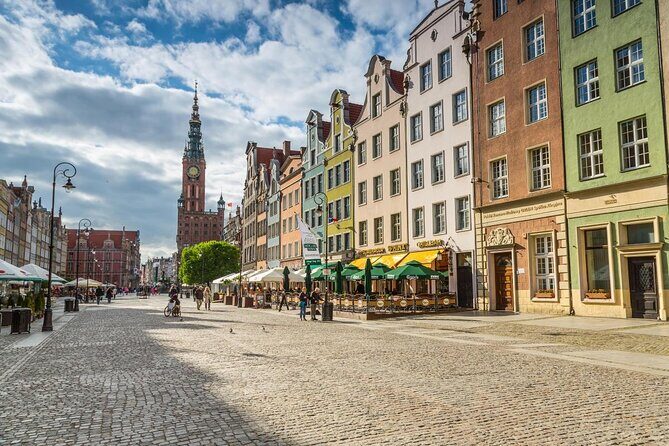
A good WWII tour doesn’t just show places. It helps you understand what changed, who made choices, and why certain locations mattered. This private route does that by moving from the darkest chapter (Stutthof) to the spark point (Westerplatte) and then into the city where the war’s fingerprints stayed behind.
You’re paying for more than entry tickets. You’re paying for a guide who can untangle interwar politics around the Free City of Danzig and explain why the opening of the conflict in 1939 didn’t happen in a vacuum. On top of that, you’re not spending your time commuting between far-flung sites on your own.
The day runs roughly 6 to 7 hours, and it’s built around private transport plus guided time at Stutthof. That matters because Stutthof takes focus. Walking through it without context can feel like a blur. With context, you start to connect dates, policies, and the human impact to the physical layout.
Stutthof Concentration Camp: The Context You Actually Need
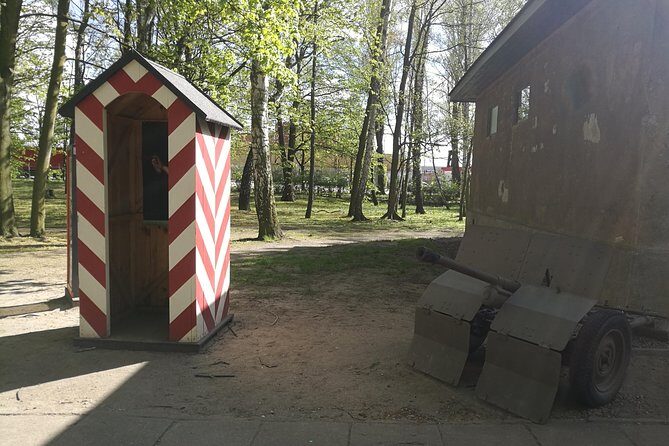
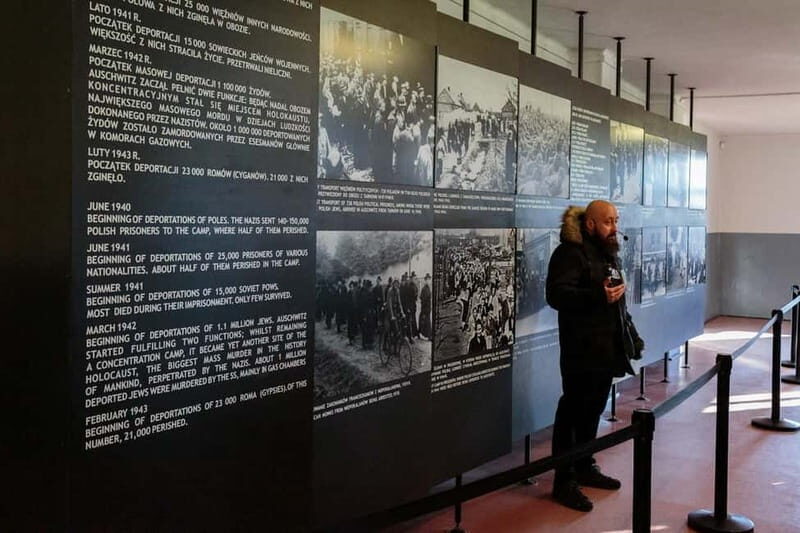
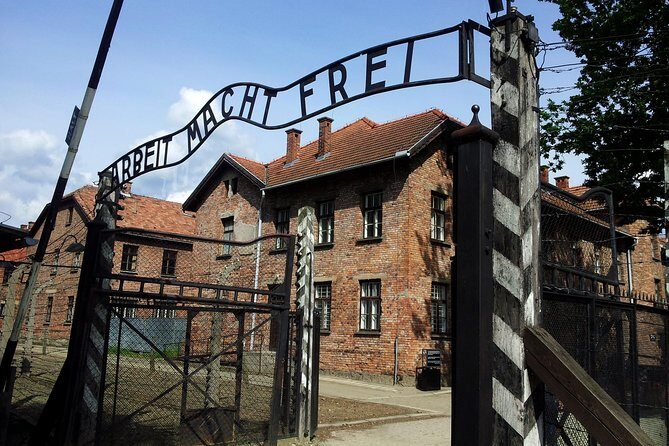
Stutthof is the kind of place where your brain wants details fast. The itinerary handles that by pairing a short transfer with guided museum time. You’ll spend about 2 hours guiding inside the Stutthof Concentration Camp Museum, with admission included.
Before you even hit the museum, the guide uses the transfer time to explain complicated relationships between the Republic of Poland, Nazi Germany, and the Free City of Gdańsk during the interwar period. That’s not trivia. It’s the groundwork for understanding how this region slid toward war and why the camp became part of the Nazi system.
At Stutthof, the goal isn’t to overwhelm you with names or dates. It’s to give you a framework so you can read what you’re seeing—exhibits, memorial information, and the story told by the museum. Expect emotional weight and plan to take things slowly.
A practical tip: bring tissues just in case. Also, wear comfortable shoes. Even if the official guiding time is fixed, your body will still register the walking and standing.
You can also read our reviews of more private tours in Gdansk



Plaza Stegna Lunch on the Baltic Sea: A Needed Reset
After Stutthof, the plan moves to Plaza Stegna, where you get a break by the sea. Lunch here is included, and the schedule gives you time to look out at the Baltic Sea before heading back toward Gdańsk.
This stop is more than a meal. It’s a breather in the story—an intentional shift in pace. If you’ve done “museum-only” days before, you know how quickly attention drains. A beach lunch helps you reset so the next part of the route lands.
You’ll have around 1 hour 30 minutes for this segment, and admission is listed as free. In reviews, people also specifically appreciated the guide’s willingness to spend time at the Stegna beach, which tells me the guiding style aims to balance structure with small, human comforts.
What to pack: light layers. Even when the city feels mild, coastal wind can cool you down.
Westerplatte: The Place WWII Begins
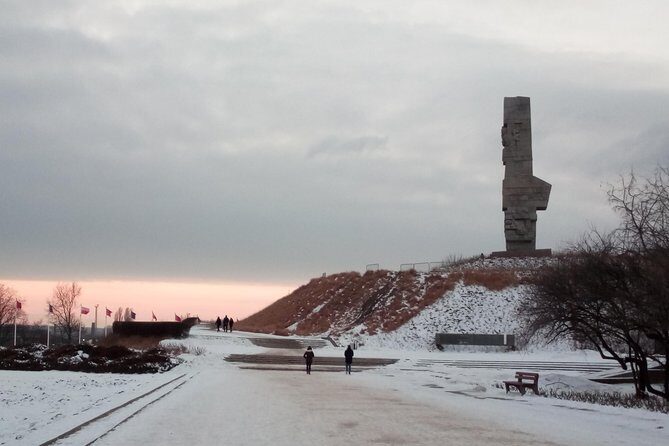
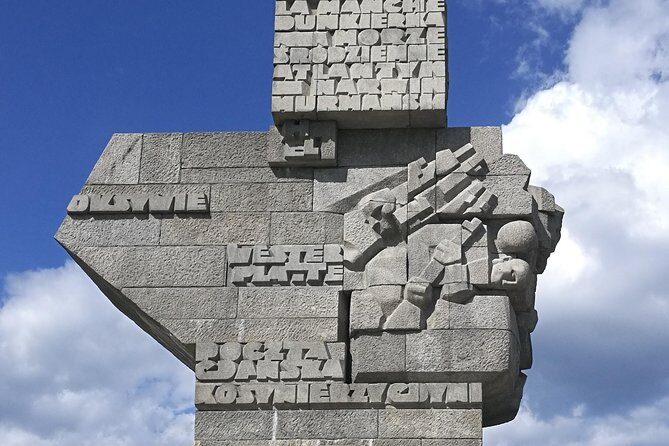
Then comes the part that reads like a history lesson with a real-world address: Westerplatte—the peninsula where WWII started. The timeline matters here, and the route lays it out clearly.
From 1926 to 1939, Westerplatte was the Polish Military Transit Depot, operating within the territory of the Free City of Danzig. On 1 September 1939, the German battleship Schleswig-Holstein opened fire on the Polish garrison without warning. Seven days later, Major Henryk Sucharski decided to surrender because of a lack of ammunition and supplies.
That sequence is why Westerplatte works as a stop after Stutthof. You’re moving from the machinery of oppression to the moment the broader catastrophe began—same era, different lens. You also get a short but focused visit, roughly 1 hour, with admission listed as free.
If you’re the type who likes to visualize events, Westerplatte is ideal. You’re standing in the geography that shaped tactics and decisions. And if you’re traveling with kids, teens, or anyone who gets restless, this stop’s clear timeline helps the story stay easy to follow.
Museum of the Polish Post Office and Gdańsk Old Town WWII Traces
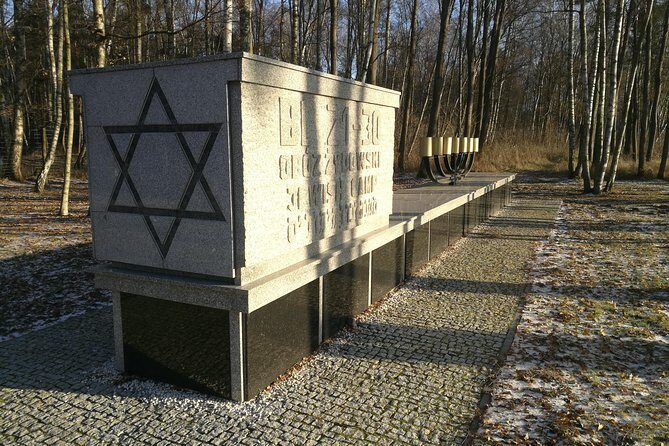
Back in Gdańsk, the tour shifts from major standalone sites to the city’s remaining wartime evidence. One key stop is the Museum of the Polish Post Office and the Defenders of the Polish Post Office monument.
This defense is described as one of the first acts of WWII in Europe, as part of the Invasion of Poland. You’ll spend about 30 minutes here, looking at the historical building and the memorial context tied to the defenders.
Why this matters: city history isn’t only about big battles. It’s about resistance, symbolism, and how wars start by targeting communications and civilian structures. The Polish Post Office episode fits that pattern.
Then you head into the Old Town, where you’ll see remaining WWII features like Victoria Schulle elements and bunkers and ruins from the 1940s. You get about 1 hour for this segment, and admission is listed as free.
This part can be surprisingly powerful because you’re not in a controlled museum setting. You’re in a living city where the war is still physically present. It can help you connect what you learned at Westerplatte to what happened to Gdańsk right afterward.
In some guided days (based on real-world route variations), people have also been taken past other historic markers around the Old Town area, including religious and cultural sites linked to the city’s wartime narrative. Even if those aren’t on every schedule, the overarching theme stays the same: Gdańsk is part of the story, not just a backdrop.
Timing, Pace, and How the Private Transport Helps
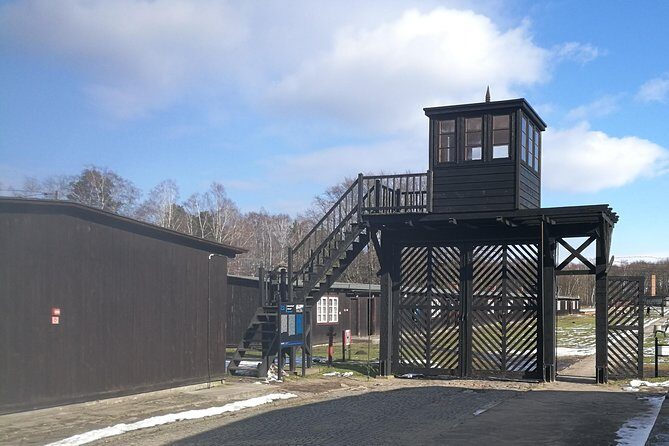
A day like this lives and dies by logistics, and the tour’s structure is built around not wasting your energy.
You get pickup from all hotels in Gdańsk and Port of Gdańsk, which helps a lot if you’re staying outside the main tourist core or arriving by cruise ship. You’re also not juggling multiple transit routes between sites.
The tour starts with a window listed as 8:30 AM to 10:30 AM (based on the meeting time details). Once you’re in motion, the pacing looks like this: transfer to Stutthof, guided museum time, then the sea lunch break, then Westerplatte, then the Polish Post Office and Old Town.
In practice, that schedule is good for staying engaged. Stutthof is heavy, so the guide builds in a transition with transfer context before museum time. Then you get a lighter reset at the Baltic Sea. Finally, you finish with city stops that are shorter and easier to process.
Physical fitness note: the tour asks for moderate physical fitness. Nothing suggests extreme hiking, but you should expect walking and standing inside museums and around memorial areas.
A few more Gdansk tours and experiences worth a look
Price and Value: What $255.18 Buys You
At $255.18 per person, this isn’t a budget add-on. It’s priced like a full-day private experience that includes specialized time.
Here’s what you’re buying:
- Private transport between Gdańsk and Stutthof, plus intra-day driving.
- Guided time at Stutthof with included admission.
- A guided, structured route through Westerplatte and key wartime sites in Gdańsk.
- Lunch included at Plaza Stegna on the Baltic Sea.
Also, the reviews give you a clue about how the guide’s work affects value. Guides named Maciej (and another guide noted as Matthew on one day) earned top marks for clear English, strong explanations, and staying responsive to questions. That kind of guiding is hard to replicate with a self-guided audio app, especially at Stutthof where context matters.
If your goal is to see the sites independently, you could try to piece things together. But if your goal is to understand the chain of events and leave with a clear mental map, the private structure is the value play.
What the Guide Quality Looks Like in Real Life
The biggest theme in strong reviews is the guide’s ability to make complexity feel navigable. People specifically highlight clear explanations of how events led up to WWII and how the guide kept the day moving with interesting detail.
In at least one review, the guide used photos and explanations to help people feel part of what they were learning. Another review praised a guide’s friendliness and ability to keep young adults and adults asking questions. One person also noted flexibility, including turning the plan toward the Stegna beach area.
Why that matters for you: a private tour is only as good as the person talking. When the guide can answer questions on the fly and adjust without losing the core story, you get a better day, not just a longer one.
So when you book, you should expect an experience where dialogue is part of the product, not an afterthought.
Who Should Book This Private WWII Tour
This is a great fit if you want:
- A structured WWII day focused on the specific Gdańsk region story.
- English guidance in places that need explanation (especially Stutthof).
- A mix of memorial seriousness and a real lunch break by the sea.
- The convenience of pickup and private transport.
It’s also a smart choice if you have Polish heritage or personal ties to the region, because the route emphasizes Polish perspectives at key sites like the Polish Post Office and Westerplatte garrison story.
You might consider another option if you prefer shorter tours or if emotionally heavy sites feel overwhelming. Stutthof is not optional content here—it is the heart of the route.
Should You Book This Private WWII Tour of Westerplatte, Gdańsk, and Stutthof?
If you’re deciding between a quick overview and a day that tries to make the whole WWII story coherent, I’d lean toward booking this one.
Do it if:
- You want a private, English-guided experience.
- You care about understanding the timeline from the Free City of Gdańsk through the opening attacks.
- Lunch by the Baltic Sea is your kind of morale reset after museum time.
Skip it (or look at a lighter alternative) if:
- You only want minimal time at memorial sites.
- You’re shopping for a purely self-guided itinerary with lots of spare time.
For most people who come to Gdańsk for history, this route hits a rare sweet spot: serious content, clear storytelling, and transport that removes the stress.
FAQ
How long is the tour?
The tour runs about 6 to 7 hours.
What stops are included?
The day includes Stutthof Concentration Camp, Plaza Stegna (lunch by the Baltic Sea), Westerplatte, the Museum of the Polish Post Office in Gdańsk, and wartime remains in the Old Town.
Is lunch included?
Yes. Lunch is included during the Plaza Stegna stop by the Baltic Sea.
Is pickup included?
Pickup is available from hotels in Gdańsk and from the Port of Gdańsk.
Is the tour offered in English?
Yes. The tour is offered in English.
Are admission tickets included?
Admission is included for the Stutthof museum. Admission is listed as free for Plaza Stegna, Westerplatte, the Museum of the Polish Post Office, and the Old Town stops.
What’s the meeting time window?
The meeting details list hours from 8:30 AM to 10:30 AM, Monday through Sunday.
Is this a private tour?
Yes. It’s a private tour/activity, with only your group participating.
Is there a physical fitness requirement?
The tour recommends moderate physical fitness.
Can I cancel and get a full refund?
Yes. Free cancellation is available, and you can cancel up to 24 hours in advance for a full refund.