REVIEW · GDANSK
Gdansk: Chopin’s Piano Concert by Candle Glow
Book on GetYourGuide →Operated by Opera da Camera di Roma · Bookable on GetYourGuide
Music by candle glow changes everything in Gdańsk. This Chopin-only feeling happens inside a 13th-century Gothic church, where piano notes float through candlelight and stone. It’s one of the rare ways to hear classical piano as part of the city’s old brick atmosphere, not in a modern hall.
What I like most are two things: the outstanding acoustics in St. Catherine’s Church, and the way the concert builds around recognizable composer names, from Chopin to Bach, Beethoven, Liszt, Schumann, Prokofiev, and Rachmaninoff. And because the pianist performs a different selection each day, you’re not stuck with the same set if you plan more than one night.
The only real heads-up is comfort. Even with heaters around, the church can still feel chilly, and chairs aren’t described as plush—so bring a warm layer and plan to sit still for the full 50 minutes.
In This Review
- Key highlights at a glance
- Inside the Rectoral Church of St. Catherine: what the evening feels like
- Why the acoustics matter for piano (and why this venue is the point)
- The 50-minute flow: what happens during your listening time
- The program choices: Chopin first, then Bach, Beethoven, and friends
- Seats, warmth, and how to not ruin the vibe
- Price and value: why $29 feels fair for this format
- Who should book this Chopin-by-candle-glow concert
- Should you book this Gdańsk candle-glow Chopin concert?
- FAQ
- How long is the concert?
- What does it cost?
- Where does the concert take place?
- Is it only music by Chopin?
- Will the program be the same every day?
- Do you need to bring your own food or drinks?
- Are there heaters for cold weather?
- What languages are used?
- Is the venue wheelchair accessible?
- Can I cancel or pay later?
Key highlights at a glance
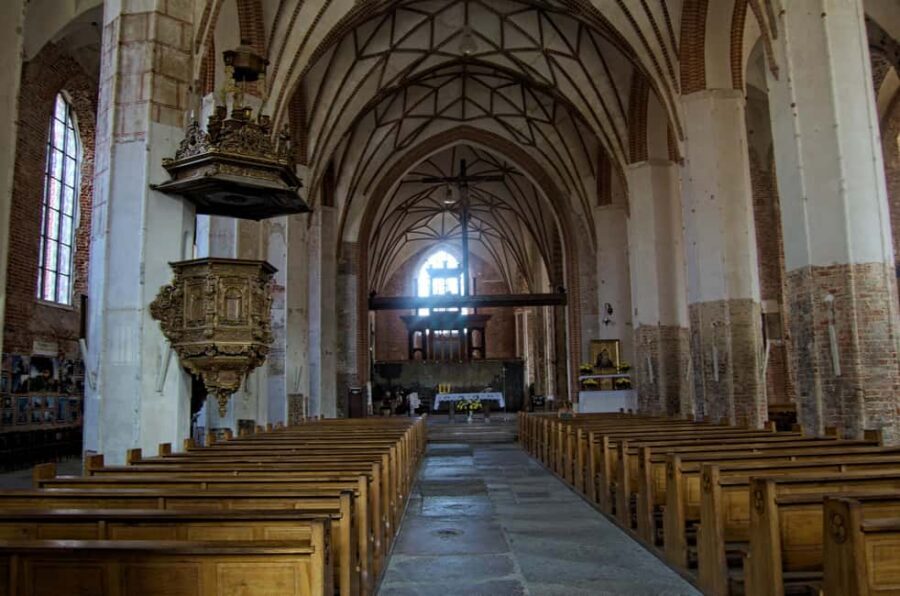
- 13th-century Gothic venue: the Rectoral Church of the Carmelite Fathers of St. Catherine in Gdańsk
- Big-sound acoustics: a space known for carrying piano clearly and warmly
- Chopin-focused programming: plus Bach, Beethoven, Liszt, Schumann, Prokofiev, Rachmaninoff
- Different pieces each day: so repeat nights stay interesting
- English and Polish support: a host/greeter is available, and the pianist explains pieces in both languages
- Heaters provided: helpful on cold evenings, though you should still expect some chill
Inside the Rectoral Church of St. Catherine: what the evening feels like
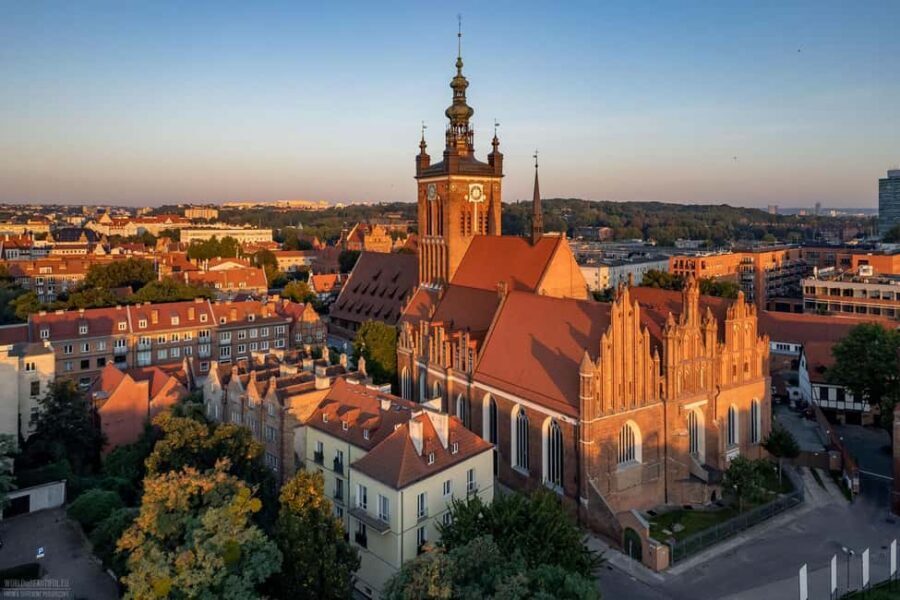
This concert starts with the setting, plain and simple. You’re going to a massive Gothic church from the 1200s, the Rectoral Church of the Carmelite Fathers of St. Catherine, and the atmosphere is built around candles and stillness. The result is not just pretty photos. It’s a different pace for listening, because the space makes you lower your voice and pay attention.
There’s also a human scale to it. This isn’t a giant auditorium experience. It’s set up as a small-group concert, and the piano performance happens close enough that you can feel like you’re part of the moment rather than watching from far away. One review notes the pianist was only a couple of meters away, which tells you the whole setup leans toward intimacy.
Before the first notes, I suggest you take a minute to look up. Gothic interiors can be visually dramatic, and even if you’re not a church-history person, it helps your brain lock onto the “why” of the night: piano in stone. When the music begins, it feels less like a standard concert and more like sound traveling through the church itself.
You can also read our reviews of more tours and experiences in Gdansk.



Why the acoustics matter for piano (and why this venue is the point)
Piano can sound either close and detailed, or flat and distant. Here, the venue is chosen because St. Catherine’s Church is known for outstanding acoustics, and you feel that quickly. The church shape and surfaces help the piano carry without swallowing the softer passages.
That matters because the program includes pieces that depend on nuance. Chopin’s writing often lives in delicate dynamics and phrasing. Some of the selections also demand clarity—fast runs, repeated patterns, and dense harmonic textures. In a venue with weak acoustics, those details can blur. In a venue designed for it, you hear the structure.
It’s also a practical advantage. If you’ve ever struggled to hear classical music in a noisy modern room, this setup is a different story. I’d call it “listening without effort.” You don’t need to be a music expert to catch the contrasts when the pianist switches styles across composers.
One more detail: candlelight changes your attention. Even if the music is the main event, candles make you slow down. You stop scanning your phone for updates and start listening like you’re supposed to. That’s part of the charm, and it’s also why polite phone behavior matters (more on that later).
The 50-minute flow: what happens during your listening time
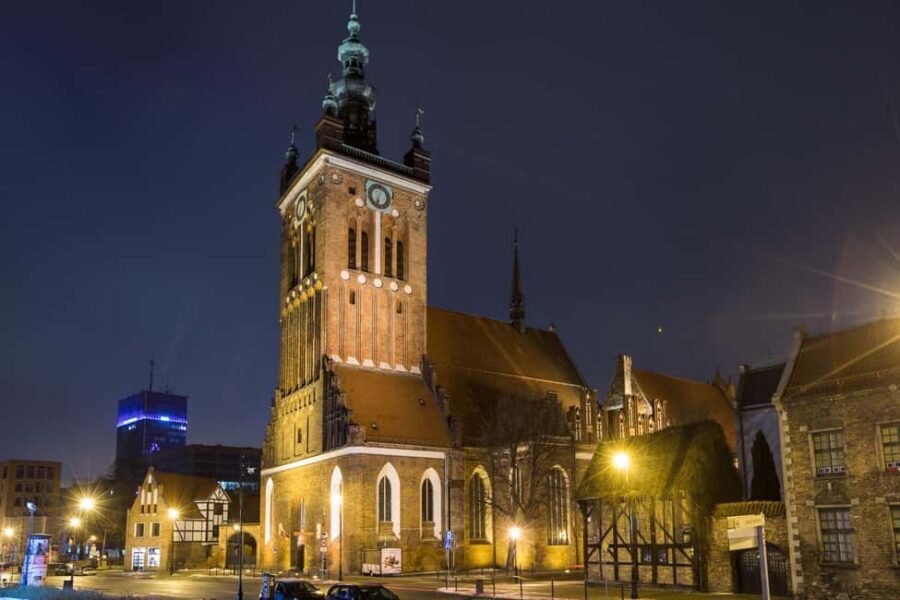
Plan on a tight schedule. The concert runs about 50 minutes, and you’ll want to arrive ready to sit. Since it’s short, every minute counts, which is one reason the experience feels focused instead of long.
Here’s how the evening generally plays out:
- You settle in and get comfortable enough for a relatively cold, still environment.
- The pianist performs a set built around Chopin, with other composers woven in.
- Pieces are performed back-to-back, and the pianist provides brief explanations before or around the selections, in English and Polish in many cases.
That “explain as you go” element is one of the biggest quality factors. Even if you only know a few Chopin titles, quick context helps you follow what you’re hearing—especially for pieces that might feel unfamiliar at first. Several comments mention the pianist talking about the pieces in English and Polish, which turns the concert into more than a soundtrack.
Also keep expectations aligned with the duration. A shorter concert can feel more intense. If you’re used to full symphonies, this will be concentrated. That’s not a flaw—it’s part of the value: you get a special setting and a strong program without losing an entire night.
The program choices: Chopin first, then Bach, Beethoven, and friends
This is a Chopin experience, but it’s not Chopin-only. The selection rotates each day, and the full menu of possible works includes a mix of Romantic and earlier classical giants. The organizer can also change the program, so think of the evening as a “set of masterpieces” rather than an exact list you’re guaranteed to hear every time.
From the Chopin side, expect familiar emotional colors and technical showpieces. The roster includes:
- Scherzo in B minor, Op. 31
- Fantasy in F minor, Op. 49
- Barcarolle in F-sharp major, Op. 60
- Polonaise in A major, Op. 40 No. 1
- Nocturne in C-sharp minor, Op. posth.
- Études, including the Revolutionary Étude (Op. 10 No. 12) and others
Then the program expands your ear with other composers who “fit” the night. You may hear Bach through a Prelude & Fugue (WTC II, in G-sharp minor), and Beethoven through a Sonata in A-flat major, Op. 31 No. 3. Liszt shows up as well (Petrarch Sonnet No. 104), with Schumann (Papillons, Op. 2), Prokofiev (Sonata No. 3, Op. 28), and Rachmaninoff (Étude in D minor, Op. 33 No. 4).
Why this mix works in this setting:
- Chopin gives you the lyrical core and the “recognizable romance” most people come for.
- Bach and Beethoven add structure and clarity, which makes the contrast with Chopin feel sharper.
- The technical étude pieces keep the performance vivid and demonstrate why this pianist is good enough to lead a candlelit room without letting it turn sleepy.
One practical tip if you’re choosing which day to attend: pick the night when you’ll be most emotionally ready for piano depth, not just the “famous Chopin” highlights. A couple of voices suggested they’d like more of the most famous Chopin works—but the upside is that you also get variety. If you want only the biggest hits, you might prefer to check the daily lineup before you lock it in.
Seats, warmth, and how to not ruin the vibe
In a candlelit church, small comfort issues become big ones. Reviews specifically mention heaters around the space, which helps a lot on cold nights. Still, I recommend treating this like outdoor weather on the inside: wear layers. If you tend to get cold easily, bring a warmer coat or a scarf you can sit in.
Seating is another real factor. Some comments mention chairs that could be more comfortable, and if you’re sensitive to sitting still, you’ll feel it by the middle of the 50 minutes. Comfort hacks are simple: arrive early enough to pick a better spot, and don’t assume you’ll be perfectly positioned for both sound and sightlines.
Speaking of sightlines, keep your phone away during the performance. At least one comment complained about people using phones that blocked views and disrupted the atmosphere. I’m on the same page: if you need a photo, take it before the music starts, then put the phone away. In a room like this, the atmosphere is the feature.
If you care about being close to the pianist, seat selection matters. There’s some evidence that front rows may be more coveted, and people adjust as the evening goes. I’d rather be practical: arrive with enough time to choose your preference, especially if you’re traveling with someone who really wants to see the pianist’s hands.



Price and value: why $29 feels fair for this format
At $29 per person for a 50-minute concert, you’re paying for a very specific product: piano performance in a 13th-century Gothic church, with candlelight and strong acoustics. That’s not just “music.” The venue is doing part of the work, and in this case it’s clearly part of the pitch.
What makes it good value:
- You’re not paying for extras you’ll ignore. There’s no food package included, and the whole focus stays on the concert.
- The program is high-quality by design: well-known composer names plus technical pieces that show off the pianist.
- You get variety over multiple days, because the pianist plays a different selection each day.
Where it might feel less good:
- If you expect a long concert, this is short. The experience is intense because the time is limited.
- If you’re not comfortable sitting in a church for close to an hour, you may feel the environment more than the music.
Also, the language options help value for international visitors. Host/greeter support is available in English and Polish, and the pianist often explains the pieces in both languages. That takes the edge off for beginners and makes the music more rewarding without requiring prior knowledge.
Who should book this Chopin-by-candle-glow concert
This is a strong fit if:
- You’re in Gdańsk and want a classical event that feels connected to the city’s historic architecture.
- You like Chopin and want the emotional tone of his writing in a setting that matches.
- You enjoy “learning while listening,” especially when the pianist explains works in plain language.
- You want something atmospheric that doesn’t eat your whole night.
It’s less ideal if:
- You hate quiet spaces where phones are distracting (you’ll still have to share the room).
- You need padded seating and don’t plan to layer up for cooler conditions.
- You’re chasing only the most famous Chopin selections. The program can include less expected choices depending on the day.
For families: the concert is 50 minutes, so it can work for older kids who enjoy listening. But since there’s no food or drinks included, you may want to plan a snack before you go.
Should you book this Gdańsk candle-glow Chopin concert?
If you’re deciding whether to spend a night on piano in candlelight, my answer is yes—especially if you care about atmosphere and sound. The combination of St. Catherine’s Church acoustics, candle glow, and a Chopin-centered program makes this feel like a true “Gdańsk night,” not a generic concert you could hear anywhere.
Book it when you can dress warmly, arrive with a little extra time to get a comfortable seat, and keep your phone stowed. If you do those things, you’ll get exactly what makes this experience special: Chopin’s music, performed live, in a space designed to carry it.
FAQ
How long is the concert?
The concert lasts 50 minutes.
What does it cost?
The price is $29 per person.
Where does the concert take place?
It’s held in the Rectoral Church of the Carmelite Fathers of St. Catherine (St. Catherine’s Church) in Gdańsk.
Is it only music by Chopin?
No. While the concert focuses on Chopin, the program can also include works by composers such as Bach, Beethoven, Liszt, Schumann, Prokofiev, and Rachmaninoff.
Will the program be the same every day?
No. Each day the pianist performs a different selection of pieces, and the organizer can also make changes to the program.
Do you need to bring your own food or drinks?
Food and drinks are not included.
Are there heaters for cold weather?
Heaters are mentioned in reviews, including patio heaters around the space.
What languages are used?
The host or greeter is available in English and Polish.
Is the venue wheelchair accessible?
Yes, the activity is wheelchair accessible.
Can I cancel or pay later?
You can cancel up to 24 hours in advance for a full refund, and you can reserve now and pay later.