REVIEW · GDANSK
Gdansk 1 Hour Guided Tour through the Heart of the Old Town
Book on Viator →Operated by Adventures Mellex Gdansk · Bookable on Viator
Gdańsk in one hour can actually work. This guided ride threads together Old Town landmarks and port-era memory without turning your day into a marathon. You get the big names, plus the kind of street-level context that helps everything click.
I really like the format: it’s a private, English-guided loop that keeps things moving, so you don’t lose half your vacation to slow lines and long walks. I also like that the stops cover both the shiny sightseeing hits (like Neptune’s Fountain) and the heavier chapters (like the Museum of the Second World War and the shipyard area).
One thing to consider: it’s fast. Most stops are brief looks from the route, and only St. Bridget’s Church is listed as included, so if you want to go inside multiple places, you’ll likely need extra time and extra tickets.
In This Review
- Key things to know before you go
- The one-hour Melex loop: how the tour feels in real life
- Where the story starts: from the Gdańsk Shakespeare Theatre to the High Gate
- The Royal Route gates: Golden Gate, Strohturm, and the medieval walls you can trace
- Coal Market Square, artisan corners, and the Great Armoury’s war-prep logic
- Churches in a short window: St. Mary’s, St. Catherine’s, and St. Bridget’s (included)
- Port power in miniature: Crane miniatura, Long Coast, and Motława views
- WWII and labor history without overselling it: Second World War Museum, Bunkier, Shipyard Gate
- Everyday Gdańsk bridge and market details: Fish Market, Bread Bridge, and guild leftovers
- Museums and monuments in the Main Town core: Polish Post Office and Neptune’s Fountain
- Price and value: is $40 for a 1-hour private tour a smart buy?
- Should you book the Gdansk 1 Hour Guided Tour?
- FAQ
- How long is the Gdansk 1 Hour Guided Tour?
- What does the tour cost?
- Is the tour in English?
- Is this a private tour?
- What’s included in the ticket price?
- Are museum and church entrances included at every stop?
- Where does the tour start and end?
- Are food and drinks included?
- Is it possible to visit with a service animal or use public transport nearby?
Key things to know before you go
- A cozy electric Melex ride keeps the pace comfortable, especially after lots of walking in Gdańsk.
- Most stops are quick exterior photo breaks, so you’ll want to be ready to look up and around.
- St. Bridget’s Church entrance is included, which is a smart value add on this kind of short tour.
- Your guide’s style matters here: multiple praised guides (including Christian and Przemek) were described as friendly, funny, and not rushed.
- You’ll see both postcard Gdańsk and wartime/shipyard history in one compact route.
The one-hour Melex loop: how the tour feels in real life
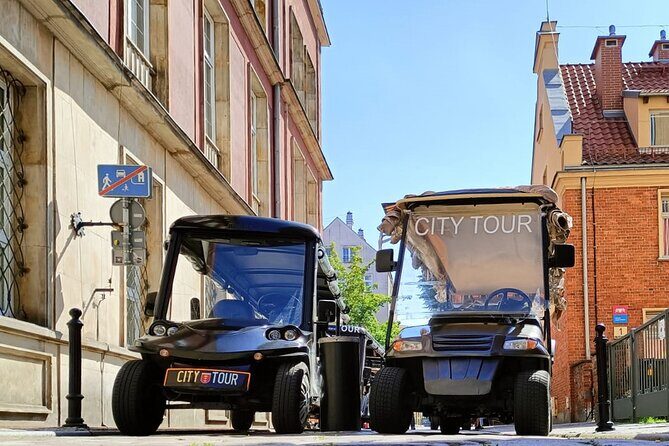
This tour is built for speed with comfort. You meet at Długi Targ 1, then you ride your way through the Old Town’s most recognizable stretches while still getting explanations for what you’re looking at. It runs about 1 hour to 1 hour 15 minutes, so you’ll finish with a solid “map in your head” rather than a checklist of random sights.
The ride is private, so it won’t feel crowded or chore-like. That matters, because the best parts of this kind of tour are the back-and-forth moments—questions, little clarifications, and the guide making sure the group follows along. The reviews also point to a relaxed vibe: guides like Christian and Przemek were praised for answering questions well and keeping things from feeling robotic.
A practical note: this is not a slow wandering day. Most stops are marked at about a minute or two, so plan to dress for being outside and be ready to move quickly between viewpoints. If you’re the type who wants deep museum time, treat this as orientation.
You can also read our reviews of more guided tours in Gdansk



Where the story starts: from the Gdańsk Shakespeare Theatre to the High Gate
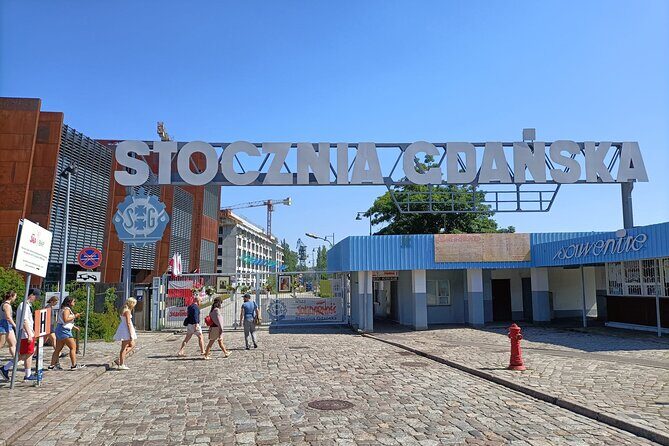
The route begins with theatre history that feels unexpected in Gdańsk. The Gdańsk Shakespeare Theatre sits on the site of a 17th-century venue tied to English travelling players. It opened in September 2014, and the design blends older theatre ideas (linked to research about London’s Fortune Playhouse) with modern technology. It’s a great first stop because it signals that Gdańsk’s story isn’t only local—it has international threads.
Next you roll toward one of the Old Town’s most important thresholds: Brama Wyżynna (the Highland Gate), built 1574–1576. This wasn’t just a gate. It was a ceremonial welcome spot for Polish kings and the place associated with handing over the keys to the city. From a tour-taker’s view, it’s useful because you learn what “gate” really means here: defense and ceremony, all in one structure.
You then hit the darker gateway layer with the Prison Tower and the connected space called Gdansk Katownia (the Torture Chamber). These buildings were part of the gatehouse on Długa Street—so when you’re standing nearby, you’re standing at the crossing point between everyday commerce and the city’s punishment system. The Katownia story continues into the 16th century when it was rebuilt and used as a court, prison, and place of execution, with interiors that included interrogation and cells. Even if you don’t go inside, the point is clear: this is medieval justice, not tourist theatre.
The Royal Route gates: Golden Gate, Strohturm, and the medieval walls you can trace
After the gatehouse complex, you move into the part of the Old Town that reads like a guidebook cover—especially the corridor around Ulica Długa. The tour includes the Langgasser Tor (Goldenes Tor), a Renaissance city gate created 1612–1614, replacing an earlier Gothic gate. It’s positioned at one end of Long Lane, and it fits into the fortifications network alongside Brama Wyżynna and the Prison Tower. If you’ve ever wondered how the Royal Route relates to city defense, this is where it clicks.
A short stop later, you’ll see the Strohturm (Baszta Slomiana). This octagonal brick tower dates to the second half of the 14th century and was added for western fortification support. Its name is tied to the idea of an original thatched roof, later replaced with tiles. It’s a small stop, but it helps you spot how medieval cities expanded protection rather than building one single “wall and done.”
Then you’ll glance at a modern marker: the Millennium Tree, a stainless-steel monument built to commemorate the 1000th anniversary of Gdańsk. It’s not medieval, but it’s useful because it shows how the city keeps re-framing itself—turning history into public design.
Coal Market Square, artisan corners, and the Great Armoury’s war-prep logic
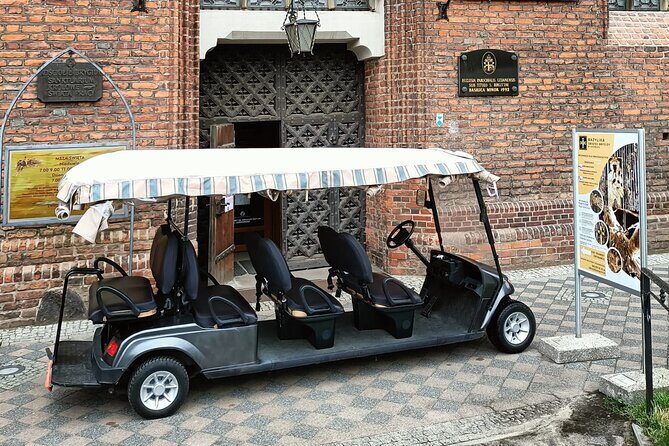
The tour touches the area around the Coal Market Square, where coal trading mattered from the 15th century, with market activity like Pea Market and Tandeta listed in the area’s history. It’s a good “downtown pulse” stop because it reminds you that cities run on trade long before they run on monuments.
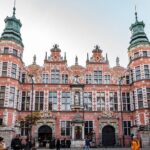
Then comes the structure that feels like a fortress dressed up for civic pride: the Great Armoury (Wielka Zbrojownia). Built 1602–1605, it was created because Gdańsk felt the growing threat from Sweden and needed a proper arsenal for war gear. The plan wasn’t only functional storage; the building was also designed to impress. It’s “secular Mannerist,” and it’s said to be inspired by the Meat Market in Haarlem—another sign that Gdańsk borrowed ideas and then made them its own.
Right after that, you’ll see the Jan III Sobieski Monument, unveiled November 20, 1898. The bronze work by sculptor Tadeusz Barącz (cast in Artur Krupp’s Viennese workshop) shows Sobieski in national dress jumping over a destroyed Turkish cannon. It’s a strong visual shortcut for “who won what, and why that matters to civic pride.”
Churches in a short window: St. Mary’s, St. Catherine’s, and St. Bridget’s (included)
If you only see one church on a short stop, this is the moment to pay attention. The route includes St. Mary’s Church area, featuring the Royal Chapel—a baroque Catholic chapel built 1678–1681, designed to serve Catholic faithful when St. Mary’s was under Protestant control. In a short tour, these details matter because they explain why the architecture looks the way it does: religion, politics, and power shifts all left marks.
Later, you’ll visit St. Catherine’s Church, whose construction began in 1227, with expansions in the 14th and 15th centuries. The tower history is later and specific: it wasn’t completed until 1634, crowned with a Baroque cupola after the Teutonic Knights were driven out. Its interior was equipped with a carillon in 1738, so it’s also about sound and civic life, not only walls.
The star included stop is St. Bridget’s Church. Construction started in 1227-era roots, expanded over time, and the current story includes the Order of St. Bridget arriving in 1394 after the cult of St. Bridget of Sweden reached Gdańsk. The church played a role in Poland’s recent history too—in August 1980, it became one of the symbols of Solidarity. Since the tour lists entrance to St. Bridget’s Church as included, this is where you get the most “value-per-minute” on the whole route. If you care about a calm, focused indoor moment, this stop is the one to savor.
Finally, there’s a nearby historic residence often referred to as the House of Three Preachers (Dom Kaznodziejów) on Katarzynki Street. It dates to 1599–1602, was used for pastors connected to St. Catherine’s Church, and survived severe WWII damage with façade survival. It’s not a church, but it’s a great example of how religious institutions shaped daily life in the Old Town.
A few more Gdansk tours and experiences worth a look



Port power in miniature: Crane miniatura, Long Coast, and Motława views
One reason I like this tour is the way it pivots from city to water. You’ll see Zuraw miniatura—the Crane. It consists of two brick towers with a wooden hoisting mechanism used to erect masts and reload goods. It also functioned as a city gate. In 1945, the wooden structure burned down, and after the war it was rebuilt and turned over to the Central Maritime Museum. The tour notes that you can enter the lifting mechanism since 2003, and admission is listed as free. This is one of the most “hands-on-looking” stops for such a short tour.
Next comes the Motława River Embankment (Długie Pobrzeże / Long Coast), a waterfront promenade along the western bank of the Motława. You’re shown water-gate features typical of Gdańsk architecture, and the street traces back to loading platforms from the 14th century, later linked into a single pier in the 17th century. It’s a good place to understand why cranes, gates, and warehouses belong in the same mental picture.
The tour also includes the Ołowianka island area. Between the Motława River and the Stępka Canal, it was owned by the Teutonic Knights from 1343 to 1454 and later became an actual island after the canal was dug in 1576. Even if you just get a quick look, the point is the geography: this area mattered for shipping control and strategic access.
WWII and labor history without overselling it: Second World War Museum, Bunkier, Shipyard Gate
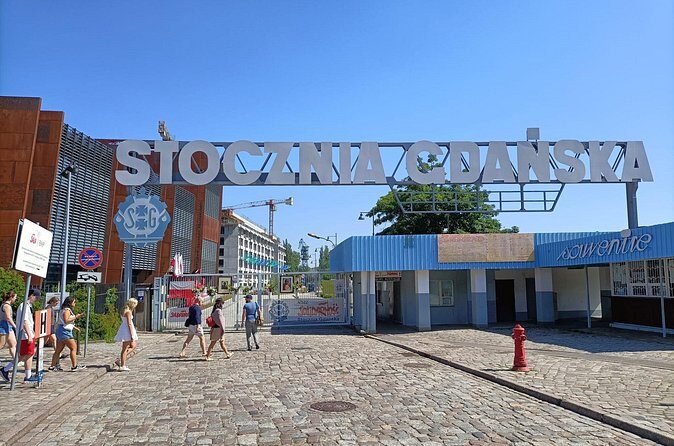
This is where the tour turns from beautiful to heavy. You pass the Museum of the Second World War, a state cultural institution established in 2008, with exhibits opened in 2017. Since admission is not included, don’t expect museum time inside—but do expect context so the building isn’t just another big photo stop.
Then there’s Bunkier—specifically an Luftschutz Hochbunker air-raid shelter on Olejarna Street, built between 1942 and 1943. It’s described as a six-storey structure (one storey underground), covered with sand between reinforced concrete slabs. The tour’s description also emphasizes thick reinforced walls and concrete that was as hard as granite. Even from outside, it helps you grasp the scale of wartime survival infrastructure.
After that, you reach one of Gdańsk’s most emotionally charged landmarks: Gdansk Shipyard Gate No. 2. On 16 December 1970, striking shipyard workers leaving through this gate were fired upon by army troops. Two people were killed and eleven wounded, and the gate was the first remembrance location before the later monument was erected. This is brief on timing, but it’s powerful in purpose. If you want to learn more, this is the stop that gives you the clearest reason to come back.
Everyday Gdańsk bridge and market details: Fish Market, Bread Bridge, and guild leftovers

Along the way, the tour includes two of the city’s most distinctive “walk-by” classics: Karuzela Gdanska (Fish Market area) and the Most Chlebowy (Bread Bridge, also called Most MiloSci). The Fish Market grew from Teutonic-era arrangements and market privileges in the 1300s, and it was later separated from the river by a wall. The tour’s description links it to gates and market control—again, city planning and economy in one.
The Bread Bridge is older too: built between 1338 and 1356 over the Radunia Canal, connecting Kowalska and Korzenna Streets. The name comes from bakers selling bread from stalls known as bread benches. It’s been rebuilt many times, including with a tram line at one point, and later renovation restored a historical appearance with cobbled surfaces and stylized railings and lanterns in the early 2000s. In a short tour, this is one of those spots where you can take a great photo and actually understand the reason it exists.
The route also references the Millers’ Guild Hall—an 1831 building tied to the millers’ guild and the Great Mill, described as half-timbered and originally located on an island formed by arms of the Radunia Canal. Even if you barely stop, this is a reminder that the Old Town isn’t only grand churches and gates. It’s also trade organizations and crafts.
Museums and monuments in the Main Town core: Polish Post Office and Neptune’s Fountain
Another culture-and-identity stop is the Museum of the Polish Post Office (Museum of Gdansk). The post office in the Free City of Danzig was set up under the Treaty of Versailles with buildings treated as extraterritorial Polish property. The tour notes that in 1930, the Gdańsk 1 building on Hevelius Platz became the primary Polish post office with a direct telephone line to Poland. Admission is listed as free, so this can be a strong “add-on” stop if you’re nearby and want more than street views.
Then you’ll reach two of the Old Town’s classic symbols of public space. The Heweliusz Monument on Korzenna Street commemorates astronomer Johannes Hevelius—astronomer, mathematician, inventor, and brewer, with the tour referencing his lunar atlas Selenographia and his astronomical observatory site. The monument was unveiled in 2006.
And finally, Neptune’s Fountain (Fontanna Neptuna), erected on the initiative of mayor Bartłomiej Schachmann and designed by Abraham van den Blocke. Work began in the early 1600s, with Neptune’s bronze sculpture cast in 1612 by Piotr Husena, and it was only put into operation in 1633 after delays and technical issues. Admission is listed as free, and it’s one of those spots where you can quickly feel the city’s maritime identity.
Price and value: is $40 for a 1-hour private tour a smart buy?
At $40.14 per person, this tour sits in the “worth it if you want time back” category. Why? Because you’re paying for three things you’d otherwise spend extra time assembling on your own:
- A tight route that hits major Old Town highlights and several history-heavy sites.
- A guide who stays friendly and engaged rather than rushing you through.
- A comfort factor: the electric Melex ride saves your legs for when you want to stroll later.
You do need to watch the inclusions. The tour lists St. Bridget’s Church as included, while many other stops are explicitly marked as not including admission. Zuraw miniatura is listed as free, but other museums (like the Second World War Museum) would likely require separate tickets if you want inside time.
For value, I’d think of this tour as the “starter course.” If you’re only in Gdańsk for a day or two, it helps you decide where to spend your next hour: churches, museums, or waterfront.
If you do have more time, it still works. It gives you an easy way to spot what you want to see twice—something no printed map can do as fast.
Should you book the Gdansk 1 Hour Guided Tour?
Book it if you want a smooth orientation with comfort. This is ideal for first-timers, couples, families, and anyone who’s tired of walking circles around the Old Town looking for the one building they remember from a photo. The private format plus the praised “cozy” guide style (often noted by guides like Christian and Przemek) makes it feel like a helpful conversation on wheels.
Skip it only if you’re chasing deep museum time as your main goal. This route is designed for short stops and quick context, not long indoor visits. If you want to linger in multiple churches or spend serious time inside major museums, you’ll still enjoy the tour—but plan a follow-up day too.
If you like the idea of learning how gates, churches, cranes, and shipyard history all fit together, this is one of the best ways to get it without burning your day.
FAQ
How long is the Gdansk 1 Hour Guided Tour?
It runs about 1 hour to 1 hour 15 minutes.
What does the tour cost?
The price is $40.14 per person.
Is the tour in English?
Yes, it’s offered in English.
Is this a private tour?
Yes. It’s private, meaning only your group participates.
What’s included in the ticket price?
Entrance to St. Bridget’s Church is included.
Are museum and church entrances included at every stop?
No. Many stops are listed as not including admission. St. Bridget’s Church is included, and Zuraw miniatura is listed as free.
Where does the tour start and end?
It starts at Długi Targ 1, 80-828 Gdańsk, Poland, and ends back at the meeting point.
Are food and drinks included?
No. Coffee and/or tea, soda/pop, and meals are not included.
Is it possible to visit with a service animal or use public transport nearby?
Service animals are allowed, and the meeting area is near public transportation.