Jetlag doesn’t stand a chance here. This off-the-beaten-path Warsaw walk turns history into something you can actually see on the street, with Lukasz guiding you through communist leftovers, 1930s modernism, and the city’s everyday corners in between. I especially like how the tour mixes serious architecture talk with friendly pacing, so you don’t feel stuck in a lecture.
What I also like is the payoff at the end: you stop for a local pastry on Wilcza Street and finish at Hala Koszyki, a longtime food market that’s been feeding Warsaw for more than 100 years. The only real drawback to consider is that each place is visited briefly (about 10 minutes each), so if you want long museum-style time, you’ll need a separate plan for that.
In This Review
- Key highlights you’ll care about
- Nowy Świat and the communist-era buildings that still shape Warsaw
- Elizeum, Pniewski House, and the city seen through design
- Jazdów’s wooden houses, plus Park Ujazdowski’s calmer pace
- Ujazdów Avenue and pre-war apartment buildings that survived
- Plac Konstytucji’s Socialist Realism, Politechnika, and Hostel Witt
- Wilcza pastry and a memorable finish at Hala Koszyki
- Price, group size, and who this tour fits best
- Practical tips before you go
- Should you book this Warsaw offbeat walk?
- FAQ
- How long is the Warsaw Off the Beaten Path & Local Pastry tour?
- Is the tour offered in English?
- What’s the group size?
- Where does the tour start and end?
- Is a mobile ticket used, and are there entry fees?
- Is free cancellation available?
Key highlights you’ll care about
- Small group, max 10 people: easier questions and less crowding on narrow streets
- English mobile ticket: simple check-in and smooth start
- Free entry for the listed stops: no surprise admission bills along the way
- Architecture-focused route: modernist buildings, Socialist Realism housing, and pre-war facades
- A real food finish: Hala Koszyki for a flexible meal after the walk
Nowy Świat and the communist-era buildings that still shape Warsaw
The walk starts at the Charles de Gaulle statue on Nowy Świat—right where you can quickly orient yourself if you’ve just arrived. From there, the tour heads into a part of Warsaw that feels less like a postcard and more like a lived-in city, where the past shows up in doorways, courtyards, and street-level details.
Your first big stop is Nowy Świat 6/12, tied to the former headquarters of the communists. Even if you’re not a history geek, there’s something powerful about seeing how political power left physical marks. You’ll get quick context on what this building meant, and then you’ll move on before it turns into doom and gloom. That’s part of the value here: you learn just enough to make the city readable, without getting buried.
A practical note: early on, you’ll be outside and doing short viewing windows. Wear comfortable shoes. Warsaw streets can be uneven in older areas, and you’ll want your feet to stay happy for the full two hours.
You can also read our reviews of more tours and experiences in Warsaw.


Elizeum, Pniewski House, and the city seen through design
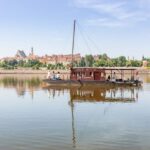
Next, you’ll spend time at Elizeum, set along the Warsaw Escarpment. This is one of those stops that helps you understand why Warsaw developed the way it did—where the land rises, how neighborhoods grow around it, and why certain views and corridors matter over centuries. The tone here is less about politics and more about how terrain guides a city.
Then you reach Pniewski House, one of the important modernist buildings from the 1930s. This is where the tour’s architecture focus really pays off for you. Modernism can sound abstract until you’re standing in front of a real structure and hearing what makes it feel different—how it handles shape, function, and space. If you like taking photos, this is also the stage of the tour where angles and facades start to make sense.
One thing I appreciate in this style of walking tour is that it doesn’t treat architecture like trivia. It explains what you’re looking at and why people built in that style—so the buildings stop being random and start feeling legible. That’s a big deal in Warsaw, where different eras are stacked close together.
Jazdów’s wooden houses, plus Park Ujazdowski’s calmer pace
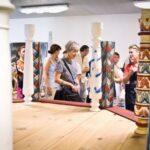
After the urban design hits, the route slows down in a satisfying way at Jazdów. This area is known for a colony of wooden houses that host local activities—lectures, concerts, urban gardening, and even yoga classes. You’re not just looking at buildings. You’re seeing how culture can take root in smaller, unusual spaces.
This stop is a good reminder that Warsaw isn’t only memorials and grand avenues. It’s also studios, classrooms, community gardens, and weekend life. If you’ve been touring museum-heavy cities, this part can feel like a breath of fresh air.
From there, the tour moves into Park Ujazdowski, a 19th-century-style park layout. Parks are useful for two reasons: you get a quick reset for your body, and you can spot how planning changed over time—from dense streets to breathing room. Even if you only have a few minutes here, it helps you understand the rhythm of the area before you continue onto the next streets.
Ujazdów Avenue and pre-war apartment buildings that survived
Now the walk turns elegant, then quietly historic. Ujazdów Avenue is lined with 19th-century settings and former residences of Warsaw’s elite. The details matter at walking speed: rooflines, building spacing, and the way the avenue frames movement. This isn’t just pretty. It helps you grasp how the city organized status and daily life before the big mid-century disruptions.
You also visit Mokotowska, a street with pre-war apartment buildings that survived World War II. That phrasing—survived—does a lot. It tells you these aren’t brand-new facades meant for tourists. They’re real survivors, still part of the city’s texture.
If you’re the kind of person who likes to photograph facades and street scenes, this is the stretch where your camera will feel useful instead of random. Take a quick shot, then look around again—because the tour’s whole point is connecting what you see with what you now understand.
Plac Konstytucji’s Socialist Realism, Politechnika, and Hostel Witt
Then comes one of the most visually distinct sections: Plac Konstytucji. Here you’ll see a significant communist-era housing estate representing Socialist Realism, a mandatory architecture style in the 1950s. Standing in front of this kind of construction can make abstract political talk feel real. You’ll get the context for why this style was used, and how it shaped everyday living at scale.
Next, you pause at Politechnika, specifically the Faculty of Architecture of the Warsaw University of Technology. This is a neat bridge between past and future. It’s a reminder that architecture isn’t only about what gets built—it’s also about what gets taught, preserved, and argued over.
Finally, you stop at Hostel Witt, a place where Roman Polanski filmed his famous The Pianist movie. This adds a cinematic layer without turning the tour into a movie set scavenger hunt. It also helps you connect Warsaw’s post-war memory to how the city has been seen by film and global audiences.
One caution: this segment can feel more intense, since it mixes large-scale political architecture with deeper cultural references. If you’re sensitive to heavy themes, it may help to take a breath between stops and focus on the architectural details you’re learning. You’ll still keep moving.


Wilcza pastry and a memorable finish at Hala Koszyki
The walk ends with food, and that matters. After walking for two hours through streets and buildings, you’re ready for something warm and local. The tour includes a local pastry stop on Wilcza Street, so you get a taste of Warsaw that fits the route. It’s not just a random snack. It’s timed as a reward after the architecture-heavy blocks.
Then you finish at Hala Koszyki, a very popular local food venue housed in a historical market building constructed over 100 years ago. This is a strong ending choice because you can keep your evening flexible. You might want a full meal, something quick, or just a drink while you watch the crowd. Either way, you end in a place where Warsaw life feels active and current, not staged.
It’s also a smart practical finish. If you’re hungry after the tour, you don’t have to decide what to do next while you’re tired. Hala Koszyki gives you options right away.
Price, group size, and who this tour fits best
The price is $41.40 per person for about two hours. At first glance, it sounds like a small amount—then you notice the value stack: a guide (in English), a small group capped at 10 people, and a route that includes free admission for the listed stops. Add the included pastry stop and you’ve got a tour that isn’t only window shopping.
The small group size is especially practical in Warsaw. Some streets feel tight, courtyards can surprise you, and it’s easier to ask questions when the group isn’t larger than the sidewalks can handle.
This is also a good pick if you want a city orientation that goes beyond the main sights. You’ll cover modernist architecture, parks, elite avenues, and housing estates tied to Socialist Realism—so you leave with a mental map of how Warsaw changed over time.
Who might like it most:
- You want architecture and street-level history, not a museum marathon
- You enjoy walking with an English-speaking guide who can answer questions
- You want a meal or snack option lined up at the end (Hala Koszyki is a solid target)
What might not fit as well:
- You want long stays at each site or deep ticketed interiors
- You’re not up for a steady walk with quick stops and frequent outside time
Practical tips before you go
A few things will make the tour smoother:
- Dress for walking and bring comfortable shoes. The stops are spread along city streets.
- Expect brief photo moments. Don’t plan on lingering. Plan on looking, learning, and moving.
- If you care about specific themes, ask your guide early. The tour style is built to pay attention to what you want to get out of it, and many people appreciate that personal touch.
- Use the mobile ticket. It helps keep the start clean and fast.
Also, service animals are allowed, and the tour is near public transportation—useful if you need to connect quickly to the rest of your day.
Should you book this Warsaw offbeat walk?
I think you should book if you want Warsaw to feel like a city you can read, not a list of famous stops. The combination of architecture-focused street walking, free-access stops, and a pastry plus Hala Koszyki finish makes it feel like good value rather than just another guided stroll.
If you prefer slow-paced museum time, you may feel the “brief stops” rhythm. But if you like history that shows up in real buildings and neighborhoods, this is one of the better ways to get your bearings fast while still seeing the parts of Warsaw most people miss.
FAQ
How long is the Warsaw Off the Beaten Path & Local Pastry tour?
It lasts about 2 hours.
Is the tour offered in English?
Yes, it is offered in English.
What’s the group size?
The tour has a maximum of 10 travelers.
Where does the tour start and end?
It starts at the Charles de Gaulle statue on Nowy Świat 12 and ends at Hala Koszyki on Koszykowa 63.
Is a mobile ticket used, and are there entry fees?
You receive a mobile ticket, and the listed stops show admission tickets as free.
Is free cancellation available?
Yes. You can cancel up to 24 hours in advance for a full refund.