REVIEW · TORUN
Walking Tour of the medieval Toruń
Book on Viator →Operated by Walking Tours of Torun · Bookable on Viator
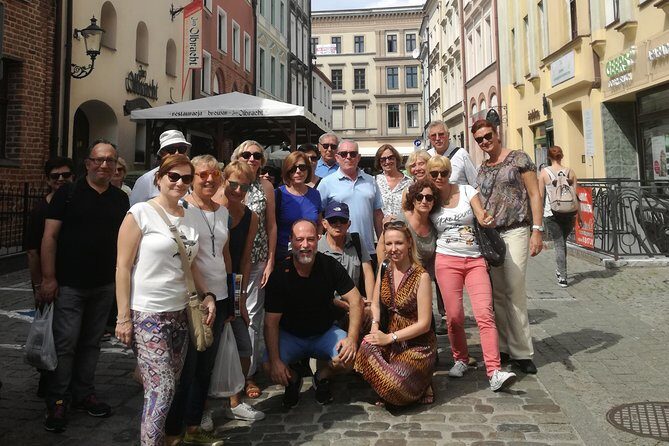
Leaning towers and Gothic fronts make Toruń click. A small private guide brings the city to life, and the walk centers on one of Toruń’s biggest sights, the Krzywa Wieża (Leaning Tower), plus a string of spots you can actually understand in the time you have. Guides like Karolina and Jan are known for keeping things lively while still staying on track.
What I like most is how the route mixes major landmarks with moments you might otherwise miss. You also get real flexibility to ask questions and get context as you walk, instead of being herded through a checklist. That matters in a place like Toruń, where the details (symbols, facades, inscriptions) are half the fun.
One consideration: not every stop has admission included. The Leaning Tower, Copernicus House, and the Old Town Hall courtyard require separate tickets, while several churches are free to enter—so it helps to plan for a mix of included and add-on entry fees.
In This Review
- Key highlights you’ll feel right away
- Where the Tour Starts: Old Town City Hall Viewpoint, Then Right Into the Story
- Krzywa Wieża (Leaning Tower): The First Landmark That Hooks You
- Copernicus House: A Gothic Facade Worth Seeing Up Close
- St. John’s Cathedral Interior: Nearly 800 Years of Stonework
- The Former Granaries as a Background Thread
- Main Square Moments: The Donkey Story and the Tiny Monument of Filus
- Regional Museum and Old Town Hall Courtyard: Medieval Civic Life Up Close
- St. Mary’s Church: Anna Waza’s Burial and a Second-Oldest Church Factor
- Church of the Holy Spirit: A Younger Church with a Napoleon Echo
- Price and Value: What $180 for Up to 15 Really Buys You
- Who This Tour Is Best For (and Who Might Want Something Else)
- Should You Book This Medieval Toruń Walking Tour?
- FAQ
- FAQ
- How long is the Walking Tour of the Medieval Toruń?
- What language is the tour offered in?
- Is the tour private?
- Where do we meet, and does it end nearby?
- Are admission tickets included?
- What’s the general time window for the activity?
- Is there a cancellation policy?
- Are service animals allowed and is it suitable for most people?
Key highlights you’ll feel right away
- Private group size (up to 15) for a calmer, more conversational pace
- Ask-anything guiding style with room for questions and humor
- Leaning Tower + Copernicus House early, so you start with the big visual hits
- Free church interiors at key moments, including St. John’s Cathedral
- Old Town Square stories tied to the donkey and the tiny Filus dog monument
- Historic civic focus through Toruń’s town hall courtyard and nearby medieval buildings
Where the Tour Starts: Old Town City Hall Viewpoint, Then Right Into the Story

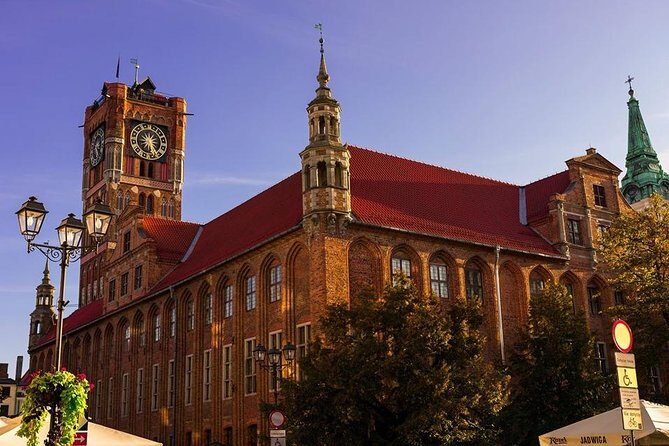
The meeting point is the Old Town City Hall viewpoint in Toruń’s Main Square area (Rynek Staromiejski 1). The practical win here is simple: you don’t waste time guessing where to stand or where the guide is coming from. When the tour fits your schedule, it’s the easiest kind of start—close to the city’s core.
If you prefer not to navigate on your own, you can also opt for hotel pickup if it’s offered for your request. That’s especially useful if you’re coming in from outside the center or you just want your vacation to feel smooth from the first hour.
The tour lasts about 2 to 3 hours, which is long enough to feel you saw Toruń’s medieval spine, but short enough that you won’t end up tired and cranky. Since it ends back at the meeting point, you can plan lunch or your next stop without hunting for a new drop-off location.
You can also read our reviews of more walking tours in Torun
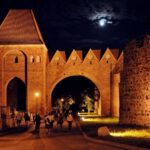
Krzywa Wieża (Leaning Tower): The First Landmark That Hooks You
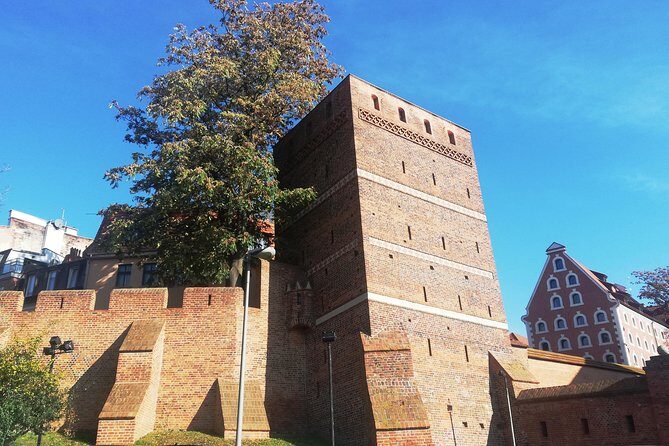
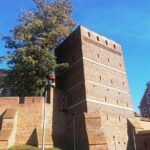
You begin at the map area near the Convent Gate, then head to the Leaning Tower, Krzywa Wieża w Toruniu. This is a great opening stop because the tower is instantly visual—you don’t need explanations to feel it. But once you’re there, your guide connects it to Toruń’s medieval identity rather than treating it like a quick photo op.
It’s scheduled for about 10 minutes, and an admission ticket is not included. That’s a small heads-up, because it affects your time and budget. Still, even with the ticket add-on, this early stop is worth it: it sets the tone for the rest of the walk. When a guide starts with a landmark people recognize, you quickly build trust that the rest of the route will be meaningful too.
If you like history you can point at, you’ll probably enjoy this stop most when you take your time looking at angles and details the first time through. Your guide’s job is to translate what you’re seeing into why it matters.
Copernicus House: A Gothic Facade Worth Seeing Up Close
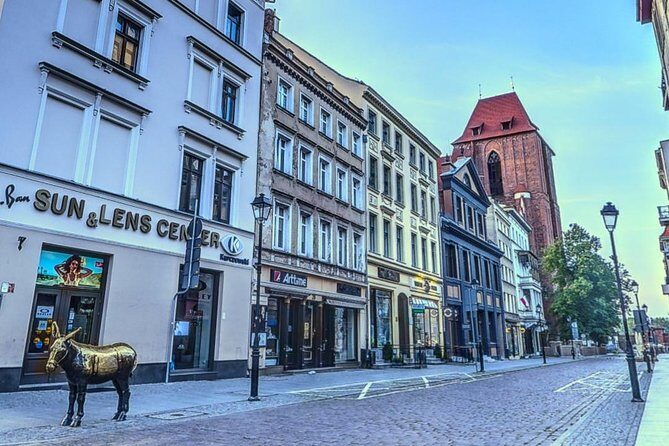
From the Leaning Tower, you move to the House of Nicolas Copernicus, with a quick stop focused on the building itself. The highlight here is the pure gothic facade, which sounds like a technical detail until you actually stand in front of it. Gothic architecture has a way of turning abstract “medieval” into something physical.
This stop is about 5 minutes, and again, admission is not included. In other words, you’re not being asked to commit to a museum visit here—at least not automatically. Your guide keeps it short so you don’t lose momentum, and you can decide on your own whether you want to go deeper with paid entry later.
Practical tip: if you’re the kind of person who likes to linger over facades, you can use those few minutes to take a careful look at what’s decorative versus structural, then let your guide fill in the meaning. If you’re more of a “walk and learn” person, you’ll still get the key context without boredom.
St. John’s Cathedral Interior: Nearly 800 Years of Stonework
Next up is St. John’s Cathedral, scheduled for around 10 minutes. This is one of the stops where the tour offers actual value because the admission ticket is free. That means you can focus on the interior instead of budgeting for yet another entry fee.
Your guide will help you see the cathedral not just as a pretty room, but as something almost 800 years old that has carried many layers of faith and community life. Even if your interest is more about architecture than religion, cathedrals like this tend to reward attention: scale, rhythm, and the way light hits surfaces can make the centuries feel less distant.
The drawback is simple: cathedral interiors often have rules about movement and quiet. You’ll want to follow your guide’s lead on where to stand and when to keep things moving. But that’s usually a small trade for a free, high-impact interior stop.
The Former Granaries as a Background Thread
Along the way, you’ll pass former granaries that are now turned into the History Museum. This part is less about tickets and more about seeing how Toruń used to store wealth—grain, trade goods, the practical stuff that kept a merchant city strong.
Because it’s a pass-by moment, you shouldn’t expect a full guided museum experience here. But it works as a bridge: the walk keeps reminding you Toruń isn’t only churches and towers. It was also economy and infrastructure—buildings designed for storage, power, and trade.
If you like learning through contrasts, you’ll probably enjoy how the tour alternates between religious space, civic space, and trade-related space.



Main Square Moments: The Donkey Story and the Tiny Monument of Filus
Back in the heart of the Old Town, you’ll hit the Main Square and get two story-driven stops that feel made for a private tour.
First: the guide explains the surprising story behind the infamous donkey in the central square. People often photograph statues first and ask questions later. Here, you’ll get the order right: a guide provides the context, so the donkey stops being random street art and starts being a piece of local memory.
Second: you’ll see Filus, the beloved doggie and the smallest monument in the city. This one is easy to miss if you’re just sightseeing on your own, but that’s exactly why it lands well on a private walking tour. You don’t just see a point on a map—you get the meaning behind it.
These square stops also benefit from the private format. If you’re curious, you can ask follow-ups right there without breaking someone else’s schedule. And if you’re in a hurry, the guide will keep you moving so the tour stays tight.
Regional Museum and Old Town Hall Courtyard: Medieval Civic Life Up Close
A key civic stop follows: the Regional Museum in Torun – Old Town Hall area. You’ll have a chance to see and enter the courtyard of the town hall, described as among the most beautiful medieval town halls in Europe. Even if you treat that as a marketing line, the real value is that you get courtyard access, not just an exterior glance.
This stop runs around 10 minutes, and admission is not included. That means you’ll want to manage expectations. Still, getting into a courtyard like this is one of those things that makes a short tour feel “real,” because it’s a space with atmosphere, not just a street corner.
Why it matters: churches teach you about beliefs. Civic buildings teach you about how power worked—who governed the city, how it organized itself, and where the public gathered. In a medieval city, that distinction helps the whole place make sense faster.
St. Mary’s Church: Anna Waza’s Burial and a Second-Oldest Church Factor
Next comes St. Mary’s Church, scheduled for about 5 minutes. It’s described as a Franciscan church and noted as the second oldest in Toruń, and it’s also the burial place of princess Anna Waza.
The admission here is free, which is a great perk for a short stop. The main benefit isn’t length—it’s focus. You’re not wandering. You’re learning what to look for and why this church is tied to a specific person and era, not just generic medieval Christianity.
A quick stop like this works best when you let the guide point you to the features that connect to Anna Waza. If you love biographies and the human side of old places, this is one of the moments most likely to land with you.
Church of the Holy Spirit: A Younger Church with a Napoleon Echo
The final church stop is the Church of the Holy Spirit, about 5 minutes. It’s called one of the younger churches in Toruń’s Old Town, and it sits next to a neogothic post office. The tour also mentions that the site previously served as a hotel that remembers a visit of Napoleon.
Admission is free here too, so this round keeps the budget lighter at the end. It also adds variety. By finishing with a church that has connections to later eras—through the Napoleon-linked hotel reference—you get a sense that Toruń’s old center didn’t stay frozen in time.
This is a good closing note because it gently reminds you that medieval cities keep collecting stories long after the medieval period ended.
Price and Value: What $180 for Up to 15 Really Buys You
The tour costs $180 per group (up to 15 people). On paper, that number can look high if you’re thinking per person. But private walking tours become good value when you spread the cost across a group—especially for families or small friends who want a shared plan and no “group of strangers” awkwardness.
Because the tour is private, you’re paying for a guide who can set pace, answer questions, and adapt to your interests. Reviews for this tour-style experience tend to highlight exactly that: the guides keep facts clear without turning the walk into a lecture. When you’re paying for time in a city, that style matters.
Also consider the mix of included and not-included admissions. Some stops are free (St. John’s Cathedral; St. Mary’s Church; Church of the Holy Spirit), but others are not included (Leaning Tower; Copernicus House; Old Town Hall courtyard). So your total spend depends on whether you choose to enter those ticketed sites.
If you’re the sort of person who wants to see key monuments but doesn’t necessarily want every paid interior, you can still get plenty from the walk. If you want full access at the ticketed spots, you should budget for those additional entries.
One more practical point: this type of tour is often booked ahead—on average around 30 days in advance. If your dates are fixed, it makes sense to lock it in early rather than rolling the dice.
Who This Tour Is Best For (and Who Might Want Something Else)
This tour fits best if you want Toruń to feel like a story instead of a stamp-collecting exercise. You’ll likely enjoy it if you like:
- A small-group pace with time to ask questions
- Seeing the big landmarks plus small local details like Filus and the donkey story
- Learning in English with a guide who keeps things engaging
It may be less ideal if you only want exterior sights and you dislike paying extra for interiors. Because a few major stops come with separate admission, you’ll want to be comfortable with that tradeoff.
Also, if your group is huge, you’ll want to confirm what “up to 15” means for comfort on narrow lanes. Smaller groups tend to get the best version of the private feel.
Should You Book This Medieval Toruń Walking Tour?
If you’re choosing between a standard group tour and a private guide, I’d lean toward this one. The value isn’t only the route—it’s the format. You get the major sights in a smart order, a question-friendly guide style, and some very Toruń-specific story moments that you’d likely miss on your own.
Book it if you want a 2–3 hour plan that balances churches, civic buildings, and old-town quirks without rushing. Skip it only if you strongly prefer a budget option with zero paid entries or if you’d rather explore independently at your own speed without a structured narrative.
FAQ
FAQ
How long is the Walking Tour of the Medieval Toruń?
The tour lasts about 2 to 3 hours.
What language is the tour offered in?
It’s offered in English.
Is the tour private?
Yes. It’s a private tour/activity, and only your group participates. The group size is up to 15 people.
Where do we meet, and does it end nearby?
You meet at the Old Town City Hall (viewpoint) at Rynek Staromiejski 1, 87-100 Toruń. The tour ends back at the same meeting point.
Are admission tickets included?
Not for all stops. Admission tickets are not included for the Leaning Tower, Copernicus House, and the Old Town Hall courtyard. St. John’s Cathedral, St. Mary’s Church, and the Church of the Holy Spirit are listed as free to enter.
What’s the general time window for the activity?
The meeting point hours are shown as Monday to Sunday, 9:00 AM to 6:00 PM.
Is there a cancellation policy?
Free cancellation is available. You can cancel up to 24 hours in advance for a full refund.
Are service animals allowed and is it suitable for most people?
Service animals are allowed, and most people can participate.