REVIEW · GDANSK
TriCity Tour (Gdansk, Gdynia, Sopot) – PRIVATE (8h)
Book on Viator →Operated by PT Team · Bookable on Viator
One day, three different moods.
This private tri-city loop strings together Gdansk’s medieval port grandeur, Gdynia’s interwar harbor city energy, and Sopot’s seaside resort vibe. I like that you get a real local guide and smooth hotel pickup, so you spend more time looking at things and less time figuring out transport.
My favorite part is how the walk is paced. You get focused time at key landmarks like Long Market-area streets, Neptune’s Fountain, St. Mary’s Basilica, the medieval crane, then you switch gears to ships in Gdynia and the long pier in Sopot. One thing to consider: it’s tight. With multiple neighborhoods in 8 hours, you’ll be moving, and optional museum time depends on what you choose to add.
In This Review
- Key highlights to watch for
- A smooth tri-city day: why this 8-hour loop works
- Hotel pickup and private transport: the real time-saver
- Gdansk in 3 hours: Old Town energy and the medieval port mindset
- Old Town walk: cobblestones, waterfront views, and power shifts
- Dluga Street and Dlugi Targ: the Royal Route shortcut to the city’s best façade
- Neptune’s Fountain: a quick landmark stop with a real story
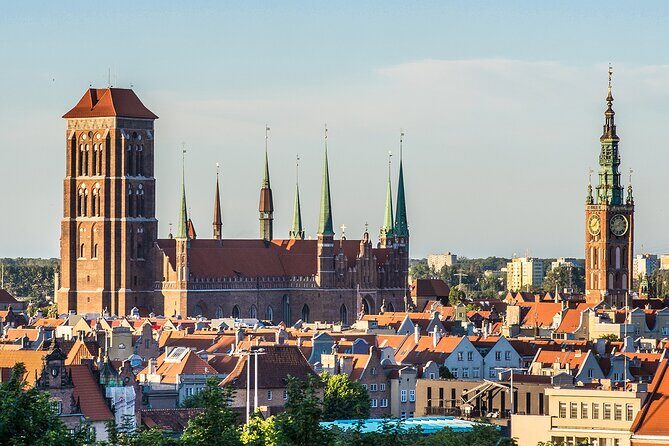
- St. Mary’s Basilica: what to focus on during a timed stop
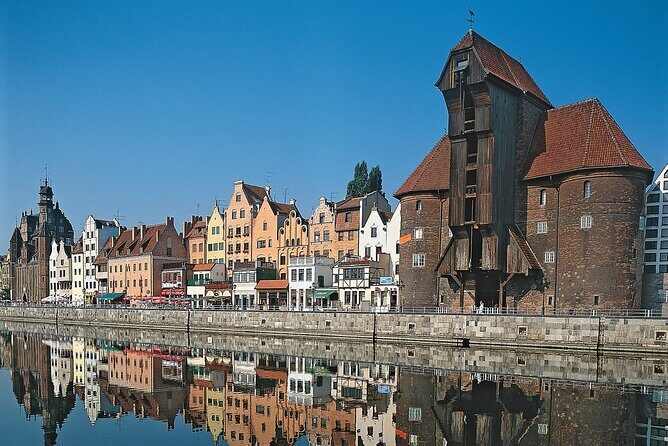
- The medieval Crane: maritime power in a tiny timeframe
- Gdynia in 2 hours: the harbor promenade and Poland’s modern shipping story
- Museums you might want to add time for
- Sopot in 2 hours: the pier reset and the resort-style finish
- The guide factor: what to expect from the private experience
- Price and value: what you’re paying for at about $351 per person
- Who should book this TriCity private day (and who may not need it)
- Should you book the TriCity Tour Private (8h)?
- FAQ
- How long is the TriCity Tour (Gdansk, Gdynia, Sopot) private day?
- Does the tour include hotel pickup and drop-off?
- Is the tour offered in English?
- What’s included in the price?
- Are entry fees included for all stops?
- How does cancellation work?
Key highlights to watch for
- Private, door-to-door pickup: your guide meets you at your hotel lobby, then you’re on a chauffeured schedule.
- English-guided city walks in Gdansk: a guided route through Old Town highlights like Dluga and Dlugi Targ.
- St. Mary’s Basilica in a single, smart stop: plan what you’ll notice fast, including the astronomical clock.
- The maritime switch in Gdynia: harbor promenade views plus famous docked ships like ORP Błyskawica and Dar Pomorza.
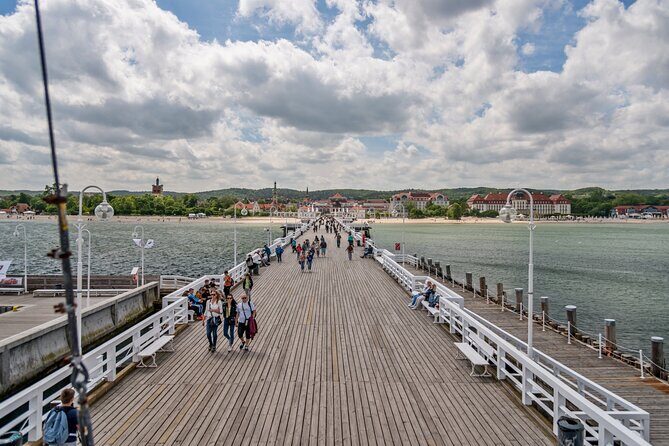
- Sopot’s pier walk time: long wooden pier and Plac Zdrojowy feel like a reset from the city streets.
- Free-to-see sights, but watch optional entry: crane entry is marked not included, and some stops may depend on what you want to go inside.
A smooth tri-city day: why this 8-hour loop works
This tour is built for people who want variety without long travel days. Gdansk gives you medieval and early-modern port power. Gdynia shows how Poland built a modern harbor-focused city in the 1920s. Sopot then changes the tone with a seaside resort feel.
You also get a practical rhythm: short walks for big sights, then longer stretches where you can actually absorb the atmosphere. It’s a good fit if you’re short on time but still want the “wow” factor from three places instead of only one.
You can also read our reviews of more private tours in Gdansk



Hotel pickup and private transport: the real time-saver
What makes a private day like this feel easy is the start. Your guide is scheduled to meet you in the hotel lobby, holding your name, and pickup is handled with air-conditioned transport.
That matters because TriCity can be spread out. Doing it as a loop with pickup and drop-off means you don’t waste energy on buses or trains when you’d rather be walking streets or looking at the water.
Gdansk in 3 hours: Old Town energy and the medieval port mindset
Gdansk is the headline act, and you get a full chunk of time—about 3 hours—to get your bearings. As Poland’s main seaport and a key member of the Hanseatic League, it has the kind of history you can feel when you’re near the waterfront and old streets.
You’ll likely start with the wider historic center vibe, then narrow into Old Town proper. The goal here is not to rush every street in sight. It’s to understand why this area mattered so much as a shipbuilding and trading town.
Old Town walk: cobblestones, waterfront views, and power shifts
Old Town is described as part of the historic city center, but it’s still enough to grasp Gdansk’s medieval “glory days.” You’ll pass through lanes that help explain its layered story of Polish, Prussian, and German rule, along with periods of autonomy as a free city state.
Practical tip: wear shoes you can trust on cobblestones. You’ll do enough walking that foot comfort becomes your main “how was your day?” factor.
Dluga Street and Dlugi Targ: the Royal Route shortcut to the city’s best façade

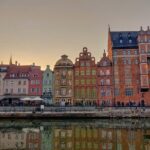
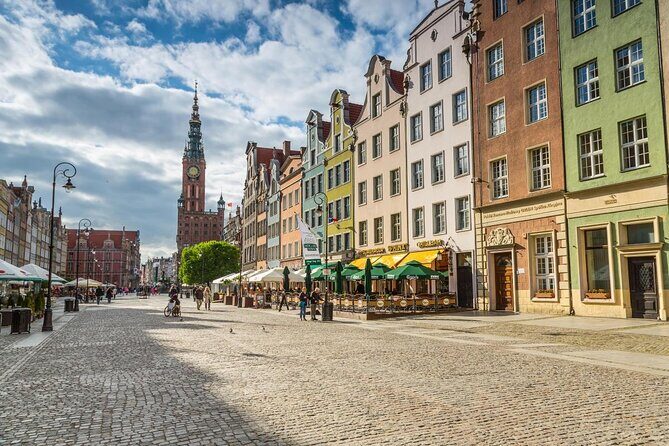
After Old Town, you move into the Royal Route corridor—Dluga Street and its extension, Dlugi Targ. This is the pedestrian spine lined with rebuilt historic-style buildings (many from the 17th century), and it ends at the Green Gate area overlooking the Motława River.
This stop is timed at about 45 minutes, which is just right for a guided “see-and-understand” walk. The details are part of the point here: you’re looking for elaborate ornaments, crests, and allegoric figures that were tied to wealthy patrician homes.
You’ll also get “anchor” landmarks along the way:
- the Golden Gate start
- the Town Hall area
- Neptune’s Fountain and Arthur’s Court along the route
- the Green Gate overlooking the river





Neptune’s Fountain: a quick landmark stop with a real story
Next you’ll hit Neptune’s Fountain (Fontanna Neptuna), positioned in front of the Artus Court. It’s treated as a symbol of Gdansk, and it’s not just about the photo.
The key detail: it was set up on initiative of Mayor Bartłomiej Schachmann and the town council, with the Neptune sculpture designed by Abraham van den Blocke and cast in bronze in 1615. In later renovations, the base got a rococo style upgrade and sea creatures were added.
Tip for the quick stop: toss a coin only if you like rituals. The real value is noticing the mix of sculpture design and civic pride around it, which is a theme throughout this city.
St. Mary’s Basilica: what to focus on during a timed stop
St. Mary’s Basilica is one of those places where “one stop” can still feel big. You get about 30 minutes, and that’s enough if you go in knowing what matters.
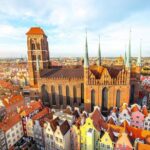
This church is described as the largest brick church in the world. Construction began in 1343 and ran in stages until 1502. Inside, you’ll find medieval and baroque art pieces, including a stone Pietà (around 1410) and a copy of Hans Memling’s The Last Judgement.
The standout technical detail: the astronomical clock. It’s from the second half of the 15th century and was built by Hans Düringer over a period of 7 years. Even if you don’t fully “read” a complex clock, it’s worth looking for the way the mechanism and design were meant to explain the world.
If you’re visiting with limited time, aim for this order: broad interior space first, then clock details, then one or two art highlights you’ll actually remember.
The medieval Crane: maritime power in a tiny timeframe
After St. Mary’s, the itinerary moves toward the Crane, an iconic Gdansk landmark. You’ll have about 15 minutes here, and it’s an “external stop with meaning,” unless you choose to go further inside where applicable.
This crane was built in the first half of the 15th century between pylon structures of Brama Szeroka, the Wide Gate. In the Middle Ages, it was Europe’s largest port crane and could lift goods up to 4 tons to an altitude of 36 feet. It was powered by workers walking inside two tread wheels.
Here’s the consideration: the Crane stop lists admission as not included. So if you want museum-style depth, you may pay extra. If you mostly want the story and the landmark itself, this is still worth it even with the short time.
Gdynia in 2 hours: the harbor promenade and Poland’s modern shipping story
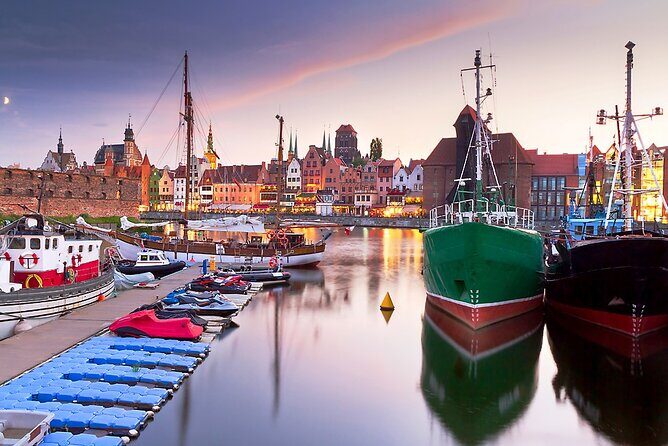
Then you switch cities to Gdynia, with about 2 hours on the clock. Gdynia is presented as a distinctive place shaped by the 1920s and a freshly built modern harbor.
The heart of Gdynia is the long promenade by the harbor. This is where historical ships are docked, and the names matter:
- ORP Błyskawica, a 1930s destroyer and the oldest preserved ship of its class in the world
- Dar Pomorza, a famous sailing frigate
You can use this time to slow down. In Gdansk you’re mostly reading the past through streets and architecture. In Gdynia, you read the past through ships, ports, and the whole layout of a working harbor.
Museums you might want to add time for
The tour notes several museums in the harbor area:
- Naval Museum (Polish navy history)
- Emigration Museum (Polish emigrations from the 19th century to modern days)
- Gdynia Aquarium (underwater life)
The key practical point: entry isn’t guaranteed as part of every choice because optional admission can apply. With the 2-hour window, I recommend deciding early what you want most—ships, museum rooms, or the waterfront walk—so you don’t get stuck in “maybe” mode.
Sopot in 2 hours: the pier reset and the resort-style finish
Finally, you end in Sopot with another 2 hours, and the tone changes on purpose. Sopot is described as a luxury seaside resort town with mass events and shopping energy.
The main symbol is the pier. It juts about 560 yards into the sea and is described as the longest wooden pier in Europe. At the end of the pier, iodine concentration is said to be twice what’s recorded on the shoreline, which makes the walk feel a bit like a seaside ritual rather than just sightseeing.
Then you connect the pier to land via Plac Zdrojowy, the central square. Nearby you’ll see a lighthouse for panoramic views and an outdoor concert hall that’s active in summer.
One small consideration: in peak season, Sopot can feel busy. If crowds annoy you, aim to get your pier walking early in your two-hour block.
The guide factor: what to expect from the private experience
This is a private tour, so you’re not stuck in a rigid group pace. You get a professional local guide, plus air-conditioned transport and your own schedule within the overall structure.
The guide quality is clearly a big part of why people rate this so highly. You might get a standout like Andrzej Falkowski, who’s praised for being extremely knowledgeable about the region and for bringing helpful background to the cool sights. Another possibility is Peter, described as a policeman who guides as a side job, and the pace tends to feel relaxed rather than overloaded.
Practical advice: if you care most about history facts, tell your guide early. If you care more about photos and street time, say so too. A private day works best when you steer the conversation.
Price and value: what you’re paying for at about $351 per person
At $351.49 per person for roughly 8 hours, you’re not paying for a budget bus tour. You’re paying for a private day with:
- hotel pickup and drop-off
- a professional local guide
- air-conditioned vehicle
- private transportation
The value math is simple: if you’d spend time (and stress) arranging transit between three cities, the door-to-door service becomes a real upgrade. If you’re traveling as a small group, private pricing often starts to look more reasonable because you can split the day’s cost.
My tip: compare this against the true cost of your time. TriCity is doable on public transport, but you’ll likely spend energy on transfers instead of seeing St. Mary’s Basilica and the Crane at an efficient pace.
Who should book this TriCity private day (and who may not need it)
This tour fits best if you:
- want three distinct cities in one shot
- appreciate guided context at major landmarks
- like a paced schedule with enough walking to feel the place
- want English guidance and door-to-door pickup
You might choose something else if you:
- prefer deep museum time over quick landmark stops
- dislike compact itineraries and prefer one city per day
Also, because the day includes multiple outdoor walking segments and cobblestones, it’s best with comfortable footwear and a willingness to move.
Should you book the TriCity Tour Private (8h)?
I’d book it if your priority is a well-run tri-city overview with a guide who can connect the dots—from the medieval port power of Gdansk to the modern harbor story of Gdynia and the seaside release of Sopot. The structure makes it feel efficient, and the private setup makes it easier to adapt your pace.
If you’re the type who wants to linger inside every building, consider using this tour as your “big overview day” and saving deeper museum time for another day on your own. For most first-timers, this is a strong way to see the best parts without turning your schedule into a full-time job.
FAQ
How long is the TriCity Tour (Gdansk, Gdynia, Sopot) private day?
It runs for about 8 hours.
Does the tour include hotel pickup and drop-off?
Yes. Pickup and drop-off are included, and the guide meets you in your hotel lobby with your name.
Is the tour offered in English?
Yes, it’s offered in English.
What’s included in the price?
Included features are hotel pickup/drop-off, a professional local guide, air-conditioned vehicle, and private transportation. Mobile ticket and group discounts are also offered.
Are entry fees included for all stops?
Entry or admission fees are not included as a general rule (optional). Some stops are listed as free, but the Crane stop specifically notes admission is not included.
How does cancellation work?
The experience offers free cancellation, with a full refund if you cancel at least 24 hours before the start time.