REVIEW · LUBLIN
Lublin Old Town Highlights Private Walking Tour
Book on GetYourGuide →Operated by Rosotravel Poland · Bookable on GetYourGuide
A good city walk in Poland feels like a history lesson with good shoes. This private Old Town walking tour takes you through Lublin’s best-preserved historic core, from Krakowska Gate and medieval walls to the show-stopping Lublin Castle and major churches with impressive interiors and organs. I like that the route is tightly focused, so you actually get the stories behind the landmarks, not just the postcard views.
Two standouts for me are the chance to see Lublin Castle up close and the visit to St. John the Baptist Cathedral, where the interior is a highlight on its own. The other big plus is how the tour stays conversational with a guide who can keep you on pace for the full time window. One consideration: on Sunday mornings, church services can limit sightseeing or mean you’ll mainly view some places from outside.
In This Review
- What to know before you lace up
- Key highlights you’ll feel the moment you start
- Why Lublin’s Old Town walking route is a smart use of your time
- Meeting under Krakowska Gate, then settling into a 2–3 hour rhythm
- Market Square and the former Town Hall: where civic Lublin shows up
- Narrow alleys and Polish kings: turning street scenes into stories
- Krakowska and Grodzka Gates: meeting Lublin’s 14th-century defenses
- Fara Square, Trinity Tower, and the church cluster that changes pace
- Lublin Castle in neo-Gothic style: the big visual anchor
- Church of the Holy Spirit altar and the optional extra 3rd hour churches
- Romanesque townhouses and Theatre of Osterwy: architecture you’ll spot later
- Finishing at the Lublin Union Monument: ending with meaning
- Price and value: what $107 really covers on a private tour
- Who should book this tour, and who might not love it
- Booking decision: should you take the Lublin Old Town Highlights tour?
- FAQ
- Where do I meet the guide for this Lublin Old Town tour?
- How long is the tour?
- What’s included in the tour?
- Is the Trinity Tower ticket included?
- What languages are available?
- What should I expect on Sunday mornings?
What to know before you lace up
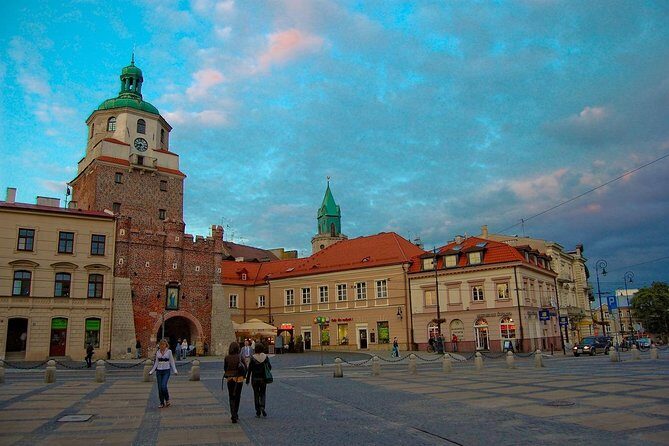
This tour runs about 2 to 3 hours, with a 3-hour extension option if you want more sacral stops. You’ll be walking through narrow Old Town streets, so plan for cobbles and a bit of standing time around gates and church entrances, especially when you pause for photos and explanations.
For the best experience, bring comfortable footwear and be ready to slow down and look up. If you’re hoping for full inside access to every church on a Sunday, adjust expectations accordingly.
Key highlights you’ll feel the moment you start
- Meet under Krakowska Gate for an easy, unmistakable start to Lublin’s Old Town route
- Medieval defense walls in real life at 14th-century Krakowska and Grodzka Gates
- St. John the Baptist Cathedral visit with attention to the interior and organ details
- Lublin Castle in neo-Gothic style as a major anchor point on the walk
- Optional Trinity Tower top ticket if you want a little extra height and views
- End at Lublin Union Monument so the last stop ties together the city’s story
You can also read our reviews of more walking tours in Lublin
Why Lublin’s Old Town walking route is a smart use of your time
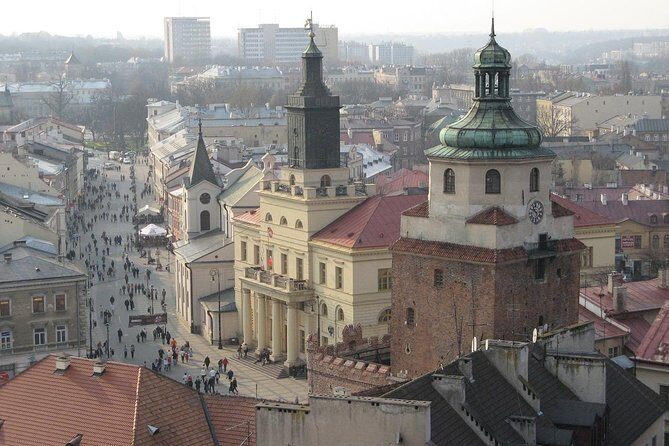
Lublin isn’t just another pretty Polish town center. Its Old Town is known as one of the best preserved historic complexes in Poland, and that matters because the streets and buildings help you understand how the city used to function. In the past, Lublin played an important role as an administrative, trade, and military center in the Polish kingdom—so your walk connects everyday spaces to serious history.
This tour works because it doesn’t scatter you across town. It keeps you in the historic core and uses a logical sequence: market space, defenses and gates, old squares, then the big religious and cultural landmarks, and finally a meaningful monument. You’ll get the sense that Lublin was built to be protected, run, and represented—then layered with later styles and traditions.
I also like that it’s private. With only your family and friends, the guide can adjust pace for photo stops, questions, and the group’s comfort level on a walking itinerary. That’s the difference between rushing past details and actually absorbing them.
Meeting under Krakowska Gate, then settling into a 2–3 hour rhythm
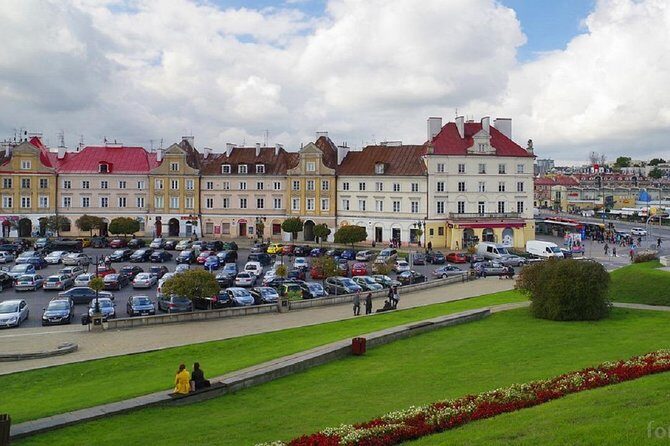
You meet your guide under Krakowska Gate. That’s a great way to start because the gate itself sets the theme—Lublin’s defensive history—before you even begin walking.
The timing is flexible. The base tour runs about two hours, and you can extend to three hours to add more sacral buildings. For many people, the sweet spot is the full 3 hours, because it gives time to include the extra churches without feeling like you’re sprinting between stops.
You’ll hear the stories in English, German, or Polish depending on your group. And you can expect the guide to share practical tips too, including local recommendations for restaurants, patisserie, and pubs. That’s useful because it helps you turn the walk into the rest of your day, not just a box to tick.
One small reality check: you’re walking through an Old Town, so expect cobbles, some uphill bits, and frequent pauses. Wear shoes you can stand in, and don’t plan to cram shopping errands immediately afterward.
Market Square and the former Town Hall: where civic Lublin shows up
The tour begins with the Market Square area and then moves through nearby streets toward important civic buildings. This is where Lublin’s identity as an administrative and trade center becomes easiest to grasp. Even if you know the broad outlines of Polish history, watching how these spaces connect feels different when you see them in person with a guide.
A key moment here is the stop at the former Town Hall. It’s the kind of building you might walk past without a second look unless someone explains why it mattered. In this part of the walk, your guide links the architecture and layout to how the city operated day to day—decision-making, commerce, and public life.
You’ll also notice Renaissance-style buildings along the streets. The tour’s narrow lanes are part of the fun because they force you to slow down and look at façades, window rhythms, and street scale. This is where a private guide helps: you can ask why a building looks the way it does, and you don’t have to wait for the group.
Narrow alleys and Polish kings: turning street scenes into stories
One of the best parts of this walk is how it treats the Old Town as a living stage for history. As you move through lanes and small streets, the guide connects the visible architecture to Polish kings and the wider narrative of the Polish kingdom.
This is more than trivia. It changes how you see the buildings, because you stop thinking of them as random old stone and start seeing them as settings for power, culture, and tradition. The city becomes a timeline, and the narrow alleys feel like intentional corridors between “important places.”
If your travel style likes details—names, time periods, what came first—this portion will keep you engaged. If you mostly want quick highlights, tell your guide early and you’ll still get the main sights without overdoing the side stories.
Krakowska and Grodzka Gates: meeting Lublin’s 14th-century defenses
A highlight that I think you’ll remember later is the gate section. Lublin’s historic gates are remnants from defensive walls dating back to the 14th century, and seeing them in context gives real weight to the word protection.
The tour focuses on two major gates:
- Krakowska Gate
- Grodzka Gate
Why it’s worth your time: gates aren’t just pretty entrances. They represent how cities controlled movement—who came in, how goods moved, and how threats were managed. A guide helps you spot clues in the structure and position, turning “old walls” into something you can actually picture.
Also, these gates are handy orientation points. As you move between them, you’ll start to understand the Old Town’s shape and where major landmarks sit relative to the former defensive line. That makes the rest of your sightseeing day easier, even if you later go off on your own.
Fara Square, Trinity Tower, and the church cluster that changes pace
After the gate and wall segment, the tour shifts toward older parts of the city center. You’ll check out the Fara Square area and Trinity Tower, described as very old remains within the historic core.
Trinity Tower has an extra option: the top ticket is not included, and it costs about 2 EUR if you want to go up. If you like viewpoints, this is a simple add-on. If you’d rather keep the walk moving and save energy for the interiors, you can skip it without losing the main storyline.
Then the tour moves into one of its most valuable included stops: St. John the Baptist Cathedral. This is where the pace often feels different because you’re no longer outside in open air—you’re inside a space meant for attention. The cathedral is known for its rich interior and stunning organs, and a guide can help you focus on what to look for while you’re there.
If you care about architecture and sacred art, this church stop is a strong reason to book the tour rather than wandering alone. You’ll know where to direct your eyes and why the details mattered to the community.
Lublin Castle in neo-Gothic style: the big visual anchor
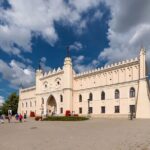
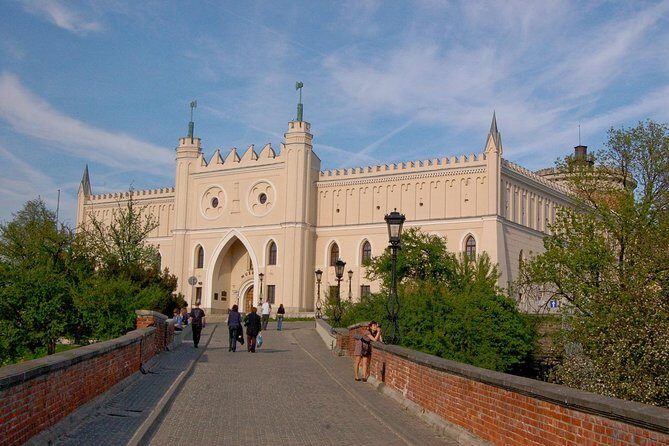
Next up is Lublin Castle, described as outstanding and styled as neo-Gothic. Even if you’re not a hardcore castle person, it’s a natural centerpiece because it’s visible and imposing, and it helps you picture the city’s power structure.
This is also a good moment in the tour for context. Up until now, you’ve seen gates, squares, and city streets. The castle gives you the “who mattered” side of the story—administration, military importance, and political presence—wrapped into one landmark you can easily orient around.
A private guide helps you see the castle as more than a photo spot. You’ll get the connective tissue that links Lublin’s medieval role to later traditions and stylistic changes.
Church of the Holy Spirit altar and the optional extra 3rd hour churches
The included religious stop beyond St. John the Baptist Cathedral is the Church the Holy Spirit, noted for its spectacular altar. This is a great contrast within the itinerary: you have organs and grand interior space on one hand, and then the altar-focused experience on the other.
If you extend the tour to three hours, you add more extraordinary sacral buildings, including:
- Carmelite Church
- Roman Catholic Church of St. Piotr and Paul
This extension is worth considering if you want a fuller sense of Lublin’s spiritual and artistic traditions. It also gives you breathing room to absorb what you’ve already seen, instead of racing through all the big stops back-to-back.
One practical thing: religious sites can mean quiet rules and limited access depending on services. On Sunday mornings, mass takes place, and sightseeing may be limited or possibly only from outside. If your schedule includes Sunday morning, plan your photos and expectations around that.
Romanesque townhouses and Theatre of Osterwy: architecture you’ll spot later
Lublin rewards people who look up. This tour includes a chance to spot Romanesque townhouses in the heart of the city, with a specific mention of the Theatre of Osterwy.
This matters because theaters and cultural buildings tell you how a city expresses identity beyond government and defense. Theatre also tends to sit at the crossroads of locals’ daily life and bigger artistic movements. When you learn what you’re looking at, the building stops being background.
The guide can point out details you might otherwise miss—shape, style cues, and why certain elements look the way they do. Even if you don’t remember every architectural term, you’ll remember the feeling: Lublin isn’t just old; it’s layered.
Finishing at the Lublin Union Monument: ending with meaning
The tour ends at the Lublin Union Monument, with the story behind it. Ending at a monument is a smart move. It gives the walk a conclusion that isn’t just “and then you went home.” Instead, it ties your route together with a broader message about the city’s past and identity.
By the time you reach the monument, you’ve seen gates, squares, church interiors, and the castle. That’s a lot of information. The final explanation helps it click into place: how Lublin protected itself, governed itself, worshiped, and expressed itself.
If you’re planning what to do next, this ending point can also help you reorient around the core area. You’ve got a mental map now, and you can choose to keep exploring nearby streets on your own.
Price and value: what $107 really covers on a private tour
At $107 per person for a 2–3 hour private walking tour, you’re paying for three things: a guide, time, and exclusivity.
First, you’re not sharing a microphone with strangers. In a private format, your group gets more direct answers, and the guide can tailor stops to your pace. That’s especially valuable in an itinerary packed with churches and architectural details, where people often have different comfort levels with inside visits and standing time.
Second, the tour includes more than “look at buildings.” You get a visit to St. John the Baptist Cathedral, you get the Church the Holy Spirit stop, and you can add more sacral buildings during the 3-hour option. You also get tips about where to eat, including patisserie and pubs. Those small extras can offset the cost if you use them well.
Third, you get a licensed guide and languages offered (English, German, Polish). Even if you don’t need translation, you benefit from the guide’s ability to explain what you’re seeing and why it matters.
Optional costs are small and clear. For example, the Trinity Tower top ticket is not included and is about 2 EUR. So you can choose whether to add it based on your energy and interests.
Who should book this tour, and who might not love it
This tour is a great fit if you like:
- Old Town architecture and city history tied to real places
- Private conversations with a guide instead of a big group script
- A route built around major anchors like Lublin Castle and key church interiors
- Walking with just enough structure that you don’t feel lost
You might want to consider another option if you dislike walking for 2–3 hours on uneven Old Town surfaces. Also, if your main goal is purely panoramic views, you’ll only get one clear “optional height” moment with the Trinity Tower top ticket.
If you’re traveling with family and friends and want the flexibility to ask questions, a private tour is often the best comfort upgrade you can buy.
Booking decision: should you take the Lublin Old Town Highlights tour?
Yes, if you want a focused, story-driven walk through Lublin’s Old Town with the essentials done well. The combination of Krakowska and Grodzka Gates, Lublin Castle, and major church visits makes this more than a stroll. The private format also tends to bring out the best in these kinds of itineraries because the guide can keep your group engaged and at the right speed.
A great sign: the guide Damien is specifically praised for being knowledgeable and keeping the group entertained for the full stretch (including the three-hour version). That’s exactly what you want on an architecture-and-history route—good explanations and a pace that holds attention.
If you’re visiting on Sunday morning, adjust expectations because services can limit access to some church areas. But even then, the route still gives you strong sights from outside and a solid sense of Lublin’s historic core.
FAQ
Where do I meet the guide for this Lublin Old Town tour?
Meet your guide under Krakowska Gate.
How long is the tour?
The tour lasts 2 to 3 hours, depending on whether you stick to the standard time or extend to include extra sacral buildings.
What’s included in the tour?
The tour includes a private walking tour with a licensed guide, a visit to St. John the Baptist Cathedral, and tips about local restaurants, patisserie, and pubs.
Is the Trinity Tower ticket included?
No. The top of the Trinity Tower is optional, and the ticket is about 2 EUR.
What languages are available?
The live tour guide is available in English, German, and Polish.
What should I expect on Sunday mornings?
On Sunday mornings, mass takes place in Catholic churches, and sightseeing may be limited or possibly only from outside out of respect for prayer time.