REVIEW · LODZ
Lodz: Jewish Heritage Private Tour
Book on GetYourGuide →Operated by PT Team · Bookable on GetYourGuide
Four hours in Łódź can feel like a full chapter of history. This private tour strings together Jewish monuments across the city, then brings you right up to the sites tied to the Litzmannstadt ghetto and the Holocaust.
I love the way the stops build a timeline you can actually walk—before WWII Jewish Łódź (over 200,000 people, about one third of the city) to the wartime reality you see at places like Radegast Station. A second thing I really like is the mix of solemn memory with real-world city life: the Children’s Martyrdom / Broken Heart monument, the Survivors’ Park memory trees, and the former synagogue now known as the Reicher Synagogue. One possible drawback to plan for: entrances aren’t included, and for some sites you’ll get the most out of your visit if you actively ask about access and what you can go inside.
In This Review
- Key highlights worth your time
- Where this Łódź tour really takes you
- Getting oriented: the hotel meet-up and the flow of the day
- Pre-war Jewish Łódź: why the story starts before the war
- The Trail of Jewish Monuments: reading the city like a map
- Radegast Station: the last stop before the Holocaust
- Litzmannstadt ghetto area: learning the history where you stand
- The Jewish cemetery: the largest necropolis in Poland
- Children’s Martyrdom Monument (Broken Heart) on Przemysłowa Street
- Survivors’ Park and the memory trees: a pause that matters
- Reicher Synagogue: the former synagogue that survived as a salt warehouse
- Manufaktura and Israel Poznanski’s factory: when industry tells a Jewish story
- Piotrkowska Street at the end: processing with a city stroll
- Price and value: what $46 buys in a private 4-hour format
- Choosing the right fit: who will love this tour and who should think twice
- Should you book this Lodz Jewish Heritage Private Tour?
- FAQ
- How long is the Lodz Jewish Heritage Private Tour?
- Is this tour private?
- What’s included in the price?
- Are entrance fees included?
- What languages are available for the guide?
- Can I pay later?
- How does cancellation work?
Key highlights worth your time
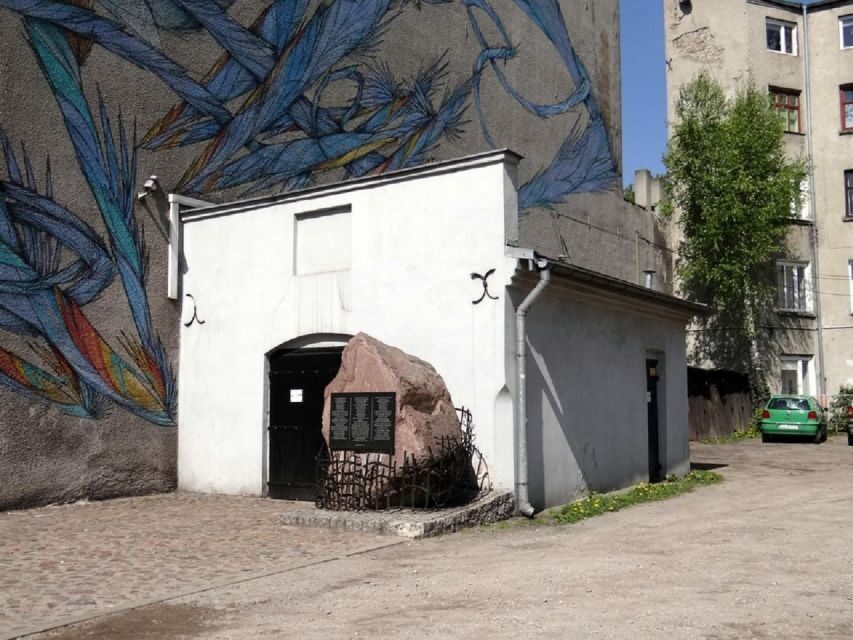
- Trail of Jewish Monuments: a walk that connects everyday life before WWII to the trauma of war
- Radegast Station: the final point for trains carrying Jews from western Europe and from provincial ghettos
- Jewish cemetery: the largest Jewish necropolis in Poland, with real room to slow down and reflect
- Broken Heart (Children’s Martyrdom Monument): a direct, local reminder of Polish children imprisoned in Przemysłowa Street
- Survivors’ Park and the memory trees: pauses for reflection under more than 600 planted trees
- Manufaktura and Israel Poznanski’s factory: the pre-war industrial story in brick and fountains, followed by Piotrkowska Street
Where this Łódź tour really takes you
This isn’t just a list of famous places. It’s a guided route through how Łódź changed—and how Jewish life in the city was reshaped, erased, and remembered. You start with context, then you move site by site, so the story stays anchored in streets, buildings, and memorial spaces.
You’ll be picked up from your hotel and dropped back afterward, which matters in a city day that already has a lot going on. The tour is private, so you set the pace. That also means your guide can respond to what you’re curious about, whether that’s architecture, the industrial past, or how memorials are placed into the modern city.
And yes, it’s emotional. The stops tied to the Holocaust and ghetto history are serious. I recommend mentally bracing for that, wearing comfortable shoes, and giving yourself permission to pause. The point of the tour is to connect facts to place.
You can also read our reviews of more private tours in Lodz

Getting oriented: the hotel meet-up and the flow of the day
Your guide meets you in the hotel lobby with your name, so you’re not left hunting around a meeting point. That first handshake is useful because it sets expectations: you’re not doing a self-guided scavenger hunt.
From there, the structure is simple: you go from one key site to the next, using included transportation to handle the distances. One practical note: included transportation doesn’t always mean a full “sit in a car” day. Some parts may still involve walking, and the exact mix can vary depending on route and timing. If you’re someone who prefers shorter walking segments (or you have mobility limits), ask early how long you’ll be on your feet at a time.
Your guide speaks English, German, Russian, or Polish. If you have a strong preference, mention it up front. The best tours aren’t only about language—they’re about nuance, especially when you’re discussing Jewish heritage and Holocaust memory.
Pre-war Jewish Łódź: why the story starts before the war
A lot of Jewish heritage tours start at wartime sites. This one earns its impact by starting earlier. Before World War II, Łódź had a Jewish population of over 200,000, and they made up about one third of the city. That’s the scale you need in your head before you look at the ghetto-era memorials.
What I like about this approach is that it prevents the story from becoming only a tragedy montage. You see that Jewish life here wasn’t a footnote. It was part of how Łódź worked—socially, economically, and culturally—before the machinery of persecution turned the city inside out.
A private guide helps here: you can ask questions as they come up. Want more on community life, or more on the industrial connection to Jewish business? You can steer the conversation.
The Trail of Jewish Monuments: reading the city like a map
The route follows a Trail of Jewish Monuments, and the title is more than marketing. You’re moving through a chain of sites that each adds one piece to the puzzle: what was there, who lived through it, and how the city remembers.
This is also where you start getting “street-level” lessons. Your guide doesn’t just say what happened. You’ll learn how these locations relate to one another across time—so the story clicks instead of feeling scattered.
One useful way to get more out of this stage is to slow down at what looks ordinary. A wall, an exterior façade, a memorial plaque—these can hold the exact tone your guide is trying to teach you. Don’t rush photos. Let the guide’s pointing direct your attention.
Radegast Station: the last stop before the Holocaust

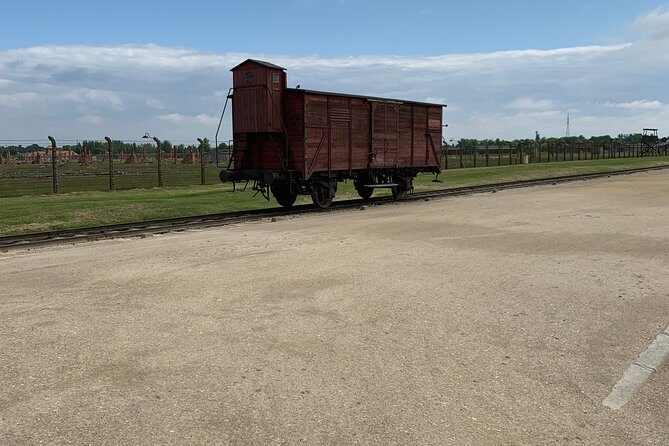
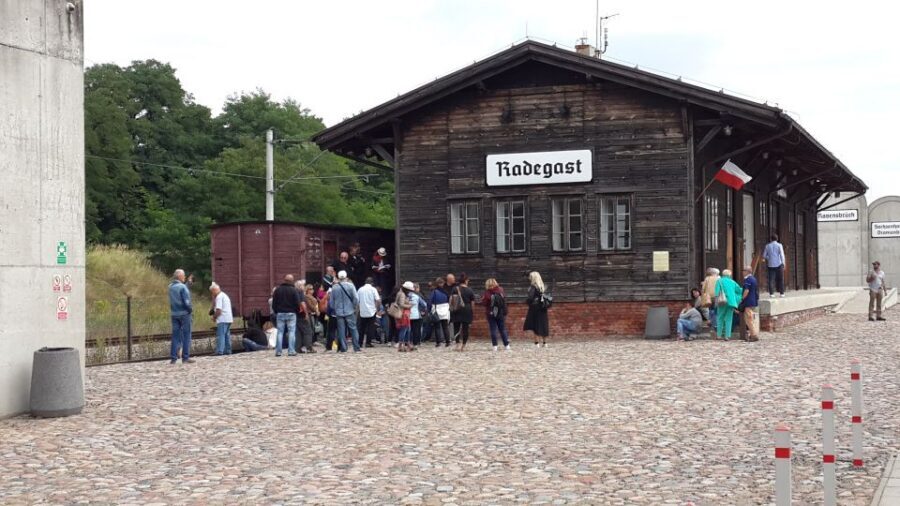
Then you hit one of the tour’s most crucial anchors: Radegast Station. This is described as the final point of trains transporting Jews from western European countries and from provincial ghettos from Wartheland. That phrasing matters because it reminds you the victims weren’t only local.
At this stop, you’re not meant to “speed through and move on.” You’re meant to absorb the meaning of the place. A good guide will connect the dots between deportation routes and what the ghetto became.
If you’re carrying any anger, confusion, or grief, keep it with you. That emotional weight isn’t a distraction; it’s part of how you process why these sites exist in the urban fabric today.
Litzmannstadt ghetto area: learning the history where you stand
From there, the tour continues through the area associated with the Litzmannstadt ghetto, with time set aside to learn about Holocaust history tied to Łódź. You’ll get the big picture: how the ghetto system operated, and what it meant for daily life and survival.
What makes this stage work is that it’s not only about naming dates. Your guide helps you connect the local geography to the human impact. You’ll likely be encouraged to look closely at how modern life now occupies what used to be a closed and brutal world.
A small practical tip: when the guide points out text or markings tied to memory, take a moment to read. Even when the words feel hard to look at, they help you understand what the spaces are trying to say now.
The Jewish cemetery: the largest necropolis in Poland
One of the most powerful stops is the Jewish cemetery, described as the largest Jewish necropolis in Poland. Cement and stone here do more than mark names. They show a community’s long presence and the sheer scale of who was part of the city.
Plan your mindset for this stop. The pace often becomes slower, and it’s normal to feel quiet. If you’ve only ever visited a cemetery as a quick photo stop, switch gears. Give the place time.
Also, don’t assume you’ll automatically go into every area. If access is possible, you’ll get more out of it if you ask your guide about entering rather than only viewing from the outside. That single question can change how meaningful the visit feels.
Children’s Martyrdom Monument (Broken Heart) on Przemysłowa Street
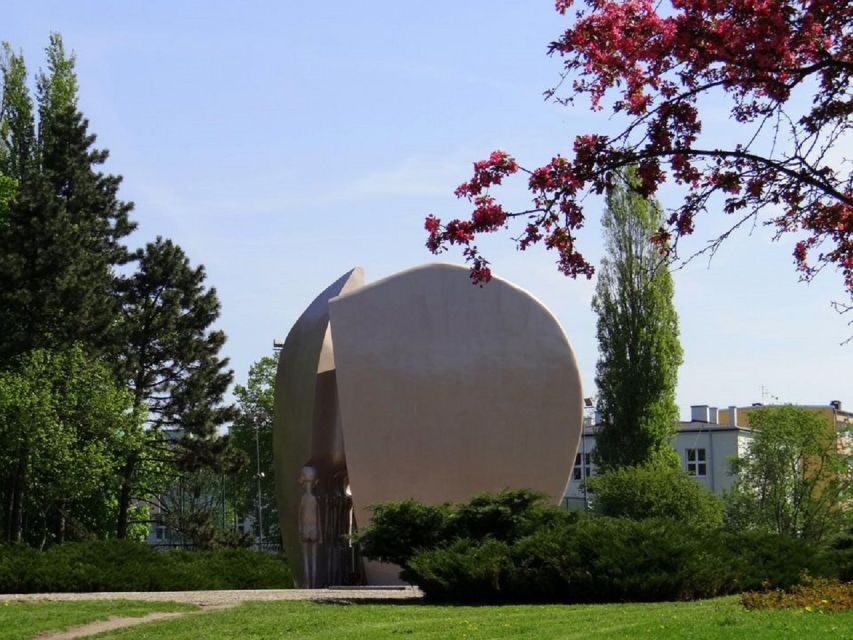
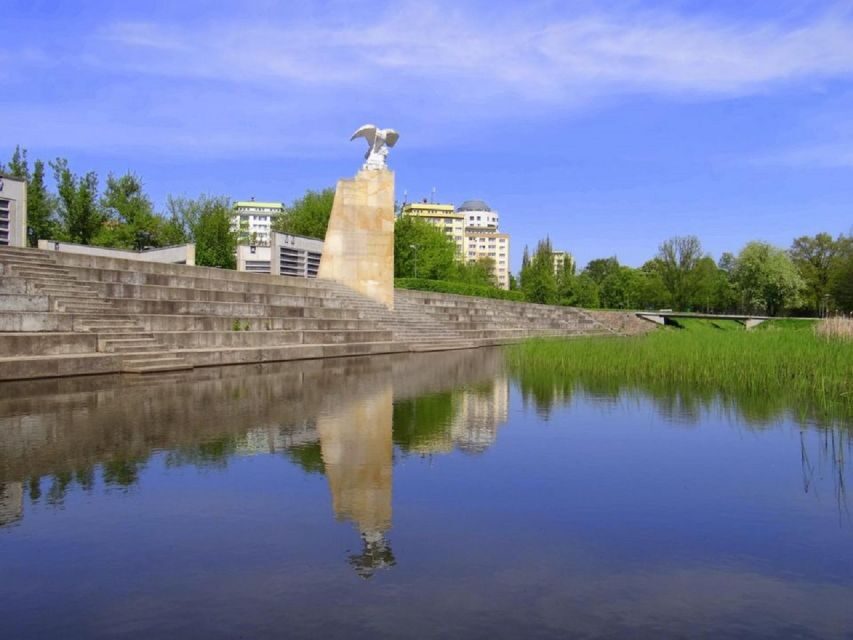
Then you come to a memorial that doesn’t let you drift into abstraction. The Children’s Martyrdom Monument, also called the monument of the Broken Heart, is dedicated to Polish children who died or were murdered while imprisoned in the camp in Przemysłowa Street.
This is one of the places where the tour’s guided framing matters most. Without context, you might see stone and symbolism and move on too fast. With a guide, you understand why the memory is anchored to children—and how local history intersects with the larger Holocaust story.
If you tend to get overwhelmed at memorial sites, take short breaths and don’t rush. The tour is four hours total, and this is the kind of stop where rushing is the wrong instinct.
Survivors’ Park and the memory trees: a pause that matters
After the cemetery and children’s memorial, you get a breather at Survivors’ Park, commemorating the liquidation of the ghetto. Then you stop under one of over 600 memory trees planted by people who survived the Litzmannstadt Ghetto.
This part is often underrated because it feels “quiet” compared to stations and cemeteries. But quiet is the point. The trees turn remembrance into something living and ongoing.
If you’re traveling with kids or someone who finds too-dark topics hard, this stage can work better than you’d expect. It gives you a way to process without constant confrontation. It also lets you think about time—how long memory lasts, how survivors’ voices keep shaping how the city tells its story.
Reicher Synagogue: the former synagogue that survived as a salt warehouse
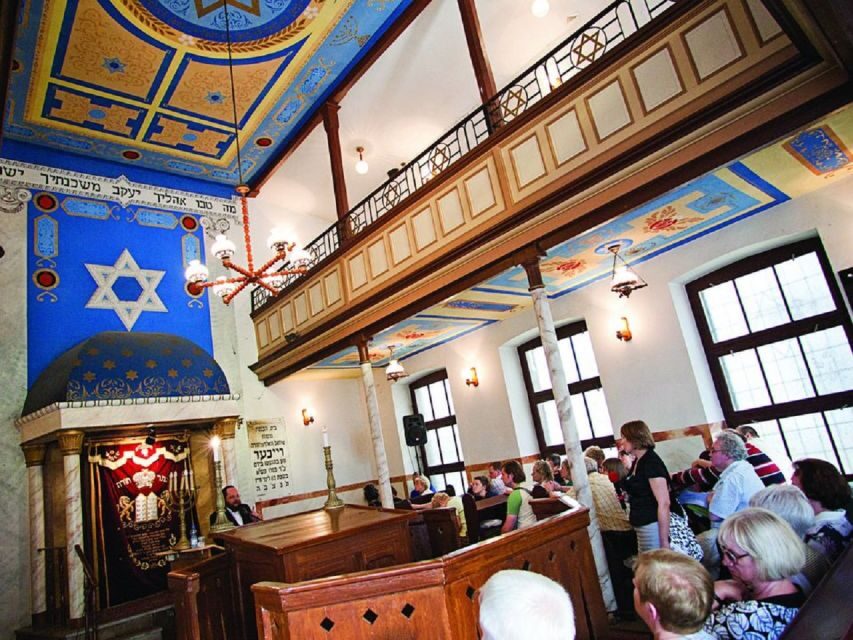
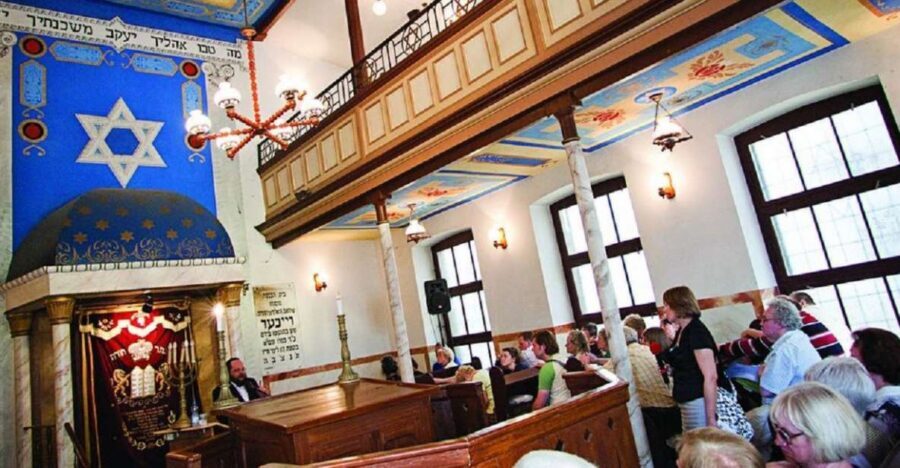
Next comes a tangible link to pre-war Jewish community life: the Reicher Synagogue, described as the only remaining pre-war synagogue, which survived the occupation as a salt warehouse.
That detail—salt storage instead of worship—hits you once you imagine what Jewish religious life must have been under pressure. You’re looking at survival in an odd form: a building kept standing because it was repurposed.
Your guide can help you appreciate how that works. The physical shell remains, but the meaning changes with history. That’s why this stop is so valuable even if you’ve seen synagogues elsewhere in Poland: you’re seeing a specific survival story, tied to Łódź.
Manufaktura and Israel Poznanski’s factory: when industry tells a Jewish story
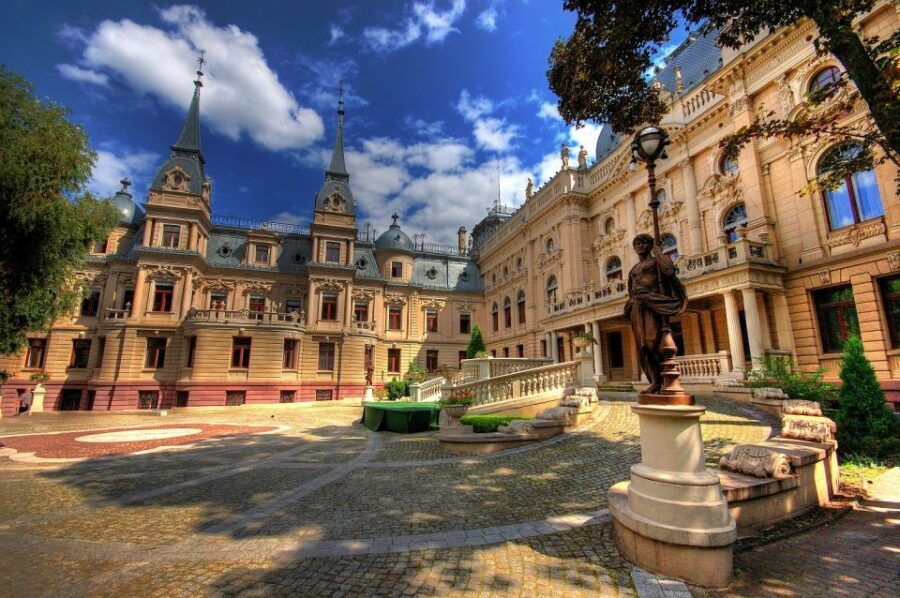
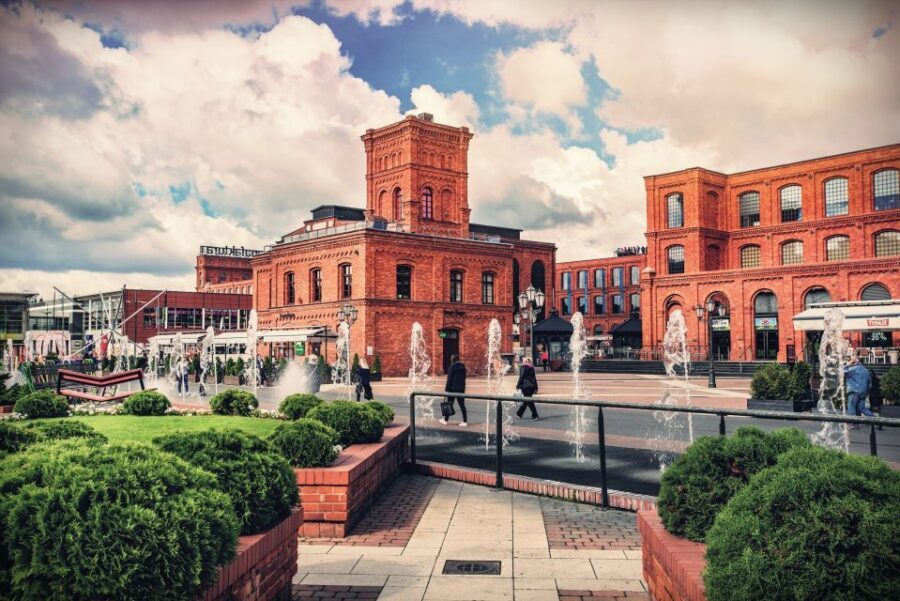
Now the tour swings into architecture and industrial history with Manufaktura, the renovated industrial complex that belonged to Jewish businessman Israel Poznanski.
This is where the tour becomes very “Łódź.” You get an open-air plaza surrounded by large brick buildings, and it’s noted for having the longest stretch of fountains in Europe. Even if you’re not the fountain type, look at how the space is laid out—big brick shapes, open circulation, and a city that has re-used industrial bones for modern life.
I like this segment because it prevents the story from ending at wartime loss. It reminds you that Jewish enterprise and civic presence were part of how Łódź functioned. The tour doesn’t skip the hard parts, but it also doesn’t let you leave thinking it was only destruction.
Piotrkowska Street at the end: processing with a city stroll
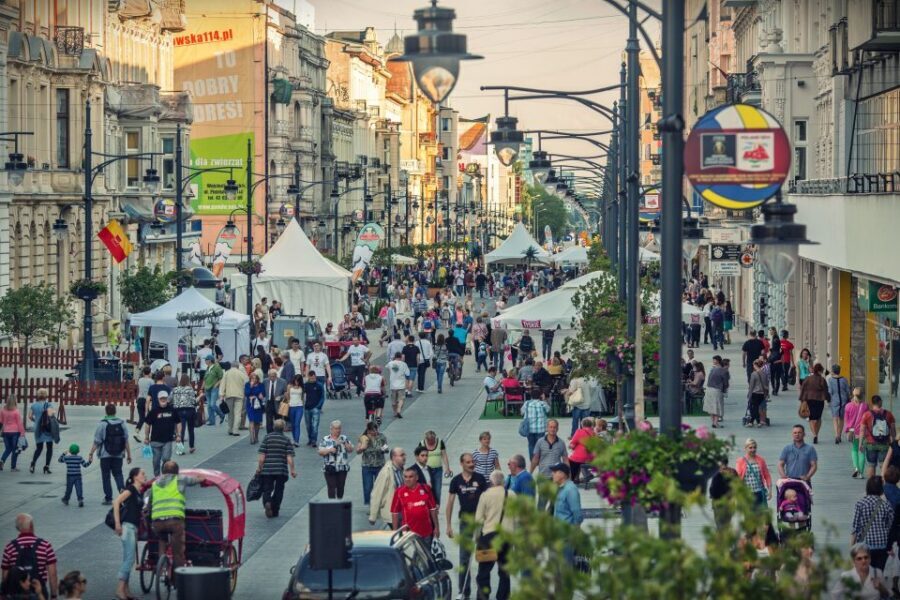
At the end, you walk along Piotrkowska Street, described as Poland’s longest promenade. This is a good way to return to the present. Shops, pubs, restaurants, and sculptures line the avenue, including works that commemorate famous inhabitants of Łódź.
After memorial-heavy stops, this kind of walk helps you rebalance. You’re still in the same city, but your brain gets a new job: noticing daily life again.
Ask your guide what else you can explore on your own afterward. The tour ends, but the city shouldn’t feel like a closed chapter. A good guide will suggest how to keep the story going without repeating the same ground.
Price and value: what $46 buys in a private 4-hour format
At about $46 per person for a 4-hour private tour, what you’re really paying for is time plus local navigation. You get hotel pickup and drop-off, transportation between stops, and a live guide. Entrances are not included.
Is it good value? For Łódź, yes—especially if it’s your first time. A private guide helps you connect the dots quickly and avoid the common mistake of seeing sites without understanding the “why” behind them.
The “entrances not included” line is the only cost you might add on your own. If you want to plan tightly, ask your guide which stops are likely to have entry fees and which you can view from the outside. That way you don’t hit a surprise when you’re ready to spend time inside.
Choosing the right fit: who will love this tour and who should think twice
This tour is a strong match for you if:
- You want a structured route through major Jewish heritage and Holocaust-linked sites in Łódź
- You value a guide who can adapt your route and pacing to your interests
- You like connecting history to architecture and how the city is built today
It may feel like too much if:
- You prefer light sightseeing. This is not that kind of tour.
- You need a very specific framing style. If you want a particular tone—neutral, explicitly Jewish-focused, or strictly historical—tell your guide what you need before you start.
One more practical point: because this material can touch politics and identity, trust matters. If you don’t feel your guide is speaking with the tone you expect, say so early and adjust. A private tour is meant to be flexible.
Should you book this Lodz Jewish Heritage Private Tour?
I’d book it if you want your Łódź visit to make sense, not just look impressive. The combination of Radegast Station, the Jewish cemetery, Holocaust ghetto context, and then the return to city life at Piotrkowska Street gives you a full, honest picture.
Book it especially if you like guides who can go beyond the obvious and connect the story to city culture—architecture, industrial history, and the way Łódź remembers itself today. And do yourself a favor: ask your guide about access to places where entry may be optional, and bring time to read what’s written around you. The tour works best when you treat it like walking through an argument for remembering carefully.
FAQ
How long is the Lodz Jewish Heritage Private Tour?
It lasts 4 hours.
Is this tour private?
Yes. It’s a private group tour.
What’s included in the price?
Hotel pickup and drop-off, transportation, and a live guide are included.
Are entrance fees included?
No. Entrances are not included.
What languages are available for the guide?
The live tour guide is available in English, German, Russian, and Polish.
Can I pay later?
Yes. You can reserve now and pay later.
How does cancellation work?
You can cancel up to 24 hours in advance for a full refund.